Eco Fury - When people picture futuristic motorcycles, they often imagine something that hovers, glows blue, and maybe makes spaceship sounds. But back in the real world, Kawasaki took a huge leap toward that vision—minus the hover feature (for now)—with the launch of their hydrogen-powered marvel, the Ninja H2 HySE.
The Kawasaki Ninja H2 HySE prototype made its debut on December 12, 2023, during the Akashi brand’s Group Vision 2030 conference.(Picture from: OtomotifKompas)
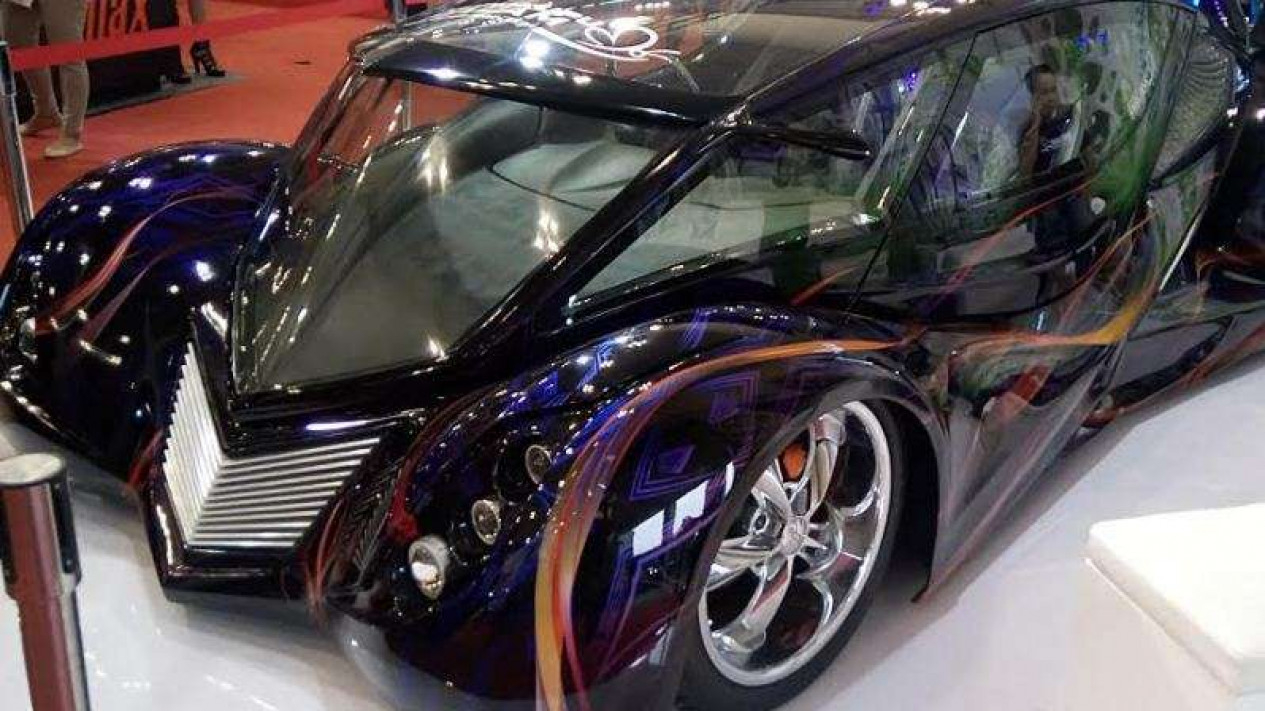
Conscious Engineering- When creativity meets passion, something truly extraordinary can happen—especially in the world of custom cars. Imagine the everyday sedan, usually modest in form and function, transformed into a stunning display of design and innovation. Now add six wheels, scissor doors, and a heart-pounding sound system, and you're no longer imagining. You're looking at reality—a bold creation called Hati Nurani - Walang Kadung.
Hati Nurani - Walang Kadung, an Indonesian six-wheeled custom car at the Indonesia International Auto Show (IIMS) 2015 in Kemayoran Jakarta. (Picture from: Viva.co.id)
Born in the vibrant city of Yogyakarta, Indonesia, Hati Nurani, which translates to "Conscience" in English, is anything but ordinary. It’s a custom-built six-wheeled sedan that challenges conventional automotive design, crafted by the hands of Kupu-Kupu Malam Auto Custom, one of Indonesia’s most respected modification workshops. Built in 2011 and still turning heads today, this unique vehicle is a rolling testament to how art, philosophy, and engineering can come together in a single frame.
Hati Nurani – Walang Kadung was built on a 1951 Chevrolet sedan, with its original chassis retained—though significantly extended to accommodate an additional axle.(Picture from: Viva.co.id)
Led by General Manager Kunto B Wibisono, the Kupu-Kupu Malam team didn’t just aim to modify a car—they wanted to tell a story. According to Kunto, Hati Nurani is rooted in deep personal and cultural values. For them, modifying a car isn’t just about the aesthetics or performance specs; it's about putting soul into steel. And with this project, they’ve done exactly that.
The foundation of this extraordinary machine is a Chevrolet 51 sedan, with its original chassis preserved—though extensively stretched to support an additional axle. Drawing inspiration from nature, specifically the grasshopper (known locally in Javanese as Walang Kadung), the car features striking scissor doors that resemble insect wings in motion. This clever use of biomimicry gives Hati Nurani a uniquely organic yet futuristic character that sets it apart from anything else on the road.
Hati Nurani – Walang Kadung, inspired by nature and specifically the grasshopper (locally known in Javanese as Walang Kadung), features striking scissor doors that mimic the graceful motion of insect wings. (Picture from: OyotPring)
Painted in a sleek black with colorful tribal-style graphics in silver, red, blue, and yellow, the car’s visual impact is undeniable. The paint itself uses a 90 Line Waterbase system, ensuring both depth and durability. The front lights are from Eagle Eyes Projector and Autovision, enhancing its modern look while delivering excellent visibility.
Step inside, and the futuristic impression only deepens. The interior is fully customized with electric seats, a tailor-made gear lever, and uniquely engineered pedals. Every detail reflects thought and craftsmanship. Just in front of the gear shift lies a control panel with buttons for an advanced air suspension system—one for each of the six wheels, offering supreme comfort and control.
Right side view of Hati Nurani - Walang Kadung by Kupu-Kupu Malam Auto Custom.(Picture from: Wartakota)
But perhaps the most jaw-dropping part of Hati Nurani is its sound system. It's not just powerful—it’s almost cinematic. Featuring a 2-DIN DVD system, five Venom monoblock amplifiers, three four-inch Venom amps, four 12-inch and six 10-inch Venom subwoofers, plus a combination of Venom split and coaxial speakers—this car doesn’t just drive, it performs. With 40 small monitors scattered inside and a pair of 7-inch screens, entertainment is everywhere. Add in the dual Venom capacitor banks and you’ve got a mobile concert hall that’s as technically impressive as it is immersive.
Rear side view of Hati Nurani - Walang Kadung by Kupu-Kupu Malam Auto Custom. (Picture from: OyotPring)
Under the hood, the heart of Hati Nurani - Walang Kadung beats strong. A 5,700 cc Chevrolet Small Block engine powers the beast, a popular choice for modifications thanks to its reliability and easily sourced components. It's a machine designed not only for show but also to roar to life when needed.
Building a car like this is no weekend project. It took the Kupu-Kupu Malam team around six months to bring Hati Nurani - Walang Kadung to life. While the exact cost has never been revealed, the result speaks volumes. The car claimed top honors as Champion at the prestigious Djarum Black Autoblackthrough in 2011 and continues to spark admiration and curiosity far beyond Indonesia.
This six-wheeled custom masterpiece, crafted by the renowned Yogyakarta-based workshop, still exists today. While its current location hasn’t been officially disclosed, it was proudly showcased at the 2021 Indonesia International Motor Show (IIMS) Hybrid in Yogyakarta. Years may have passed since its debut, but Hati Nurani - Walang Kadung remains a striking example of what happens when bold vision meets engineering brilliance. It’s more than just a car—it’s a rolling piece of art that dares to dream bigger, drive bolder, and stand louder. Let the ride speak for itself!***[EKA [28082015] | FROM VARIOUS SOURCES | KUPU-KUPU MALAM ON INSTAGRAM | AUTOVISION.CO.ID | VIVA.CO.ID | OYOTPRING ]
Note: This blog can be accessed via your smart phone
Powerstorm Revealed - Every now and then, the automotive world gets a jolt of electricity—not from a battery pack, but from pure, unfiltered ambition. It usually begins with a whisper: a new name, a new company, a sketch of a car that seems too wild to be true. Then, almost overnight, that whisper becomes a roar. And right now, that roar comes from Modena, Italy, where a bold newcomer named Giamaro Automobili is doing something quite extraordinary.
The Giamaro Katla, named after a powerful Icelandic volcano, is a seismic force in the hypercar world with a staggering 2,127bhp and 1,481 lb-ft of torque. (Picture from: Carscoops)
Let’s start with the showstopper: the Giamaro Katla. With a name borrowed from a powerful Icelandic volcano, this machine is nothing short of a seismic event in the hypercar world. It’s not just about wild numbers, although, yes, it boasts a truly outrageous 2,127 brake horsepower and a colossal 1,481 lb-ft of torque. This isn't a theoretical figure hidden behind a development curtain—it comes from a quad-turbocharged V12 engine that Giamaro claims was built entirely in-house. It's a feat even the most seasoned automakers would hesitate to tackle.
The Giamaro Katla interior embraces an aviation theme that avoids parody, presenting a fighter jet-inspired cockpit with dual screens, exposed carbon fibre, and aluminium accents that reflect a futuristic yet mechanical character. (Picture from: Carscoops)
The Katla’s layout is all drama: a 120-degree V configuration, three power settings accessed by three physical keys (white, black, and red—each unlocking more fury), and rear-wheel drive only. That last detail feels like a dare, considering all that muscle is being directed to just two tires at the back. Yet Giamaro seems unfazed. The chassis is a bespoke carbon fibre monocoque weighing just 170 kg, contributing to the Katla’s lean 1,450 kg total mass. It’s a number that makes the power-to-weight ratio almost cartoonishly unreal.
The Giamaro Katla features bodywork built on a bespoke carbon fibre monocoque chassis weighing just 170 kg, contributing to its lean 1,450 kg total mass, and is powered by a mid-mounted quad-turbocharged V12 engine. (Picture from: Carscoops)
But the Katla isn’t all muscle and no finesse. Giamaro has engineered it with adjustable suspension, active dampers, carbon ceramic brakes, and an active rear wing that can become an airbrake when needed. The exterior styling, meanwhile, is sculpted with purpose rather than flair—those dual roof scoops aren’t for show, they’re breathing life into that V12 furnace. And while it might look ready to launch into orbit, there’s a quiet elegance to the Katla that makes it feel thoroughly modern, not just manic.
The Giamaro Katla is built with its owner, not just for them, offering personalization that goes far beyond paint and leather—down to the steering feel, throttle response, and every detail that makes each car a true one-of-one creation.(Picture from: Carscoops)
Inside, the aviation theme takes flight without veering into parody. Giamaro calls the cockpit a personal extension of its driver—a fighter jet-inspired console, dual screens, and exposed carbon fibre meet aluminium accents to create a space that feels futuristic, yet mechanical. And since every Katla is built with its owner, not just for them, personalization runs far deeper than paint and leather. From the steering feel to throttle response, each Katla will be a one-of-one creation. | TPpyuLkixFk |
Then, just as the dust settles from the Katla’s reveal, Giamaro throws another wild card into the mix: the Giamaro Albor. Named after a Martian volcano, the Albor is what happens when a hypercar decides it wants to leave the track—and maybe the planet—behind. With the same quad-turbo V12 at its core and that lightweight carbon tub underneath, the Albor raises the game (and the suspension) with off-road capability.
The Giamaro Albor, named after a Martian volcano, takes the hypercar concept off the track and into new terrain with its quad-turbo V12 engine, lightweight carbon tub, and elevated suspension designed for off-road capability.(Picture from: Carscoops)
It’s higher, tougher-looking, and though full specs are still under wraps, Giamaro hints that the Albor might be as outrageous in motion as it is in design. The idea of over 2,000bhp on loose terrain is borderline madness, but that’s exactly the kind of thinking that defines Giamaro: “Why not?” isn’t a rhetorical question for them—it’s a philosophy.
The Giamaro Albor sits higher with a tougher stance, and while full specs remain under wraps, Giamaro hints it could be as outrageous in motion as it is in design.(Picture from: Carscoops)
What makes all of this more than just vaporware is the conviction behind it. Founders Giacomo and Pierfrancesco Commendatore aren’t trying to build just another fast car. They’re building emotion, identity, and an experience that transcends conventional performance metrics. Both the Katla and the Albor are mechanical marvels wrapped in storytelling—and whether they hit the road, the track, or a Martian trail, they’re already redefining what it means to be a hypercar in 2025.
The Giamaro Albor embodies the brand’s “Why not?” philosophy, pushing the limits with the borderline madness of unleashing over 2,000bhp on loose terrain.(Picture from: Carscoops)
So, if you thought you knew what automotive excess looked like, think again. Giamaro hasn’t just entered the scene—they’ve detonated onto it. And if their vision is anything to go by, this might just be the beginning of a whole new chapter in performance engineering. Buckle up. *** [EKA | FROM VARIOUS SOURCES | GIAMARO AUTOMOBILI | TOPGEAR | MOTOR1 | CARSCOOPS | DRIVING.CA ]
Note: This blog can be accessed via your smart phone
Vintage Perfection - Scooters have a unique way of capturing the charm of a bygone era. With their sleek curves and iconic designs, they bring a nostalgic allure that many enthusiasts treasure. When discussing classic scooters, names like Vespa and Lambretta often come to mind due to their prominence in the mid-20th century. However, tucked away in the annals of scooter history is an underrated gem that once rivaled these legends: the Heinkel Tourist 103A-1. Often referred to as "The Rolls-Royce of Scooters," this vintage marvel has a fascinating story, rooted in the ingenuity of its German manufacturer, Heinkel Flugzeugwerke.
The Heinkel Tourist 103A-1 was produced during 1953 and 1965 by Heinkel Flugzeugwerke, a company originally renowned for its aviation expertise. (Picture from: Motorplus-Online)
The Heinkel Tourist 103A-1 was crafted by Heinkel Flugzeugwerke, a company originally renowned for its aviation expertise. During World War II, Heinkel was a prominent player in aircraft manufacturing, producing fighter planes that were integral to Germany's aerial operations. But as the war ended and the landscape of German industry shifted, Heinkel turned its attention to consumer goods. In an era of economic recovery, there was a burgeoning demand for reliable and practical vehicles, and Heinkel sought to fill that niche by transitioning to two-wheelers. Thus, the Heinkel Tourist line was born, with the 103A-1 model emerging as a standout example of the brand's craftsmanship.
The
Heinkel Tourist 103A-1 epitomized luxury and durability, earning its
'Rolls-Royce of Scooters' title for its unmatched comfort, stability,
and quality.. (Picture from: Motorplus-Online)
Produced between 1953 and 1965, the Heinkel Tourist 103A-1 was a scooter designed to embody luxury and durability. It earned its nickname as "The Rolls-Royce of Scooters" due to its superior comfort, stability, and overall quality compared to competitors like Vespa and Lambretta. At a time when scooters were largely seen as affordable and practical city vehicles, the Heinkel Tourist stood out as a high-end alternative. Its robust build and elegant design reflected a commitment to excellence that set it apart, even if it came at a higher price.
The Heinkel Tourist 103A-1 was equipped with a sturdy casting handlebar that neatly housed a centrally mounted speedometer for clear visibility.(Picture from: BringATrailer)
Underneath its stylish exterior, the Heinkel Tourist 103A-1 housed a 175cc single-cylinder, four-stroke, air-cooled engine paired with a four-speed manual gearbox. This configuration not only delivered a smooth and reliable performance but also ensured a quiet ride, an aspect that appealed to those seeking sophistication. Its large frame provided enhanced stability, making it a preferred choice for longer journeys or rougher terrains. These attributes combined to make the Tourist 103A-1 a highly sought-after model during its production years.
The Heinkel Tourist 103A-1 features compact-sized luggage under the seat, along with access to the engine and fuel tank.(Picture from: Motorplus-Online)
Fast forward to recent times, and the Heinkel Tourist 103A-1 continues to capture the hearts of vintage scooter enthusiasts. One particularly striking example of this scooter surfaced when a dedicated collector discovered a 1960 model in poor condition in 2019. Determined to restore its former glory, the owner embarked on a meticulous restoration project, which culminated in April 2021. Every detail, from the scooter’s bodywork to its mechanical components, was brought back to life with precision and care.
The Heinkel Tourist 103A-1 is powered by a 175cc single-cylinder, four-stroke, air-cooled engine paired with a four-speed manual gearbox. (Picture from: BringATrailer)
The restoration process included repainting the scooter in its original Oslo Blue color, a shade that perfectly complements its timeless design. Accessories such as luggage racks and spare tires were reinstalled, staying true to the scooter's authentic aesthetic. Original spare parts, including the speedometer, lighting units, shock absorbers, and brakes, were sourced to ensure the restoration was as faithful as possible. Even the engine was refurbished and fitted with new components, making it as reliable and powerful as it was decades ago.
The Heinkel Tourist 103A-1's manual serves as a valuable guide for owners to properly maintain the scooter.(Picture from: Motorplus-Online)
One of the most remarkable aspects of this restored Heinkel Tourist 103A-1 is its pristine condition, right down to the original owner's manual, which remains intact. This attention to detail highlights the dedication of the owner and the enduring appeal of the scooter. The restored model was eventually put up for auction on Bring a Trailer in July 2021, where it garnered significant interest from collectors worldwide. By July 27, 2021, it had sold at $6,000, a testament to the enduring value of this rare and unique vehicle.
This restored Heinkel Tourist 103A-1 currently residing in Beverly, Massachusetts, exemplifies the timeless charm and craftsmanship of vintage scooters. (Picture from: Motorplus-Online)
Currently residing in Beverly, Massachusetts, this restored Heinkel Tourist 103A-1 stands as a shining example of what makes vintage scooters so special. Beyond its historical significance and elegant design, it represents the spirit of innovation and resilience that defined post-war manufacturing. As enthusiasts eagerly follow its journey, one can't help but wonder how high its value will climb and who will ultimately become its next caretaker.
Scooters like the Heinkel Tourist 103A-1 are more than just vehicles; they are pieces of history that remind us of a time when design and engineering were driven by passion and purpose. For those lucky enough to own one, they are not just collectors’ items but symbols of an era that continues to inspire. Whether displayed as a showpiece or ridden for its exceptional comfort and stability, the Heinkel Tourist 103A-1 remains a timeless treasure that celebrates the artistry of classic scooters.
Kept spur your adrenaline on the power of two-wheeled monster and stay alive with the true safety riding. May God will forgive Your sins and so does the cops...... *** [EKA | FROM VARIOUS SOURCES | BRINGATRAILER ]
Note: This blog can be accessed via your smart phone
Engineered Defiance - Every now and then, the automotive world is shaken not by how fast a car goes, but by how boldly it breaks the rules. In the early 1960s, when most manufacturers clung tightly to tradition, Ferrari dared to turn its back on one of its oldest principles. This moment gave birth to something radically different — the Ferrari 196 SP by Fantuzzi — a machine that wasn’t just a race car, but a statement on innovation.
The 1962 Ferrari 196 SP by Fantuzzi, chassis #0806, was featured in the RM Sotheby’s Monterey auction lineup in 2019.(Picture from: Motor1)
Built between 1961 and 1963, the Ferrari 196 SP was part of a very exclusive family, with fewer than ten units ever created. What set it apart wasn't just its rarity, but its revolutionary engineering. At a time when Enzo Ferrari firmly believed that the engine belonged at the front — famously insisting that the “horse should come before the cart” — the 196 SPwent against the grain with a mid-mounted engine. This wasn’t a compromise. It was a calculated move towards better balance, sharper handling, and superior weight distribution.
Left-side view of the 1962 Ferrari 196 SP by Fantuzzi, chassis #0806. (Picture from: ConceptCarz)
Under the sleek body sculpted by Fantuzzi, a renowned coachbuilder with a flair for simplicity and function, sat a Vittorio Jano-designed V6 engine. Jano’s approach was a departure from Ferrari’s signature 12-cylinder Colombo engines. His V6 was smaller, lighter, and more fuel-efficient — and yet still capable of breathtaking performance. Mounted longitudinally, the engine worked in harmony with a five-speed manual transmission to drive the rear wheels with precision.
The 1962 Ferrari 196 SP by Fantuzzi with chassis #0806 features a cabin equipped with two racing bucket seats, a three-spoke sporty steering wheel, and a simple, driver-focused dashboard.(Picture from: TopSpeed)
Supporting all this was a tubular steel chassis and double wishbone suspension, which gave the 196 SP not only agility but also confidence through tight corners and demanding courses. Its exterior design, while understated by racing car standards, was elegant and purposeful — a perfect blend of form and function.
The 1962 Ferrari 196 SP by Fantuzzi is powered by a Vittorio Jano-designed V6 engine that is smaller, lighter, and more fuel-efficient.(Picture from: TopSpeed)
The Ferrari 196 SP wasn’t just different in theory. It proved its worth on the track. It first roared to life as chassis #0790 and immediately made an impression at the 1961 Targa Florio. Just a year later, it secured victory at the Nürburgring 1000 km — a track known for punishing lesser machines. Over time, Ferrari adapted the platform, converting the early 246 SP into a 196 SP, demonstrating just how flexible and forward-thinking the engineering truly was.
Rear left-side view of the 1962 Ferrari 196 SP by Fantuzzi, chassis #0806. (Picture from: Conceptarz)
As with many Ferrari race cars from that era, specifications evolved over its short production run. Engines were tweaked, and components updated, often retrofitted into existing chassis. Between 1962 and 1963, just five chassis were produced, making each one a rare artifact of Ferrari’s boldest experiments.
Rear view of the 1962 Ferrari 196 SP by Fantuzzi, chassis #0806.(Picture from: ConceptCarz)
Though only a handful of these cars were ever made, their impact is far greater than their numbers suggest. The Ferrari 196 SP laid down the blueprint for the brand’s future successes, including its mid-engined domination at Le Mans with the 250 P. Even decades later, examples like the original #0790 still make appearances at prestigious events like the Cavallino Classic, reminding us that this wasn’t just a car — it was a turning point.
Today, looking back, it’s clear that the Ferrari 196 SP by Fantuzziwasn’t built to follow the rules. It was built to redefine them. And in doing so, it carved out a legacy that still echoes through every mid-engined Ferrari that followed. *** [EKA [17112019] | FROM VARIOUS SOURCES | FERRARI | CONCEPTCARZ | BUSINESS INSIDER | MOTOR1 | THE DRIVE | TOPSPEED | CAVALLINO ]
Note: This blog can be accessed via your smart phone
Shadow Myth- In the golden era of automotive design, when bold lines met bold ambitions, one car managed to capture the spirit of innovation and exclusivity like no other: the Lamborghini Countach LP400 'Periscopio'. While the 1970s birthed many iconic vehicles, few have left a legacy as distinct, untouched, and mysterious as this stealthy black beauty with a tale that stretches across continents and decades. It’s more than just a car—it’s a time capsule, frozen in the dreams of engineers, collectors, and enthusiasts alike.
The Countach LP400 'Periscopio' wasn’t just another model on Lamborghini’s lineup—it was a revolution in form and function. The variant name “Periscopio” came from its unique rear-view periscope-style roof channel, a design choice that both enhanced visibility and added flair. According to Lamborghini’s records, chassis number 1120182 was initially destined for Lebanon, ordered in an elegant black exterior paired with a black interior. This configuration alone made it stand out, as it became the only fully finished example of its type among just 150 LP400s ever built. However, due to the outbreak of civil war in Lebanon, the order faced delays. It wasn’t until May 14, 1976, that the car was finally completed.
Front three-quarter of 1976 Lamborghini Countach LP400 'Periscopio'. (Picture from: Motorious)
Following its completion, Lamborghini used the freshly built LP400 for driving tests, capturing it in stunning promotional photography that highlighted its daring design. By autumn of the same year, the car was shipped to Japan, where it was slightly modified to comply with local regulations—most notably gaining a side rearview mirror and a larger front turn signal. It stayed in the care of the Lamborghini Agent in Nagoya until December 12, 1977, when it found its first private owner.
Interior of 1976 Lamborghini Countach LP400 'Periscopio'. (Picture from: Motorious)
That owner was none other than Mitsuo Sanami, a well-known Japanese celebrity and elite car enthusiast who once represented Japan as a trap shooter at the 1964 Olympics. Despite owning such a rare automotive masterpiece, Sanami never registered it for road use. For five years, the LP400 remained undriven and tucked away—an untouched gem in his collection.
In 1982, the Countach changed hands again, this time acquired by Isao Noritake, Japan’s most celebrated Lamborghini collector and founder of the Japan Lamborghini Owner’s Club. Like Sanami, Noritake preserved the car as a piece of art rather than a mode of transport. He housed it in his private museum, where it remained off the roads and untouched by the elements. Eventually, he sold the car to his friend, Yoshiaki Okada, another passionate collector, who continued the trend of ownership without ever putting the car on the street.
The engine view of 1976 Lamborghini Countach LP400 'Periscopio'. (Picture from: Motorious)
After several years, Noritake reacquired the vehicle in 1990. By then, the Countach had sat idle for so long that it required professional attention. He sent it back to the Lamborghini factory in Italy for a full overhaul. There, the Countach received comprehensive servicing, and its interior was painstakingly repainted and refurbished. The restoration took two years and cost a staggering $160,000. Once complete, the car returned to Noritake’s collection—but once again, it was never driven. The odometer reads only 540 kilometers to this day, believed to have been logged entirely during Lamborghini’s internal testing between 1990 and 1992.
The Countach’s journey continued into the 21st century when in 2015, it was acquired by Symbolic International in San Diego, California. That same year, it was purchased by American collector Peter Dyson. But by 2018, the car made its way back to Symbolic International, reaffirming its place among top-tier collectible vehicles.
By October 2019, after decades of being admired from afar, the black Lamborghini Countach LP400 ‘Periscopio’ once again stepped into the spotlight. Symbolic International put it up for sale, though the asking price remained undisclosed. Following its brief reappearance, the car quietly changed hands once more—its trail vanishing into the world of elite private collections. While its final destination and value were never made public, what’s certain is this: it remains one of the most elusive and immaculately preserved examples of its kind. This Countach doesn't need the open road to make its presence felt—its legend was forged long ago, and it continues to echo among those who know where to look.*** [EKA [18112019]| FROM VARIOUS SOURCES | MOTORIOUS | JUST CAR GUY ]
Note: This blog can be accessed via your smart phone.