-->
Drop Down MenusCSS Drop Down MenuPure CSS Dropdown Menu

Saturday, April 9, 2022

Next-Gen Concept: Car That Splits into Twin Motorcycles!

Weird ONES - Dreams of owning a car that seamlessly transforms into a pair of powerful motors may no longer be confined to the realms of imagination. Enter the Lane Splitter, a groundbreaking concept car that brings this dream to life, courtesy of the innovative minds Chipp Walters of Argodesign, as reported by Gizmag. Drawing inspiration from eclectic sources such as the iconic Batman Tumbler and the visionary work of Syd Mead, the Lane Splitter concept is a testament to the fusion of creativity and cutting-edge design.
The Lane Splitter concept is an awesome concept car that splits into two motorcycles. (Picture from: ArgoDesign)
At the core of the Lane Splitter's uniqueness are its hubless wheels, designed in pairs to enhance stability during intricate maneuvers. The concept also features a retractable roof, serving as a convenient entry point for passengers. With two seats and a maneuverable steering system, the Lane Splitter seamlessly transitions from a car to a motorcycle, embodying a dimension of 128 inches (325 cm) with an asymmetrical silhouette.
The Lane Splitter concept was designed by Chipp Walters Argodesign. (Picture from: Gizmag)
The process of docking and undocking is ingeniously simplified with the push of a button. Docking connectors strategically positioned at the front and rear facilitate the seamless integration of the two-wheeled mode. An automated docking mechanism, complete with a small landing wheel, ensures stability and alignment during the transformation – a technological marvel reminiscent of auto-parking features found in modern cars.
The Lane Splitter concept takes the form of a buggy-like vehicle when in car-mode. (Picture from: Gizmag)
In motorcycle mode, the Lane Splitter transforms into two smaller wheels, enhancing its stability. The reintegration of these wheels occurs effortlessly when the motor is assembled back into its car form. The electric motor, embedded in the rear wheel, provides the necessary power to propel this futuristic concept forward.
The wheels of the Lane Splitter concept separate slightly when in bike-mode for increased stability. (Picture from: Gizmag)
The Lane Splitter emerged from Wilson's Creative Director for a Day initiative and made its debut just in time for the prestigious New York Auto Show 2015. This groundbreaking concept car not only pushes the boundaries of conventional design but also hints at a future where versatility and innovation seamlessly coexist on the roads.
As we marvel at the Lane Splitter's transformative capabilities, it beckons us to envision a future where the lines between cars and motorcycles blur, and vehicles become dynamic expressions of creativity and functionality. The road ahead holds endless possibilities, where the dream of a car that effortlessly morphs into a pair of motors becomes a tangible reality, promising a thrilling journey into the unknown.

Kept spur your adrenaline on the power of the two-wheeled monster and stay alive with the true safety riding. May God will forgive Your sins and so does the cops....... *** [EKA [02052015] | FROM VARIOUS SOURCES | ARGODESIGN | GIZMAG | FASTCOMPANY ]
Note: This blog can be accessed via your smart phone.

Friday, April 8, 2022

This is the first Lotus' hyper SUV made in China

Hyper SUV After some time ago  Lotus Cars, the famous British car manufacturer had launched its electric-powered sportscar Evija followed by the birth of Emira known as the company's last petrol-engined sportscar. Recently, the car maker company based in Hethel, Norfolk, England, officially released the first and newest electric SUV, named the Lotus Eletre. At first glance, the unique and cool design actually reminds us for a moment of the SUV made by the Italian manufacturer, Lamborghini Urus.
The birth of the Lotus Eletre marks a new era of Lotus as an EV maker that draws on elements from the Evija electric hypercar and the Emira sports car. (Picture from: Otomotif SIndoNews)
Besides that, it turns out that there is a more interesting fact related to the Lotus Eletre, which states that the world's first hyper electric SUV is actually not purely made by the Lotus's plant in England, due to this latest Lotus Eletre was made in China. Precisely at the Geely factory in Wuhan, China. How come? Of course this is possible, because currently Lotus is one of the automotive brands that has been owned by the Chinese automotive giant Geely Group, just like Volvo, Polestar, and Proton.
The Lotus Eletre electric-powered SUV is built on the basis of the Electric Premium Architecture (EPA) platform. (Picture from: Otomotif SIndoNews)
Although made by China, Lotus Eletre has many amazing things. As quoted of Autoblog, that the Lotus Eletre design is a slick blend of styles adopted from previous Lotus-made sportscars such as the Evija and Emira. And the combined design of both is later presented in a large-sized vehicle, high ground clearance and equipped with advanced technologies to seduce the market.
The Lotus Eletre cabin has a slim gauge cluster and a head-up display provides the driver with relevant info, front passengers get a similar slim display that can display infotainment options. (Picture from: BlackXperience)
Even though this electric-powered SUV is made in China, that doesn't mean Lotus really let it go in its design process. Well, the entire design and manufacturing process of the Eletre is still under the control of the British company through Ben Payne, Head of Design at Lotus Tech Creative Centre. No wonder when you look at the final result, where for a production car, the Lotus Eletre looks almost like a concept car. 
The Lotus Eletre interior comes in four- or five-seat configurations, so the customers will just have to adjust their choices according to their driving style preferences. (Picture from: BlackXperience)
The reason is that various futuristic elements are still perfectly installed in the Lotus' premium SUV. For example, the camera system instead of car mirrors, then there is the face detection feature inside the cabin, to a LIDAR Scanner mounted on the roof. Besides that, the Lotus Eletre itself is offered in two seat configurations, 4 and 5 seats. So consumers will just have to adjust their choices according to their driving style preferences.
Lotus isn't ready to divulge specific battery capacity, only told is the pack is more than 100 kWh and output starts at 600 horsepower all-wheel-drive, with a motor on each axle. (Picture from: Autoblog)
Furthermore, the Lotus Eletre electric car is built on the basis of the Electric Premium Architecture (EPA) platform and Lotus isn't ready to divulge the weight of this premium SUV and also specific battery capacity at the time of its official launch, only told is the pack is more than 100 kWh and output starts at 600 horsepower all-wheel-drive, with a motor on each axle.
The Lotus Eletre's rear featured with its Lotus script and full-width light bar fading into triangular intakes along the sides, clearly comes from the sports cars. (Picture from: Autoblog)
The car's acceleration from rest to 100 kph is claimed to only take less than 3.0 seconds with a top speed that can be achieved is 260 kph. The British car manufacturer also says that the battery capacity installed in the Eletre is over 100 kWh, and this allows the WLTP range to be estimated at around 600 kilometers and capable of replenish two-thirds of its battery in 20 minutes at a 350 kW fast charger device, and by such a power capacity allowing the car to drive range up to 400 kilometers.
Besides that, there is also advanced technology that is also installed on this Lotus SUV. One of them is autonomous technology that uses LIDAR. Thanks to this technology, the car owners can call the car to come by itself from its parking lots to where the owner is waiting. All of this is done through an application installed on the car owner's smartphone.

It is planned that the Eletre will be sold in China and the UK in the next 2023. After that, other countries will be got turn to have the car in 2024. Until now, Lotus has not revealed the price of its Eletre electric SUV which is predicted to be a strong competitor to the Lamborghini Urus, Aston Martin DBX and Alfa Romeo Tonale. *** [EKA | FROM VARIOUS SOURCES | LOTUS CARS | CARANDDRIVER | AUTOBLOG ]
Note: This blog can be accessed via your smart phone.

Thursday, April 7, 2022

The 1961 Kelly Corvette: American Muscle Reimagined with Italian Elegance

Italian Styled Vette - When it comes to cars that make your heart race, sports cars are often at the top of the list. It’s not just about speed—they’re about emotion, design, and the thrill of the drive. And while many associate this level of excitement with sleek machines from Italy or Germany, there’s one car that blends American power with European elegance so perfectly, it feels like it was born to stand apart from the rest. That car is the 1961 Kelly Corvette.
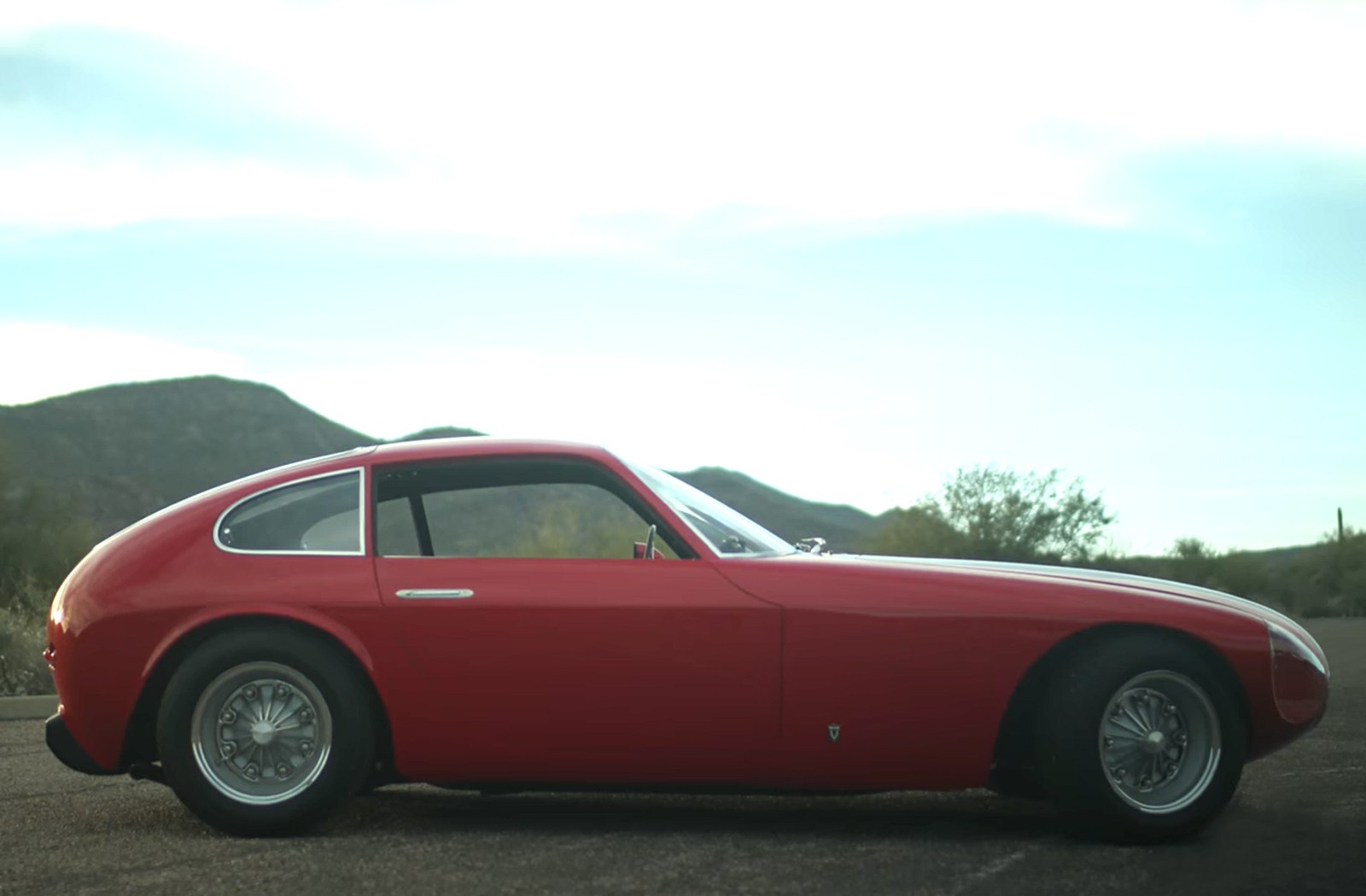
The 1961 Kelly Corvette is a one of a kind custom masterpiece designed by Gordon Kelly, built by Carrozzeria Vignale, a renowned Italian coachbuilder. (Picture from: Autoevolution)
Back in the early 1960s, Gordon Kelly, a designer from Wisconsin, had an idea. He loved the performance of the Chevrolet Corvette but thought it could be something more—something that didn’t just roar on the road, but also looked like it belonged on display in a European art gallery. So, he turned his idea into a scale model, a 1/8 replica of what he believed a reimagined Corvette could look like. This wasn’t just a redesign; it was a dream on wheels. And to bring it to life, he needed more than engineering—he needed artistry. 
Gordon Kelly's 1/8 scale model served as the foundation for Carrozzeria Vignale's creation of this one-of-a-kind custom masterpiece Corvette.. (Picture from: Autoevolution)
That’s where Carrozzeria Vignale entered the picture. Known for their work with the likes of Ferrari and Maserati, the Italian coachbuilder was a bold and unexpected choice. But for Kelly, bold was the whole point. He handed his model to Vignale, along with a Corvette chassis, and let them do what they did best: shape metal like it was sculpture. What they created would become known as the Kelly Corvettea one-of-a-kind masterpiece that felt more like rolling artwork than a typical American sports car.
Front view of the 1961 Kelly Corvette featured with a wide front grille gave the car an almost catfish-like appearance. (Picture from: Autoevolution)
Unlike the standard C1 Corvette of its time, which was full of sharp edges and dramatic scoops, the Kelly Corvette was all about smooth curves and flowing lines. The front grille was wide and low, giving the car a unique, almost aquatic look. From the side, it flowed like a wave, ending in a beautifully sloped rear with a large window that added both visibility and visual flair. Everything about the car was sleek, refined, and unmistakably European—yet underneath, it still had the muscle and spirit of a true Corvette.
The 1961 Kelly Corvette abandoned the bold, scalloped lines of the C1 Corvette and replaced them with sleek, flowing curves. (Picture from: Autoevolution)
When the car debuted at the 1961 Paris Salon de l'Automobile, it didn’t just turn heads—it stopped people in their tracks. It was unlike anything else at the show. The European crowd was stunned by its sophistication, especially once they learned it was based on an American classic. The media took notice too, and soon the Kelly Corvette was featured in magazines and newspapers, praised not just for its looks, but for what it represented: a bridge between two very different automotive worlds.
The 1961 Kelly Corvette's interior feels a bit more of its era, but it nevertheless quite stunning. (Picture from: OtoBlitz)
After Gordon Kelly passed away, the car’s journey continued. It eventually became part of the collection owned by John Breslow, a passionate collector with an eye for the rare and remarkable
The 1961 Kelly Corvette is powered by a 5.4-liter Small-Block V8 engine from the C2-generation Chevrolet Corvette. (Picture from: Autoevolution)
He instantly recognized that the Kelly Corvette wasn’t just another vintage car—it was a mobile piece of design history. In his own words, it was “like a van Gogh you can drive.” And that really captures what makes this car so special. It wasn’t mass-produced. It wasn’t meant to fit in. It was meant to inspire. 
The 1961 Kelly Corvette, adorned with a large rear window and sloping rear end, enhanced its distinctive silhouette. (Picture from: Jalopnik)
Beneath its graceful bodywork lies a 5.4-liter small-block V8 engine from the second-generation Corvette, so it’s got the muscle to back up its looks. But what really sets it apart isn’t the specs—it’s the story. This car was born from one man’s vision, shaped by world-class Italian hands, and finished with a soul that’s all its own.
The Kelly Corvette stands as a reminder of what can happen when creativity has no boundaries. It’s proof that great design doesn’t need to choose between form and function—it can have both. And even decades after it was built, it still shines as a symbol of what’s possible when passion, talent, and a little bit of risk come together. 

This isn’t just a car. It’s an idea on wheels. And it’s still cruising in style. *** [EKA [21062016][07042022] | FROM VARIOUS SOURCES | PETROLICIOUS | JALOPNIK | COLLECTINGCARS | AUTOEVOLUTION | CARSTYLING.RU | WIKIPEDIA ]
Note: This blog  can be accessed via your smart phone

Wednesday, April 6, 2022

Sbarro Autobau Concept: A Weird Yet Fascinating One-Off Creation

Defiant Masterpiece - When people talk about cars, they usually mention familiar names—Ferrari, Lamborghini, Porsche. These brands dominate posters, headlines, and dreams. But every once in a while, the automotive world produces something so unusual that it almost feels like it doesn’t belong on the same road. That’s exactly the case with one of the strangest and boldest concept cars ever revealed: the Sbarro Autobau.
The Sbarro Autobau made its public debut while sitting proudly on display at the 2010 Geneva Motor Show, instantly drawing attention from enthusiasts who were both fascinated and puzzled by its unusual presence. (Picture from: Autoblog)
The year was 2010, and at the Geneva Motor Show, crowds expected to see polished innovations from industry giants. Instead, they also stumbled upon a curious machine that didn’t follow the usual script. The Autobau wasn’t just another shiny prototype meant to hint at future production. It was more personal, more eccentric, and almost rebellious. Created by the visionary Franco Sbarro, this car was a one-off tribute to his close friend, Fredy Lienhard, a Swiss racing driver who had famously won the 24 Hours of Daytona in 2002. Unlike the usual business-driven concepts, this one was rooted in friendship and admiration.
The Sbarro Autobau does not feature conventional doors like ordinary cars, but instead uses a dramatic cockpit design that tilts forward as a single hydraulic unit, turning entry into the cabin into an event of its own. (Picture from: Sbarro.Phcalvet.fr)
Even the message shared in the official booklet gave the car a poetic layer. Sbarro wrote that Autobau was meant to honor Lienhard not only for his victories on the track but also for his achievements in life. He hoped the car would capture that same sense of fireworks and passion that defined Lienhard’s career. It wasn’t about market trends or practicality—it was about emotion on four wheels. 
The Sbarro Autobau stands out with a design that refuses to follow convention, looking somewhat similar to Lamborghini’s wild Egoista through its stingray-like front and two closely positioned intakes. (Picture from: Autoblog)
Looking at the Autobau, it’s hard not to pause in confusion. The design refuses to follow any familiar pattern. From the front, it echoes the spirit of Lamborghini’s Egoistaa radical single-seater concept—its body almost stingray-like with two closely set intakes staring forward. Were they meant purely for aerodynamics? Nobody ever clarified. Along the sides, odd trims run from the A-pillar to the C-pillar, adding more mystery than function. And forget about traditional doors—this car has none. Instead, the entire roof rises hydraulically, making the simple act of climbing inside feel like part of the show.
The Sbarro Autobau carries its theatrical character into the cabin, where red Alcantara clashes with black metal in a sharp, almost aggressive mix that feels less like luxury and more like a machine determined not to blend in. (Picture from: Autoblog)
Inside, the drama continues. Red Alcantara meets black metal in a sharp, almost aggressive combination. It feels less like a luxury car and more like a machine that wants to keep reminding you that it isn’t meant to blend in. Move to the back and you’ll see more oddities: four exhaust pipes jutting out with the flair of racing cars from the 1970s, while strange spoiler-like elements frame the rear with no clear function. The Autobau leaves you constantly guessing what is form and what is function—and perhaps that’s the point. 
Beneath its eccentric body, the Sbarro Autobau hides a serious heart in the form of a Ferrari V12 engine producing around 500 horsepower, a detail that instantly shifts it from being dismissed as a toy to being recognized as a machine with genuine performance credentials. (Picture from: Autoblog)
But underneath its eccentric body lies something undeniably serious. The car is powered by a Ferrari V12 engine producing around 500 horsepower. That single detail changes everything, reminding anyone tempted to dismiss it as a toy that this is a machine with real performance credentials. Unfortunately, Sbarro never revealed much more about the engine setup, and maybe that mystery is part of what keeps the Autobau fascinating even today.
The Sbarro Autobau reveals even more oddities at the rear, with four exhaust pipes jutting out like 1970s racing cars and strange spoiler-like elements of uncertain purpose, leaving you wondering what is form and what is function—and perhaps that is exactly the point. (Picture from: Autoblog)
What makes this car stand out isn’t just its shape or its power—it’s the fact that it ignores the rules. Most concepts are tied to future production goals, marketing strategies, or technology showcases. The Autobau was none of those. It was built for passion, to honor a friend, and to show that cars can still surprise us when they’re freed from commercial logic. It’s a car that feels like an art piece on wheels, something you admire not because it makes sense, but because it dares to exist.
More than a decade after its first appearance, the Sbarro Autobau still sparks curiosity. It remains one of those rare creations that doesn’t fit into categories, a reminder that cars don’t always have to be rational or even beautiful to leave an impression. Sometimes, the strangest designs carry the most interesting stories—and the Autobau is proof that when friendship, creativity, and engineering collide, the result can be something truly unforgettable. *** [EKA [14102017] | SBARRO.PHCALVET.FR | FROM VARIOUS SOURCES | AUTOBLOG | GTPLANET ]
Note: This blog can be accessed via your smart phone.

Tuesday, April 5, 2022

The latest Russian' stealth Checkmate fighter jets

Adv Fighter Jet This has nothing to do with the war that took place as a result of Russia's invasion of neighboring Ukraine since Februari 2022. Does not also intend to side with one of the parties who are fighting, where various types of sophisticated war machines including fighter jets of Russian and Ukrainian are involved in the conflict. The war should be ended right away! We hope the bloody dispute will end soon, although it's difficult to predict when the conflict will end.
The Sukhoi SU-75 'Checkmate' single-engined fighter jet sat on display at the 2021 Dubai Air Show. (Picture from: ZonaJakarta)
Despite all that, it turns out that there is a new fighter aircraft launched by a Russian manufacturer. As quoted of the Eurasian Times, sometime ago came a new fighter jet made by the Russian company Sukhoi (part of Rostec State Corporation's United Aircraft Corporation) that is said to be an alternative rival that can beat the F-35 Lightning II called the Sukhoi Su-75 'Checkmate,' and reportedly the Russian company has patented its newest stealth fighter.
The Sukhoi SU-75 'Checkmate' single-engined fighter jet sat on display at the 2021 Dubai Air Show.. (Picture from: AirspaceReview)
The mentioned patent above confirms that the latest Russian design aircraft is claimed superior to known foreign fighters in terms of flight and field performance, Rostec said in a statement. Furthermore that's proof that the Russian designers have managed to improve the stability and control of the 5th-generation fighter while maintaining its high aerodynamic performance and stealth characteristics.
The Sukhoi Su-75 'Checkmate' single-engined fighter jet (on left) sat posed along with its sibling Su-57 'Felon' (on right). (Picture from: Eurasian Times)
The new patent also states that the Checkmate' engine can be equipped with a thrust vector nozzle that moves in a vertical plane aligned with the fuselage axis and is used for flight control and trimming. The Russian' fifth-generation Checkmate fighter prototype was first unveiled at the MAKS-2021 Air Show in last July 2021.
The Sukhoi Su-75 'Checkmate' single-engined fighter jet is said will be powered by a derivative of the NPO Saturn AL-41 engine, which is also installed on its sibling Su-57. (Picture from: Eurasian Times)
An earlier presentation by Rostec at the air show revealed that this 5th-generation fighter will not only be capable of carrying more than seven tonnes of armament payload, the Su-75 will have the capability of carrying a group of drones on board.
The Su-75 Checkmate is a single-engine fighter designed to be a low-cost alternative rival to the US F-35 Lightning II stealth fighter jet and also known as the second fifth-generation fighter to be produced by Russia after the Sukhoi Su-57 'Felon'. The Russian's latest fighter has reportedly been designed with customers such as Vietnam, India and African countries in mind.
There is speculation the Checkmate single-engine fighter will be powered by a derivative of the NPO Saturn AL-41 engine, which is also installed on its sibling Su-57. The machine is claimed to be capable of flying up to a maximum speed of Mach 1.8 as well as supercruise performance which is said to be capable of striking up to six targets simultaneously in a combat radius that stretches up to 3,000 km. ***  [EKA | FROM VARIOUS SOURCES | EURASIAN TIMES | ]
Note: This blog can be accessed via your smart phone.

Monday, April 4, 2022

GLM-G4, Japan's first electric supercar

~The 1st Jap EV~ In response to the trend of world electric cars with an American brand, Tesla dominates the market. They already have three models: Model S, Model X and Model 3. In the future, this Elon Musk-owned company will also have a Y-model.
GLM-G4, the Japan's first electric supercar at 2016 Paris Auto Show. (Picture from: Kumparan)
There is a Japanese automotive company based in Kyoto named GLM founded in 2010. Reportedly, one of the company founders is Japanese imperial noble and son-in-law of Vice President of the Japanese electronic giants Sony.

And in 2017, Hong Kong tycoon named Li Ka-shing, and two other investors have bought GLM's shares. And in the same year, GLM launched its new car called GLM-G4 and will begin mass production in 2019. Besides that, this car is recorded as the first electric supercar in Japan. At first glance, if you pay attention to the design of the GLM-G4, it is similar to the supercar from the Netherlands, the Savage Rivale Roadyacht GTS, especially on the sides and doors.
Front three quarter view of GLM-G4 electric supercar. (Picture from: RiderTua)
As the next generation electric supercar that follows the GLM ZZ models, the GLM-G4 has released a concept model for the first time at the 2016 Paris Motor Show. With a coupe-style car with four doors and seats, adopting the 'Scissor' door-type on the front and rear. Maintaining the roof line of a supercar, four people will certainly enjoy it comfortably.
Top view of GLM-G4 electric supercar. (Picture from: RiderTua)
The power unit is armed with two 'Multi Sarienzi Power Package' motors with high output and efficiency on the front and rear. The maximum power that can be produced is 540 ps and a maximum torque of 1,000 Nm.
Interior view of GLM-G4 electric supercar. (Picture from: RiderTua)
In addition, each motor has a control technology that applies to the back power of the tires, while adjusting the road surface conditions, and maximizing power while running. The accelerator from 0-100 kph in 3.7 seconds with a maximum speed of 250 kph, and the distance is 400 km for a single battery charges.
Rear-left side view of 2017 GLM-G4 with all its 'scissor' door type opened. (Picture from: RiderTua)
The estimated price of GLM-G4 is ¥40 million, equivalent to Rp.4.7 billion. The manufacturer targets sales of 1,000 units and will develop businesses with a target of selling ¥40 billion on this model. There are also plans to sell it in Europe, Hong Kong, the Middle East and China.
For that, the GLM has increased development for mass production by 2019 and currently they have collaborated with partners to develop machines dedicated to the GLM-G4 and the latest electronic control devices. *** [EKA [12082018] | FROM VARIOUS SOURCES | GLM ]
Note: This blog  can be accessed via your smart phone