2025’s Pinnacle - In the fast-moving world of automotive innovation, the lines between art, engineering, and luxury grow increasingly blurred. The year 2025 brings a fresh surge of excitement for car enthusiasts, marked not only by breakthrough technologies but also by the arrival of vehicles whose prices defy belief. Carefully arranged from the least to the most expensive, a trio of exceptional creations has captured global attention with their extraordinary craftsmanship and exclusivity.
Horacio Pagani in front of his-owned creation, the Pagani Zonda HP Barchetta at the 2017 Pebble Beach Concours d'Elegance. (Picture from: Pagani Automobili on Facebook)
Sitting at the bottom of this remarkable trio is the breathtaking Pagani Zonda HP Barchetta, an Italian masterpiece priced at approximately $18.03 million USD (approx. Rp.303 billions). Pagani Automobili, renowned for its bold hypercar designs and uncompromising performance, crafted the Zonda HP Barchetta as a tribute to its founder, Horacio Pagani. Only three units exist, making it an ultra-rare collectible coveted by enthusiasts around the world.
The Pagani Zonda HP Barchetta's design features an open-top layout paired with a distinctive fairing behind the driver’s seat, forming a striking and aggressive silhouette. (Picture from: en.WheelsAge.org)
Its design features an open-top layout paired with a distinctive fairing behind the driver’s seat, forming a striking and aggressive silhouette. Underneath its dramatic bodywork lies a 7.3-liter V12 engine developed in collaboration with AMG, delivering an unforgettable symphony of power. Built with a lightweight yet incredibly strong Carbo-titanium structure and reinforced with a steel front and rear subframe, the Zonda HP Barchetta stands as a true marvel of modern engineering.
The Pagani Zonda HP Barchetta built with a lightweight yet incredibly strong Carbo-titanium structure and reinforced with a steel front and rear subframe, and made it stands as a true marvel of modern engineering. (Picture from: Liputan6)
Rising next is an extraordinary creation from the legendary British marque: the Rolls-Royce Boat Tail, valued at approximately $27.3 million USD (approx. Rp.459 billions). Designed under the prestigious Coachbuild program, each Boat Tail is meticulously crafted to reflect its owner’s personal vision. Inspired by the luxurious yachts of the 1920s and 1930s, the Boat Tail blends nostalgic elegance with modern sophistication.
The Rolls-Royce Boat Tail shows off coachbuilding chops of the Phantom platform, inspired by the luxurious yachts of the 1920s and 1930s to blend nostalgic elegance with modern sophistication. (Picture from: Autoblog)
The rear, shaped like a ship’s deck, houses thoughtful luxuries including a custom parasol and a bespoke champagne compartment, turning every outing into a celebration of refined grandeur. Often described by Rolls-Royce as the world’s finest picnic experience on wheels, each unit took more than four years to complete, and only three examples exist worldwide, solidifying its status as an automotive work of art.
The Rolls-Royce Boat Tail's rear, shaped like a ship’s deck, houses thoughtful luxuries including a custom parasol and a bespoke champagne compartment, turning every outing into a celebration of refined grandeur. (Picture from: Suara)
Topping this prestigious list is the magnificent Rolls-Royce La Rose Noire Droptail, commanding a stunning price of approximately $31.25 million USD (approx. Rp.525 billions). This masterpiece represents the pinnacle of luxury, with only four units created globally. Drawing inspiration from the rich elegance of the Black Baccara rose, the La Rose Noire Droptail combines classic craftsmanship with modern design innovation. Its deep crimson exterior shimmers with mesmerizing depth, while the interior transforms into a mobile gallery, featuring hand-finished black sycamore wood sourced from France.
The Rolls-Royce La Rose Noire Droptail was unveiled just hours before its customer delivery at Rolls-Royce’s private booth during the 2023 Pebble Beach Concours d'Elegance. (Picture from: MerahPutih)
Every detail is meticulously crafted by Rolls-Royce’s finest artisans. To complete its exclusivity, the car includes a removable Audemars Piguet timepiece, blending the worlds of haute horology and automotive excellence. As Rolls-Royce’s first two-seater roadster in the modern era, the La Rose Noire Droptail offers an open-air experience like no other, redefining what true luxury feels like on the road.
The Rolls-Royce La Rose Noire Droptail, inspired by the rich elegance of the Black Baccara rose, seamlessly blends classic craftsmanship with modern design innovation, featuring a mesmerizing deep crimson exterior. (Picture from: Suara)
These three magnificent vehicles showcase how the world of ultra-luxury automobiles continues to evolve, reaching new levels of creativity, craftsmanship, and exclusivity. More than mere modes of transportation, they are enduring symbols of human ingenuity, passion, and artistry. With production limited to only a few examples and prices reaching tens of millions of dollars, they offer a rare glimpse into a world where cars become timeless treasures, destined to be admired for generations. *** [EKA | FROM VARIOUS SOURCES | ROLL ROYCE | ROBBREPORT | AUTOBLOG | CARANDDRIVER | PAGANIAUTOMOBILI ON FACEBOOK | INDIANTIMES | OVERDRIVE | EN.WHEELSAGE.ORG ]
Note: This blog can be accessed via your smart phone
Ambitious Engineering - In the world of automotive legends, certain names instantly evoke prestige, passion, and innovation. One such name is Luigi Chinetti—best known for bringing Ferrari to North America and founding the revered North American Racing Team (NART). But beyond his successes with Ferrari and racing glory, Chinetti harbored a dream that had little to do with importing exotic cars or winning on the track. He wanted to build something entirely his own—a car that would represent his vision from the ground up.
The Cadillac NART Zagato is a sports car designed by Luigi Chinetti Jr. and built in 1970 under the independent NART brand, in collaboration with GM and Zagato.(Picture from: MotorTrend)
By the late 1960s, that dream began to take shape. With years of experience in the luxury car scene and a strong presence in the American market, Chinetti saw a unique opportunity to step beyond Ferrari. In 1968, driven by this personal ambition, he began crafting a new car with the help of his own son, who designed the concept. It wasn’t just going to be another high-performance vehicle; it was going to be a bold statement.
To maintain a sports car’s performance despite its size, Zagato used extensive aluminum in the bodywork, achieving a sleek, futuristic design that kept the weight low and made it a true showstopper.(Picture from: MotorTrend)
To bring this dream to life, Chinetti turned to two powerhouse collaborators: General Motors (GM), a dominant force in American automotive manufacturing, and Zagato, a renowned Italian coachbuilder famous for sculpting some of Europe’s most beautiful and aerodynamic cars. The collaboration aimed to combine American muscle with Italian finesse—and the result was the one-off sports car known today as the Cadillac NART Zagato.
Inside the cabin of the 1970 NART Zagato, the dashboard and steering column, which features a classic three-spoke steering wheel, were sourced directly from Cadillac’s own lineup, blending familiar American luxury with the car’s unique design.(Picture from: Autoevolution)
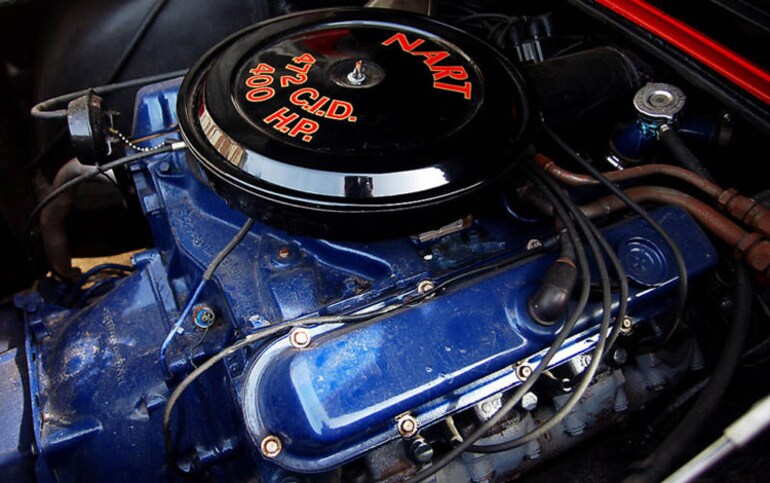
This car wasn’t built from scratch in the traditional sense. Its core came from the Cadillac Eldorado, but everything from its drivetrain to its structure was reimagined. Most notably, the original front-wheel-drive V8 setup was relocated to the rear—an ambitious engineering feat in itself. The powerful 472 cubic-inch engine, which originally produced 375 horsepower, was upgraded to churn out an estimated 400 horsepower. This bold move showed just how serious Chinetti was about performance.
The 1970 NART Zagato's cabin boasts a luxurious four-seater layout, with each seat meticulously covered in genuine leather, accented by striking red stripes along the edges, enhancing both comfort and visual appeal.(Picture from: MotorTrend)
Design elements were a clever blend of various GM vehicles. The taillights, for instance, were taken from a Pontiac GTO, while the dashboard, steering column, and braking system came from Cadillac’s own lineup. To counterbalance the car’s size and ensure it performed like a proper sports car, Zagatoused aluminum extensively in its bodywork, keeping the weight impressively low. The sleek, futuristic design made it a true showstopper.
The 1970 NART Zagato is essentially a heavily modified Cadillac built on a chassis that originally started as a Cadillac Eldorado, with the 472 cu-in V-8 and FWD transaxle repositioned to the rear.(Picture from: MotorTrend)
In 1971, the Cadillac NART Zagato made its official debut at the Turin Motor Show. Chinetti hoped it would be the beginning of a new chapter in his automotive journey. Orders were ready to be taken, and two additional designs were already in the pipeline. But then, unexpectedly, GM pulled out of the project. The economic downturn of the early ’70s, coupled with delays during development, led the American giant to withdraw its support—leaving the project hanging by a thread.
The Cadillac NART Zagato wasn’t built entirely from scratch, as it was based on a Cadillac Eldorado but extensively reengineered from its drivetrain to its overall structure.(Picture from: MotorTrend)
With GM gone, Chinetti’s ambitious plan fell apart. No further units were produced, and the only existing prototype remained within the Chinetti family for years. It wasn’t until 1987 that the car changed hands, sold to a collector in Illinois who gave it a complete restoration. After that, the car seemingly vanished—until it resurfaced on eBay in 2008, listed from Brussels, Belgium for just $25,000. How it got there remains a mystery.
The Cadillac NART Zagato might never have become the production icon Chinetti envisioned, but it stands today as a remarkable testament to a moment when creativity, passion, and collaboration tried to break the mold. It’s a story not just about a car, but about daring to dream beyond the limits—even when the odds say otherwise.*** [EKA [15072021] | FROM VARIOUS SOURCES | MOTORTREND | AUTOEVOLUTION | CARROZZIERI-ITALIANI ]
Note: This blog can be accessed via your smart phone.
Performance Excellence - In the world of high-performance sports cars, few names carry as much weight as Ferrari. Known for their impeccable engineering, luxurious designs, and relentless pursuit of speed, Ferrari cars have always stood at the pinnacle of automotive excellence. From the roaring engines to the precise handling, each Ferrari model is a testament to the brand's commitment to perfection. Among these legendary cars, the Ferrari F430 stands out as one of the most iconic vehicles in Ferrari’s rich history.
The Ferrari F430 stands out as an iconic model in Ferrari’s history, shaped by input from seven-time Formula 1 World Champion Michael Schumacher. (Picture from: EsoticCarHack)
Introduced in 2004, the F430 was a major leap forward from its predecessor, the Ferrari 360 Modena. Designed as a replacement, it immediately captured the attention of car enthusiasts and collectors worldwide. The car was a blend of striking design, cutting-edge technology, and superior performance, all wrapped up in a sleek Ferrari package.
The Ferrari F430 boasted a 4.3-liter V8 engine with 502 horsepower, propelling it from 0 to 60 mph in just 3.6 seconds. (Picture from: Wikipedia)
Ferrari's dedication to motorsport played a significant role in the F430's development, with input from none other than Michael Schumacher, the seven-time Formula 1 World Champion. Schumacher’s insights helped refine the car's handling and performance, ensuring it was built for those who sought the thrill of the road or the racetrack.
The Ferrari F430 Spider, introduced in 2005, retained the coupe's performance while adding the thrill of open-air driving. (Picture from: Wikipedia)
The Ferrari F430 featured a 4.3-liter V8 engine capable of producing 502 horsepower. This powerhouse of an engine enabled the F430to accelerate from 0 to 60 mph in just 3.6 seconds, with a top speed of 196 mph. Its mid-engine layout, paired with a lightweight aluminum chassis, allowed for perfect weight distribution, providing exceptional handling and agility. Whether navigating sharp corners on winding roads or blasting down the straightaways, the F430 was a car that could deliver an unforgettable driving experience.
The Ferrari F430, pictured here in its Spider model, featured an advanced F1-style paddle-shift gearbox, a racetrack-honed technology that set it apart. (Picture from: Wikipedia)
One of the standout features of the F430 was its advanced transmission system. The car came equipped with Ferrari's F1-style paddle-shift gearbox, a technology that had been honed on the racetrack. This system allowed for lightning-fast gear changes, providing the driver with the ability to shift gears with minimal effort, all while maintaining a high level of control. The F430’s performance was also complemented by its superior braking system, ensuring the car could slow down just as quickly as it accelerated.
The Ferrari F430 Scuderia, unveiled in 2007, was a lighter and faster variant designed for even greater performance. (Picture from: Wikipedia)
In 2005, Ferrari introduced the F430 Spider, a convertible version of the F430. This model retained all the performance characteristics of the coupe but offered the added pleasure of open-air driving. The F430 Spider featured a retractable hardtop that folded away seamlessly, providing an effortless transition from coupe to convertible. With the same V8 engine and paddle-shift transmission as its sibling, the Spider was just as capable of delivering thrilling performance while allowing drivers to feel the wind in their hair.
The Ferrari F430 Scuderia featured an upgraded F1 transmission for quicker shifts, with reduced weight and enhanced aerodynamics for a superior weight-to-power ratio.(Picture from: Wikipedia)
The Ferrari F430 also spawned a more focused variant: the F430 Scuderia, which was unveiled in 2007. Designed with even greater performance in mind, the Scuderia was lighter and faster than the standard F430. It featured a host of improvements, including a revised version of the F1 transmission that shifted gears even more quickly. Ferrari engineers focused on reducing weight and optimizing aerodynamics, allowing the Scuderia to reach a remarkable weight-to-power ratio. This version of the F430 was all about performance, offering an exhilarating ride for those who demanded the best.
To celebrate Ferrari's success in Formula 1, Ferrari introduced the Scuderia Spider 16M in 2008, a special edition of the F430 Scuderia. With only 499 units produced, this model commemorated Ferrari’s 16th victory in the Formula 1 Constructor’s Championship. The 16M featured an even lighter design, with a range of carbon fiber components and an engine that produced 510 horsepower. This limited-edition model became a collector’s item, offering exceptional performance while celebrating Ferrari’s motorsport success.
The Ferrari F430 Scuderia Spider 16M, introduced in 2008, was a special edition celebrating Ferrari's success in Formula 1.(Picture from: Wikipedia)
Though production of the F430 ended in 2009, estimated 16,750 F430s were produced during the period, and the legacy of this car still lives on. It was replaced by the Ferrari 458 Italia, which continued Ferrari’s tradition of high-performance vehicles. However, the F430 remains a beloved model among Ferrari enthusiasts. Its combination of breathtaking performance, elegant design, and racing pedigree makes it a standout in Ferrari’s storied lineup of cars, ensuring it will always be remembered as a true icon in the world of sports cars. *** [EKA | FROM VARIOUS SOURCES | FERRARI | ITALDESIGN | FORZA.FANDOM | EXOTICCARHACK | WIKIPEDIA ]
Note: This blog can be accessed via your smart phone.
Wasted Brilliance - In the automotive world, there are moments when imagination takes the front seat, steering the wheel of innovation into uncharted territory. The 1990s was one such era, marked by daring experiments and bold design visions from emerging manufacturers trying to carve a name for themselves on the global stage. One unexpected player in that race was the South Korean automaker Daewoo, which, though mostly known for its affordable and practical vehicles, dared to dream bigger. Enter the Daewoo Bucrane—a concept car that remains one of the most fascinating "what if" stories in automotive history.
The Daewoo Bucrane was a 2+2 coupé inspired by sleek 1960s sports cars, featuring flowing curves that defied the boxy norms of its time. (Picture from: TopGear)
Daewoo, at the time, was not content to stay in the shadows of its more prominent rivals like Hyundai and KIA. In an effort to rise above its utilitarian image and make a splash in the European market, the brand turned to one of the most respected names in automotive design: Giorgetto Giugiaro. A legend in his own right, Giugiaro was the founder of ItalDesign and the creative mind behind iconic designs for Alfa Romeo, Maserati, and many others. Daewoo wanted more than just a stylish car—they sought an identity, something that could rewrite the narrative surrounding Korean cars.
The
Daewoo Bucrane, a luxury sports coupe concept car with a 2+2 seat
configuration, debuted at the March 1995 Geneva Motor Show showcasing
its breakaway design co-created with ItalDesign. (Picture from: DesignToDream)
The result of this ambitious collaboration was the Bucrane, a 2+2 coupé that was anything but ordinary. Drawing inspiration from sleek sports cars of the 1960s, the Bucrane featured a flowing, rounded silhouette that stood in stark contrast to the boxier and more conservative shapes of the era. It was a design exercise with flair, confidence, and a touch of nostalgia. The body lines, sculpted with fluid grace, hinted at speed and elegance, while the unique door system—combining elements of butterfly doors with traditional hinges—added a layer of theatricality.
The Daewoo Bucrane was used as a promotional model before Daewoo’s entry into the European market, featuring a distinctive three-part chrome grille logo that was prominently displayed during auto shows. (Picture from: DesignToDream)
Transformability was at the heart of the Bucrane’s design. Its glazed panels were removable, turning the coupé into a targa-style vehicle reminiscent of the Pontiac Firebird, complete with a central longitudinal pillar. Beneath its futuristic skin, the Bucrane was envisioned to pack a serious punch with a 3.2-liter V6 engine capable of delivering 240 horsepower at 5,500 rpm and 31.5 kg.m of torque at 4,500 rpm. Paired with a four-speed automatic transmission, the car promised spirited performance to match its dramatic looks.
The
Daewoo Bucrane embraced transformability with removable glazed panels
that turned the coupé into a targa-style car reminiscent of the Pontiac
Firebird, complete with a central longitudinal pillar. (Picture from: DesignToDream)
Step inside, and the cabin told a story of eclectic influences. ItalDesign outfitted the interior with components borrowed from the Honda Legend, blending premium feel with practicality. A vivid green theme ran throughout, adding a playful and unconventional touch. Although striking, it was clear that the Bucrane was more about making a statement than preparing for mass production.
The Daewoo Bucrane featured an interior by ItalDesign that blended practicality and premium feel using Honda Legend components, all wrapped in a vivid green theme that added a playful, unconventional touch.(Picture from: CarStyling.ru)
Unveiled in both South Korea and the United Kingdom, the Bucrane sparked curiosity and admiration. With its Daewoo badge proudly displayed, the concept suggested a bold new direction for the brand—one full of performance, style, and ambition. But despite the excitement it generated, the Bucrane was never meant to go beyond the show floor. Daewoo, facing the economic realities of maintaining profitability, ultimately shifted its focus back to building budget-friendly vehicles. As financial troubles mounted, the company was eventually acquired by General Motors, which had little interest in adding a niche sports coupé to a portfolio already rich with the likes of the Corvette and Camaro.
The
Daewoo Bucrane’s fluidly sculpted lines suggested speed and elegance,
while its hybrid butterfly-traditional door system added drama. (Picture from: TopGear)
While the Bucrane never saw the light of day as a production model, its spirit didn’t entirely vanish. Elements of its design seemed to echo a few years later in the 1998 Maserati 3200GT—a car that shared a similar nameplate format and a more refined execution of the grand tourer concept, albeit with a ferocious 3.2-liter V8 pushing out 365 horsepower. It wasn’t a direct evolution, but perhaps a subtle nod to a forgotten gem. | 8stVWnt1uyY | R_n58c8jdik | ksxhA4rbWc0 |
Today, the Daewoo Bucrane stands as a fascinating chapter in automotive history—a reminder of what happens when bold design meets unlikely ambition. It may have remained a dream on wheels, but it showed the world that even the most unexpected names in the industry could dream in shapes, speed, and soul. Sometimes, that’s all a concept car needs to become unforgettable. *** [EKA | FROM VARIOUS SOURCES | CARROZZIERI-ITALIANI | TOPGEAR | COCKPITDZ | OLDCONCEPTCARS | CARSTYLING.RU | DESIGNTODREAM ]
Note: This blog can be accessed via your smart phone.
Automotive Whimsy - In a world where car enthusiasts dream big but bank accounts whisper caution, the art of automotive transformation has become both an escape and a statement. Why settle for just one dream car when you can combine the essence of three into one head-turning, conversation-starting masterpiece? It’s not about owning a supercar anymore—it’s about creating one that defies categories, logos, and even logic. That’s exactly what happened in the streets of Marrakesh, where a humble Toyota Celica decided to stop being just a Celica—and started identifying as a Bugatti, a Ford, and a Nissan.
The Veyron GT²R is a wild custom creation by a Moroccan workshop that transformed a sixth-generation 1998 Toyota Celica hatchback into a blend of three automotive icons—the Bugatti Veyron, the Ford GT, and the Nissan GT-R.. (Picture from: Carscoops)
Back in 2017, a custom car builder in Morocco took on what might be one of the most hilariously ambitious replica projects we’ve ever seen. They started with a sixth-generation 1998 Toyota Celica hatchback, a reliable, unassuming car that probably just wanted to live a quiet life of decent fuel economy and mild sporty flair. But fate had other plans. With a client apparently torn between three automotive icons—the Bugatti Veyron, the Ford GT, and the Nissan GT-R—the decision was simple: say yes to all of them.
Beneath the Veyron GT²R’s flamboyant fiberglass and identity mashup lies a humble sixth-gen Toyota Celica, likely powered by a 126-horsepower 2.0-liter 3S-FE engine, with a Bugatti-inspired horseshoe grille up front and a stretched, vented hood that matches the car’s over-the-top styling. (Picture from: Carscoops)
The result? A Frankensteinian creation unofficially dubbed the Veyron GT²R. Let that sink in for a moment. It's like someone mashed their favorite cars together in a racing video game mod and then made it real. At first glance, you’d be forgiven for not recognizing anything Toyota left behind.
The Veyron GT²R’s sides reveal even more creative flair, with widebody rear fenders flowing into aggressively reworked doors, complete with air vents that suggest a supercar influence—though it’s hard to say exactly which one.(Picture from: Carscoops)
The rear has been thoroughly Ford-ified with styling lifted straight from the GT playbook—twin-barrel taillights, a big diffuser, dual exhausts mounted high, and a small spoiler sitting proudly like it's about to do something dramatic. It doesn’t stop there, as the hatch and rear arches look like they took design notes from the original Acura NSX. Surprise, now it’s a four-car mashup.
The Veyron GT²R’s interior is decked out with two-tone quilted seat covers and oversized, likely imitation, Recaro logos stitched onto the headrests.(Picture from: Carscoops)
The sides show even more creative freedom, with widebody rear fenders blending into aggressively reworked doors, complete with air vents that again hint at something supercar-ish but hard to pin down. By the time you reach the front, your brain is probably ready to wave a white flag. There, a Bugatti-inspired horseshoe grille stares back at you, perched awkwardly on a nose that’s a little too sharp and angular to actually trick anyone into thinking this thing is French and worth millions. The hood has been stretched and vented to match the absurdity of the rest of the bodywork, and yet—credit where credit’s due—it’s impressively put together for a homegrown build.
The Veyron GT²R’s cabin features a steering wheel that has been reshaped into a yoke-style design, adding a touch of dramatic flair and giving the impression that you're sitting behind the controls of a fierce, track-ready supercar. (Picture from: Carscoops)
Peek inside, and things get even more playful. The cabin is fitted with two-tone quilted seat covers and oversized, likely imitation, Recaro logos embroidered onto the headrests. Adding to the theatrical flair, the steering wheel has been reshaped into a yoke-style design, giving the driver the feeling of being at the helm of a fierce, track-ready supercar.
The Veyron GT²R’s hatch and rear arches seem to borrow design cues from the original Acura NSX.(Picture from: Carscoops)
And underneath all that flamboyant fiberglass and identity confusion lies a very grounded reality: a Toyota. Specifically, a sixth-gen Celica with what’s most likely a 2.0-liter 3S-FE engine making about 126 horsepower. Not exactly hypercar territory, but hey—it’s a stick shift. So there’s some driving fun to be had, if you can get past all the puzzled stares.
The Veyron GT²R’s rear has been heavily inspired by Ford GT styling, featuring twin-barrel taillights, a bold diffuser, high-mounted dual exhausts, and a small spoiler that looks ready for action. (Picture from: Carscoops)
And just when you think this story couldn’t get more entertaining, the price tag seals the deal. This rolling identity crisis was listed for sale in Morocco at 110,000 Moroccan dirhams—roughly $12,000, not counting shipping or the inevitable double takes. For the cost of a modest used hatchback, you could be the proud owner of what might be the most gloriously confused car ever built. While the video below isn’t about the custom Veyron GT²R, it highlights another impressive example of Moroccan automotive creativity—the stunning and powerful Laraki Sahara supercar. | B3VrYWrMKUU |
This wild blend of ambition, creativity, and good old-fashioned "why not?" makes the Veyron GT²R one for the books. It’s not perfect, and it’s certainly not for everyone—but it’s proof that passion and imagination can take you places even Ferrari can’t. Or at least get you some pretty wild looks at your local gas station.
Ever seen a Toyota that thinks it’s a Bugatti? Now you have. And honestly, the world’s a little more fun because of it. *** [EKA | FROM VARIOUS SOURCES | AVITO.MA | CARSCOOPS | CARBUZZ ]
Note: This blog can be accessed via your smart phone.
Forgotten ONES - The mid-20th century saw a surge in microcar production as engineers sought innovative solutions for affordable, compact transportation. While brands like BMW and Heinkel, along with a series of other German-made microcars, became well-known for their contributions, East Germany also had its own fascinating microcar projects, including the rare and unique 1958 Schubert Prototyp.
The Schubert Prototyp was built in 1958 by Herr Schubert, an East German citizen from the city of Hainichen, with only two units ever produced. (Picture from: Mr.Scharroo'sWeird Cars Museum on Flickr)
There is little information about this microcar, which was built by an East German citizen named Herr Schubert from Hainichen, this handcrafted vehicle stands out due to its distinct design and engineering choices. The car closely resembles the Heinkel Kabine 175 Type 153, a popular bubble car of the era, but with its own homemade twist. Schubert designed the car using a 350cc two-stroke flat-twin engine sourced from an IFA BK350 motorcycle. This engine, originally designed for a motorcycle, featured a shaft drive system, an uncommon characteristic that made it well-suited for use in a car.
At first glance, the 1958 Schubert Prototyp bears a resemblance to the Heinkel Kabine 175 Type 153. (Picture from: Teilix on Instagram)
One of the most intriguing aspects of the Schubert Prototyp 350cc is its unconventional entry system. Instead of having side doors like most cars, the entire front of the vehicle acts as a door, hinged at the bottom. This design, reminiscent of the Polish Smyk B30 and even the BMW Isetta 600, presents both charm and challenges. While it maximizes space efficiency, getting in and out of the vehicle can be quite cumbersome.
The 1958 Schubert Prototyp features an unconventional entry system, with the entire front of the vehicle serving as a door hinged at the bottom instead of traditional side doors. (Picture from: Mr.Scharroo'sWeird Cars Museum on Flickr)
Schubert is believed to have built only two of these microcars, making them extremely rare. It's said that one of these examples has been preserved and put on display at the Automuseum Störy in Bockenem, Germany. Despite its obscurity, the Schubert Prototyp 350cc represents a remarkable effort by an unknown individual to create a functional and innovative vehicle in a time of economic constraints.
The 1958 Schubert Prototyp powered by a 350cc two-stroke flat-twin engine sourced from an IFA BK350 motorcycle. (Picture from: Mr.Scharroo'sWeird Cars Museum on Flickr)
The existence of this car is a testament to human ingenuity and determination, especially in an era when resources were limited. Though it never entered mass production, the Schubert Prototyp 350cc remains a fascinating piece of automotive history, showcasing the creativity of microcar enthusiasts in East Germany. *** [EKA | FROM VARIOUS SOURCES | MRSCHRROO'S WEIRD CAR MUSEUM ON FLICKR | MICROCAR WORLD ON FACEBOOK ]
Note: This blog can be accessed via your smart phone.


 These three magnificent vehicles showcase how the world of ultra-luxury automobiles continues to evolve, reaching new levels of creativity, craftsmanship, and exclusivity. More than mere modes of transportation, they are enduring symbols of human ingenuity, passion, and artistry. With production limited to only a few examples and prices reaching tens of millions of dollars, they offer a rare glimpse into a world where cars become timeless treasures, destined to be admired for generations. *** [EKA | FROM VARIOUS SOURCES | ROLL ROYCE | ROBBREPORT | AUTOBLOG | CARANDDRIVER | PAGANIAUTOMOBILI ON FACEBOOK | INDIANTIMES | OVERDRIVE | EN.WHEELSAGE.ORG ]