Most Valuable ONES - Perhaps some of you may not be as familiar with the classic Lamborghini Miura as you are with newer models like the Huracán, Aventador, or Gallardo. Yet, the Lamborghini Miura can be hailed as the trailblazer for the stunning sports cars bearing the iconic Raging Bull emblem. Its debut on the public stage occurred at the 1966 Geneva Motor Show, though the chassis had already made its presence known in 1965. What's the captivating tale behind this beauty? Let's dive into the narrative.
The inception of Automobili Lamborghini in Sant'Agata Bolognese boasts a unique origin story. It's widely recounted that it all began when Ferruccio Lamborghini expressed dissatisfaction with the clutch of his Ferrari 250 GTE, leading to a grievance lodged with Enzo Ferrari himself. As time unfurled, in 1963, Ferruccio Lamborghini ventured into the realm of automobile manufacturing, birthing his own car company. Success swiftly followed with the production of the 350 GT and 400 GT coupes in 1964, marking the inception of this Italian company's journey towards becoming a renowned automaker.
The P400 lightweight chassis made of 1965, ready to house a 3.9-liter V12 engine. (Picture from: Suara)
In 1965, as part of their relentless pursuit of innovation, Lamborghini unveiled a new model. The design and engineering team, all in their late twenties, spearheaded this venture. Chief engineer Gian Paolo Dallara was brimming with enthusiasm to create an innovative vehicle that would cement Lamborghini's legacy in the competitive world of automotive manufacturing. Initially known as project P400, which translates to "4-liter rear-drive engine" in Italian, this car was built on a robust yet lightweight chassis, ready to house a 3.9-liter V12 engine, identical to the one employed in the Lamborghini 400 GT.
The new car necessitated a mid-mounted engine with a low-slung profile, graced by the visionary styling of Bertone's Marcello Gandini. The culmination of their efforts resulted in the Lamborghini Miura, unveiled in all its glory at the 1966 Geneva Motor Show. It boasted a 350-horsepower 4.0-liter V12 engine, designed by Giotto Bizzarrini and ingeniously mounted transversely. The front and rear decks, crafted from aluminum, opened with a clamshell-like grace.
Interior view of Lamborghini Miura P400. (Picture from: OtoBlitz)
Inside, steeply reclined seats nestled behind a stylish two-pod instrument panel adorned with additional gauges in the center stack. Thus, the Miura P400 came into existence. The journey continued with the Miura P400S in 1968, enhancing interior quality, revamping the rear suspension, and boosting horsepower by 20, bringing the total to 370 horses.
In 1971, the Miura P400SV made its entrance, initially as a special order car. This edition featured widened rear fenders to accommodate bulkier 15-inch rims and tires, redesigned taillights, a fresh nose design, and a power bump to 385 horsepower. The broader rear track, along with structural chassis reinforcement, rendered the Miura SV exceptionally capable, boasting a 0-60 mph time of 5.8 seconds and a top speed of around 180 mph – bona fide supercar figures of its era. The Miura's production run came to a close in 1973, making way for the radical new Countach, which reached its final form the following year.
Although Ferruccio Lamborghini never formalized plans to race the Miura, the renowned test driver Bob Wallace played a pivotal role in developing the Miura P400 Jota, a prototype designed to meet FIA motorsport regulations. The Jota featured an all-aluminum chassis and body for significant weight savings, while the V12 engine was tuned to produce over 400 horsepower at nearly 9,000 rpm. Notable body enhancements included a front spoiler, fixed headlights with fairings, and substantial suspension modifications.
1970 Lamborghini Miura P400 Jota built based of Miura's chassis #5084. (Picture from: SupercarNostalgia)
While there were no intentions to enter this vehicle into competition, word quickly spread about this factory-made race car. Six Lamborghini enthusiasts ordered cars in the spirit of the Jota, known as the Miura SV/J, directly from the factory. It's worth noting that Lamborghini later converted several more Miuras into SV/J specifications. Additionally, one prototype of the Miura P400 Roadster, Bertone's concept car, still exists today. Hence, it was unsurprising when a special Lamborghini model resurfaced as a tribute to the Miura in 2016.
In terms of price, the most expensive Lamborghini Miura, the final unit produced in 1971, can command around 2.5 million US dollars or approximately Rp. 36.25 billion (as of 2018). In 2022, a British insurance company, Confused, named the venerable Lamborghini Miura sports car as the most valuable classic car, surpassing legendary classics like the Ferrari F40, Ferrari 250 GTO, and others.
Confused utilized a unique calculation method for this determination, considering around 2,000 classic cars that have left an indelible mark on the global automotive industry. The assessment spanned from 2019 to 2022, examining factors such as production numbers, car prices in May 2019, current car prices, and Google search volumes for car names.
From this comprehensive assessment, the Lamborghini Miura was declared the most valuable classic car, securing the top spot in the ranking. The Ferrari F40, the last car personally approved by Enzo Ferrari, narrowly trailed behind the Miura. The Lamborghini Miura's enduring allure stems from its revolutionary design and performance, making it an everlasting symbol of Italian automotive prowess. *** [EKA [19092023] | FROM VARIOUS SOURCES | LAMBORGHINI | SUPERCARS.NET | MOTORTREND | STUFF ]
Note: This blog can be accessed via your smart phone.
Singular Legend - When talking about legendary supercars that have shaped the future of automotive design, few names shine brighter than Lamborghini. The brand’s relentless pursuit of innovation and performance has led to some of the most breathtaking creations the world has ever seen. One of the most iconic among them is the Lamborghini Miura, a car that not only redefined the supercar category but also paved the way for the mid-engined, two-seater sports car layout that dominates today’s performance market.
The Lamborghini Miura SVR, a car so unique that only a single unit was ever produced. (Picture from: iNews.id)
Legacy Reforged - In the automotive world, few ideas are as captivating as revisiting a legend without becoming imprisoned by it. Manufacturers constantly balance heritage and innovation, deciding how much of yesterday should shape tomorrow. That tension came vividly to life in the 2006 Lamborghini Miura Concept, a car created not to restart an old chapter, but to reinterpret one of the most influential supercars ever built.
The 2006 Lamborghini Miura Concept stood proudly alongside the legendary 1966 Lamborghini Miura, visually bridging four decades of design evolution in a single, striking moment. (Picture from: es.Motor1)
Unveiled in 2006 to mark 40 years sincethe original Miurastunned audiences at the Geneva Motor Show, the project—internally called “Concept M”—began in October 2003. It was the first Lamborghini design overseen by Walter de'Silva after he assumed creative leadership, working closely with Luc Donckerwolke. The car was initially revealed to select guests at the Paley Center for Media before making its public debut at the North American International Auto Show. Even without a full show-floor presence in Los Angeles, it generated immediate discussion among enthusiasts and industry insiders.
The 2006 Lamborghini Miura Concept was unveiled to mark 40 years since the original Miura stunned audiences at the Geneva Motor Show, a project internally called “Concept M” that began in October 2003 under the creative leadership of Walter de'Silva alongside Luc Donckerwolke. (Picture from: Wikipedia)
Its emotional weight came from history. The original Lamborghini Miura emerged from a bold internal effort led by Gian Paolo Dallara, Paolo Stanzani, and Bob Wallace—initially without the full awareness of founder Ferruccio Lamborghini. Once approved and clothed in dramatic bodywork by Marcello Gandini at Bertone, it reshaped Lamborghini’s identity. The Miura proved that a mid-engined layout combined with daring design could redefine what a supercar meant.
The 2006 Lamborghini Miura Concept paid tribute with remarkable discipline, echoing the 1966 original through its wraparound cockpit, concealed A-pillars, clamshell body sections, and signature “eyelash” headlights. (Picture from: ConceptCarz)
The 2006 conceptpaid tribute with remarkable discipline. Its wraparound cockpit, hidden A-pillars, clamshell front and rear sections, and signature “eyelash” headlights echoedthe 1966 original. Muscular rear haunches tapered into a crisp Kamm tail, while subtle aerodynamic refinements—such as a carbon-fiber chin spoiler and electronically activated rear wing—addressed the high-speed lift that once challenged the classic model. Despite its nostalgic lines, the concept reportedly achieved a lower drag coefficient thanthe contemporary Gallardo, blending memory with measurable progress.
The 2006 Lamborghini Miura Concept was based on the Lamborghini Murciélago LP640 platform and, despite being an exterior study, would likely have used its spaceframe chassis, double wishbone suspension, and upgraded brakes in production form. (Picture from: ConceptCarz)
Underneath, the structure was closely related tothe Lamborghini Murciélago LP640. Although presented purely as an exterior study without a finished interior, a production version would likely have usedthe LP640’stubular steel spaceframe with carbon-fiber reinforcements, double wishbone suspension, and upgraded braking system. Power would have come from the 6.5-liter V12 producing 631 horsepower, paired with either a manual or E-Gear transmission and Lamborghini’s viscous all-wheel-drive system. Estimated performance figures—around 210 mph top speed and 0–62 mph in 3.4 seconds—would have placed it firmly among modern supercar elites.
The 2006 Lamborghini Miura Concept featured muscular rear haunches flowing into a crisp Kamm tail, while subtle aerodynamic refinements such as a carbon-fiber chin spoiler and electronically activated rear wing helped counter the high-speed lift that once challenged the classic model. (Picture from: Wikipedia)
Lamborghini made it clear thatthe Miura Conceptwas strictly a tribute, not a signal of revival. Under CEO Stephan Winkelmann, the company emphasized that retro production cars were not part of its long-term vision, which remained focused on future-oriented design and performance. After completing its show appearances, the concept was preserved and placed on display at the Lamborghini Museum as part of the brand’s historical collection. But the story is not over yet. | -nRPrhmCa7g |
A decade later, however, Lamborghini briefly revisited the theme with the limited 50-unit Lamborghini Aventador Miura Homage, based on the Aventador and created to mark the Miura’s 50th anniversary. Retaining standard Aventador performance, it featured exclusive two-tone color schemes and commemorative detailing—a subtle reminder that while Lamborghini always looks ahead, it never entirely forgets the car that changed its course. *** [EKA | FROM VARIOUS SOURCES | SUPERCARNOSTALGIA | CONCEPTCARZ | CARBUZZ | ES.MOTOR1 | WIKIPEDIA ]
Note: This blog can be accessed via your smart phone.
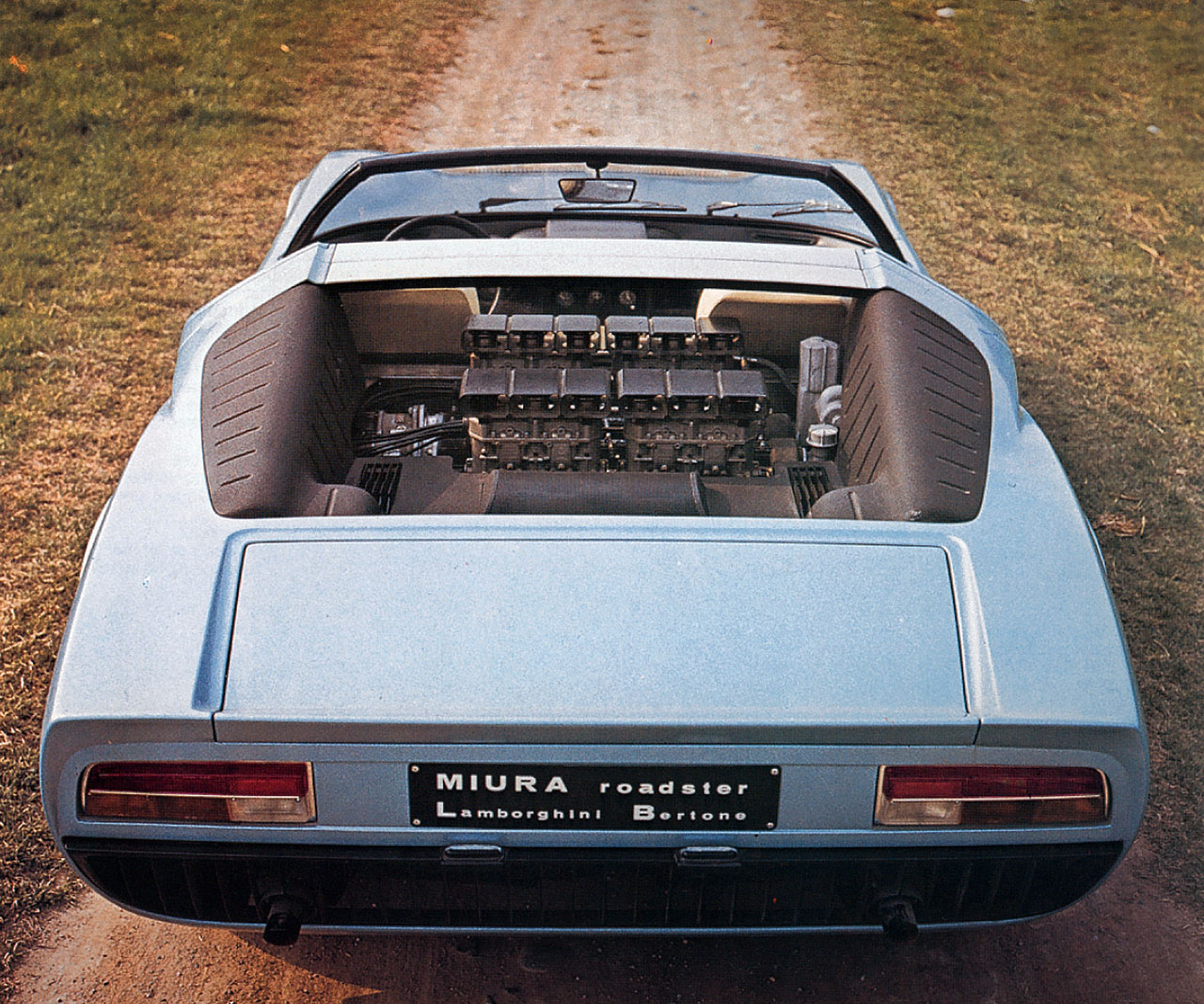
ONE-OFF - Lamborghini's legacy is punctuated with iconic sports cars that have left an indelible mark on the automotive world. Among these legends stands the Lamborghini Miura P400 Roadster, a truly exclusive gem that made its debut at the 1968 Brussels Auto Show. Crafted and conceptualized by Bertone, this open-top beauty was no ordinary Lamborghini with its roof removed. Unlike its predecessor, the 350 GTS by Touring, the Miura Roadster underwent a comprehensive redesign, showcasing exceptional taste and innovation.
Adapting a model like the Miura for a soft-top version was a formidable challenge. The Miura was notorious for its torsional rigidity issues, and simply removing the roof could have exacerbated the problem. To tackle this challenge, Bertone's Marcello Gandini took the reins and embarked on a journey to strengthen the chassis while making substantial alterations to the car's rear.
Right side view of 1968 Lamborghini Miura P400 Roadster. (Picture from: DrivingLine)
To ensure a smooth ride even at the proposed top speed of 186 mph, several crucial modifications were made. The windscreen's angle was lowered, a rear spoiler was integrated, engine louvers were omitted, and the exhaust system was expertly rerouted. The interior also received significant changes. Notably, the overhead console switches from the standard Miura had to be relocated, eventually finding their place on the central console. Furthermore, the Bertone steering wheel bore a striking resemblance to the one featured in the Marzal and the Espada prototypes, both of which were Bertone creations as well.
The Miura P400 Roadster donned a stunning bright-metallic azure blue exterior, while the interior boasted magnolia-hued leather upholstery, almost resembling white leather, reminiscent of the first 350 GTV. The impact of this showstopper prototype was enormous in Brussels and later in Geneva. However, it was destined to remain a unique creation. Many enthusiasts and collectors expressed their desire for a Miura Roadster from the Lamborghini factory. Nevertheless, Automobili Lamborghini SpA never officially produced a Miura Roadster, let alone crafted a replica. It's worth noting that Bertone also refrained from adding a top or side windows to this prototype.
A high angle rear view of 1968 Lamborghini Miura P400 Roadster. (Picture from: LamboCars)
The Miura P400 Roadster found a new home with the International Zinc and Lead Development Association (ILZRO), which utilized it as an exhibition showcase to highlight the properties of the metals they were eager to promote. Collaborating with the factory and Bertone, they reimagined the car, changed its color, and christened it as "Zn75."
When the car sold to ILZRO, the 1968 Lamborghini Miura P400 Roadster changed color and name to Zn75. (Picture from: DrivingLine)
Following its tenure with ILZRO, the car went through various owners until it was meticulously restored to its original appearance and specifications. Its grand return took place at the prestigious 2008 Pebble Beach Concours d’Elegance. In 2013, CNN sought the expertise of Hagerty Insurance to appraise this exceptional Lamborghini. The valuation that emerged was nothing short of astonishing, with a price range estimated between $8,000,000 and $10,000,000, solidifying its status as the most valuable Lamborghini ever.
In conclusion, the Miura P400 Roadster stands as a testament to the unparalleled artistry and innovation that Lamborghini and Bertone brought to the world of automotive design. Its unique blend of style, power, and exclusivity continues to captivate enthusiasts and collectors, making it a true icon in the realm of sports cars. This remarkable creation remains a testament to the enduring legacy of Lamborghini, a name synonymous with uncompromising excellence in the world of high-performance automobiles. *** [EKA [21072015] | FROM VARIOUS SOURCES | LAMBOCARS.COM | DRIVINGLINE]
Note: This blog can be accessed via your smart phone.
Forgotten ONES - Among the premium quality cars crafted by Automobili-Lamborghini S.p.A, an Italian powerhouse recognized by the iconic raging bull logo, a unique and elusive gem emerges—the Lamborghini P400 Miura Iota, where in Spanish 'I' is pronounced as 'J'. This rare sports car, now existing solely in replicas, carries with it a captivating history that sets it apart from the rest.
1970 Lamborghini P400 Miura Jota built based of Miura's chassis #5084. (Picture from: SupercarNostalgia)
The genesis of this extraordinary vehicle dates back to 1970 when Bob Wallace, a Lamborghini test driver, embarked on a unique project based on the Lamborghini Miura. The Miura, produced between 1966 and 1973, marked Lamborghini's foray into the realm of supercars, featuring a two-seater layout and a rear-center positioned engine, earning its title as the fastest production car of its time.
1970 Lamborghini P400 Miura Jota is is intended to push Lamborghini's technical boundaries to the limit. (Picture from: SupercarNostalgia)
Endowed with the spirit of pushing technical boundaries to the limit, Wallace and his team, under the permission of general manager Paolo Stanzani, set out to craft a mid-engined hot rod. This project, beyond being a technical exploration, held a passionate aspiration to partake in racing events, symbolized by its name 'Jota,' a nod to the FIA’s Appendix J regulations.
1970 Lamborghini P400 Miura Jota has an impressive performance numbers for 0 - 60 mph acceleration in just 4 seconds and can be driven to a top speed of 197 mph. (Picture from: SupercarNostalgia)
The metamorphosis of the standard Miura (chassis #5084) involved extensive modifications. Weight reduction measures saw the integration of Avional lightweight aluminum alloys, plastic side windows, and a front spoiler. Wallace and his team were replaced the headlamps with fixed, and then a front spoiler was added, faired-in units.
Recreation of 1970 Lamborghini Miura Jota owned by Walter Ronchi based of Miura P400S and called Millechiodi. (Picture from: SupercarNostalgia)
They also installed two smaller, sill-mounted fuel tanks to replace the single larger original unit. The suspension was also remade and widened (9" in the front, 12" in the rear), and four lightweight wheels were fitted. The engine included of those revamped to deliver approximately 418–440 bhp (312–328 kW) at 8,800 rpm, with an increased compression ratio, altered cams, electronic ignition, dry-sump lubrication, and a less restrictive exhaust system.
Recreation of 1970 Lamborghini Miura Jota owned by Piet Pulford. (Picture from: Torque)
Completed in October 1970, the one-off Miura Jota exhibited impressive performance, achieving 0-60 mph in just 4 seconds with a top speed of 197 mph. Despite its sleek design and outstanding capabilities, the car failed to sway Ferruccio Lamborghini, the company's owner, known for his reluctance to indulge in racing events due to perceived financial extravagance.😓
The Jota, a masterpiece by Bob Wallace, never graced the racing circuits and instead became the most renowned creation of Lamborghini's special tuning department. The potential for the Jota to compete in the World Sportscar Championship against rivals like Ferrari 365 GTB/4C, Chevrolet Corvette, and Porsche 911 ST remained unrealized.
Recreation of 1970 Lamborghini Miura Jota owned by Piet Pulford. (Picture from: Torque)
After completing around 20,000 km of test mileage, Jota was then sold through a Brescia-based dealer, InterAuto to Dr. Alfredo Belponer, owner and president of the Scuderia Brescia Corse racing team. However, in April 1971, before reaching the owner's hands, the unfortunate fate befell the car when it crashed and caught on fire on an unopened ring road around the city of Brescia, only its engine could be salvaged with the rest being scrapped.😢
Although Lamborghini declined to produce additional Jota examples, the
legacy endured through the creation of five Jota-inspired Miura SV/Js
and the subsequent unveiling of the unique Miura SV/R.
In the aftermath of the Jota's destruction, the original owner, Walter Ronchi, commissioned a tribute car known as Millechiodi, built on a P400S base. Specially modified to mirror the specifications of the original Jota, this car stands as a testament to the indomitable spirit of innovation and passion within the Lamborghini community. Another Jota replica emerged, crafted by Chris Lawrence of Wymondham Engineering for British Lamborghini owner Piet Pulford, featuring chassis #3033.
In the ever-evolving saga of Lamborghini, the Miura Jota remains a poignant chapter, etching its legacy through its brief yet impactful existence and the subsequent tributes it inspired. The roaring spirit of the Jota lives on, an enduring symbol of Lamborghini's pursuit of excellence and unwavering commitment to pushing the boundaries of automotive innovation.*** [EKA | FROM VARIOUS SOURCES | WIKIPEDIA | CLASSICANDSPORTSCAR.COM | SUPERCARNOSTALGIA.COM | TORQUE ]
Note: This blog can be accessed via your smart phone
Heritage Restraint - The automotive world loves a good comeback story, but not every legend is meant to return. Some icons endure precisely because they are left untouched, preserved in the era that made them extraordinary. Few cars embody that idea better than the Miura. While digital renderings and speculative concepts continue to imagine its rebirth, the broader message from Sant’Agata Bolognese has remained remarkably consistent: the Miura belongs to history, not the production line of tomorrow.
The Miura SVR Concept is a bold digital exploration by Andrea Sassano, envisioning what a contemporary Miura could look like through a modern interpretation. (Picture from: Autoevolution)
Whenthe Lamborghini Miuraarrived in the 1960s, it reshaped the performance car landscape. Its mid-engine configuration, dramatic proportions, and flowing silhouette helped propel Lamborghini into global prominence. The Miura didn’t just compete with the establishment; it rewrote the rules, becoming a blueprint for what we now recognize as the modern supercar. Unlike the Lamborghini Countach, which has enjoyed reinterpretations and renewed visibility in recent years, the Miura has never been granted a full modern revival.
The Miura SVR Concept visually preserves the original’s unmistakable DNA, reinterpreting its iconic round headlights and signature black “eyelash” accents with modern precision.(Picture from: Autoevolution)
That hasn’t stopped designers from imagining one. Andrea Sassano’s Miura SVR Conceptis a bold digital exploration of whata contemporary Miuramight look like. Carryingthe aggressive SVRdesignation—traditionally reserved for the most extreme variants in Lamborghini’s naming language—the concept leans heavily into performance-inspired design. The badge itself is not without historical meaning. In 1974, Lamborghini builtthe one-off Lamborghini Miura SVR, a radically modified, track-oriented evolution of the original created for a Japanese client.
The Miura SVR Concept retains a low, wide stance and dramatic fastback profile while incorporating large front air intakes, a pronounced splitter, and exposed carbon fiber elements that heighten its aggressive presence.(Picture from: Autoevolution)
By reviving the SVR name, Sassano’s concept subtly nods to that lesser-known but significant chapter in Miura history. Yet notably, this modern interpretation reveals no power figures, no drivetrain configuration, and no technical platform. The absence of specifications is intentional: this is a design study driven by emotion, not an engineering proposal.
The Miura SVR Concept features a thin full-width LED light bar above an imposing rear diffuser, reinforcing its track-focused attitude without compromising its classic proportions.(Picture from: Autoevolution)
Visually, the concept preserves the original’s unmistakable DNA. The iconic round headlights with their signature black “eyelash” accents return, reinterpreted with modern precision. The low, wide stance and fastback profile remain central to its character, while contemporary elements sharpen its presence. Large front air intakes, a pronounced splitter, and visible carbon fiber details emphasize aggression. At the rear, a thin LED light bar stretches across the width above an imposing diffuser, giving the car a track-focused attitude without distorting its classic proportions. Even in digital form, the balance between heritage and modernity feels carefully considered.
The Miura SVR Concept features a thin full-width LED light bar above an imposing rear diffuser, reinforcing its track-focused attitude without compromising its classic proportions.(Picture from: id.Motor1)
Historically, Lamborghini has revisited the Miura name only in the spirit of tribute, never as a blueprint for revival. In 2006, the brand unveiled the Lamborghini Miura Concept as a design study marking the original’s 40th anniversary, making it clear from the beginning that it was not destined for production. A decade later, the celebration continued with the Miura Homage edition—50 specially finished units based onthe Lamborghini Aventador—created to honor the Miura’s 50th anniversary. More recently, Lamborghini’s Head of Design, Mitja Borkert, has reaffirmed that philosophy. In various interviews, he has stressed that whilethe Miuraremains deeply respected within the company, Lamborghini’s direction is firmly forward-looking. The brand’s future, he explains, is rooted in innovation and evolving design language—not in resurrecting past icons. | x5E9SzDF3Ow |
Seen in that context, the Miura SVR Concept does not contradict Lamborghini’s direction; it complements it. It highlights how powerful the Miura’s influence still is, even without an official successor. The car’s proportions, attitude, and emotional pull continue to inspire designers and enthusiasts alike. And perhaps that is the real point: some legends don’t need to return to prove their relevance. The Miura’s legacy remains intact—not because it was reborn, but because it was never diluted. *** [EKA | FROM VRIOUS SOURCES | AUTOEVOLUTION | ROADANDTRACK | AUTOEXPRESS | ID.MOTOR1 | OTOMOTIF.SINDONEWS | MOBILINANEWS ]
Note: This blog can be accessed via your smart phone.
Special ONES - In the realm of automotive enthusiasts, the Lamborghini Miura P400SV often garners accolades as the epitome of beauty and elegance to ever roll out of the renowned Italian car manufacturer based in Sant'Agata Bolognese. With its graceful curves and captivating agility, it's hailed by many as a timeless masterpiece. Thus, it comes as no surprise that its automaker company Automobili Lamborghini, on the 50th anniversary of the Miura's inception in 2016, paid a special tribute to this iconic car.
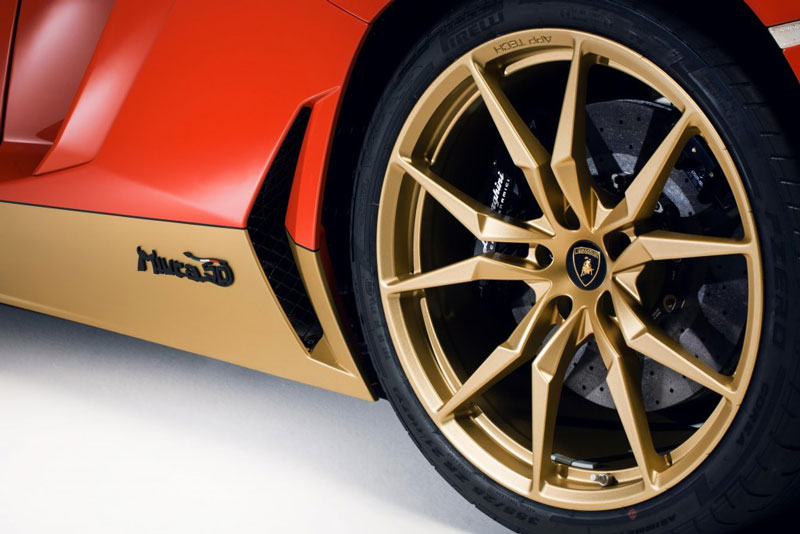
The Lamborghini Aventador Miura Homage appeared in Rosso Arancio with gold coating Dione alloy 21" wheels, debuted at the Goodwood Festival of Speed 2016. (Picture from: TheVerge)
Enter the Lamborghini Aventador Miura Homage, a limited edition masterpiece, with only 50 units gracing select markets across the globe. These exclusive automobiles were allocated to discerning buyers who successfully navigated a rigorous selection process, and unsurprisingly, most of them have found their lucky owners.
The Lamborghini Aventador Miura Homage will be rarer than the car it honors with only 50 units ever made. (Picture from: OtoSpirit)
The Lamborghini Aventador Miura Homage owes its existence to the skilled artisans at the Lamborghini Ad Personam studio. Built upon the foundation of the Lamborghini Aventador, this exquisite creation was unveiled at the prestigious Goodwood Festival of Speed 2016. The philosophy behind its creation was to pay homage to the original 1966 Miura in a manner that truly captures its spirit.
The Lamborghini Aventador Miura Homage owes its existence to the skilled artisans at the Lamborghini Ad Personam studio. (Picture from: OtoSpirit)
Notably, the top portion of the Aventador Miura Homage's body can be adorned with a palette of 18 vibrant solid and metallic colors. Among these are Rosso Arancio (red), Verde Scandal (green), Blu Tahiti (blue), and more. Meanwhile, the lower body and side sills are treated to contrasting paint, accentuating its striking appearance. The Dione alloy wheels, available in silver or gold finish, further enhance its visual appeal.
The Lamborghini Aventador Miura Homage's side proudly displayed with a Miura 50th-anniversary badge, serving as a constant reminder of its heritage. (Picture from: OtoSpirit)
On closer inspection, you'll find a Miura 50th-anniversary badge proudly displayed, serving as a constant reminder of its heritage. Inside the cabin, a choice of two-tone colors with 'Miura 50th' stitching adorns the supple leather, perfectly echoing the aesthetics of the original masterpiece. Now, let's delve into the mechanical heart of this extraordinary beast.
Interior view of Lamborghini Aventador Miura Homage for Hong Kong adorned with two-tone colors with 'Miura 50th' stitching adorns the supple leather. (Picture from: Motor1)
Under the Aventador Miura Homage's sculpted hood resides a 6.5-liter V12 engine that defies the ordinary. This powerplant boasts an astounding 700 horsepower at 8,250 rpm, paired with a maximum torque of 690 Nm at 5,500 rpm—a substantial leap from the original's P400SV variant, which produced a modest 380 horsepower. With this powerhouse at its disposal, the Lamborghini Aventador Miura Homage catapults from a standstill to 100 kph in a mere 2.9 seconds and achieves a blistering top speed of 350 kph.
The Lamborghini Aventador Miura Homage for Hong Kong in Verde Scandal with silver coating Dione alloy 21" wheels graces the market with a price of HK $8 million. (Picture from: Motor1)
Now, the question that inevitably arises: How much does this piece of automotive artistry cost? Well, as you might expect, it commands a hefty price tag. For instance, an Aventador Miura Homage destined for Hong Kong graces the market with a price of HK $8 million, roughly equivalent to Rp. 13 billion.
While it's undeniably a substantial sum, it represents an enticing proposition when compared to the astronomical prices of an original Miura, which can easily reach up to $3 million. And let's not forget, these two cars share more than just Racing Bull emblem; they share a legacy that defines the very essence of automotive excellence. ***[EKA [01072016] | FROM VARIOUS SOURCES | LAMBORGHINI | THE VERGE | MOTOR1 ]
Note: This blog can be accessed via your smart phone.


 The inception of Automobili Lamborghini in Sant'Agata Bolognese boasts a unique origin story. It's widely recounted that it all began when Ferruccio Lamborghini expressed dissatisfaction with the clutch of his Ferrari 250 GTE, leading to a grievance lodged with Enzo Ferrari himself. As time unfurled, in 1963, Ferruccio Lamborghini ventured into the realm of automobile manufacturing, birthing his own car company. Success swiftly followed with the production of the 350 GT and 400 GT coupes in 1964, marking the inception of this Italian company's journey towards becoming a renowned automaker.


 From this comprehensive assessment, the Lamborghini Miura was declared the most valuable classic car, securing the top spot in the ranking. The Ferrari F40, the last car personally approved by Enzo Ferrari, narrowly trailed behind the Miura. The Lamborghini Miura's enduring allure stems from its revolutionary design and performance, making it an everlasting symbol of Italian automotive prowess. *** [EKA [19092023] | FROM VARIOUS SOURCES | LAMBORGHINI | SUPERCARS.NET | MOTORTREND | STUFF ]