-->
Drop Down MenusCSS Drop Down MenuPure CSS Dropdown Menu

Sunday, June 22, 2025

Vespa Polini 23-Carat Gold: A Golden Revival of the Classic Primavera

Auric Elegance - When it comes to turning heads on the street, few vehicles can compete with the charm and elegance of a classic Vespa. But imagine that timeless design taken to a whole new level of luxury — not with fancy tech or futuristic upgrades, but by wrapping the entire scooter in 23-carat gold. That’s exactly what happened with the Vespa Polini 23-Carat Gold, a shimmering icon that blends Italian craftsmanship with bold automotive artistry.
Vespa Polini 23-Carat Gold. (Picture from: BikesDoctor)
This glittering masterpiece is based on the 1964 Vespa Primavera 125, a model already admired for its sleek curves and vintage soul. Yet what made this one truly unforgettable was its jaw-dropping appearance at the EICMA motorcycle show in Milan back in 2014. Polini, a well-known Italian tuning and modification house, was the creative mind behind the golden transformation, and their work turned the scooter into something closer to a museum exhibit than a regular ride.
The Vespa Polini 23-Carat Gold takes its foundation from the iconic 1964 Vespa Primavera 125. (Picture from: BlackXperience)
The entire body of
the Vespa
from the front fender and engine cover to the handlebars and rear panelsis delicately coated in genuine 23-carat gold. To achieve that opulent finish, no fewer than 500 thin sheets of gold were applied with meticulous care. It wasn’t a simple task. Polini admitted that the process was extremely delicate, as each individual gold sheet could easily tear. Precision and patience were essential throughout the project.
Left sdide view of Vespa Polini 23-Carat Gold. (Picture from: BikesDoctor)
But Polini didn’t stop at just covering the scooter in gold. They reimagined other parts of the Vespa to match its dazzling new identity. The seat, for instance, was redesigned with black material textured like orange peela subtle but stylish contrast to the golden glow. The wheels received a fresh chrome finish, offering a clean and modern touch without overshadowing the main attraction.
Rear side view of Vespa Polini 23-Carat Gold. (Picture from: BikesDoctor)
Underneath all that shine, Polini also upgraded the engine’s performance. The Golden Vespa is equipped with a racing clutch supported by two springs, and a 27-69 primary gear setup. There’s also a custom crankshaft, a 24 mm Polini carburetor, and a dedicated CDI ignition system. They even added 12-volt headlights and built a custom exhaust to complete the transformation, ensuring the scooter performs just as boldly as it looks.
Even after a decade since it first dazzled the crowd in Milan, the Vespa Polini 23-Carat Gold still captures the imagination of collectors and design enthusiasts around the world. It’s not just a scooter — it’s a symbol of passion, precision, and unapologetic flair. Wrapped in gold but powered by craftsmanship, this Vespa proves that even the most classic rides can shine brighter when touched by true creativity.

Kept spur your adrenaline on the power of two-wheeled monster and stay alive with the true safety riding. May God will forgive Your sins and so does the cops....... *** [EKA [26112014] | FROM VARIOUS SOURCES | BIKES DOCTOR ]
Note: This blog  can be accessed via your smart phone

WM P70 Returns: French Racing Icon Reborn

Heritage Reignited - In the ever-evolving world of automotive design and racing, few stories strike as deeply as the return of a legend once thought lost to time. While the automotive landscape of today is dominated by futuristic EVs and AI-driven technology, there's something soul-stirring about a machine that harks back to a purer era of innovation—when ambition and hand-built passion were the real engines of progress. Enter the WM P70, a French prototype sports car first introduced in 1970 and now reborn in 2024 thanks to the relentless effort of the Welter Meunier Historique association.
The 1970 WM P70 is a French prototype sports car, the result of the passionate work of Gérard Welter and Michel Meunier, two emblematic figures of the Peugeot brand. (Picture from: WM Historique in Facebook)
More than just a car, the WM P70 is a symbol of French engineering spirit and grassroots ingenuity. Its story begins with two men—Gérard Welter and Michel Meunier—who, in the early 1970s, were already well-known for their contributions to Peugeot. United by their love for speed and style, they took on a bold challenge: to build a competitive endurance prototype with their own hands. 
The WM P70 was not only futuristic in design but also daring in its minimalism, with a lightweight 505-kilogram body and a 1.3-liter Peugeot 304 S engine delivering 130 hp to reach a top speed of 225 km/h. (Picture from: WM Historique in Facebook)
What emerged was the P70, a car that was not only futuristic in design but daring in its minimalism. With just a 1.3-liter Peugeot 304 S engine producing 130 horsepower, the lightweight 505-kilogram body could reach a top speed of 225 km/h. Short, sleek, and far ahead of its time, the P70 was a striking combination of raw engineering and visionary design.
The WM P70 was resurrected over half a century later not just as a tribute but as a full-scale revival, meticulously rebuilt from scratch over nearly five years by the WMH team to match the original in every curve, line, and component with complete authenticity. (Picture from: WM Historique in Facebook)
The resurrection of this car over half a century later is more than a tribute; it's a full-blown revival. Starting from scratch, the WMH team spent nearly five years meticulously reconstructing the P70 to be identical to the original—every curve, line, and component rebuilt with absolute authenticity. The effort culminated in its dramatic unveiling at the 2024 Retromobile Show in Paris, where it captivated a new generation of enthusiasts and reminded veterans of the golden days of motorsport creativity.
The WM P70, despite its smooth matte finish and subtle sponsor decals, is a fully operational machine with a functional cockpit and drivetrain, bridging past and present in both form and performance. (Picture from: WM Historique in Facebook)
Despite its smooth matte finish and subtle sponsor decals, the new WM P70 is a fully operational machine. Everything from the cockpit to the drivetrain is fully functional and ready to race, offering a powerful visual and mechanical link between the past and present. Its aesthetic still echoes iconic Peugeot designs such as the 504 Coupé, while the aerodynamic contours forecast shapes seen in later Peugeot concepts like the Oxia and Quasar—underscoring how the P70 was a decade ahead of its time.
The WM P70 carries design echoes of iconic Peugeot models like the 504 Coupé, while its aerodynamic contours anticipate the shapes of later concepts such as the Oxia and Quasar, highlighting how it was a decade ahead of its time. (Picture from: WM Historique in Facebook)
As of 2025, the WM P70 is not just a static museum piece. It recently completed its first test laps on the UTAC track in Mortefontaine, breathing life into what was once a dormant dream. The team behind its rebirth now has their sights set on entering the P70 in events like the Le Mans Classic, bringing this pioneering prototype back to the racing circuits where it truly belongs. | 02NTxtxFShE | bNNxUWxlELI | 
The WM P70 isn’t just a rediscovered relic—it’s a living, breathing celebration of vision, perseverance, and the enduring thrill of motorsport. And for anyone who thought true racing passion was a thing of the past, the echo of the P70’s engine on the track says otherwise.*** [EKA | FROM VARIOUS SOURCES | WM HISTORIQUE IN FACEBOOK | LIGNESAUTO.FR | LIGNESAUTO IN FACEBOOK | LENOUVELAUTOMOBILISTE.FR | TJALO33 ON X ]
Note: This blog can be accessed via your smart phone.

Saturday, June 21, 2025

The Mara: Argentina's Short-Lived Wedge-Shaped Sports Car

Forgotten Innovation - When you think of sports cars, countries like Italy, Germany, and the United States are often the first to come to mind. However, you might be surprised to learn that Argentina, a nation known for its passionate sports culture, legendary racing heroes, and automotive enthusiasts, also made its own unique mark in the world of automotive design, contributing to the global landscape of high-performance vehicles.
The first I.A.V.A. Mara prototype was presented in August 1971, when Fisanotti and his colleague Miguel Angel Galuzzi introduced the idea of a car that would combine Italian design influence with Argentine ingenuity. (Picture from: Mitutu)
Alongside iconic figures such as legendary racer Juan Manuel Fangio, and automotive pioneers like Alejandro De Tomaso and Horacio Pagani, Argentina has its own lesser-known stories of innovation in the automotive industry. One such story takes us back to the 1970s, when the "Industria Argentina de Vehículos de Avanzada," (I.A.V.A.) or Argentine Advanced Vehicles Industry created the unique Mara sports car, marking a fascinating chapter in the country's automotive history. 
The Mara sports car was the I.A.V.A. first project, was a bold and ambitious attempt to create a sports car that could stand alongside some of the most recognized names in automotive history. (Picture from: RareComponentCars)
In the early 1970s, a pivotal development occurred in the small town of Martínez, located within the Province of Buenos Aires. Here, the Industria Argentina de Vehículos de Avanzada (I.A.V.A.) was born, thanks to the initiative of the Fiat dealer group in Argentina. This company was founded by engineer Juan Carlos Fisanotti, who took on the role of technical manager. The Mara, I.A.V.A.’s first major project, was a bold and ambitious attempt to create a sports car that could stand alongside some of the most recognized names in automotive history. 
The I.A.V.A. Mara, the company’s first sports car prototype featuring an enlarged 1200cc engine based on the Fiat 128’s 1100cc, underwent initial road tests as a bold step in automotive innovation. (Picture from: RareComponentCars)
The concept was presented in August 1971, when Fisanotti and his colleague Miguel Angel Galuzzi introduced the idea of a car that would combine Italian design influence with Argentine ingenuity. The Mara's design was nothing short of striking. Despite being a product of a small Argentine company, the Mara clearly displayed the ambition to compete on the international stage. The car’s exterior bodywork was crafted from fiberglass, a material that allowed for flexibility and reduced weight, crucial elements for a sports car aimed at achieving impressive performance. 
The I.A.V.A. Mara’s fiberglass bodywork, influenced by iconic design houses like Bertone and Italdesign, combined flexibility, reduced weight, and a sleek, futuristic appearance essential for high performance. (Picture from: RareComponentCars)
The body shape itself was influenced by iconic automotive design houses like Bertone and Italdesign, giving the Mara a sleek and futuristic appearance. Anyone familiar with the Maserati Boomerang concept car would immediately notice the similar design elements present in the Mara, especially in its bold angles and aerodynamic form. One of the most innovative aspects of the Mara was its engine configuration. I.A.V.A. chose to base the car's mechanicals on the Fiat 128, a well-known Italian model, but made significant modifications. 
The rear view of the I.A.V.A. Mara prototype, showcasing the distinctive Kamm-tail aerodynamic design, enhances its overall performance and sleek appearance. (Picture from: Fiat128DelSur)
The original 1100cc engine of the Fiat 128 was enlarged to 1200cc, giving the Mara an edge in power and performance. This change aimed to push the prototype’s performance to a top speed of 130 mph, a notable figure for a car built in Argentina during the 1970s. To further enhance its sporty characteristics, the engine and transmission were placed in a mid-rear position, which improved the car’s handling and balance, a key feature for sports cars of the era. 
After a series of exhibitions in Europe, the I.A.V.A. Mara was redesigned with a more modern look, including the addition of retractable headlights. (Picture from: RareComponentCars)
Although the Mara was still a prototype, its potential was clear. The I.A.V.A. team intended to take the car to European exhibitions, hoping to gauge public reaction and generate interest in both local and export markets. The goal was not only to introduce a new sports car to Argentina but also to make a mark on the global automotive scene. However, despite the bold ambitions, the Mara never saw mass production. 
The front view of the I.A.V.A. Mara, enhanced with a sleeker design and modern features, following an extensive redesign process. (Picture from: RareComponentCars)
Only one unit of the car was built, and after several public appearances in redesigned versions, the company ultimately shifted its focus to other projects, including a line of tuning accessories for Fiat models that became very successful in Argentina. The story of the Mara, though short-lived, is a testament to the innovative spirit of Argentina’s automotive engineers in the 1970s. While the car was never mass-produced, it represents a fascinating moment in the country’s attempt to carve out a niche in the sports car world. 
The rear view of the I.A.V.A. Mara, following a redesign process, features a shape that subtly resembles the iconic Lancia Stratos HF. (Picture from: RareComponentCars)
The I.A.V.A. may have moved on to different ventures, but the Mara remains a symbol of what could have been—an Argentine sports car that never reached its full potential but nonetheless left a unique legacy. In the end, the Mara serves as a reminder that innovation often comes from the most unexpected places. While Argentina’s automotive history may not be as widely celebrated as some of the world’s biggest car-producing nations, the country’s contributions—like the Mara—demonstrate that the passion for sports cars is truly global. 
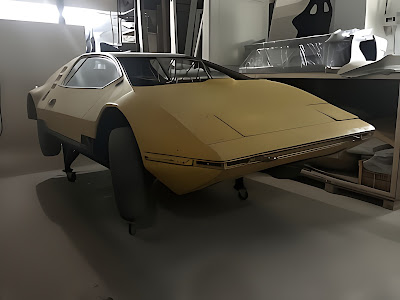
After facing challenging times, the I.A.V.A. Mara underwent a restoration process aimed at reviving its former performance, though the results remain unknown to this day. (Picture from: Fiat128DelSur)
The legacy of engineers like Juan Carlos Fisanotti and Miguel Angel Galuzzi may not have resulted in the international fame they had hoped for, but their work in creating the Mara is still remembered as a daring and imaginative step in Argentina’s automotive evolution. *** [EKA | FROM VARIOUS SOURCES | FIAT128DELSUR | MITUTU | IAVA.SANJUAN | RARECOMPONENTCARS | CARSTHATNEVERMADEITETC ]
Note: This blog can be accessed via your smart phone.

The Unique Legacy of Mercury Breezeway: Innovation and Design

Bold Innovation - The automotive world has always been a playground for bold ideas, where manufacturers constantly push the limits of engineering and aesthetics. Some designs become timeless icons, while others remain fascinating experiments, representing a time when innovation often took precedence over practicality. One such unique creation was Mercury’s Breezeway, a vehicle that challenged conventional styling with its distinctive reverse-rake roofline and retractable rear window.
The 1955 Mercury Beldone D-528, originally a concept car, was Mercury’s first known use of a functioning rear glass, which can be seen partially open in this shot, and remarkably, the vehicle still exists today. (Picture from: MacsMotorCityGarage)
Though it never became a mainstream success, the Breezeway remains a remarkable example of an era when carmakers were unafraid to take creative risks. The inspiration behind the Breezeway concept was rooted in architecture, where "breezeways" were designed to improve airflow between structures. Mercury adopted this principle in the late 1950s, seeking a way to enhance natural ventilation in automobiles before air conditioning became standard.
The 1953 Packard Balboa-X concept car, designed by Dick Teague, was the first vehicle to adopt the Breezeway system with a reverse-rake roof. (Picture from: MacsMotorCityGarage)
Unlike most American cars of the time, which prioritized sleek, streamlined profiles, the Breezeway took a different route with its sharply angled rear roofline. This unconventional approach not only made the car stand out visually but also introduced a practical advantage—allowing fresh air to circulate through the cabin with the help of a power-operated rear window.
The 1957 Mercury Turnpike Cruiser was the first production model to feature Breezeway Ventilation, but due to slow sales, both the car and its distinctive rear window design were soon discontinued. (Picture from: MacsMotorCityGarage)
The origins of the Breezeway design can be traced back to the early 1950s, when automotive designer Dick Teague first experimented with a reverse-rake roof for the 1953 Packard Balboa-X concept car. While the Balboa-X remained a one-off prototype, the idea piqued the interest of Ford, which later brought the concept to Mercury in the form of the 1957 Turnpike Cruiser. This model featured a similar roofline with a retractable rear window, but its polarizing design failed to capture widespread consumer interest.
The 1963 Mercury Monterey was designed with an elegantly crafted Breezeway rear window, adding a distinctive touch of both style and functionality to its overall aesthetic. (Picture from: OldMotors on Facebook)
Mercury refined the concept further in 1958 with the Lincoln lineup, overseen by John Najjar’s design team. These cars integrated the Breezeway roof more seamlessly, combining its distinct visual appeal with improved functionality. However, economic challenges and shifting consumer preferences meant that the design struggled to gain traction in the market. By the early 1960s, the idea was temporarily shelved as buyers gravitated toward more conventional styling.
The 1963 Mercury Monterey featured a stylish Breezeway rear window, seamlessly blending elegance with practicality. (Picture from: Wikipedia)
While the Breezeway concept never took off in the U.S., it found success overseas. European manufacturers, including Ford’s U.K. division and Citroën, embraced the reverse-rake roofline for compact vehicles. The Ford Anglia 105e, introduced in 1959, utilized this design to maximize rear passenger space, while Citroën’s 1961 Ami incorporated a similar approach with a roll-down rear window. These models proved popular, but as hatchbacks gained favor in later years, the need for a slanted rear roofline diminished.
The 1963 Mercury Monterey S-55, featuring the distinctive "Breezeway" rear window, combined bold styling with innovative functionality. (Picture from: Wikipedia)
In 1963, Mercury made one last attempt to reintroduce the Breezeway, hoping to carve out a niche in a competitive market. Led by designer Buzz Grissinger, the restyled Mercury models featured the signature Breezeway roof on both two-door and four-door variants. Although the design generated initial interest, sales figures told a different story. Buyers ultimately preferred the sleeker, fastback-style rooflines offered by competitors, and production numbers dwindled. The two-door Breezeway models, in particular, saw limited production, with only 15,333 units built in 1963 and an even smaller 8,047 in 1964. Realizing the shifting landscape of automotive trends, Mercury phased out the two-door Breezeway after 1964 and discontinued the design entirely by 1966.
The 1958 Continental Mark III convertible with its retractable rear window open, showcasing a unique blend of luxury and innovation. (Picture from: Wikipedia)
As car designs evolved toward aerodynamics and integrated ventilation systems, the Breezeway became a relic of a bygone era. Modern advancements in climate control and streamlined body shapes rendered its retractable rear window unnecessary. However, Mercury’s bold attempt to marry function with style remains a cherished piece of automotive history. Today, surviving Breezeway models are highly sought after by collectors, serving as a tribute to a time when innovation often defied convention. While its time on the road was brief, the Mercury Breezeway left a lasting impression—one that continues to captivate enthusiasts and remind us of an era when carmakers weren’t afraid to take chances. *** [EKA | FROM VARIOUS SOURCES | WIKIPEDIA | SUPERCARS.NET | OLDMOTORS ON FACEBOOK | MACSMOTORCITYGARAGE ]
Note: This blog can be accessed via your smart phone.

Friday, June 20, 2025

The One and Only Ferrari 330 GT Shooting Brake by Vignale

Design Rebellion - There’s something undeniably romantic about the idea of a car that blends the elegance of a grand tourer with the practicality of a wagon. It’s a rare breed—especially when that car wears a Ferrari badge. While shooting brakes have never been mainstream, they carry a kind of mystique that makes them unforgettable to those lucky enough to spot one. Among these rarities, few are as intriguing or as singular in their story as the Ferrari 330 GT Shooting Brake by Vignale.
The one-off 1965 Ferrari 330 GT 'Shooting Brake' was a bold reimagination by Carrozzeria Vignale, transforming the classic Ferrari silhouette into a dramatic, futuristic estate car, and appeared in bronze metallic paint when it was auctioned in 2018. (Picture from: RMSothebys)
This car didn’t just appear by chance. It began life as a 1965 Ferrari 330 GT Series II, designed by Tom Tjaarda at Pininfarina. Originally finished in Rosso red over a beige interior and fitted with U.S.-spec miles-per-hour instrumentation, it was delivered to Luigi Chinetti Motors in Connecticut—home to one of Ferrari’s most important North American ambassadors. But what started as a classic example of Ferrari’s road-going elegance soon veered into the unexpected.
The one-off 1965 Ferrari 330 GT 'Shooting Brake' by Carrozzeria Vignale was seen finished in metallic green with a gold roof, as listed back in 2008. (Picture from: Cars.Bonham)
By 1967, the car had returned to Chinetti Motors. That’s when Luigi Chinetti Jr., the son of Ferrari’s U.S. importer and a passionate creative in his own right, envisioned something radically different. Together with American illustrator Bob Peakfamous for his iconic movie postersChinetti Jr. imagined a Ferrari like no other: a sleek, sculptural shooting brake that retained only the windshield and partial door structure from the original car.
The one-off 1965 Ferrari 330 GT 'Shooting Brake' by Carrozzeria Vignale was a one-off creation commissioned by Luigi Chinetti Jr. and developed with American illustrator Bob Peak, who imagined a sleek, sculptural Ferrari that retained only the windshield and partial door structure from the original car. (Picture from: JoeMacari)
The coachwork itself was entrusted to Carrozzeria Alfredo Vignale in Turin, a company renowned for its flair and craftsmanship. This wasn’t just another restyle. It was a bold reimagination—transforming the classic Ferrari silhouette into a dramatic, futuristic estate car. It was painted in metallic green with a gold roof (as listed back in 2008), the new design included seating for four and a large rear cargo area, effectively marrying Ferrari performance with luxurious practicality. When it debuted at the 1968 Turin Motor Show, it turned heads—not just for its shape, but for its daring departure from Ferrari norms.
The one-off 1965 Ferrari 330 GT 'Shooting Brake' by Carrozzeria Vignale featuring a new design included seating for four and a large rear cargo area, effectively marrying Ferrari performance with luxurious practicality. (Picture from: JoeMacari)
What made this car even more remarkable was its exclusivity. It was the final Ferrari to ever wear Vignale’s badge before the coachbuilder’s operations came to a close. That gave it a kind of poetic closure—an artistic curtain call for a name that had long been associated with some of the most beautiful Italian automotive design.
The one-off 1965 Ferrari 330 GT 'Shooting Brake' by Carrozzeria Vignale features four individual bucket seats trimmed in tan leather, with a three-spoke wood-rimmed steering wheel, a wood dash, Veglia gauges, and a Blaupunkt radio that reflect the luxury of a bygone era. (Picture from: JoeMacari)
After its time in the spotlight, the 330 GT Shooting Brake remained in private hands for decades. It passed through a handful of dedicated owners, including Jean-Claude Paturau of Paris, who restored the car and proudly displayed it at some of Europe’s most prestigious concours events. Later, it found its way into the garage of Jay Kaylead singer of Jamiroquai and a well-known Ferrari enthusiast—who continued to showcase the car at festivals and classic car gatherings across the UK.
The one-off 1965 Ferrari 330 GT 'Shooting Brake' by Carrozzeria Vignale powered by a single-cam V-12 displacing 3,967cc, power reached the rigid rear axle via a five-speed manual transmission. (Picture from: JoeMacari)
Today, the one-off Ferrari continues to impress, now finished in a bronze metallic paint that highlights its sculpted lines (as listed back in 2018). Under the hood, it retains a 4.0-liter V12 with triple Weber carburetors, delivering 300 horsepower through a five-speed manual gearbox. Inside, four individual bucket seats are trimmed in tan leather, while the wood dash, Veglia gauges, and Blaupunkt radio echo the luxury of a bygone era. Even the smallest detailsfrom the knock-off wheels to the wood-rimmed steering wheel—reflect the craftsmanship that defines a car of this caliber. | 3QpgiXmMOfk |
This is not just a car. It’s a living piece of Ferrari history. A unique blend of American imagination, Italian artistry, and fearless experimentation. It may not have been what purists expected, but that’s precisely what makes it unforgettable. When creativity meets courage, legends are born—and in the case of the Ferrari 330 GT Shooting Brake by Vignale, that legend is parked on four wheels. *** [EKA | FROM VARIOUS SOURCES | CARS.BONHAM | RMSOTHEBYS | JOEMACARI | MYCARQUEST ]
Note: This blog can be accessed via your smart phone.

1968 Eldorado-Based Custom Racer: Classic Form, Racing Spirit

Carbon Majesty - The fusion of classic design and modern performance has always been a fascination for car enthusiasts worldwide. It's not just about blending two aesthetics; it also brings together innovations that improve a car's speed and efficiency, thanks to cutting-edge aerodynamic elements. When it comes to iconic American cars, the 1960s stand out as a defining era. One of the most luxurious and well-known brands of the time was Cadillac, a company that experienced significant growth and success, especially in 1968. Their reputation for producing vehicles that combined elegance and power made them the brand of choice for wealthy buyers.
The 1968 Eldorado Le Mans, styled by Andreas Wennevold, is a bold tribute to classic Cadillac craftsmanship—blending vintage elegance with futuristic engineering in a way only a true car enthusiast could imagine. (Picture from: Autoevolution)