-->
Drop Down MenusCSS Drop Down MenuPure CSS Dropdown Menu

Wednesday, June 11, 2025

Dacora’s Bold Ultra-Luxury EV Beyond Imagination

Electric Opulence - In the world of luxury cars, there’s always room for something bold—something so daringly different that it makes you pause, squint, and ask, "Is this for real?" That’s exactly the kind of attention Dacora Motors seems to be chasing with its jaw-dropping debut: an ultra-luxury electric vehicle that looks like a love letter to 1930s elegance with a twist of sci-fi drama.
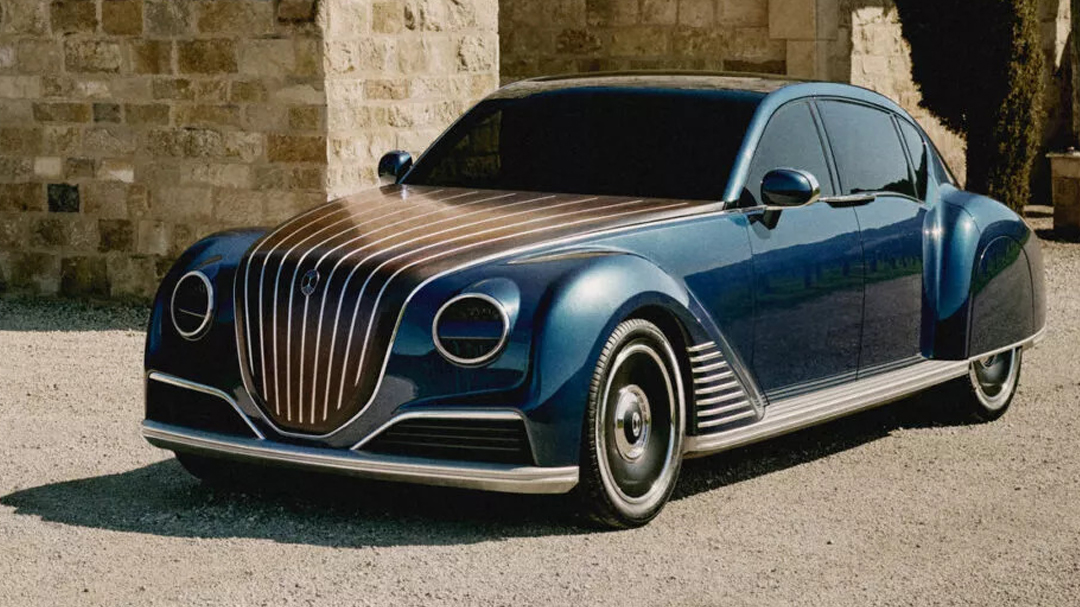
Dacora’s bold ultra-luxury EV, crafted with Pininfarina, merges Streamline Moderne curves with electric power—like a gala-ready Beetle from another universe. (Picture from: Carscoops)
Enter Dacora’s first-ever vehicle, a curiously retro-futuristic EV that’s as much a piece of moving art as it is a car. Designed in collaboration with the famed Italian studio Pininfarina, the vehicle is Dacora’s statement of intent—and it’s loud. Imagine the flowing lines of Streamline Moderne architecture meeting a high-performance electric powertrain, wrapped in a body that feels like an alternate-universe Volkswagen Beetle dressed for a gala. It’s not subtle, and that’s clearly the point.
Dacora’s bold ultra-luxury EV showcases old-school glamour with circular headlights flanking a handcrafted wood hood, while bulging fenders and minimalist wheels blend vintage charm with futuristic restraint. (Picture from: TopSpeed)
Despite Dacora's questionable claim of creating the first American-made ultra-luxury vehicle in nearly a century—something Cadillac Celestiq would quickly challenge—their debut effort is not just about headline-grabbing. Underneath that curvaceous wooden hood sits an electric drivetrain that reportedly pushes over 800 horsepower, launching the nearly 6,500-pound vehicle from zero to sixty in under four seconds. That’s no small feat. Dacora also estimates a range of around 400 miles on a single charge, which puts it on par with top-tier EV offerings.
Dacora’s bold ultra-luxury EV, their first-ever vehicle, is a retro-futuristic creation that feels as much like moving art as it does a car. (Picture from: TopSpeed)
Visually, the car is a parade of old-school glamour. Circular headlights flank a handcrafted wood hood. Bulging fenders and minimalistic wheels balance a vintage aesthetic with futuristic restraint. The rear end sweeps down in a dramatic slope, ending in afterburner-style taillights that wouldn’t look out of place on a spaceship. Covered rear wheels and an SUV-like 7.5-inch ride height add just enough quirk to keep you guessing whether it’s more luxury sedan or elevated cruiser.
Dacora’s bold ultra-luxury EV offers a thoughtfully curated interior where woven wool, sustainable bioleathers, and warm woods replace cold plastics and screens, doubling as elegant surfaces for digital displays that disappear when not in use. (Picture from: Carscoops)
Step inside, and you’ll find an interior that feels like it was curated rather than assembled. Gone are the cold plastics and screen overloads of modern cars. In their place: woven wool, sustainable bioleathers, and warm woods that not only look elegant but serve as canvases for projected digital displays that vanish when not in use. The entire cabin is modular, designed to be reimagined with the seasons. Think linen interiors in the summer, wool in the winterlike fashion, but for your car.
Dacora’s bold ultra-luxury EV features a fully modular cabin designed to change with the seasons, like fashion—linen for summer, wool for winter. (Picture from: Carscoops)
Dacora isn’t stopping at simple personalization either. Seating configurations range from a minimalist three-seat executive lounge to a more expansive seven-passenger layout. Console options include luxuries you didn’t know you needed: from humidors and espresso machines to a literal bonsai garden under a glass dome. There’s even talk of a biometric safe and a mini fridge, all seamlessly integrated to make the car feel more like a rolling penthouse suite.
Dacora’s bold ultra-luxury EV features a dramatically sloping rear end that culminates in afterburner-style taillights fit for a spaceship. (Picture from: Carscoops)
If full electrification isn’t your style, Dacora plans to offer a hybrid option as well, though they’re keeping those details tightly under wraps for now. What’s clear is that flexibility is part of the brand’s DNA—whether that’s in design, performance, or powertrain options.
Dacora’s bold ultra-luxury EV features a dramatically sloping rear end that culminates in afterburner-style taillights fit for a spaceship. (Picture from: Carscoops)
Each of these vehicles will be hand-built at Dacora’s 100-acre Hudson Valley Garage campus in New York, adding yet another layer of exclusivity. With a starting price of $500,000 and a required $50,000 refundable deposit, it’s targeting a niche market—one apparently eager to buy in, as Dacora claims reservations have already exceeded their initial production targets. Still, they’ve been suspiciously quiet about just how many cars that first run includes. | v8wZCkM14Ok |
While time will tell if Dacora Motors can deliver on all its ambitious promises, there’s no denying that their debut is something the industry hasn’t seen before. In a world of cookie-cutter luxury and EVs that often play it safe, Dacora has taken a wildly imaginative leap—and whether it soars or stumbles, it’s definitely going to turn heads. *** [EKA | FROM VARIOUS SOURCES | DACORA | CARSCOOPS | THEEVEREPORT | TOPSPEED ]
Note: This blog can be accessed via your smart phone.

Manta Mirage: The Legendary Street-Legal Supercar

Epic Legacy - The world of automotive engineering has always been a stage for innovation, blending creativity and functionality to create machines that redefine performance and design. Among the most fascinating cars to emerge from this dynamic world is the Manta Mirage, a vehicle that captures the imagination with its unique origins and unparalleled performance. This car, a product of the 1970s, remains a symbol of ingenuity and ambition, offering a glimpse into an era where the concept of a "kit car" was transformed into a legitimate supercar phenomenon.
The 1978 Manta Mirage could be ordered as a kit or factory-built car in the 1970s and 1980s, and once assembled, it became one of the fastest cars on the road. (Picture from: Silodrome)
The Manta Mirage was conceived by American brothers Brad and Tim LoVette, founders of Manta Cars, based in Costa Mesa, California. Their vision was ambitious yet grounded in practicality: to create a supercar that was not only street-legal but also attainable for enthusiasts willing to assemble it themselves. Introduced in 1974, the Mirage quickly set itself apart from other kit cars of the time. Its sleek, aerodynamic fiberglass body drew inspiration from the legendary McLaren M8 Can Am race car, reflecting a design ethos that prioritized both aesthetics and performance.
The Mirage featured a custom tubular steel spaceframe chassis, independent front and rear suspension, four-wheel disc brakes, and a lightweight fiberglass body. (Picture from: Silodrome)
At its core, the Manta Mirage boasted a tubular steel space frame chassis, providing a lightweight yet robust foundation. Paired with independent front and rear suspension and four-wheel disc brakes, the Mirage was engineered for agility and precision on the road. The choice of a mid-mounted American V8 enginetypically a Chevrolet or Ford unit—further solidified its reputation as a powerhouse. With curb weights around 2,000 lbs (907 kg) and power outputs exceeding 400 bhp, the Mirage could rival or even outperform many factory-built supercars of its time. This exceptional performance, combined with its affordability, made it a game-changer in the realm of kit cars.
The Manta Mirage features an interior with black seats, black carpets, predominantly black accents, modern dashboard instrumentation with silver bezels and white faces, five-point safety harnesses, and a classic manual transmission with a three-pedal arrangement.. (Picture from: Silodrome)
The Manta Mirage was not merely a technical marvel; it also gained cultural significance. Its appearance in the original 1974 film 'Gone in 60 Seconds' and later in TV shows like Hardcastle and McCormick elevated its status from a niche enthusiast car to a pop culture icon. These appearances showcased the Mirage’s dynamic capabilities and exotic allure, further cementing its legacy in the automotive world.
The car used in the classic 1980s TV series Hardcastle and McCormick is said to be a modified Manta kit car that for plot purposes was said to be a prototype sports car called the “Coyote X.”. (Picture from: Silodrome)
The flexibility offered by the Manta Mirage kit allowed builders to tailor the car to their preferences. While some chose relatively modest configurations, others pushed the boundaries with highly modified engines and performance enhancements. This customization potential contributed to the Mirage’s appeal, offering owners the satisfaction of personalizing a vehicle that could compete with the best on the road.
This Mirage is powered by a stroked small block 383 cubic inch Chevrolet V8 producing a claimed 445 bhp. (Picture from: Silodrome)
Manta Cars’ influence extended beyond the Mirage. The company later introduced models like the Manta Montage and Montage-T, further diversifying its offerings. However, the Mirage remained the centerpiece of the brand, embodying the spirit of innovation and accessibility. Despite its eventual closure in 1986, Manta Cars left an indelible mark on the industry, producing approximately 1,000 vehicles during its 12-year run.
The Manta Mirage's styling was inspired by the McLaren M8 Can Am car, with this example featuring one of the best color choices—McLaren Papaya Orange. (Picture from: Silodrome)
Today, the Manta Mirage enjoys a dedicated following among collectors and enthusiasts. Its rarity and historical significance make it a prized possession, with many examples undergoing meticulous restorations to preserve their original charm. Whether admired for its cutting-edge design, impressive performance, or the adventurous spirit it represents, the Mirage continues to captivate those who encounter it.
The story of the Manta Mirage serves as a testament to the creativity and determination that define the automotive world. Brad and Tim LoVette’s vision brought to life a car that transcended its origins as a kit vehicle, proving that passion and innovation can produce extraordinary results. The Mirage remains not just a car, but a symbol of a bygone era when bold ideas and daring designs pushed the boundaries of what was possible. In the hearts of enthusiasts and the annals of automotive history, the Manta Mirage endures as a timeless classic that inspires wonder and admiration. *** [EKA | FROM VARIOUS SOURCES | SILODROME | WIKIPEDIA ]
Note: This blog  can be accessed via your smart phone

Tuesday, June 10, 2025

De Tomaso Pantera 90 SI: The Ultimate Evolution of a Supercar

Ultimate Power - The world of supercars has always been dominated by high-priced, exclusive machines crafted for the elite. But every now and then, a car emerges that challenges this notion—offering breathtaking performance without an astronomical price tag. The De Tomaso Pantera was one such machine, earning its reputation as a blue-collar supercar. 
The De Tomaso Pantera 90 SI would have its styling significantly updated by Marcello Gandini, the man who designed the Miura, Countach, Stratos, and countless others. (Picture from: Silodrome)
With Italian styling and a reliable American V8, it combined the best of both worlds. However, as the years went by, the Pantera needed an evolution, leading to the ultimate version: the De Tomaso Pantera 90 SI (short for Serie Imperiale). As the final iteration of the Pantera series, the 90 Si was the culmination of decades of refinement. 
The De Tomaso Pantera 90 SI, as the final iteration of the series, represented the ultimate evolution of the model, refined over decades. (Picture from: Silodrome)
It was redesigned by Marcello Gandini, the mastermind behind the Lamborghini Miura and Countach. His expertise gave the car a sharper, more aerodynamic look, bringing it in line with the supercars of the 1990s. 
The interior of the Pantera 90 SI was the best-appointed of any of the Panteras, with leather, wood trim, air-conditioning, electric windows, and more. (Picture from: Silodrome)
Underneath the newly sculpted body, the 90 Si featured extensive mechanical improvements, making it the most advanced Pantera ever built. Power came from a 5.0-liter Ford V8, producing 305 bhpan upgrade over the previous 5.8-liter engine, thanks to modern electronic fuel injection and revised internals. The chassis received reinforcements, while the suspension was thoroughly reworked to improve handling. 
The original car used a fuel-injected 5.0 liter Ford V8, but this car has had the fuel injection system replaced with a more traditional carburetor. (Picture from: Silodrome)
Braking was also a major highlight, as De Tomaso equipped the 90 SI with four-wheel ventilated and drilled disc brakes, featuring the same Brembo calipers used on the legendary Ferrari F40. Production numbers for the 90 SI were extremely limited, with only 41 units built
Just 41 examples of the Pantera 90 SI would be made, though two of these would be destroyed during crash testing and another was sent directly to the De Tomaso Museum. (Picture from: Silodrome)
Of those, two were sacrificed for crash testing, and another was reserved for the De Tomaso Museum, leaving just 38 available to the public. Unlike the original Pantera, which was sold through Lincoln-Mercury dealerships in the United States, the 90 Si was never officially sold new in the U.S., making it an exceptionally rare sight on American roads. | 4ke56gMTviw |
Looking back, the Pantera’s journey from its debut in 1971 to its final 90 SI variant tells the story of a car that defied convention. It offered Ferrari-like performance at a fraction of the cost and proved that supercars didn’t have to be temperamental or unattainable. The 90 SI may have marked the end of the Pantera lineage, but its legacy as an underdog in the supercar world remains as strong as ever. *** [EKA | FROM VARIOUS SOURCES | SILODROME ]
Note: This blog can be accessed via your smart phone.

Fiat 8V Zagato Elaborata: Italy’s Forgotten V8 Masterpiece

Iron Elegance - In the golden era of post-war automotive innovation, car manufacturers across Europe vied not just for market dominance but also for motorsport glory. Italy, already a cradle of automobile artistry, saw its marques like Ferrari, Maserati, and Lancia rise to fame with their two-liter race machines. Amid these legends, Fiat—a name more often associated with practicality than performance—made a surprising and unforgettable impact with a car that redefined its image in motorsport history. This rare icon wasn’t just another racer; it was a bold expression of engineering flair and coachbuilding mastery.This car was the Fiat 8V Zagato Elaborata.
The Fiat 8V Zagato Elaborata quickly became some of the most sought-after, not only for their striking craftsmanship but also for their success in motorsports. (Picture from: UltimateCarPage)
The story of the Fiat 8V begins at the 1952 Geneva Motor Show, where Fiat unveiled a car that few expected. Internally called “8V,” or “Otto Vu” in Italian, this new machine was created specifically to compete in the fiercely competitive two-liter class of the Italian racing circuit. Fiat deliberately avoided using the term “V8” due to possible trademark conflicts with Ford, though ironically, the engine layout was indeed a V8—a rarity in Fiat’s long lineage of vehicles. The company, better known for its practical road cars, had entered an arena dominated by specialized racing outfits.
The Fiat 8V Zagato Elaborata features a rounded grille with two prominent headlights, flanked by smaller auxiliary lights in the fenders. (Picture from: UltimateCarPage)
At the heart of this engineering marvel was a compact 2.0-liter V8 engine, meticulously crafted by merging two inline-four blocks onto a shared crankcase. To keep the engine’s footprint small, the V angle was restricted to 70 degrees, far narrower than the conventional 90 degrees typically seen in larger V8s. This narrow layout not only saved space but also contributed to better weight distribution and aerodynamics. The centrally placed camshaft operated the valves through pushrods, and the power output evolved across its development—from 105 horsepower initially, to 115 horsepower with the addition of an extra Weber carburetor, and eventually reaching an impressive 127 horsepower in racing trim.
The Fiat 8V Zagato Elaborata benefited from additional tuning and a lightweight aluminum body by Zagato, which together delivered a clear performance edge on the track. (Picture from: UltimateCarPage)
The technical elegance of the 8V wasn’t limited to its engine. It rested on a steel tubular chassis and featured independent suspension on all four wheels—advanced for its time and ideal for the rigors of circuit and endurance racing. The first series wore a factory body designed by Fiat’s head stylist Fabio Luigi Rapi, whose approach blended functionality with elegance. Its rounded grille housed two prominent headlights, flanked by smaller auxiliary lights in the fenders. A second series was later introduced, with four headlights integrated into the fenders to meet GT regulations.
The Fiat 8V Zagato Elaborata showcases a refined interior with deep red leather, a wood-rimmed three-spoke steering wheel, and a clean, vintage-style dashboard. (Picture from: UltimateCarPage)
It was at this point that the genius of Zagato entered the picture. The Milanese coachbuilder, known for crafting lightweight, aerodynamic bodies, took the Fiat 8V to the next level. Initially modifying five of Fiat’s original designs, Zagato eventually produced a limited run of around 25 bespoke 8Vs, each a blend of art and engineering. These vehicles, collectively referred to as the 8V Zagato Elaborata, benefited from additional tuning and significant weight reduction thanks to Zagato’s feather-light aluminum bodywork. These enhancements translated directly into track performance, giving the Zagato variants a competitive edge over their rivals.
The Fiat 8V Zagato Elaborata featured a compact 2.0-liter V8 engine, created by merging two inline-four blocks on a shared crankcase, producing 115 horsepower with a third Weber carburetor and up to 127 horsepower in racing trim. (Picture from: UltimateCarPage)
These refined 8Vs were not just beautiful—they were winners. Their nimble handling and power-to-weight ratio enabled them to clinch the Italian Championship in 1954, firmly establishing their place in racing history. Perhaps more impressively, one of these rare machines managed to win its class in the 1957 Mille Miglia, the final edition of the legendary endurance race. Despite their limited production—just 114 Fiat 8Vs were ever made—these cars left a lasting impression. 
The Fiat 8V Zagato Elaborata features the now-iconic Zagato double-bubble roof, a distinctive design element that increased structural rigidity while providing additional headroom for helmeted racing drivers. (Picture from: UltimateCarPage)
Today, the Fiat 8V Zagato Elaborata stands as a symbol of an exceptional chapter in Fiat’s story—a moment when the brand, typically associated with utilitarian excellence, embraced performance and elegance in one of the most competitive automotive arenas. | oX7jfdVMhRU |
These cars remain highly coveted by collectors and enthusiasts, not only for their rarity but also for the distinct blend of engineering innovation and artisanal craftsmanship they represent. The 8V may have been a brief detour from Fiat’s usual path, but it was a glorious one, culminating in a vehicle that continues to fascinate and inspire generations later. *** [EKA | FROM VARIOUS SOURCES | ULTIMATECARPAGE | CARS.BONHAM | CARROZZIERI-ITALIANI ]
Note: This blog can be accessed via your smart phone.

Monday, June 9, 2025

Spohn DV-13 Convertible: A Bizarre Beauty Born from Bold Imagination

Glorious Oddity - It’s not every day you stumble upon a car that looks like it was imagined in a dream—equal parts vintage science fiction and postwar fantasy. In the golden era of design experimentation, when chrome was king and fins stretched like the wings of jet planes, some cars broke molds so dramatically, they carved out a legacy of their own. One such example is the 1957 Spohn DV-13 Convertible—an eccentric, unforgettable creation that continues to raise eyebrows and spark conversations wherever it goes.
The Spohn DV-13 Convertible, with its strikingly unique design, is believed to have been commissioned by American GIs stationed in postwar Germany and built by the renowned coachbuilder Hermann Spohn Karosseriebau in Ravensburg. (Picture from: Story-Cars)
Built in Ravensburg, Germany, by the renowned coachbuilder Hermann Spohn Karosseriebau, this car emerged from a company once trusted to shape the bodies of legendary names like Maybach, Mercedes-Benz, and Bugatti. After WWII, Spohn shifted gears—literally and creatively. American GIs stationed in postwar Germany began commissioning custom cars that reflected their bold, stateside tastes. The result? Machines like the DV-13, where pre-war engineering meets outrageous imagination.
The 1957 Spohn DV-13 Convertible front end features double-stacked headlights and a grille and bumpers that feels more sci-fi than showroom. (Picture from:Silodrome)
At its core, the DV-13 is a Frankenstein of eras. Underneath its flamboyant skin lies a 1939 Ford chassis, complete with pre-war mechanicalsfront and rear live axles, transverse leaf springs, and drum brakes. Power comes from a robust 5.4-liter Cadillac V8 engine paired with a Ford 3-speed manual transmission. It’s a combination that tells you this car wasn’t just about looks—it was built to run.
The 1957 Spohn DV-13 Convertible rides on a 1939 Ford chassis, featuring pre-war mechanicals like live axles, transverse leaf springs, and drum brakes. (Picture from: Silodrome)
But let’s talk about those looks. With its steel body shaped into curves and contours that seem to defy logic, the DV-13 is anything but shy. The front end features double-stacked headlights and a grille that feels more sci-fi than showroom. The rear is topped with towering fins that became something of a Spohn signature by the late 1950s. Some say it looks like two cars squashed into one, others claim it made professional designers question their careersbut no one ever calls it boring.
The 1957 Spohn DV-13 Convertible features a left-hand-drive cabin with black upholstery, color-matched carpeting, roll-up windows, a lockable glovebox, a dash-mounted cigar lighter and ashtray, and a bright dashboard housing a 140-mph speedometer and worn auxiliary gauges. (Picture from: Silodrome)
Despite its polarizing appearance, the DV-13 has grown into a cult classic. In 2012, it was purchased by Wayne Carini of Chasing Classic Cars along with his friend Ralph Marano, who found it in the Miami-based Dezer Collection. The car later appeared on the show, then went on to win the Camille Jenatzy Award for “Most Audacious Exterior” at the Amelia Island Concours d’Elegance in 2013. It didn’t stop there—it continued its victory lap at events like the 2014 Boca Raton Concours and even made a stop at the AACA Library.
The 1957 Spohn DV-13 Convertible powered by a robust 5.4-liter Cadillac V8 engine paired with a Ford 3-speed manual transmission. (Picture from: Silodrome)
That kind of exposure turned the DV-13 into something more than just a strange car—it became a symbol of automotive individuality. Now being offered for sale on Bring a Trailer with no reserve and a clean New Jersey title, it comes with spare gauges and a story you couldn’t make up if you tried.
The 1957 Spohn DV-13 Convertible's rear is topped with towering fins that became something of a Spohn signature by the late 1950s. (Picture from: Story-Cars)
And if you thought the DV-13 was Spohn’s only wild creation, there’s more. Another standout from the same workshop is the 1950 Spohn-bodied Veritas, featuring dramatic tailfins and faux jet intakes—a bold example of how far postwar styling could go when imagination was in charge. Curious to see just how far Karosseriebau Hermann Spohn pushed the envelope? You can take a look right here. | Mw8P4wRprz0 |
In the end, cars like the Spohn DV-13 Convertible are a reminder that sometimes the best designs don’t aim to please everyone—they aim to be remembered. This is one of those cars you don’t just see. You experience it. And once you do, you’ll never forget it. *** [EKA | FROM VARIOUS SOURCES | BRINGATRAILER | SILODROME | STORY-CARS ]
Note: This blog can be accessed via your smart phone.

Nissan IF: The Futuristic Design Lost to Time

Forgotten ONES - If the moon could speak, it would have countless stories of innovative automotive creations. Some of these vehicles quietly disappear, while others briefly shine before vanishing from public view. Among these, the 1989 Nissan 300XM (NTC IF) Concept, commonly known as the Nissan IF, is one of the lesser-known gems. It may not be widely recognized to public, but it represents a fascinating chapter in automotive history ahead of its time.
The 1989 Nissan 300XM or Nissan IF (ニッサン IF) Concept initially designed by Satoshi Wada, and won the prestigious New Concept Car Contest organized by Nissan. (Picture from: Facebook)
The story of the Nissan IF begins in 1987, when a talented Japanese designer, Satoshi Wada, sketched a unique concept. His design won the prestigious New Concept Car Contest organized by Nissan. The Nissan IF, or ニッサン IF in its original Japanese name, was conceived as a mid-engine sports car that prioritized exceptional handling and agility
The 1989 Nissan 300XM or Nissan IF (ニッサン IF) Concept initially designed by Satoshi Wada, and won the prestigious New Concept Car Contest organized by Nissan. (Picture from: Facebook)
To turn this vision into reality, a dedicated team was assembled in October 1988, under the leadership of Saneatsu Hashimoto. The team’s mission was clear: to create a compact, high-performance sports car that would stand out in terms of both design and engineering. 
The 1989 Nissan 300XM or Nissan IF (ニッサン IF) Concept initially designed by Satoshi Wada, and won the prestigious New Concept Car Contest organized by Nissan. (Picture from: Facebook)
The development of the Nissan IF was no small feat. Over 140 employees from the Department of Body Design of the Nissan’s Technical Center (NTC) in Atsugi were involved in bringing the concept car to life. It all started with a 1:4 scale model, which quickly progressed to a full-size 1:1 mock-up.
The 1989 Nissan 300XM or Nissan IF (ニッサン IF) Concept initially designed by Satoshi Wada, and won the prestigious New Concept Car Contest organized by Nissan. (Picture from: Facebook)
The process took months, but by May 1989, the Nissan IF prototype was ready to be shown to a select group of business insiders. Contrary to some reports, the concept car was never publicly displayed at the 1988 Tokyo Motor Show, a fact often misrepresented since no such event was held that year.
The 1989 Nissan 300XM or Nissan IF (ニッサン IF) Concept initially designed by Satoshi Wada, and won the prestigious New Concept Car Contest organized by Nissan. (Picture from: Facebook)
Technically speaking, the Nissan IF was ahead of its time. The car featured a floor and frame made entirely of aluminum, a material choice that contributed to its lightweight construction. The IF's suspension system consisted of a double wishbone setup at the front and a multi-link configuration at the rear, ensuring a balanced and smooth ride. 
The 1989 Nissan 300XM or Nissan IF (ニッサン IF) Concept initially designed by Satoshi Wada, and won the prestigious New Concept Car Contest organized by Nissan. (Picture from: Facebook)
Under the hood, or more accurately, behind the seats, the Nissan IF housed a mid-mounted 930cc four-cylinder engine borrowed from the Nissan Micra. This small yet efficient powerplant was intended to deliver a nimble driving experience, perfectly aligned with the car's emphasis on handling. Although the Nissan IF never reached mass production, it remains a testament to the creativity and vision of Nissan’s design and engineering teams. Since there isn’t a video specifically about this car, here’s a video featuring Nissan concept cars in Shinjuku, Japan.
Its sleek and sporty appearance, combined with its innovative engineering, continues to captivate those lucky enough to learn about it. Despite its limited exposure, the Nissan IF serves as a reminder of what could have been – a remarkable small coupe that might have made a significant impact on the automotive world. While the car may have stayed in the shadows, its legacy endures among enthusiasts who appreciate the beauty of forgotten concept cars. *** [EKA | FROM VARIOUS SOURCES | SWDESIGN-TOKYO | GTPLANET FORUM | CARSTYLING.RU | ALLCARINDEX | 1989 NISSAN IF IN FACEBOOK ]
Note: This blog can be accessed via your smart phone.