Flash Phantom - In a world where electric scooters can outpace your Wi-Fi connection and autonomous cars now park themselves better than your cousin Dave ever could, there's something oddly charming—no, electrifying—about a supercar that says, “Forget your tech, I’m here to blow your socks off.” Enter the Stanguellini Anita by Viotti, a name that sounds more like a glamorous opera singer than a 400+ km/h beast—but make no mistake, this car can sing... at 800 horsepower.
The Stanguellini Anita by Viotti wasn’t just a car; it was an Italian love letter written in carbon fiber and speed. (Picture from: ObscureSupercar on X)
Back in 2016, when Pokémon Go was peaking and people were walking into fountains trying to catch Pikachu, the revived Carrozzeria Viotti decided to gift the world something far rarer than a shiny Charizard: a supercar that looked like it time-traveled straight out of a vintage dream but roared with the lungs of a modern monster. Stanguellini Anita by Viotti wasn’t just a car; it was an Italian love letter written in carbon fiber and speed. | gtVQrf4_swQ |
Viotti, for the uninitiated, was a Turin-based coachbuilder with roots deep in the golden age of car design. The name had gone quiet for years until its brief renaissance in the 2010s, first with the Willys AW380, and then with their pièce de résistance: the Anita. Unveiled at the Supercar Roma Auto Show, the Anita wasn't just another rich guy’s garage trophy. It was a tribute—dedicated to Stanguellini, another legendary Italian name—created to mark Viotti's 95th anniversary in breathtaking, rubber-burning fashion.
The Stanguellini Anita by Viotti was showcased alongside its sibling, the 2015 Willys AW 380 Berlineta, during its debut at the 2016 Supercar Roma Auto Show. (Picture from: Stanguellini)
It took a year and a half of obsessive craftsmanship to bring Anita to life, and boy, she made a dramatic entrance. With a 4.0-liter twin-turbo V8 engine tucked under her classically curvy hood, the Anita boasted an output of 800 horsepower. That’s the kind of power that makes you question your hairline and scream “mamma mia!” even if you’ve never been to Italy. Zero to 100 km/h in under 2.8 seconds?Top speed of over 400 km/h? This wasn’t just fast. This was fast with flair—like Sophia Loren sprinting in stilettos.
The Stanguellini Anita by Viotti was a tribute—dedicated to Stanguellini, another legendary Italian name—created to mark Viotti's 95th anniversary in breathtaking, rubber-burning fashion. (Picture from: Stanguellini)
Only 49 of these rolling sculptures were promised to exist, priced at €1.5 million each. That’s roughly the cost of a small island... or a large wedding... or approximately three avocados a day in a big city for 90 years. But exclusivity was the whole point. Anita wasn’t for the masses. She was for the collectors, the dreamers, the kind of people who don’t ask for the price tag because they already own a private racetrack.
The Stanguellini Anita by Viotti was a masterclass in aerodynamic design, blending wind-sculpted lines with retro charm and raw efficiency. (Picture from: ObscureSupercar on X)
The design itself was a masterclass in aerodynamic poetry. With dramatic, flowing lines that looked like they were sculpted by the wind itself, the Anita combined retro charm with brutal efficiency. The V-shaped tail lights were more than just a nod to the Stanguellini-Viotti name; they were a mic-drop. Carbon-ceramic brakes, Formula 1-inspired push-rod suspension, and a stance that made it look ready to pounce even when parked—every detail was dialed in for performance and presence.
The Stanguellini Anita by Viotti featured V-shaped tail lights as a bold tribute to its name, backed by carbon-ceramic brakes, Formula 1-style push-rod suspension, and a poised stance that radiated performance even at a standstill. (Picture from: ObscureSupercar on X)
And yet, for all her drama, the Anita never left the concept stage. After the hype, the lights dimmed. Viotti, as a company, quietly dissolved, and left the Staguellini Anita remained a magnificent “what if” in automotive history. But maybe that’s part of her magic. Like a great one-hit wonder or the perfect espresso shot, she existed briefly, burned brightly, and left everyone wishing for more. | d7hbOEuETvY |
Today, the Stanguellini Anita by Viotti stands not just as a dream supercar, but as a symbol—a wild, wonderful, and weirdly romantic reminder that sometimes, passion drives faster than practicality. And honestly, who wouldn’t want a little more of that in their rearview mirror? *** [EKA | FROM VARIOUS SOURCES | STANGUELLINI | MOTORI.FANPAGE.IT | YOUMEDIA.FANPAGE.IT | OBSCURESUPERCAR ON X ]
Note: This blog can be accessed via your smart phone.
Engineering Elegance - The world of automotive engineering is marked by remarkable innovations, groundbreaking designs, and an unwavering commitment to pushing the boundaries of performance. In this ever-evolving landscape, few names resonate as strongly as Porsche. Known for its relentless pursuit of excellence, Porsche has produced some of the most iconic vehicles in the history of motorsport. Among them, the Porsche 906 Carrera 6 stands out as a masterpiece, embodying precision, ingenuity, and a relentless drive to dominate the racetrack.
The Porsche 906 Carrera 6 stands out as a masterpiece, embodying precision, ingenuity, and a relentless drive to dominate the racetrack. (Picture from: AutoMoto.id)
The genesis of the Porsche 906 is a tale of ambition and necessity. Introduced in 1966, the 906 Carrera 6was conceived as a homologation special, meeting the requirements of the FIA’s Group 4 Sports Car category. To qualify, Porsche needed to produce at least 50 road-legal cars with two seats and full functionality. This was no ordinary engineering challenge; it required a meticulous balance between roadworthiness and race-winning performance. In total, only 65 units were built, making the 906 a rare gem in Porsche's illustrious portfolio.
The Porsche 906 Carrera 6 (in pictured owned by Josef “Sepp” Greger) was conceived as a homologation special, meeting the requirements of the FIA’s Group 4 Sports Car category. (Picture from: AutoMoto.id)
At the heart of the Porsche 906 was a modified version of the 2.0-liter flat-six engine, a derivation of the powerplant found in the Porsche 911 R. This engine, a marvel of engineering for its time, featured a magnesium crankcase, titanium connecting rods, and a forged steel crankshaft. These refinements pushed the engine's output to an impressive 210 bhp at 8,000 rpm. When paired with the car's featherweight construction—tipping the scales at just 580 kg (1,280 lbs)—it enabled the 906 to reach speeds exceeding 280 km/h (174 mph), a formidable feat for a 2.0-liter engine.
The Porsche 906 Carrera 6 featured a sleek, wind tunnel-tested fiberglass body, optimizing aerodynamics to minimize drag and maximize efficiency for a competitive edge. (Picture from: AutoMoto.id)
One of the defining aspects of the 906 was its advanced chassis and bodywork. The car utilized a new tubular steel spaceframe chassis, a significant improvement over its predecessor, the Porsche 904. This design was not only stiffer but also lighter, enhancing the car's handling and performance. To complement this, the 906 featured a sleek, wind tunnel-tested fiberglass body. This aerodynamic design minimized drag and maximized efficiency at high speeds, giving the car a competitive edge on the racetrack.
The Porsche 906 Carrera 6 utilized a new tubular steel spaceframe chassis, a significant improvement over its predecessor, the Porsche 904. (Picture from: AutoMoto.id)
The debut of the Porsche 906 was nothing short of spectacular. At its first race, the 1966 24 Hours of Daytona, the 906secured a class victory, besting its rival, the Ferrari Dino 206 P. This triumph set the stage for a series of successes that year, including an outright win at the Targa Florio and class victories at iconic events such as the 24 Hours of Le Mans, the 12 Hours of Sebring, and the Nürburgring 1000 km. These achievements solidified the 906's reputation as one of the most dominant 2.0-liter class racing cars of its era.
The Porsche 906 Carrera 6 powered by a modified version of the 2.0-liter flat-six engine, a derivation of the powerplant found in the Porsche 911 R. (Picture from: AutoMoto.id)
Beyond its technical brilliance, the Porsche 906 became a symbol of craftsmanship and dedication. Each car was a testament to Porsche's commitment to innovation and its deep understanding of motorsport. This dedication extended to the restoration of surviving models, such as the 1966 Porsche 906 Carrera 6 delivered to Josef “Sepp” Greger, a celebrated racer and Porsche enthusiast, piloted the car to numerous victories, including the 1966 European 2-Litre Hillclimb Championship and the 1968 European Mountain Championship. Over its storied racing career, this particular 906 competed in nearly 80 events, amassing an unparalleled record of class wins.
The Porsche 906 holds enduring appeal not only for its racing pedigree but also for its rarity and striking beauty. (Picture from: AutoMoto.id)
The enduring appeal of the Porsche 906 lies not only in its racing pedigree but also in its rarity and beauty. Surviving examples are highly coveted by collectors, often commanding staggering prices at auctions. One such model, meticulously restored by Porsche race car specialist Kevin Jeanette, was sold by RM Sotheby’s for $2,205,000—a fitting tribute to its legacy.
The Porsche 906 Carrera 6 represents more than just a car; it is a celebration of engineering excellence, a reflection of Porsche’s indomitable spirit, and a reminder of the golden age of motorsport. Its journey from the drawing board to the racetrack and into the hearts of enthusiasts worldwide continues to inspire, affirming its place as a true icon in automotive history. *** [EKA | FROM VARIOUS SOURCES | MOTORSPORTRETRO | RMSOTHESBYS | MUSEUM.REVSINSTITUTE.ORG ]
Note: This blog can be accessed via your smart phone
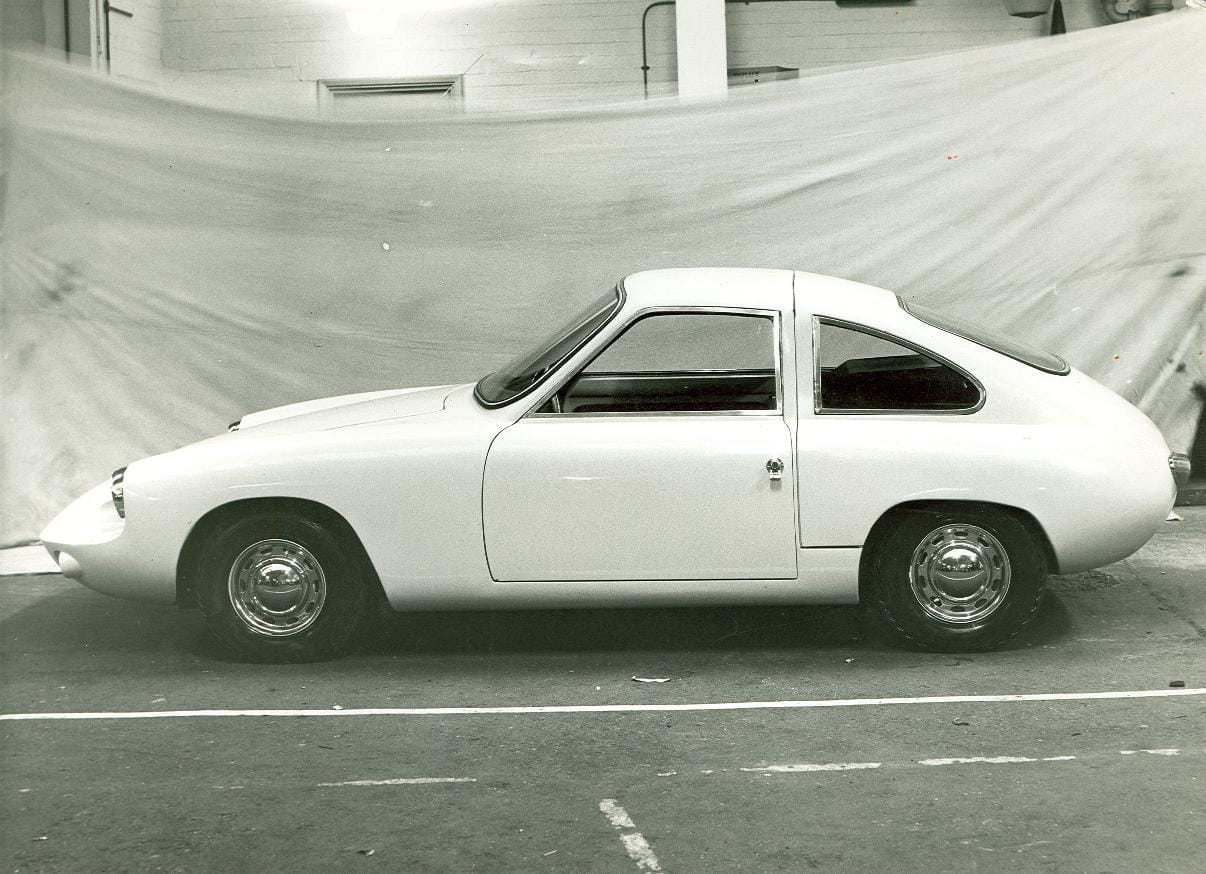
Forgotten Icons - In the early 1960s, the world of sports cars was a landscape defined by raw power and large, aggressive designs. Size and engine placement were considered cornerstones of performance, with most sports cars housing massive engines in the front. However, the debut of a peculiar, compact race car at London’s Olympia Racing Car Show in December 1961 began to change this perception. The Deep Sanderson 301, designed by British engineer and racer Chris Lawrence, defied convention with its miniature frame, unusual engine placement, and lightweight construction, signaling a new era in automotive design.
The one-off Deep Sanderson 301 Prototype made its debut at London’s Olympia Racing Car Show in December 1961. (Picture from: Banovsky)
Refined Ferocity - In a world where automotive dreams are forged with equal parts passion and precision, some names rise beyond the realm of engineering and enter the sphere of art. Just as the Maserati MC20 Venuum Cerberus once roared into the spotlight, captivating gearheads with its hellhound aggression and tailored finesse, another beast has emerged—this time from a legendary Italian stable. For those who crave something more than luxury, more than power, and certainly more than the ordinary, the Venuum Ferrari 296 Corsso stands ready to rewrite the rules.
The Venuum Ferrari 296 Corsso. (Picture from: Venuum)
Ferrari has always been more than a carmaker. It is a symbol of speed, elegance, and motorsport heritage that spans decades. Yet in 2024, something remarkable happened. The Ferrari 296, already a refined embodiment of modern performance, found itself at the heart of a new chapter—one penned by Venuum, a bespoke automotive design house based in Dubai. Known for its daring takes on elite vehicles, Venuum’s vision was clear: take an icon and elevate it to an untouchable status.
The Venuum Ferrari 296 Corsso. (Picture from: Forum.Forza.net)
This collaboration resulted in the creation of the Venuum Ferrari 296 Corsso, a rare breed of supercar that fuses Italian lineage with Arabian artistry. Venuum’s statement from the time said it best: this prototype was about innovation and elegance, offering a custom-tailored experience inside and out. And true to their word, the Corsso is far from a typical upgrade—it’s a full transformation, turning the already striking 296 into a kinetic sculpture with attitude.
The Venuum Ferrari 296 Corsso. (Picture from: Venuum)
What powers this beast is a masterclass in hybrid engineering. Underneath the sculpted carbon-fiber skin lies a 2,992cc twin-turbocharged V6 engine paired with an electric motor, delivering a combined output of 818 horsepower. The internal combustion engine alone provides 654 hp, with the electric unit contributing an additional 164 hp. The result is more than just acceleration—it’s an explosive surge that brings the driver closer to the road than ever before. This isn’t just a high-performance car; it’s a high-emotion one. | PY4pkqxPxws |
Aesthetically, the Venuum touch is impossible to miss. The Corsso’s bodywork has been reimagined with a full carbon-fiber kit that enhances aerodynamic performance while exuding aggression from every angle. Wide, forged wheels—20 inches in the front, 21 in the rear—anchor the vehicle to the tarmac, and the roof scoop, sharpened fenders, and distinct vents all serve both form and function. Painted in stealthy Black Edition or the stormy Nardo Grey, each version delivers a statement louder than its exhaust note. Even standing still, the Corsso looks fast.
Beyond the looks and numbers, exclusivity is part of what defines this model. Only 20 units of the Venuum Ferrari 296 Corsso were scheduled for production, and as of late 2024, only two had been spoken for—making it one of the rarest examples of Ferrari customization on the planet. These limited units ensure that every Corsso is not just a supercar, but a collector’s artifact—a moving monument to craftsmanship and rarity.
Venuum’s commitment to bold innovation extends well beyond Ferrari. Their official website showcases a lineup of transformative creations, including standout models like the Porsche 993, Rolls-Royce Dawn, Mercedes G63 Mastodon, and RR Apollo. Each of these bespoke projects reflects Venuum’s fearless approach to performance and design—crafting not just vehicles, but immersive, one-of-a-kind driving experiences.
For enthusiasts seeking more than just horsepower—those who crave a machine that tells a story with every rev and embodies a lifestyle of thrill and refinement—the Venuum Ferrari 296 Corsso delivers. While the price remains undisclosed, what’s certain is that this supercar offers more than speed or luxury. It’s about driving something that feels alive. Something rare. Something truly unforgettable. *** [EKA | FROM VARIOUS SOURCES | VENUUM | VENUUM ON INSTAGRAM | CARSANDCARS ON X | FORUM.FORZA.NET ]
Note: This blog can be accessed via your smart phone.
Golden Masterpiece- In the ever-evolving world of custom motorcycles, creativity often walks hand-in-hand with tradition. For decades, Harley-Davidson has dominated the chopper scene, setting the tone for what a custom bike should look and feel like. But every now and then, something radically different roars into view — something that redefines expectations and breaks the mold. That something is the BMS Nehme-sis.
Rather than following the usual American V-twin template, the Nehme-sis begins its life as a Yamaha Road Star, a bold departure that immediately sets it apart. In the U.S., this makes it a "metric" chopper — a rare breed in a space so heavily influenced by American brands. But make no mistake, this bike is anything but ordinary. Built in 2006, the Nehme-sis was the brainchild of Sam Nehme, the man behind Florida’s Broward Motorsports and its custom wing, BMS Choppers. Sam didn’t just build a bike — he created a rolling piece of mechanical art.
From the moment it debuted, the Nehme-sis turned heads. It became the first metric chopper ever to win the coveted Rats Hole Custom Bike Show at Biketoberfest, a competition with over three decades of history. And this wasn’t just a one-off achievement. Its impact resonated worldwide, especially after its stunning appearance at the CRC Speedshow in Auckland, New Zealand in 2013, where local enthusiasts were left speechless by its beauty and engineering.
The visual appeal of Nehme-sis is undeniable. It's the world’s first motorcycle to be entirely plated in 24-karat gold. Measuring an impressive 3.5 meters in length, the chopper offers a singular red velvet-covered seat, sculpted to provide comfort without compromising on elegance. Only a few traces of the original Yamaha remain — the 1,700cc engine, engine mounts, and part of the frame neck that retains the VIN. Everything else was painstakingly handcrafted from scratch.
And when we say handcrafted, we mean it. Labor costs alone for building Nehme-sis hit a staggering $250,000 — not including the gold plating, custom parts, or paint. The engineering behind its radical form is just as impressive as its golden surface. Take the one-sided front “fork,” for instance. Milled from a solid billet of aluminum and extending over a meter, it's a fully functional piece of precision machinery. Pair that with an air-ride suspension system that allows the entire bike to lift by 25 centimeters or lower flat onto the ground, and you’ve got a ride that doesn’t even need a kickstand.
Nehme-sis's red-velvet saddle which designed so perfectly that make its rider felt comfortable and more classy on it. (Picture from: MotorcycleSpecs.co.za)
The rear of the bike is no less spectacular. A massive 360mm tire, sourced from Vee Rubber, is hugged by a seamlessly integrated LED lighting system in the fender’s edge. A single-sided swingarm continues the minimalist, futuristic feel, while also housing its part of the air suspension. What’s equally clever is the electronic grip shifter — instead of a traditional gear lever, the rider shifts gears by rotating the left handgrip, which can also toggle the suspension system. Combined with an automatic clutch, it makes for an ultra-clean design free of unnecessary cables and levers.
But what truly sets the Nehme-sis apart isn’t just its looks or tech — it’s the soul that went into building it.Sam Nehme and his team didn’t just aim for innovation; they pushed for something timeless. A bike like this doesn’t come around often. It’s a fusion of luxury, performance, and imagination, elevated into something that feels more like sculpture than machine.
Nearly two decades after its creation, the Nehme-sis still stands as a benchmark for what’s possible when boundaries are ignored and vision leads the way. Whether it’s seen gliding across the tarmac or sitting still under show lights, this golden beast continues to mesmerize and inspire — a true one-of-a-kind masterpiece in the world of custom choppers.
Kept spur your adrenaline on the power of two-wheeled monster and stay alive with the true safety riding. May God will forgive Your sins and so does the cops...... *** [EKA [02092013] | FROM VARIOUS SOURCES | BMS CHOPPERS | ULTIMATEMOTORCYCLING | MOTORCYCLESPECS.CO.ZA | SPORTKU.COM]
Note: This blog can be accessed via your smart phone
Royal Obsession - In the world of exotic cars and royal indulgence, few stories are as fascinating as the quiet intersection of cutting-edge design and opulent exclusivity. Imagine a car that’s not just rare, but nearly mythical—a one-off masterpiece born from the creative genius of Pininfarina and built exclusively for one of the most extravagant car collectors in history. That car is the Royal Family of Brunei’s Mercedes Benz SL73 "Quicksilver", a bespoke automotive marvel that remains shrouded in mystery, luxury, and performance.
In 1996, His Majesty the Sultan of Brunei commissioned Pininfarina to recreate the Argento Vivo using a different platform, yet replicating the original Honda concept exactly, including the materials. (Picture from: PublicFotki)
To understand how this special roadster came into existence, we have to trace its roots back to the Argento Vivo—a stunning concept car born from a collaboration between Honda and the legendary Italian design house, Pininfarina. The Argento Vivo turned heads in the mid-1990swith its sleek curves, minimalist elegance, and futuristic presence. But while the concept was merely a design exercise for most, it became something more in the eyes of His Majesty the Sultan of Brunei. Intrigued by its style but not bound to Honda’s engineering, the Sultan envisioned a version of this car tailored to his own high standards.
Some say that Pininfarina built as many as five or six units of the Mercedes-Benz SL73 Argento Vivo for the Royal Family of Brunei.(Picture from: BenzWorld)
Instead of using the original Honda platform, he chose something more powerful and prestigious:the Mercedes-Benz R129 SL600. Already a rare and respected grand tourer in its own right, the SL600 served as the perfect base for what would become a completely reimagined machine. Pininfarina, known for shaping some of the most beautiful cars ever made, took this German chassis and transformed it into a near-exact replica of the Argento Vivo’s design. Every detail—from the fluid body lines to the advanced material choices—was preserved, blending Italian artistry with German engineering.
His Majesty the Sultan of Brunei’s Argento Vivo was built by Pininfarina on a brand-new Mercedes SL600 chassis. (Picture from: ClassicDriver)
What set the Brunei version apart, beyond its exclusive styling, was what lay under the hood. The car was fitted with a monstrous 7.3-liter M120 E73 V12 engine, the same powerplant found in the ultra-rare AMG SL73. This engine wasn’t just powerful—it was a beast. Delivering between 525 and 565 horsepower and a staggering 553 lb-ft of torque, it launched this roadster from 0 to 60 mph in just about 4.0 seconds, putting it in the same league as legends like the Lamborghini Diablo and Ferrari F40. And with a top speed surpassing 174 mph, the car was more than just a pretty face.
His Majesty the Sultan of Brunei’s Argento Vivo is powered by a 7.3-liter M120 E73 V12 engine, also used in the AMG Mercedes-Benz SL73.(Picture from: BenzWorld)
Despite its raw capabilities, what makes the Quicksilver even more intriguing is how little is known about it. Like much of the Sultan’s private collection, these cars live in a veil of secrecy. Only a handful—five or six at most—are believed to have been made. Four were reportedly built exclusively for the Royal Family of Brunei.
The Argento Vivo of the Royal Family of Brunei was significantly larger than the original Honda concept, yet could sprint from 0 to 60 mph in around 4.0 seconds and reach a top speed of over 174 mph. (Picture from: Supercars.net)
Today, it's said that at least two remain in their possession, while whispers suggest another one found its way to Monaco. There's even talk of a second, unfinished Honda-based conceptthat was eventually completed and now resides in the same European playground of the rich and famous.
The story of the SL73 Quicksilver isn't just about horsepower or head-turning design. It’s about the rare magic that happens when limitless resources meet unrestrained imagination. It's about a king’s vision turned into reality by one of the world’s finest design houses. And most of all, it’s about a car so rare and so exquisitely crafted that it seems to exist outside the ordinary timelines of automotive history—seen by few, remembered by fewer, and admired by all who know its name. *** [EKA | FROM VARIOUS SOURCES | HOTCARS | TOPSPEED | BENZWORLD | CLASSICDRIVER | MOTOR1 | CARSTYLING.RU | SUPERCARS.NET ]
Note: This blog can be accessed via your smart phone.


 Back in 2016, when Pokémon Go was peaking and people were walking into fountains trying to catch Pikachu, the revived Carrozzeria Viotti decided to gift the world something far rarer than a shiny Charizard: a supercar that looked like it time-traveled straight out of a vintage dream but roared with the lungs of a modern monster. Stanguellini Anita by Viotti wasn’t just a car; it was an Italian love letter written in carbon fiber and speed. | gtVQrf4_swQ |


 Today, the Stanguellini Anita by Viotti stands not just as a dream supercar, but as a symbol—a wild, wonderful, and weirdly romantic reminder that sometimes, passion drives faster than practicality. And honestly, who wouldn’t want a little more of that in their rearview mirror? *** [EKA | FROM VARIOUS SOURCES | STANGUELLINI | MOTORI.FANPAGE.IT | YOUMEDIA.FANPAGE.IT | OBSCURESUPERCAR ON X ]