Almost Forgotten - Among Ferrari's many illustrious sports car models, one stands out for its beautiful wedge style typical of the 1970s, yet it remains almost forgotten today. This car is the Ferrari P6 Berlinetta Speciale, designed by Pininfarina and first unveiled at the 1968 Turin Auto Show. This unique design was inspired by the Berlinetta Boxer and the 308/328 series and was originally presented as a model without an engine.
The 1968 Ferrari P6 Berlinetta Speciale by Pininfarina first unveiled at the 1968 Turin Auto Show. (Picture from: Carstyling.ru)
The Ferrari P6 Berlinetta Speciale was designed by Leonardo Fioravanti, who explored the idea of placing Maranello’s legendary V12 engine behind the cockpit instead of in the front. This concept mirrored the successful mid-engine designs of contemporaries like the Lamborghini Miura, De Tomaso Mangusta, and their successors, such as the Countach and Pantera, along with the Maserati Bora. Fioravanti's vision resulted in a car with strikingly tapered lines and a futuristic appeal.
The 1968 Ferrari P6 Berlinetta Speciale by Pininfarina posed along with its designer Leonardo Fioravanti and the inspiration sources Ferrari Berlinetta Boxer. (Picture from: WheelsAge.org)
The design of the P6 Berlinetta Specialle was almost flawless, with the exception of the rear section. The car's stubby tail, recessed headlights in the lower section, and massive upper section created a somewhat disharmonious look from the back.
Despite its initial design quirks, the Ferrari P6 Berlinetta Speciale by Pininfarina maintained a conservative yet elegant appearance, hinting at the future of sports car design. (Picture from: WheelsAge.org)
Fortunately, these design elements were significantly refined in subsequent models. Despite these initial design quirks, the car maintained a conservative yet elegant appearance that hinted at the future of sports car design.
The 1968 Ferrari P6 Berlinetta Speciale by Pininfarina is the first Maranello's model carries a mid-mounted V12 engine. (Picture from: Supercars.net)
This sparkling white vehicle was equipped with a 2,989 cc V12 engine capable of producing around 400 horsepower, a notable achievement for its time. Unlike other prototypes labeled with the letter 'P.' the P6 Berlinetta Speciale was nearly ready for production. However, despite its potential, the P6 Berlinetta Speciale did not receive the green light for mass production and was temporarily shelved.
The 1968 Ferrari P6 Berlinetta Speciale by Pininfarina is powered by a 2,989 cc V12 engine capable of spewing out around 400 hp. (Picture from: Supercars.net)
The P6 Berlinetta Speciale’s design did not fade into obscurity. Instead, it became the foundation for the Ferrari 365 GTB/4, commonly known as the Ferrari Daytona, which was launched in 1971. This new model also featured a mid-mounted 60° V12 engine, and its prototype was built on the chassis of the original P6 Berlinetta Speciale concept. The transition from the P6 to the Daytona demonstrated Ferrari’s commitment to innovation and design excellence.
The 1968 Ferrari P6 Berlinetta Speciale by Pininfarina used as the basis for the Ferrari 365 GTB/4 which was launched in 1971. (Picture from: Auta5p.eu)
Ferrari’s P6 Berlinetta Speciale may not be widely remembered today, but its influence on the brand’s subsequent models is undeniable. The car's innovative design and engineering paved the way for future successes and cemented its place in Ferrari’s storied history. The legacy of the P6 Berlinetta Speciale lives on through the Ferrari Daytona and the continued evolution of Ferrari’s sports car lineup.😔
In the ever-evolving world of automotive design, the Ferrari P6 Berlinetta Speciale stands as a testament to bold experimentation and forward-thinking engineering. Its story reminds us that even the most fleeting prototypes can leave a lasting impact on the automotive landscape. As we look back on this nearly forgotten gem, we gain a deeper appreciation for the visionaries who push the boundaries of design and performance, ensuring that the spirit of innovation continues to drive the automotive industry forward.*** [EKA [24112021] | FROM VARIOUS SOURCES | AUTA5P.EU | SUPERCARS.NET | CARROZZIERI-ITALIANI | CARSTYLING.RU ]
Note: This blog can be accessed via your smart phone
One-Off - Since its inception in 1919, Stola has carved a niche for itself in the automotive industry, consistently demonstrating its prowess in vehicle manufacturing from initial concept to final production. This heritage of excellence was epitomized at the 75th Geneva International Motor Show in 2005, where Stola unveiled the S86 Diamante, a new show model designed by the legendary Marcello Gandini.
The Stola S86 Diamante showcases the Italian brand's exceptional ability to deliver rapid, tailor-made engineering solutions, designed by the legendary Marcello Gandini. (Picture from: ArchivioPrototipi)
The Stola S86 Diamante showcases the Italian brand's exceptional ability to deliver rapid, tailor-made engineering solutions. This model is a testament to Stola's capability to execute a complete vehicle development plan—from stylistic feasibilities to small-series production—within an impressively short period. Remarkably, the S86 Diamante was completed in just five weeks before its debut at Geneva, highlighting Stola’s efficiency and dedication.
The remarkable feat of producing the S86 Diamante in just five weeks illustrates Stola’s unparalleled efficiency and the seamless integration of design and engineering.(Picture from: UltimateCarPage)
Marcello Gandini, renowned for his iconic designs for Lamborghini, including the Espada, Jarama, Urraco, Miura, and Countach, embraced this ambitious project despite the tight schedule. While some critics might argue that the S86 Diamante lacks the refinement of Gandini’s earlier works, likely due to the rush, the vehicle’s design still captures attention with its modern and dynamic aesthetic. The craftsmanship, especially in the interior, is a testament to Stola’s commitment to quality, even under time constraints.
The dimensions of the Stola S86 Diamante—a length of 4,275 mm, a width of 1,930 mm, a height of 1,225 mm, and a wheelbase of 2,600 mm.(Picture from: Supercars.net)
The S86 Diamante is more than just a showpiece; it embodies Stola’s philosophy of "Tailor Made Engineering." This approach allows Stola to develop projects from the initial stylistic feasibility phase to small-series production efficiently and precisely. The dimensions of the S86 Diamante—a length of 4,275 mm, a width of 1,930 mm, a height of 1,225 mm, and a wheelbase of 2,600 mm—contribute to its balanced and sleek profile. The front and rear tracks, measuring 1,535 mm and 1,555 mm respectively, enhance its stability and performance.
The craftsmanship, especially in the S86 Diamante's interior, is a testament to Stola’s commitment to quality, even under time constraints.(Picture from: UltimateCarPage)
Stola’s achievement with the S86 Diamante underscores its ability to meet customer needs swiftly and effectively. This model serves as a tangible demonstration of Stola’s capability to produce high-quality vehicles under tight deadlines, maintaining competitive development costs and ensuring rapid time-to-market. The S86 Diamante is neither a mere stylistic exercise nor just a show car; it is a clear example of Stola’s dedication to engineering excellence tailored to specific customer requirements.
The Stola S86 Diamante stands as a beacon of its expertise and commitment to quality. (Picture from: UltimateCarPage)
As Stola continues to innovate and push the boundaries of automotive engineering, the S86 Diamante stands as a beacon of its expertise and commitment to quality. The company's ability to adapt and deliver, even under the most challenging timelines, solidifies its reputation as a leader in the industry. The unveiling of the S86 Diamante at the Geneva Motor Show not only highlighted Stola's rich history but also paved the way for future innovations, demonstrating that with passion and precision, anything is possible. | GaRjbCPFlXE |
The remarkable feat of producing the S86 Diamante in just five weeks illustrates Stola’s unparalleled efficiency and the seamless integration of design and engineering. This achievement is a promising indication of what the future holds for Stola and its potential to continue setting benchmarks in the automotive world. With a legacy built on innovation and excellence, Stola is well-positioned to meet the evolving demands of the automotive industry, ensuring that it remains at the forefront of vehicle manufacturing for years to come. *** [EKA | FROM VARIOUS SOURCES | CARROZZIERI-ITALIANI | ULTIMATECARPAGE | SUPERCARS.NET | ARCHIVIOPROTOTIPI ]
Note: This blog can be accessed via your smart phone
⛔Rare GEMS💣 - In the realm of automotive history, few vehicles have captured the imagination quite like the Fiat 500 Topolino. Emerging in the wake of Dr. Ferdinand Porsche's creation, the Volkswagen Beetle, Italy introduced its own marvel: the Fiat 500 Topolino, affectionately named after Mickey Mouse for its compact charm. Spearheaded by Antonio Fessia and Dante Giacosa in the 1930s, this car wasn't just a vehicle; it was a symbol of accessible mobility for the masses.
The Fasana Topolino Spider built by Michele Fasana in 1957 based on the Fiat 500 Topolino. (Picture from: OcalaAutoRepair)
Measuring a mere 3.2 meters long, the Fiat 500 Topolino packed a punch with its 569 cc engine generating 13 horsepower, cruising at a modest 85 km/h. It marked Fiat's foray into mass production from 1936 to 1955, paving the way for a lineage of modern city cars that still dot our streets today.
The Fiat 500 Topolino, celebrated as the world's first city car, was produced from 1936 to 1955 and laid the foundation for a series of modern Fiat city cars that continue to this day. (Picture from: AutoUniversum)
Beyond its utilitarian roots, the Fiat 500 Topolino found itself on unexpected stages. It served as the blueprint for racing machines and became a canvas for custom projects, none more striking than the 1957 Fasana Topolino Spider. Crafted by Michele Fasana, an employee in Fiat's Special Bodies Department, envisioned and brought this remarkable vehicle to life in 1957. His passion for car design and his innovative approach have left an indelible mark on automotive history.
1938 Fiat 500A Topolino Hard Top by Zagato participated on the 1938 Mille Miglia (B&W photo colorized). (Picture from: MrScharroo's Weird Car Museum)
He began this project by sketching a design inspired by the jet age aesthetics of the 1950s. By using the chassis and mechanical components of the Fiat 500 Topolino, Fasana meticulously crafted the bodywork by himself during his free time. The result was a car that not only captured the futuristic design trends of the time but also showcased Fasana's exceptional skill and attention to detail. The front bumper featured a jet-themed intake and a large elliptical grille flanked by several lights, giving the car a distinct and memorable look.
The Fasana Topolino Spider, in its heyday, was used by its creator as a daily vehicle.(Picture from: WorldCarsFrom1930sTo1980s)
The rear design of the Fasana Topolino Spider
was equally impressive, with small fins and three tiny lights that
added to its unique character. This combination of elements made the car
stand out, evoking comparisons to the FMR Tg 500 'Tiger', another small car from a German manufacturer. The resemblance to the tiny car from "The Jetsons,"
a classic television cartoon series, further underscored its futuristic
appeal. The car's design was a perfect blend of innovation and
nostalgia, making it a true masterpiece of its time.
During its heyday, the Fasana Topolino Spider was not just a showpiece but a functional vehicle used by Michele Fasana as his daily driver. This personal connection to the car added to its charm and significance, as it was a practical realization of Fasana's design vision. The car's performance and unique design made it a head-turner on the streets, embodying the spirit of innovation that drove its creation.
While sat on diplay at the Automotoretrò 2016, the Fasana Topolino Spider in a dilapidated state, with rust covering most of its body. (Picture from: OcalaAutoRepair)
Despite its initial glory, the Fasana Topolino Spider's current condition is a cause for concern. Photos circulating on the internet show the car in a dilapidated state, with rust covering most of its body. It is a stark reminder of the passage of time and the need for preservation. This rare automotive gem deserves to be restored to its former glory, allowing future generations to appreciate its historical and artistic significance.
While sat on diplay at the Automotoretrò 2016, the Fasana Topolino Spider in a dilapidated state, with rust covering most of its body.(Picture from: Pinterest)
Restoring the Fasana Topolino Spider would not only preserve a piece of automotive history but also celebrate Michele Fasana's ingenuity and craftsmanship. It would serve as an inspiration to car enthusiasts and designers, showcasing the potential of custom automotive design. The restoration process would require meticulous attention to detail, ensuring that every aspect of the car is faithfully recreated to honor its original design.
While sat on diplay at the Automotoretrò 2016, the Fasana Topolino Spider in a dilapidated state, with rust covering most of its body.(Picture from: OcalaAutoRepair)
As we look forward to the potential restoration of the Fasana Topolino Spider, we invite anyone with pictures or information about this unique car to share them. By bringing together the collective knowledge and resources of the automotive community, we can ensure that this remarkable vehicle is preserved and celebrated for years to come. The Fasana Topolino Spider is not just a car; it is a symbol of creativity, innovation, and the enduring legacy of custom automotive artistry. *** [EKA | FROM VARIOUS SOURCES | OCALAAUTOREPAIR | BRICE HOUSTON | SILODROME'S INSTAGRAM | WORLD CARS FROM 1930S TO 1980S | AMAZINGCLASSICCARS | AMERICASBESTPICS | PINTEREST | AUTOPUZZLES ]
Note: This blog can be accessed via your smart phone
Less Fortunate Speedy Beast - The 24 Hours of Le Mans race holds a prominent place in automotive history, with a pivotal moment occurring in 1966. This year marked the first time cars manufactured by the Ford Motor Company triumphed on the championship podium, disrupting the dominance of the Italian Prancing Horses with three Ford GT40 cars. This victory not only cemented Ford's status in the racing world but also fueled the company's ambition to develop more competitive racing cars, including models that bore a striking resemblance to their rivals Ferrari 330 P3/4.
This is the Ford P68, also known as the Ford 3L GT or F3L, often regarded as one of the most visually appealing racing cars ever crafted by Ford during the 1960s. (Picture from: Alan Mann Racing)
One such creation was the Ford P68, also known as the Ford 3L GT or F3L. Introduced in March 1968, the P68 was a prototype racing car engineered by Len Bailey. This innovative car was constructed at Alan Mann Racing in Weybridge, Surrey, England, with financial backing from Ford Europe. Despite its promising design, the F3L faced numerous challenges that ultimately limited its success on the racing circuit.
The shapely Ford/Castrol 3 Litre Sports, also known as the P68 prototype, features a non-homologated bonnet line provided by the curvaceous GTX model.. (Picture from: Pedal2TheMetal)
The Ford 3L prototype made its debut at the BOAC 500 race at Brands Hatch, Kent. Although it demonstrated impressive speed capabilities, the F3L was criticized for its instability at high speeds. Mechanical and electronic failures plagued the car, preventing it from completing any race it entered. These issues highlighted the difficulties in balancing speed with reliability in high-performance racing cars.
The Ford P68, also known as the Ford 3L GT or F3L prototype made its debut at the BOAC 500 race at Brands Hatch, Kent. (Picture from: Pedal2TheMetal)
Designed to meet Group 6 regulations, the F3L featured a 2-seater layout without a roof, which led to several design flaws. The resulting narrow roof and driver space, combined with limited rear visibility, posed significant challenges. Bailey's extreme design aimed to achieve optimal aerodynamics, resulting in a low, long, and sinuous form. With a 3000cc engine, the P68 was intended to reach top speeds of 350 km/h, surpassing even the Formula One cars of its era.
Despite demonstrating impressive speed capabilities, the Ford P68/F3L faced criticism for its instability at high speeds and was plagued by mechanical and electronic failures, hindering its ability to finish any race it entered. (Picture from: Pedal2TheMetal)
However, the pursuit of aerodynamic efficiency came at the cost of driver comfort. The cramped and uncomfortable driver's cabin was a significant drawback. To address some of the aerodynamic issues, Bailey added a vortex-generating tail scoop. While this modification improved aerodynamics, it was deemed insufficient, as the front wheels of the F3L remained unstable at high speeds. This instability led renowned drivers John Surtees and Jack Brabham to refuse to drive the F3L, citing safety concerns.
The Ford P68/F3L's instability prompted renowned drivers John Surtees and Jack Brabham to decline driving it due to safety concerns. (Picture from: Silodrome)
Ultimately, the design flaws and persistent problems led to the F3L's relegation to the Ford Museum. Today, it makes occasional appearances at special events such as the Goodwood Festival of Speed and Ford Fest, serving as a reminder of its ambitious origins and the challenges faced in the quest for racing supremacy. | AquI49zoaAo |
Despite its shortcomings, the F3L remains a testament to Ford's innovative spirit and determination to push the boundaries of automotive engineering. The unique design of the Ford P68 also inspired the Fi GTP-13 Supersports custom car, created by Austrian father and son Rudolf and Alexander Fillafer. *** [EKA | FROM VARIOUS SOURCES | ALAN MANN RACING | PEDAL2THEMETAL | SILODROME ]
Note: This blog can be accessed via your smart phone
NEW BEAST - The automotive world is buzzing with anticipation as Lexus prepares to introduce a groundbreaking new supercar, inspired by the Toyota GT3 GR Concept that made waves at the 2022 Tokyo Auto Salon. This exciting development represents a spiritual successor to the legendary V10-powered LFA supercar and promises to compete fiercely with high-performance vehicles like the Aston Martin Vantage, Lamborghini Huracán, and the hybrid Ferrari 296 GTB.
The Toyota GT3 GR Concept first seen at the 2022 Tokyo Auto Salon will become the Lexus LFR. (Picture from: MotorSports)
Initially showcased as an extreme concept, the Toyota GT3 GR has evolved into a fully-fledged prototype. Recently, it was spotted at the iconic Spa-Francorchamps circuit in Belgium, demonstrating its potential with a powerful and distinctive exhaust note. Gazoo Racing, Toyota's esteemed motorsport division, is diligently working to ensure this supercar is ready for elite competitions by 2026, including the prestigious 24 Hours of Le Mans.
The spiritual successor to the legendary LFA, named the LFR, is being developed alongside Toyota's GT3 GR racing program. (Picture from: CarBuzz)
A crucial aspect of FIA homologation rules for GT3 race cars is the requirement that they share their basic body design with a road-going version. This stipulation ensures that by 2026, a slightly less aggressive, road-legal version of the GT3 GR will be available in showrooms.
The upcoming Lexus LFR supercar boasts a lightweight monocoque, drawing inspiration from the Toyota GT3 GR racer. (Picture from: Drive.com.au)
Toyota's commitment to "commercializing motorsport cars rather than simply adapting production vehicles for use in motorsports" aligns with this approach, as evidenced by the rally-tuned GR Yaris hot hatchback.
The upcoming Lexus LFR supercar boasts a twin-turbo V8 hybrid and is intended to be the successor to the Lexus LFA.(Picture from: Drive.com.au)
Lexus has a rich heritage of producing big-engined sports cars, such as the LFA, LC 500, IS-F, and RC-F. It is highly likely that the upcoming road-going GT3 GR will proudly bear the Lexus badge, continuing this legacy. Additionally, Toyota's recent collaboration with Mazda and Subaru to "revolutionize" the internal combustion engine underscores the importance of ICE technology, even as the automotive industry increasingly shifts towards electric vehicles.
Toyota has been vocal about the benefits of ongoing ICE research for sports cars. The company's significant investments in developing sustainable fuels, including a partnership with Yamaha to create a hydrogen-compatible 5.0-liter V8 engine, highlight this commitment. This engine might also feature in the upcoming Lexus supercar, further showcasing Toyota's innovative approach.
The Lexus Electrified Sport concept. (Picture from: Drive.com.au)
Expected to launch in 2026, the new Lexus supercar will likely feature a newly developed twin-turbocharged 5.0-liter V8 engine, generating an impressive 710 horsepower. Coupled with a next-generation plug-in hybrid system, the car's combined output is anticipated to reach a staggering 940 horsepower. This combination promises exhilarating performance and aligns with Toyota's multi-pathway strategy, which includes gasoline hybrids, plug-in hybrids, hydrogen-powered vehicles, and fully electric cars.
The Lexus Electrified Sport concept. (Picture from: Drive.com.au)
Confirming these ambitious plans, Toyota has announced that the new GT3 racer will carry Lexus badges. The road-going version, seen as a successor to the iconic Lexus LFA V10 supercar, is expected to debut in 2026. Rob Leupen, head of Toyota's World Endurance Championship team, affirmed that the GR GT3 concept will race in Europe starting in 2026, with a road car version following closely.
Japanese media have speculated that the new supercar, likely to be named the Lexus LFR, will utilize hybrid V8 power. Recent reports suggest it will combine a 4.0-liter twin-turbocharged V8 with an electric motor, delivering over 900 metric horsepower. The vehicle is expected to incorporate advanced materials such as aluminum and carbon fiber, enhancing its competitiveness in GT3 racing.
The Lexus LFR has already been seen testing at the Toyota-owned Fuji Speedway circuit in Japan, further indicating its readiness for the racetrack. As excitement builds, more details about this highly anticipated supercar will emerge in the coming months, setting the stage for its showroom debut.
As the automotive industry continues to evolve, Lexus is poised to make a significant impact with its innovative and powerful new supercar. The combination of cutting-edge technology, sustainable powertrain options, and a legacy of high-performance engineering ensures that this vehicle will capture the imagination of enthusiasts and set new benchmarks in the world of supercars. *** [EKA | FROM VARIOUS SOURCES | CARSALES.COM.AU | DRIVE.COM.AU | FORBES | MOTORSPORTS | CARBUZZ ]
Note: This blog can be accessed via your smart phone
ONE-OFF - Imagine a time when two great automotive cultures collided, producing a car that beautifully combined the best of both worlds. This was the Citroën SM (Serie Maserati) Coupé Frua, a stunning blend of French innovation and Italian flair. The creation of this car was not just a merging of technologies but a meeting of minds, reflecting the era’s adventurous spirit in car design.
The Citroën SM (Serie Maserati) Prototipo Coupé by Carrozzeria Frua is a stunning blend of French innovation and Italian flair. (Picture from: Carrozzieri-Italiani)
The story of the Citroën SM Coupé Frua began when Citroën acquired Maserati in 1968. This acquisition was a bold move, marking the start of a new chapter for both companies. Maserati, known for its powerful and stylish cars, brought its engineering prowess to the table. Citroën, famous for its advanced technology and unique designs, offered a fresh perspective. This partnership led to the creation of cars that were not only beautiful but also groundbreaking.
The Citroën SM (Serie Maserati) Prototipo Coupé by Carrozzeria Frua representing not just a merging of technologies but a meeting of minds, reflecting the era’s adventurous spirit in car design. (Picture from: Carrozzieri-Italiani)
One of the first fruits of this collaboration was the Maserati Bora. Designed by Giorgetto Giugiaro, the Bora was a sleek, mid-engine sports car with a 4,700cc V8 engine. Its clean lines and powerful performance set the stage for future Maserati models. Following the Bora, the Maserati Khamsin was introduced, featuring a conventional front-engine, rear-wheel-drive layout and a robust V8 engine.
The Citroën SM (Serie Maserati) Prototipo Coupé by Carrozzeria Frua stood alongside its Italian sibling, the Maserati Khamsin. (Picture from: Citroenvie)
The Khamsin's design shared several elements with the Frua-styled concept car, highlighting the synergy between Citroën and Maserati. Furthermore, the Maserati Khamsin was a rear-wheel-drive car, the Citroën SM was a front-wheel-drive vehicle powered by a distinctive 90-degree Maserati V6 engine. This engineering choice showcased the innovative approach of both brands.
The Citroën SM Prototipo Coupé by Carrozzeria Frua was a unique prototype that incorporated Citroën SM mechanical components and exhibited a design that foreshadowed future Maserati models. (Picture from: Carrozzieri-Italiani)
The Citroën SM Coupé Frua was a product of this era of experimentation and collaboration. Built by the Italian coachbuilder Carrozzeria Frua in 1971, the SM Coupé Frua made its debut at the Geneva Salon in March 1972. It was a unique prototype that incorporated Citroën SM mechanical components and exhibited a design that foreshadowed future Maserati models.
The interior of the Citroën SM Prototipo Coupé by Carrozzeria Frua is covered in black genuine leather and features a three-spoke steering wheel and a modern layout dashboard. (Picture from: Carrozzieri-Italiani)
Despite the allure of the front-wheel-drive configuration, Maserati chose to go with a mid-engine layout for its Merak model, using the Citroën-inspired V6 engine. This decision did not diminish the impact of the Citroën SM Coupé Frua, which remains a testament to Citroën’s forward-thinking design philosophy. The partnership between Citroën and Maserati during this period resulted in remarkable innovations and iconic vehicles that have left a lasting legacy in the automotive world.
The Citroën SM Prototipo Coupé by Carrozzeria Frua propelled by a distinctive front-mounted 90-degree Maserati V6 engine. (Picture from: Carrozzieri-Italiani)
After Citroën was acquired by Peugeot in 1975, the production of the SM came to an end. The Frua prototype, however, continued to capture the imagination of car enthusiasts. Following its initial display in Geneva, the car was showcased again in 1973 and at the International Motor Show in Barcelona, Spain. It eventually found its way into private ownership in Spain before being acquired by its current owner in Italy in the late 1980s.
The Citroën SM Prototipo Coupé by Carrozzeria Frua is adorned with unique flying buttresses, which clearly differentiate it from the Maserati Khamsin. (Picture from: Carrozzieri-Italiani)
The car underwent partial restoration between 2011 and 2012, preserving its unique character and historical significance. With 41,946 kilometers (about 26,000 miles) on the odometer, the Frua prototype remains in generally good condition. It comes with Spanish registration papers, offering a rare opportunity for collectors to own a piece of automotive history. This one-of-a-kind car, crafted by the talented Pietro Frua, is not just a vehicle but an entry ticket to some of the most prestigious concours d'élégance events.
The Citroën SM Coupé Frua is a remarkable example of what can be achieved when two different automotive philosophies come together. It embodies the spirit of innovation and collaboration that defined its era, standing as a symbol of the creative synergy between French and Italian automotive cultures. This car is more than just a fascinating 'might have been'; it is a celebration of the pioneering spirit that continues to inspire car designers today. *** [EKA | FROM VARIOUS SOURCES | CARROZZIERI-ITALIANI | WIKIPEDIA | CITROENVIE | CARSBONHAM | CONCEPTCARZ | OLDCONCEPTCARS ]
Note: This blog can be accessed via your smart phone


 The Ferrari P6 Berlinetta Speciale was designed by Leonardo Fioravanti, who explored the idea of placing Maranello’s legendary V12 engine behind the cockpit instead of in the front. This concept mirrored the successful mid-engine designs of contemporaries like the Lamborghini Miura, De Tomaso Mangusta, and their successors, such as the Countach and Pantera, along with the Maserati Bora. Fioravanti's vision resulted in a car with strikingly tapered lines and a futuristic appeal.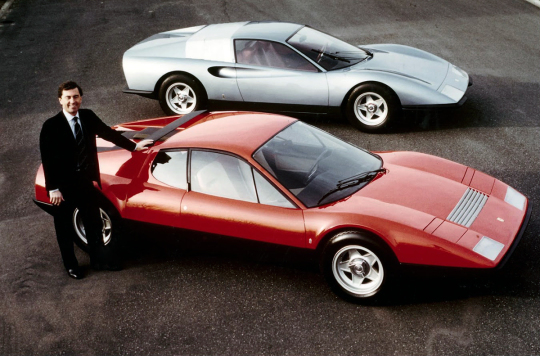


 In the ever-evolving world of automotive design, the Ferrari P6 Berlinetta Speciale stands as a testament to bold experimentation and forward-thinking engineering. Its story reminds us that even the most fleeting prototypes can leave a lasting impact on the automotive landscape. As we look back on this nearly forgotten gem, we gain a deeper appreciation for the visionaries who push the boundaries of design and performance, ensuring that the spirit of innovation continues to drive the automotive industry forward.*** [EKA [24112021] | FROM VARIOUS SOURCES | AUTA5P.EU | SUPERCARS.NET | CARROZZIERI-ITALIANI | CARSTYLING.RU ]


