-->
Drop Down MenusCSS Drop Down MenuPure CSS Dropdown Menu
Showing posts sorted by date for query Colani. Sort by relevance Show all posts

Thursday, December 11, 2025

Tracing Colani’s Mercedes Designs All the Way to the C112 Megastar

Maestro WORKS - Long before futuristic supercars became common conversation pieces, industrial designers were already imagining shapes that could slip through the air with the ease of migrating birds. The late 20th century was a fertile playground for such visions, and among the most daring voices of that era was Luigi Colani, the German-born designer who championed organic curves at a time when the automotive world was still dominated by sharp angles. His philosophy was disarmingly simple: nature already solved most aerodynamic problems—designers merely needed to pay attention. That idea would guide the trajectory of his work from the 1970s into the 1990s and eventually culminate in a radical concept known as the Mercedes C112 Megastar.
Luigi Colani’s Visionary Mercedes C112 Megastar: A Supercar for the Future. (Picture from: CultObjects in X, and Image Nanobana generated)
Colani's automotive journey with Mercedes-Benz stretches further back than most people realize. In the 1970s, he began experimenting with alternative automotive shapes, often using exaggerated curvature to prove how dramatically airflow could be controlled through organic geometry. His prototypes of that decade rarely resembled production vehicles; instead, they looked like sculpted wind tunnels made tangible, a blend of biology and machinery. These early experiments set the tone for everything that followed, especially as he pushed deeper into aerodynamic theory throughout the 1980s.
Thirty-four years ago, the 1991 issue of Auto-Illustrierte (1/91) introduced the Mercedes C112 as a groundbreaking concept created by the visionary Luigi Colani. (Picture from: CultObjects in X)
By the late 1980s and into the early 1990s, Colani’s relationship with high-speed performance became increasingly intertwined with motorsport. He proposed several extreme designs for Mercedes endurance racing, including imaginative studies meant for Le Mans. These machines were shaped like rolling airfoils—smooth, domed cockpits, rounded fenders, sweeping tails, and closed wheel housings that suggested a vehicle grown rather than engineered. Although Mercedes did not adopt these proposals for official competition, the concepts themselves influenced Colani’s own thinking. They were attempts to solve the same issues Group C cars faced: the need for stability at enormous speeds, efficient cooling, and minimal drag across hours of racing. In hindsight, these racing studies became the spiritual forerunners to the road-going supercar idea he would later pursue. 
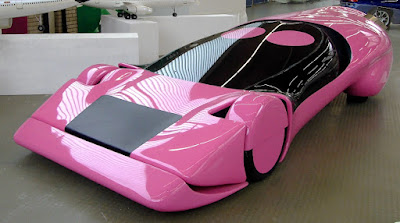
The 1970 Mercedes-Benz Colani C112 prototype, based on the Mercedes-Benz C111 with a rotary engine, stands out as a testament to his avant-garde vision. (Picture from: EternalConsumptionEngine)
That evolution led to the early 1990s, when Colani turned his attention to a more holistic supercar concept. In 1991, Auto-Illustrierte published what would become one of his most talked-about car creation under Mercedes badgethe C112 Megastar. While the name echoed the Mercedes C112 engineering prototype of the period, Colani’s interpretation was something entirely different, a sculpture of motion built upon his distinctive design language. 
The 1970 Mercedes-Benz Colani C112 prototype's rear featured with a giant wiper and a series of exhaust pipes, boasts radical aerodynamics with a drag coefficient of 0.2. (Picture from: EternalConsumptionEngine)
What made the C112 Megastar stand out was not just its visual boldness but how carefully its shape was engineered around airflow. Colani believed the world underestimated the power of what happened under a car, not just above it. In the Megastar, the air beneath the body was channeled to move faster than the air flowing over the top. This deliberate difference in velocity allowed the underbody to rise at a calculated angle, creating natural downforce at the rear axle without relying on aggressive wings or spoilers. It was a rare instance where aerodynamic function translated directly into aesthetic form.
The 1985 Mercedes-Benz W201/190 Le Mans Concept maintaining a sleek, low-slung profile, and exuded a more refined aesthetic compared to its predecessor, the Colani C112. (Picture from: ConceptCars)
The exterior continued this theme with generously sized side vents designed to extract heat from the engine and maintain steady temperatures during high-load driving. These openings did more than cool—their placement helped smooth the pressure zones along the car’s flanks, allowing the vehicle to maintain stability as speeds climbed. The roof was sculpted like an aero helmet, narrowing airflow into a controlled stream that reduced drag and guided air cleanly toward the rear. Even the tail served a role in managing turbulence, shaping the departing airflow to keep the car planted and consistent at speed.
The 1985 Mercedes-Benz W201/190 Le Mans Concept's rear incorporated smooth, rounded lines to enhance aerodynamics. (Picture from: ConceptCars)
Colani’s obsession with harmony extended all the way to the exhaust system, which he treated not as a mechanical afterthought but as part of the aerodynamic whole. Custom exhaust outlets were positioned to work with the body instead of against it, minimizing drag and supporting the airflow pattern established from nose to tail. While the interior of the Megastar was less documented than its exterior, Colani’s design philosophy suggests that he likely envisioned a cockpit built around organic ergonomics—smooth, flowing, uninterrupted shapes meant to merge with the driver rather than restrict movement.
The 1991 Mercedes-Benz W201/190 Le Mans Concept introducing slanted-style headlights, a typical modern Mercedes-Benz grille, and a striking orange hue. (Picture from: WeirdWheels)
Looking back several decades later, the C112 Megastar feels less like a relic and more like a preview of the design conversations happening today. Electric supercars, efficiency-driven shapes, underbody aerodynamics, and airflow-centric engineering have become standard topics in modern design studios. Colani’s Megastar anticipated the movement long before computational fluid dynamics became mainstream. And perhaps that is why his work continues to resonate: it occupies a rare intersection between art and engineering, challenging the idea that speed requires aggression rather than elegance.
Although the planned engine for this iteration remains undisclosed (seems like it still utilizes the donor's drivetrain), the design evolution showcased Colani's commitment to innovation. (Picture from: WeirdWheels)
Colani’s legacy is often framed through the lens of eccentricity, but the Megastar shows that his ideas were deeply grounded in physics. The car embodies decades of refinement—from his early 1970s organic experiments, to his Le Mans–inspired studies of the 1980s, to the fully formed aerodynamic philosophy he expressed in the early 1990s. The result is a concept not only representative of its era but also surprisingly aligned with the direction performance design is heading today. The C112 Megastar remains one of those rare creations that feels both rooted in its moment and remarkably ahead of it, a reminder that imagination, when paired with the laws of nature, can point toward futures the industry has yet to fully explore. *** [EKA | FROM VARIOUS SOURCES | CULTOBJECTS IN INSTAGRAM | CULTOBJECTS IN X | STORY-CARS | AMAZINGCLASSICCARS | 2H-LEMANS | DARKROASTEDBLEND | ETERNALCONSUMPTIONENGINE ]
Note: This blog can be accessed via your smart phone.

Tuesday, November 25, 2025

The Colani–Getra Viper Remodel: A Bold Fusion of Muscle Car and Bio-Design

Maestro Works - Every era in automotive history has its quiet revolutionaries—those who dared to blur the line between mechanical function and artistic imagination. In the late 1990s, when most supercar makers were obsessed with angular aggression and brute horsepower, one man continued sculpting cars like they were living organisms. That man was Luigi Colani, the German industrial designer whose fluid, organic approach to design often looked as if it came from another planet. Around 1999, his fascination with nature’s efficiency and movement collided with one of America’s rawest symbols of musclethe Dodge Viper
One of the original Dodge Viper remodels (in coupe form) was created by Luigi Colani in collaboration with the Köln-based automotive company Autohaus Getra in 1999. (Picture from: RawViper)
What emerged from that unlikely meeting was the Colani–Getra Viper Remodel, a rare and mysterious creation that still sparks curiosity today, perhaps influenced by a concept he created around the same time — the Colani Mamba ConceptThe collaboration, though never officially documented by Chrysler, is believed to have taken shape through Autohaus GETRA GmbH, a Cologne-based company known for its close association with the Dodge brand in Germany. Together, they reimagined the Viper not as a brutal track monster, but as a living sculpture in motion.  
The original 1999 Dodge Viper (left) pictured alongside the Colani Mamba Concept (center) and the Colani–Getra Dodge Viper coupe remodel (far right). (Picture from: AllCarIndex)
Colani’s touch transformed the car’s famously aggressive stance into something more fluid and almost aquatic. His design philosophy, often described as “biodesign,” aimed to replace sharp lines with the kind of curves you’d find in naturea dolphin’s fin, a bird’s wing, or in this case, the head of a mamba snakeThe visual result was nothing short of striking. The car’s nose stretched and dipped like a creature poised to strike, while its bodywork swelled in graceful arcs that seemed to breathe rather than merely channel air
One of the original Dodge Viper remodels (in coupe form), featuring additional headlights, was created by Luigi Colani in collaboration with the Köln-based automotive company Autohaus Getra in 1999. (Picture from: ReddIt)
One of the most distinctive details was the inclusion of extra headlamps—a subtle yet intentional break from the Viper’s traditional front fascia. It was Colani’s way of balancing functionality with aesthetic rhythm, a small change that made the car instantly recognizable. Paired with widened arches and softened contours, the remodel no longer looked like a muscle car forcing its presence—it appeared to glide, a contradiction of strength and elegance.
Dashboard view of the original Dodge Viper remodeled versions, was created by Luigi Colani in collaboration with the Köln-based automotive company Autohaus Getra in 1999. (Picture from: Cultobjects in X)
Rumors around production numbers have only deepened the car’s mystique. Some enthusiasts claim that just three or perhaps four of these remodeled Vipers were ever built, split between coupe and roadster versions. Whether these cars were fully functional or simply rolling design studies is still debated. Autohaus GETRA, primarily a dealership and service operation rather than a manufacturer, likely oversaw the conversion process rather than full-scale production. Yet that limited involvement might have been precisely what allowed Colani’s artistic freedom to flourish—free from the corporate constraints of mass-market design.
One of the original Dodge Viper remodeled versions (in roadster form), said to have been produced by Autohaus Getra in 1999, with only three units reportedly built. (Picture from: Nitter.net)
Though it never achieved official recognition in the automotive press of its time, the Colani–Getra Viper has endured as a cult curiosity among collectors and design historians. The car embodies a fascinating cross-cultural moment: an American symbol of untamed horsepower reinterpreted through the eyes of a German visionary obsessed with harmony and form. Seen from today’s perspective—an age where sustainability, aerodynamics, and biomimicry are central to car design—Colani’s approach feels prophetic. His belief that beauty and efficiency are one has become a cornerstone of modern automotive philosophy. 
One of the original Dodge Viper remodeled versions (in roadster form), said to have been produced by Autohaus Getra in 1999, with only three units reportedly built. (Picture from: Cultobjects in X)
More than two decades later, the Colani–Getra Viper stands as a rare glimpse into what happens when art refuses to obey the rules of engineering. It is not simply a modified sports car but a conversation between cultures, decades, and disciplines—a sculpted question mark on wheels. Whether parked in a private collection or remembered in photographs, it continues to challenge our notion of what a muscle car can be: less a beast of power, and more a creature of imagination, alive in every curve and line that Luigi Colani ever drew. *** [EKA | FROM VARIOUS SOURCES | COLANI | LUIGI COLANI DESIGN MUSEUM | CULTOBJETS IN X | STORY-CARS | STOLZECLASSICCARS | ALLCARINDEX | CARSTYLING.RU | RAWVIPER | AUTOTITRE | ALESUPERCARS.WEEBLY | BLOGOMOTIVE | REDDIT LUIGICOLANI | OCALA AUTO REPAIR | BOX26.CH | LCDM@NITTER.NET | CAR-PASSION BY R&O | GEOBLOG.RU ]
Note: This blog can be accessed via your smart phone.

Thursday, November 6, 2025

The Untamed Shape of Speed: Luigi Colani’s Radical 1974 Ferrari 365 GTB/4

Maestro Works - Automotive design has always been a playground for dreamers — a space where imagination meets engineering and where beauty often collides with boldness. But every once in a while, someone appears who completely rewrites the rules. In the 1970s, one such visionary was the German designer Luigi Colani, a man who didn’t just design cars — he sculpted motion itself. Among his many daring creations, the 1974 Ferrari 365 GTB/4 Daytona stands as one of the most fascinating and unconventional reinterpretations of a Ferrari ever built.
This is a remarkable one-off modification of the 1974 Ferrari 365 GTB/4, meticulously crafted by Luigi Colani to embody his vision of futuristic aerodynamics and artistic innovation. (Picture from: Story-Cars)
Colani was no stranger to controversy or creativity. Famous for his philosophy of “biodynamic design,” he believed that nature’s curves and organic shapes held the key to efficiency and speed. He was obsessed with aerodynamics long before it became a mainstream obsession in automotive design. When he set his sights on the Ferrari 365 GTB/4a car already known for its aggressive beauty and powerful V12 engine — his goal was nothing less than audacious: to create the world’s fastest production car.
The 1974 Ferrari 365 GTB/4 Daytona custom-built by Luigi Colani reflects his bold pursuit of blending nature-inspired “biodynamic design” with advanced aerodynamics to transform Ferrari’s powerful V12 masterpiece into what he envisioned as the world’s fastest production car. (Picture from: Story-Cars)
The result was something that looked like it came from another planet. Gone were the sharp edges and classic lines of the original Daytona. Instead, Colani replaced them with smooth, flowing contours that seemed to melt into the ground. The most striking feature was the enormous front sectiona swollen, sculptural hood with a dramatic air intake sitting like a prow of a spaceship. The front end appeared almost liquid, its seamless form designed to cheat the wind rather than please traditionalists. The windscreen wrapped around the cockpit like a visor, creating a futuristic, almost aquatic profile. Seen in the photos from the era, with Colani himself proudly standing beside his creation, the car looks less like a Ferrari and more like a concept born from a wind tunnel experiment.
The 1974 Ferrari 365 GTB/4 Daytona custom-built by Luigi Colani featured an enormous, sculptural front section with a dramatic air intake and a visor-like windscreen that together formed a seamless, fluid design resembling a futuristic, wind-cheating spacecraft. (Picture from: Story-Cars)
Despite its alien form, the foundation beneath remained pure Ferrari. The chassis and heart of the Daytonaits roaring V12 engine — stayed intact. But Colani’s modifications to the bodywork aimed to push performance boundaries. His aerodynamic ambitions were serious, though documentation of the car’s testing or speed results remains scarce. It’s possible that this unique Ferrari was more of a rolling design study than a functional record-breaker, yet it fully embodied Colani’s belief that form should follow the laws of physics rather than tradition. 
The 1974 Ferrari 365 GTB/4 Daytona custom-built by Luigi Colani appeared otherworldly, its sharp original lines transformed into smooth, flowing contours that seemed to melt seamlessly into the ground. (Picture from: Story-Cars)
Ferrari’s official stance on the car remains a mystery. There’s no record of Maranello endorsing Colani’s vision, and perhaps that’s fitting — because this project was never about approval. It was about exploration. Whether commissioned by a private collector or born from Colani’s own imagination, the 1974 Ferrari 365 GTB/4 by Luigi Colani exists as a rebellious one-off masterpiece that dares to question what a Ferrari should look like
The final form of the Ferrari Testa D'Oro Colani since undergoing its last transformation after 1992, featured a massive panoramic windshield, a low aerodynamic nose, and a cockpit wrapped in 1960s race-inspired blue. (Picture from: CarAndDriver)
Interestingly, Colani’s creative partnership with Ferrari didn’t end there. Fifteen years later, he returned to the marque with another radical concept — the 1989 Ferrari Testa D’Oro, based on the Ferrari Testarossa. Once again, his design chased the dream of ultimate speed. This later car featured a massive panoramic windshield, a low aerodynamic nose, and a cockpit wrapped in 1960s race-inspired blue. Beneath its curvaceous skin, a monstrous Lotec-Ferrari twin-turbo V12 engine delivered an astonishing 750 horsepower, capable of propelling the car to an incredible 351 km/h (218 mph)
The Ferrari Testa D'Oro Colani's engine upgrades led to a name change from 'Testarossa' (red head) to 'Testa D’Oro' (golden head). (Picture from: CarAndDriver)
Looking back from today’s world of sleek hypercars and advanced aerodynamics, Colani’s 1974 Ferrari creation feels oddly prophetic. It predicted a future where design would merge seamlessly with science — where cars would no longer be just machines but sculptures in motion. His Ferrari Daytona may not have broken records, but it broke boundaries. Here’s a video about the Testa D’Oro, since no footage of Luigi Colani’s radical 1974 Ferrari 365 GTB/4 has been found. | Jzbu8-tP4bc |
In an era when most designers played it safe, Luigi Colani built a Ferrari that refused to conform. It wasn’t about elegance or even practicality — it was about vision. Decades later, that vision still turns heads, reminding us that true innovation often begins with a question few dare to ask: What if we stopped following the wind and started shaping it instead? *** [EKA | FROM VARIOUS SOURCES | COLANI.ORG | LUIGICOLANIDESIGN | STORY-CARS | CARSTYLING.RU | WEIRDWHEELS IN REDDIT | EXPRESS CARS UK IN FACEBOOK | CARANDDRIVER ]
Note: This blog can be accessed via your smart phone.

Monday, October 13, 2025

Colani Ford Ka: The Wild Little Ford That Defied All Design Rules

Maestro Works - There was a time when small cars carried big personalities, and one of the most eccentric examples came from the unexpected collaboration between Ford and the legendary German designer Luigi Colani. Known for his obsession with organic, flowing forms, Colani believed that good design should imitate nature — and in 1998, that philosophy took shape in one of the most unusual Fords ever built: the Colani Ford Ka.
The Ford Ka highlights its sweeping side and rear contours, where Luigi Colani’s flowing design transforms the compact hatch into a sculpted piece of motion. (Picture from: LuigiColani in Reddit)
It all began when Ford wanted to inject more attitude into its then-new city car, the Ka. At the Essen Motor Show in 1998, they asked Colani to reimagine the compact hatchback into something bold and aerodynamic — something that could stand out from every other small car on the road. What resulted was less of a simple facelift and more of a design statement that seemed to bend the Ka’s shape into a liquid form
The Ford Ka flaunts its bold front design, featuring Colani’s signature aerodynamic curves and futuristic lines that give the small car a fearless personality. (Picture from: LuigiColani in Reddit)
From the front, the Colani Ka looks like it’s been sculpted by wind rather than by human hands. The headlights stretch upward into teardrop shapes, while the bumper forms two gaping intakes that give the car a quirky but aggressive face. The fenders are dramatically widened, housing distinctive Schmidt Revolution alloy wheels that look like they came from a racing car. Along the sides, the body swells over the rear wheels in a fluid motion, leading to an unmistakably bulbous tail — round, smooth, and unlike anything else on the road. Even the mirrors were reshaped with aerodynamics in mind, echoing Colani’s signature futuristic curves.
The Ford Ka welcomes with a playful yet functional cabin, blending smooth curves, soft materials, and Colani’s signature organic design touch. (Picture from: LuigiColani in Reddit)
The rear is perhaps the most polarizing view. The taillights are tucked into those oversized hips, creating a shape that feels almost biological — like something designed by evolution, not engineers. The Colani signature sits proudly on the back, reminding anyone following that this isn’t just another city car. 
 
Inside, the interior remained largely faithful to the regular Ford Ka, but it still carries that late-’90s playfulness. The rounded dashboard and soft, wave-like forms blend perfectly with Colani’s exterior vision. It’s minimalist yet characterful, with a leather steering wheel, an electric sunroof, and a small plaque confirming its authenticity as a Colani Edition. Every car also came with a certificate signed by Colani himself, turning what could have been a quirky concept into a collector’s dream. 
The Ford Ka shows off its right-side stance with fluid curves and bold proportions, embodying Colani’s aerodynamic vision in a sleek, futuristic silhouette. (Picture from: LuigiColani in Reddit)
Beneath all the design drama sat a modest hearta 1.2-liter four-cylinder Ford Endura-E engine producing 60 horsepower and 105 Nm of torque. Paired with a five-speed manual gearbox and front-wheel drive, it could reach 158 km/h and sprint from 0 to 100 km/h in just over 15 seconds. Not exactly lightning fast, but speed was never the point. This was about aerodynamic exploration and design artistry in motion.
 
What’s truly fascinating is how well the public responded. The Colani Ka wasn’t just a design study — it generated so much buzz at Essen that Ford approved a limited run of 200 units, sold exclusively through the Cologne dealership R&S Mobile. For a car this unusual, that’s a remarkable achievement. 
The Ford Ka showcases its distinctive rear curves and sculpted bumper, where Colani’s aerodynamic vision turns practicality into pure design artistry. (Picture from: LuigiColani in Reddit)
Today, the Colani Ford Ka stands as a charming relic of a time when automakers dared to experiment. It’s strange, bold, and a little bit impractical, but also wonderfully creative. Luigi Colani’s influence can still be felt in the car’s curves — a rolling sculpture that challenged the very idea of what a small city car could look like. Unfortunately, no video of this car exists — only the standard Italian Ford Ka commercial is available. | WJfGQseFzp4 |
In an era where modern cars often blend into one another, the Colani Ka reminds us that automotive design can be both functional and fantastical. It may not have been everyone’s cup of tea, but it was proof that imagination still had a place in the automotive world — and that sometimes, the most memorable cars are the ones that refuse to play it safe. *** [EKA | FROM VARIOUS SOURCES | CULTOBJECTS IN X | LUIGICOLANI IN REDDIT | STORYCARS | LOT-ART | CARSTYLING.RU | AUTOBLOG.NL | AUTOMOTO.IT ]
Note: This blog can be accessed via your smart phone.

Tuesday, October 7, 2025

The Futuristic World of Luigi Colani’s Heavy-Duty Trucks

Maestro Works  - In the world of automotive innovation, few figures dared to reimagine the rules of design quite like Luigi Colani. At a time when most trucks were built as square, utilitarian machines, Colani saw them as aerodynamic sculptures—living organisms that should flow through the air rather than fight against it. Long before the words sustainability or aerodynamics became everyday buzzwords in transportation, he was already sketching shapes that looked more like creatures from the future than vehicles of their time. His vision blended art, engineering, and science into one seamless language—bold, organic, and decades ahead of everyone else.  
The 2012 Colani Innotruck, shown here alongside Luigi Colani, features a unique design that allows the driver to access the cockpit by sliding open its glass nose. (Picture from: Bubblemania.fr)

Monday, August 25, 2025

Lehalle Coeur de Belle: The One-of-a-Kind Dream Car Born in a French Farmhouse

Farmhouse Fantasy - It’s almost hard to imagine, but at a time when cars prioritized function over flair, it took a dreamer with an artist’s vision and a mechanic’s skill to change the script. The mid-1960s were buzzing with creativity—music, fashion, and design were evolving fast—yet car design remained stuck in convention. Then, from a quiet corner of rural France, came a spark: a small team, a nearly forgotten village, and a bold vision that gave birth to one of the most original cars ever made. This is the story of the Lehalle Coeur de Belle
The Lehalle Coeur de Belle is a truly one-of-a-kind custom car, built by Claude Lehalle with the help of the villagers of Murasson, using the foundation of a Renault 8. (Picture from: ClassicAndRecreationSportscars in Facebook)
Born not in a factory but in an abandoned farmhouse in the quiet village of Murasson, this car was never meant to blend in. Its creator, Claude Lehalle, wasn’t a car executive or a famous designerhe was a model maker, a craftsman, and a storyteller in fiberglass and steel. With a dream to build something original and utterly unlike anything else on the road, he packed up his life with his wife and moved to the countryside. There, among rolling fields and the warmth of a tight-knit community, ‘Coeur de Belle’ began to take shape.
When the Lehalle Coeur de Belle was unveiled to the public in 1967, it captured the admiration of the quiet village of Murasson. (Picture from: ClassicAndRecreationSportscars in Facebook)
The car’s name, borrowed from a spiky yet striking flower called the Carlina Acanthifolia—locally known as Coeur de Belle—perfectly captured the essence of the project. It was raw, beautiful, and full of personality. Underneath, it used the bones of a Renault R8, a modest family car known for its durability and practicality. But Lehalle transformed that humble foundation into something truly fantastical. The engine, a 1108cc 4-cylinder mounted in the rear, delivered a mere 50 horsepower, but the story was never about speed. It was about imagination.
The Lehalle Coeur de Belle, named after the striking Carlina Acanthifolia flower, features a fiberglass body with no visible headlights, rear window, or wipers—elements Lehalle saw as distractions—and a butterfly-style canopy that gives it a distinctly futuristic presence. (Picture from: ClassicAndRecreationSportscars in Facebook)
The body of the car, crafted entirely in fiberglass, looked like it belonged to a sci-fi movie rather than a French backroad. It had no visible headlights, no rear window, no windshield wipersthings most people would consider necessary, but in Lehalle’s world, they were optional distractions from the form. The cabin canopy opened upwards like butterfly wings, giving the car an otherworldly presence. At the back, the engine bay lifted in a dramatic clamshell fashion. Everything about it was bold and unapologetically futuristic, reminiscent of Luigi Colani’s avant-garde “auto-morrow” concepts.
The Lehalle Coeur de Belle boasts a sleek fiberglass body free of headlights, rear window, or wipers—deliberate omissions by Lehalle to preserve its pure form—topped with a butterfly-style canopy that adds to its futuristic allure. (Picture from: ClassicAndRecreationSportscars in Facebook)
What made this car more special, though, was how it came together. This wasn’t a solo project done in secret. The entire village got involved. Craftsmen, blacksmiths, local Renault mechanics, and even schoolchildren played a part. Some helped shape body panels, others assisted in assembly, and it was the children who ultimately chose the car’s name. With the support of the Cooperative des Métiers and even the mayor—himself a passionate car enthusiast—the dream became a reality in just three months.
The Lehalle Coeur de Belle stood ready just before its journey to Paris for display at the 1967 Automobile Club de l'Ile de France exposition in Place de la Concorde. (Picture from: ClassicAndRecreationSportscars in Facebook)
On June 16, 1967, the Lehalle Coeur de Belle rolled out of the farmhouse for the first time, met with awe and curiosity. Just days later, it traveled to Paris where it became a showstopper at the Automobile Club de l'Ile de France exposition, proudly displayed in Place de la Concorde. The car stood as a symbol of creative rebellion, an outsider that didn’t ask to follow the rules.
When this photo was taken in 2015, the Lehalle Coeur de Belle remained intact, though clearly in need of a full restoration to revive its former glory. (Picture from: ClassicAndRecreationSportscars in Facebook)
Only one was ever made. Just one. A piece of rolling art that refused to conform. In 2015, decades after its debut, photos surfaced showing that the car still existedweathered by time, in need of care, but undeniably still holding onto its mystique. A children’s car inspired by its design even emerged in 1970, complete with a tiny 49cc engine, proving that even in miniature form, Lehalle’s vision continued to inspire.
When this photo was taken in 2015, the Lehalle Coeur de Belle remained intact, though clearly in need of a full restoration to revive its former glory. (Picture from: ClassicAndRecreationSportscars in Facebook)
The Lehalle Coeur de Belle is more than just a car—it’s a moving memory, shaped by passion, community, and the belief that even in a quiet, tucked-away village, something truly unforgettable can be created. *** [EKA | FROM VARIOUS SOURCES | RARECARSONLY | ALLCARINDEX | AUTOPUZZLES | CLASSIC AND RECREATION SPORTSCARS IN FACEBOOK | ATOMIC SAMBA IN FACEBOOK ]
Note: This blog can be accessed via your smart phone.

Friday, June 13, 2025

Luigi Colani’s 1969 Bizzarrini 5300 GT: The Wild Shape of Speed

Fluid Boldness - In a world where most cars follow the rules, Luigi Colani spent his life joyfully rewriting them. Long before sleek aerodynamics became trendy and before “futuristic design” became a buzzword, this German-born designer was already turning imagination into metal. Starting in the early 1950s and continuing well into the new millennium, Colani roamed freely through the world of industrial design—shaping everything from chairs and cameras to airplanes and, of course, some of the most outlandish cars ever built. 
Luigi Colani's radically reimagined 1969 Bizzarrini 5300 GT—where muscle car meets living sculpture in a bold expression of Biodesign. (Picture from: Story-Cars)
Luigi Colani
(1928 - 2019).

(Picture from: Wikidata)
If one thing defined his vision, it was his devotion to nature’s forms: flowing, round, and completely free of harsh angles. He called it Biodesign, and once you see it, you never forget it. His career in car design reads like a gallery of rolling sculptures. In 1959, he teamed up with Abarth and Alfa Romeo to create the 1300 Berlinetta, a compact yet futuristic coupe that looked like it had been formed by the wind itself. The 1970s brought the Miura Le Mans Concept, Colani’s surreal take on Lamborghini’s iconic model, reimagined for endurance racing with a shape that almost floated.
In 1968, Colani introduced his 'C-Form' concept—a visionary take on aerodynamics where the entire vehicle’s body was shaped like an inverted wing. (Picture from: Bubblemania.fr)
Not even Formula 1 escaped his touch. The Eifelland Type 21, which appeared in 1972, looked like a spacecraft in a field of race cars—complete with a single rearview mirror sprouting from its nose and bodywork that defied every norm. As time went on, his ideas only grew bolder. In 1989, Colani unleashed the Ferrari Testa D’Oro, a radical reinvention of the Testarossa built to chase speed records. Its silhouette was wild, but it was no fantasy—it actually performed. 
Luigi Colani posed alongside his car creations, such as the Mamba Concept, Ferrari Testa D'Oro, and many others. (Picture from: RawViper)
By the late '90s, he introduced the Colani Mamba Concept, reportedly designed as an experimental proposal for a future Dodge Viper. It ditched brute-force muscle in favor of an organic, serpentine shape—more creature than car. Then came the Innotruck in 2012, a full-sized biodynamic truck that looked more like a rolling spaceship than a cargo hauler. It was futuristic, functional, and totally unmistakable.
The Innotruck posed along with Luigi Colani, and as you can see here, the front of the truck gives a unique access for the driver get into the cockpit by sliding its glass nose. (Picture from: Bubblemania.fr)
Yet, among all his automotive visions, one project managed to balance Colani’s unfiltered creativity with the legacy of classic performance: the 1969 Bizzarrini 5300 GT by Luigi Colani. The original Bizzarrini was already a head-turner—an Italian GT powered by American muscle, built for both beauty and speed. But to Colani, it still played too safely. He saw potential not yet realized. So, he transformed it.
The original Bizzarrini 5300 GT is the first Giotto Bizzarrini's production version car after he estabilished his own company in 1966. (Picture from: Petrolicious)
And what a transformation it was. In Colani’s hands, the Bizzarrini 5300 GT turned into something wild and visceral. Just look at the front endferal grille slats that seem to snarl, headlights deeply recessed behind black bars like the eyes of a predator. The body, finished in an arresting yellow, flows like molten lava, with oversized fenders and swollen haunches that seem to shift under light. It’s not a car you simply look at—it’s one that stares back. The entire silhouette seems grown rather than built, like some high-speed creature engineered in nature’s own wind tunnel.
A head-on look at Colani’s 1969 Bizzarrini 5300 GT—where organic flow meets fierce presence, redefining what a sports car can look like. (Picture from: Story-Cars)
He didn’t alter the powerplant or core mechanicals; Colani’s work was pure form. But in doing so, he changed how the Bizzarrini 5300 GT was perceived. No longer just a beautiful Italian GT, it became a rolling sculpture. A challenge to the conventions of what a performance car should be. His version didn’t chase symmetry or elegance—it chased raw feeling, emotion, energy. And that’s exactly what makes it unforgettable.
Shrunk in size, not in spirit—Colani’s Biodesign lives on in every curve of this striking 5300 GT model, with fluid forms and fearless flair. (Picture from: Story-Cars)
What makes this car so captivating is how it bridges worlds—part classic grand tourer, part science fiction. It shows what happens when a visionary dares to reimagine something already iconic and breathes new life into it. Colani’s redesign didn’t boost performance on paper, but it gave the car something far more elusive: a wild soul. Perhaps by watching the video below, we can better grasp the rhythm behind Luigi Colani’s unique design flow.
Today, that 1969 Bizzarrini 5300 GT by Luigi Colani stands not only as a rare collector’s item but as a reminder that design can be fearless. That form can speak just as loudly as function. And that once in a while, someone like Colani comes along—not to follow the road, but to reshape it entirely. *** [EKA | FROM VARIOUS SOURCES | BUBLEMANIA.FR | STORY-CARS | MYCARQUEST | RAWVIPER | DESIGNDIFFUSION ]
Note: This blog  can be accessed via your smart phone