📢Rare ONES - At the 2024 Monterey Car Week, Pagani stunned the world not only with the debut of the Utopia Roadster but also with rumors of another remarkable vehicle—the Pagani Zonda Arrivederci. This exclusive model, rumored to be the final iteration of the iconic Zonda series, has generated significant excitement among automotive enthusiasts. Though the manufacturer has kept details under wraps, the buzz surrounding this special edition has only grown, fueled by a striking rendering from Modena Design, a Scottish-based supercar rendering specialist.
The
Pagani Zonda Arrivederci is reportedly the 140th example built,
promised to be the final new Zonda model, and made specifically for
American businessman and car collector Kris Singh. (Picture from: TopGear)
The supercar is reportedly the 140th example built, promised to be the final new Zonda model, and made specifically for American businessman and car collector Kris Singh, making it an incredibly rare and highly coveted vehicle. Although Pagani has not released official images, Modena Design's rendering offers an enticing preview of what's to come. The car features a Zonda Roadster body with clear ties to the 760 series, yet it stands out with several unique custom elements.
The
Pagani Zonda Arrivederci will undoubtedly be remembered as one of the most iconic and significant models in the brand’s history. (Picture from: TopGear)
Among these is the use of a distinctive composite material that incorporates Alutex, giving the car a bright silver sheen. This is beautifully contrasted with black accents and striking blue-red details that adorn various parts of the car, such as the wheel housing, rocker panels, hood, headlight surrounds, roof scoop, shark fin antenna, and the imposing rear wing.
The Pagani Zonda Arrivederci is reportedly the 140th example built, promised to be the final new Zonda model, and made specifically for American businessman and car collector Kris Singh. (Picture from: Carscoops)
One of the most eye-catching features of the Zonda Arrivederci is its rear spoiler. Inspired by the Zonda JC, this unique wing stands out not only for its design but also for its positioning, which is notably higher than that of previous Zonda spoilers. This, combined with carbon ceramic brakes and red brake calipers, gives the Arrivederci an aggressive and purposeful stance.
The Pagani Zonda Arrivederci features a Zonda Roadster body with clear ties to the 760 series, yet it stands out with several unique custom elements. (Picture from: TopGear)
Inside, the Arrivederci continues to impress with an interior that is as bold as it is luxurious. The use of bright red leather creates a striking contrast, while elements such as carbon fiber and classic wooden accents on the steering wheel enhance the car’s premium feel. These details come together to create an interior that is both modern and timeless, reflecting Pagani’s dedication to craftsmanship and attention to detail.
The Pagani Zonda Arrivederci features a distinctive Alutex-infused composite material that gives it a bright silver sheen, beautifully contrasted by black accents and striking blue-red details across various parts of the car.(Picture from: Carbuzz)
While the exact specifications of the Zonda Arrivederci’s engine remain a mystery, it is widely believed that the car will feature the same naturally aspirated V12 engine found in other Zonda 760 models. With a displacement of 7.3 liters, this engine is expected to produce an impressive 760 horsepower, ensuring that the Arrivederci delivers the thrilling performance that Pagani is known for.
The Pagani Zonda Arrivederci boasts a bold and luxurious interior, where bright red leather contrasts strikingly with carbon fiber and classic wooden accents on the steering wheel, enhancing its premium feel. (Picture from: MotorAuthority)
As with all Pagani models, the price of the Zonda Arrivederci is expected to be nothing short of extraordinary. To provide some context, the Pagani Utopia Roadster, which also debuted at the 2024 Monterey Car Week, is estimated to cost around £2.6 million (approximately Rp.47.9 billion) and rises to £3.1 million (around Rp.56.9 billion) after tax. Given the Arrivederci’s exclusivity and significance as the final Zonda, it wouldn’t be surprising if its price surpassed these figures.
With carbon ceramic brakes and red brake calipers, gives the Pagani Zonda Arrivederci an aggressive and purposeful stance. (Picture from: Carbuzz)
The arrival of the Zonda Arrivederci will mark the end of an era for Pagani. The Zonda’s journey began at the 1999 Geneva Motor Show with the debut of the Pagani Zonda C12, a car that laid the foundation for Pagani’s reputation as a creator of some of the world’s most exquisite and high-performance vehicles. Over the years, the Zonda has evolved and captivated the hearts of car enthusiasts worldwide, becoming a symbol of innovation, design, and engineering excellence.
The Pagani Zonda Arrivederci is widely believed that the car will feature the same naturally aspirated V12 engine found in other Zonda 760 models. (Picture from: TopGear)
As the curtain falls on the Zonda’s legacy, the Arrivederci serves as a fitting tribute to a car that has left an indelible mark on the automotive world. It represents not just the culmination of years of development and refinement, but also a celebration of what has made the Zonda so special—a combination of breathtaking design, unparalleled performance, and an unwavering commitment to pushing the boundaries of what a supercar can be.
In the years to come, the Pagani Zonda Arrivederci will undoubtedly be remembered as one of the most iconic and significant models in the brand’s history. For those fortunate enough to own one of these rare vehicles, it will be more than just a car; it will be a piece of automotive history, a testament to the enduring legacy of the Zonda, and a symbol of Pagani’s relentless pursuit of perfection. *** [EKA | FROM VARIOUS SOURCES | MODENA DESIGN | TOPGEAR | MOTORAUTHORITY | CARBUZZ | CARSCOOPS ]
Note: This blog can be accessed via your smart phone
Old, Fast And Fierce - Welcome to the fascinating realm of Pagani, where automotive dreams take shape and redefine the boundaries of supercar excellence. In this exploration, we delve into the lesser-known yet captivating chapter of Pagani's legacy – the Pagani Zonda 760 Nonno.
The Pagani Zonda 760 Nonno is a unique specimen in Pagani's lineup assumed the critical role of a test mule, rigorously evaluated for crash safety during the developmental phase. (Picture from: CarBuzz)
Unveiled as the second iteration after the Zonda C12 #001 at the 1999 Geneva Motor Show, the Zonda 760 Nonno is a unique specimen in Pagani's lineup. While one of its counterparts served as a demonstrator, this particular model assumed the critical role of a test mule, rigorously evaluated for crash safety during the developmental phase.
The Pagani Zonda 760 Nonno's relative obscurity stems from its duty as a test mule extensively utilized by the Italian automaker on both highways and circuits. (Picture from: MotorAuthority)
The Zonda Nonno's relative obscurity stems from its duty as a test mule extensively utilized by the Italian automaker on both highways and circuits. This unsung hero played a pivotal role in scrutinizing various aspects of new Pagani models, contributing to the refinement and enhancement of each vehicle before its official debut. Undergoing initial upgrades to meet evolving specifications, the Zonda Nonno found itself under the expert care of Pagani's official tester, Davide Testi.
The Pagani Zonda 760 Nonno played a pivotal role in scrutinizing various aspects of new Pagani models, contributing to the refinement and enhancement of each vehicle before its official debut. (Picture from: MotorAuthority)
Remarkably, the Zonda Nonno remains operational to this day, earning its endearing nickname, "Nonno," which translates to "grandfather" in Italian, a nod to its venerable age. Its current specifications mirror those of the Zonda 760 series, echoing the prowess of models like the Zonda 760 LH once owned by Formula One racer Lewis Hamilton. Propelled by a formidable 7.3-liter AMG V12 engine, the Zonda Nonno boasts an impressive 760 horsepower, seamlessly delivered to the rear wheels through a sophisticated sequential gearbox.
The Pagani Zonda 760 Nonno current specifications mirror those of the Zonda 760 series, echoing the prowess of models like the Zonda 760 LH once owned by Formula One racer Lewis Hamilton. (Picture from: MotorAuthority)
As per insights from Carscoops, the Nonno epitomizes a Pagani Zonda in the coveted 760 spec, akin to illustrious counterparts such as the Pagani Zonda 760 RS and 760 LH. Evolving over the years, it now stands as a testament to automotive ingenuity, incorporating elements from the Zonda Cinque bodywork and boasting an astonishing mileage exceeding 1.1 million kilometers, as of 2013.
The Pagani Zonda 760 Nonno propelled by a formidable 7.3-liter AMG V12 engine, the Zonda Nonno boasts an impressive 760 horsepower, seamlessly delivered to the rear wheels through a sophisticated sequential gearbox. (Picture from: AutoVideos)
With Pagani's formal announcement signaling the conclusion of Zonda production – with the Zonda Revolucion marking the pinnacle and the Zonda 764 Passione as the final road-worthy model – the Zonda Nonno can now bask in a well-deserved moment of respite. This unique Pagani, with its storied history and substantial contributions to automotive development, stands as a living testament to the brand's unwavering commitment to pushing the boundaries in the realm of high-performance vehicles.
In closing, the Pagani Zonda 760 Nonno emerges not only as a test mule but as a symbol of resilience, evolution, and innovation. Its journey from a developmental workhorse to a distinguished member of the Zonda family encapsulates the spirit of Pagani – where every creation tells a story of passion, precision, and the relentless pursuit of automotive excellence. *** [EKA | FROM VARIOUS SOURCES | MOTORAUTHORITY | CARBUZZ | CARSCOOPS ]
Note: This blog can be accessed via your smart phone.
Immortal Engineering - In the world of high-performance cars, where speed, design, and emotion blend into mechanical poetry, some machines refuse to fade into the background. Just when we thought we had seen the last of a legend, it makes an unexpected return. The automotive community is once again buzzing, not because of something entirely new, but because a familiar masterpiece has been reborn in a form never seen before. Say hello—again—to the Zonda, now resurrected as the stunningly exclusive Pagani Zonda Unico.
The Pagani Zonda Unico is the latest masterpiece brought to life by Pagani Automobili, crafted for a discerning client and inspired by the majestic Mount Kunlun in China. (Picture from: duPontRegestry)
When Pagani Automobili first unleashed the Zonda in 1999, the automotive world was forever changed. Crafted with an obsession for detail, performance, and artistic beauty, the Zonda became a symbol of what happens when technology and passion collide. Many believed the story of the Zonda had ended when Pagani shifted its focus to newer creations like the Huayra and more recently, the Utopia.
The Pagani Zonda Unico's body is entirely carbon fiber, tinted with a mesmerizing blue hue that glows with energy. (Picture from: Motor1)
But time and again, the Zonda has defied the odds. Somehow, it keeps returning—not as a recycled idea, but as a reimagined marvel. With the debut of the one-of-a-kind Zonda Unico, the phrase "Zonda never dies" has never rung more true. This latest iteration is more than just a throwback; it’s a tribute to enduring excellence and tailored craftsmanship. Commissioned by an exclusive client with a distinct vision inspired by Mount Kunlun—one of China’s most majestic mountain ranges—the Zonda Unico stands as a uniquely personalized expression of automotive artistry.
The Pagani Zonda Unico features exposed carbon elements—from the windshield frame to the mirror caps, and from the headlight surrounds to the intricate vents—that elevate both its aesthetics and performance. (Picture from: Motor1)
Unlike a completely new model, the Unico is a transformation of an existing Zonda chassis, yet the level of customization makes it feel entirely unique. It features aggressive aerodynamic enhancements, including a towering rear wing with its own smaller wing, a central fin that slices through the air, and a dominant roof scoop that amplifies its already commanding presence.
The Pagani Zonda Unico powered by the same AMG-sourced 7.3-liter naturally aspirated V-12 engine found in the Zonda 760 Roadster. (Picture from: duPontRegestry)
Although Pagani has remained quiet about exact performance figures, visual cues speak volumes. The body is entirely carbon fiber, tinted with a mesmerizing blue hue that glows with energy. From the windshield frame to the mirror caps, from the headlight surrounds to the intricate venting, exposed carbon elements enhance both aesthetics and performance. The attention to detail extends to the blue-accented wheels, brake calipers, quad exhausts, and taillight surrounds—every inch a reflection of bespoke excellence.
The Pagani Zonda Unico is a remarkable one-off creation derived from the iconic Zonda lineage, crafted as a single, exclusive unit for a discerning client.(Picture from: duPontRegestry)
Power is expected to come from the same AMG-sourced 7.3-liter naturally aspirated V-12 engine found in the Zonda 760 Roadster, offering up to 760 horsepower. Though interior photos haven’t surfaced, fans can only hope for the inclusion of a classic gated shifter—an homage to old-school driving pleasure. That kind of mechanical rawness is what has always set the Zonda apart from its competitors and even its own successors.
The Pagani Zonda Unico also features an aggressive aerodynamic package, which includes a towering center fin, a prominent roof scoop, and other race-inspired elements that emphasize both form and function. (Picture from: duPontRegestry)
It’s fascinating to observe how the Zonda, despite its age, continues to capture imaginations far more than newer Pagani models. The Huayra, while a technological marvel in its own right, never stirred the same emotional resonance. Perhaps it’s the soulful character of the Zonda, its analog purity in an increasingly digital world, or simply the rarity of each hand-built version that fuels its legacy.
The Pagani Zonda Unico features aggressive aerodynamic enhancements, including a towering rear wing with its own smaller wing. (Picture from: Motor1)
The Zonda Unico isn’t just a car—it’s a declaration that legends don’t retire. They evolve. They adapt. And sometimes, they return in even more extraordinary form. For those who thought they had seen the last chapter of the Zonda saga, this breathtaking creation is a beautiful reminder that some icons are simply timeless. *** [EKA | FROM VARIOUS SOURCES | PAGANIAUTOMOBILI ON INSTAGRAM | MOTOR1 | TOPGEAR | DUPONTREGESTRY ]
Note: This blog can be accessed via your smart phone.
💰Unique ONES💰 - The world of high-performance vehicles is filled with awe-inspiring machines, each more impressive than the last. Among these, the Pagani Zonda stands out as a truly exceptional creation. Revered for its stunning design and unparalleled performance, the Zonda has earned its place as one of the most iconic supercars ever made.
The Bajzath Bikes Zonda F has not only created a stunning tribute to the Pagani Zonda F supercar but has also set a new standard in the world of custom motorcycles. (Picture from: Jakusa in Flickr)
AnniversaryEdition - In the world of supercars, few names resonate like Pagani. Known for its exceptional craftsmanship and cutting-edge design, the Italian brand has long been synonymous with luxury and performance. In 2019, Pagani celebrates a significant milestone: the 20th anniversary of its first supercar, the iconic Pagani Zonda. With its debut at the 1999 Geneva Motor Show, the Zonda quickly became a symbol of automotive innovation, capturing the attention of car enthusiasts worldwide.
The Zonda’s lasting appeal can be attributed to its timeless design and engineering excellence. Crafted with meticulous attention to detail, the Zonda was offered in only 140 units, each built to the buyer's specifications. This exclusivity, paired with a distinct look, has helped the Zonda remain relevant two decades later. For Pagani, the Zonda's significance goes beyond just being the first production car; it marked the beginning of the brand's journey in the hypercar world.
Part of dashboard view of fully-restored Pagani Zonda C12 Chassis no. 001. (Picture from: SupercarsBlog)
As part of the 20th-anniversary celebration, Pagani unveiled a fully-restored Zonda C12 at the 2019 Geneva Motor Show. This particular car, chassis no. 001, was the very first Zonda ever produced. The restoration process was part of Pagani’s newly established program, Pagani Rinascimento, dedicated to reviving and preserving the brand’s legacy. The program focuses on restoring the cars to their original configurations, ensuring that every detail, down to the last component, mirrors its 1999 debut.
Beautiful genuine leather car seat of fully-restored Pagani Zonda C12 Chassis no. 001. (Picture from: SupercarsBlog)
Chassis no. 001 is finished in a striking silver color, inspired by Mercedes-Benz's iconic Group C race cars. The car’s heart is a 6.0-liter naturally aspirated V12 engine, built by Mercedes-Benz, producing 450 horsepower and 472 lb-ft of torque. Paired with a 5-speed manual transmission, the Zonda C12 could accelerate from 0 to 60 mph in just 4.0 seconds—an impressive feat for its time.
The Zonda C12 set the stage for a series of more powerful and refined versions. It was succeeded by the Zonda S, which featured a 7.0-liter V12 engine producing 542 horsepower. Over the years, the Zonda continued to evolve, with models like the Zonda F, Zonda Roadster, and the Zonda HP Barchetta taking the brand to even greater heights. Each new iteration pushed the boundaries of performance, while still maintaining the spirit of the original Zonda.
What makes the Zonda so captivating is not just its performance, but its enduring legacy. The Zonda’s combination of raw power, sophisticated design, and exclusivity continues to captivate car enthusiasts and collectors worldwide. As Pagani looks toward the future, it’s clear that the Zonda will always remain at the core of the brand’s story, symbolizing its lasting impact on the supercar world. *** [EKA[12042019] | FROM VARIOUS SOURCES | THE SUPERCARS BLOG | WHICH CAR ]
Note: This blog can be accessed via your smart phone
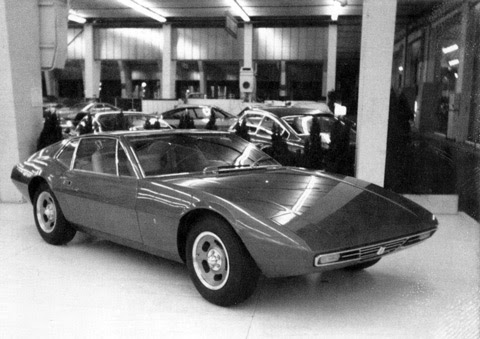
Forgotten ONES - Amid the glimmering lights and excited crowds of the 1971 Geneva Motor Show, a car appeared that seemed to come from the future. Its sleek lines, sharp profile, and enigmatic presence drew attention, yet history would soon tuck it away into obscurity. This was the De Tomaso Zonda Concept—a machine that promised both style and power but would ultimately vanish, leaving only whispers of its existence.
The De Tomaso Zonda Concept is designed by Tom Tjaarda of Carrozzeria Ghia (although the first sketch was done by Giullia Moselli ex. Italdesign). (Picture from: LotusEspritTurbo)
Born from the collaboration of Carrozzeria Ghia and the visionary designer Tom Tjaarda, based on an initial sketch by Giullia Moselli of Italdesign, the Zonda was more than a concept—it was a glimpse into what Italian automotive creativity could achieve when paired with ambition.
Its name, “Zonda,” evoked the hot winds that sweep across Argentina’s Andes Mountains, a poetic nod to the shared roots of Alejandro De Tomaso and Horacio Pagani. Decades later, Pagani would carry the name into automotive legend, but in 1971, it belonged to this singular, mysterious prototype.
The De Tomaso Zonda Concept was made its first debut at the 1971 Geneva Motor Show. (Picture from: Zwischengas)
The car was designed with the American market in mind, intended to complement the De Tomaso Pantera in Lincoln-Mercury showrooms. This plan reflected the ambition of De Tomaso to merge Italian style with American accessibility.
The De Tomaso Zonda Concept is built on the DeTomaso Deauville fancy coupe platform with a short wheelbase. (Picture from: LotusEspritTurbo)
Ford’s majority ownership of De Tomaso at the time made this strategy possible. With American industrial support backing Italian design, the Zonda
represented a unique collaboration between two continents, aiming to
bring European elegance to the streets of the United States.
The De Tomaso Zonda Concept featured with a 'fast' roofline ending in a neat, sloping tail and also had lots of glass, and neat chrome bumpers and detailings. (Picture from: CurbSideClassic)
Beneath its sleek, flowing exterior, the Zonda housed a 351ci V8 engine sourced from Ford’s Cleveland lineup. This engine delivered 350 horsepower, promising a performance that could stand alongside the era’s most respected grand tourers.
The De Tomaso Zonda Concept appears to be a pure two-seater, although it might have had some very tiny 2+2 seats in back. (Picture from: Carrozzieri-Italiani)
The engine was mounted on a shortened wheelbase borrowed fromthe De Tomaso Deauville coupe. This platform provided a compact but balanced structure, enhancing handling and giving the car a poised, athletic stance on the road, and promising performance that rivaled contemporaries like the Ferrari Daytona and Lamborghini Jarama.
The De Tomaso Zonda Concept is powered by a 350hp 351ci V8 front-mounted engine taken from Ford Cleveland. (Picture from: PerformanceFord)
Visually, the Zonda evoked comparisons to the Maserati Ghibli, sharing a fastback roofline, pop-up headlights, and a streamlined silhouette created a streamlined, futuristic profile, while curves and angles flowed smoothly to form a cohesive and elegant silhouette.
The De Tomaso Zonda Conceptrode on a 99.5-inch wheelbase, and was 176 inches long. (Picture from: LotusEspritTurbo)
The car measured 176 inches in length with a 99.5-inch wheelbase, presenting itself as a pure two-seater, like the Ferrari Daytona. However, it might have included tiny 2+2 seating in the rear, offering a hint of versatility without compromising the car’s sporty character.
The De Tomaso Zonda Concept carries GT (GranTurismo) typical styles with rear deck was a hatchback.(Picture from: PerformanceFord)
A hatchback rear deck added an element of practicality to the design. This subtle feature blended functionality with the Zonda’s unmistakable allure, making it a concept car that could impress both visually and mechanically.
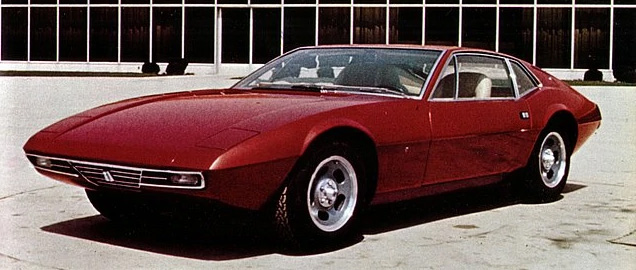
The last appearance of De Tomaso Zonda Concept was repainted in red by Ford before it dissappeared. (Picture from: LotusEspritTurbo)
Yet ambition alone could not secure its fate. Ford deemed the projected $14,000 price too low to be profitable for the American market. With funding and production halted, the Zondaremained a one-off prototype. Over time, its trail grew cold—rumors suggest it was repainted red before disappearing completely, leaving behind only photographs, sketches, and the story of what might have been. 👉Unfortunately, no video of the De Tomaso Zonda exists, so the video shown below features the De Tomaso P72 instead.🙏
Today, the De Tomaso Zonda stands as a fascinating footnote in automotive history. Though overshadowed by the later Pagani Zonda, it embodies a moment when design, engineering, and international collaboration converged in a single, fleeting creation. Its legacy lives not in showrooms or on roads but in imagination—a reminder of the bold ideas that shape automotive dreams, even when reality keeps them out of reach.😎 *** [EKA [30082022] | FROM VARIOUS SOURCES [20072022] | PERFORMANCE.FORD | DRIVR.BE | OLDCONCEPTCARS | CLASSICCARS.FANDOM | LOTUSESPRITTURBO ]
Note: This blog can be accessed via your smart phone
Sculpted Fury - There’s something magical about the turn of the millennium in the automotive world. It was a time when supercar manufacturers weren’t afraid to push boundaries, blending old-school mechanical rawness with emerging technologies. Amidst all the giants and household names, a lesser-known marque emerged with a car so unique, so dramatically engineered, that it forced the world to stop and stare. That car was the Pagani Zonda C12 S.
A striking and rare sight, the Zonda C12 S is a wild carbon-bodied supercar with a soul defined by its twin rear wings. (Picture from: MostExclusiveCars in X)
Born from the vision of Horacio Pagani, an Argentine engineer with deep Italian roots and an obsession for perfection, the Zonda wasn’t just another new face on the supercar scene—it was a direct challenge to the dominance of brands like Ferrari and Lamborghini. Pagani had spent years mastering his craft at Lamborghini, becoming an expert in composites and aerodynamics, before taking the bold step of launching his own automotive company, Pagani Automobili. And when the original Zonda C12 debuted in 1999, it made waves. But Pagani didn’t stop there.
This is the Zonda C12, the very first creation from Pagani Automobili, unveiled to the world at the 1999 Geneva Motor Show. (Picture from: MonkeyMotor)
Just a year after the debut, the Zonda evolved. In 2000, Pagani unveiled the Zonda C12 S—an upgraded, faster, more potent version of the original. At the heart of this monster was a reworked engine from AMG, the high-performance arm of Mercedes-Benz. Displacing a massive 7.0 liters, this naturally aspirated V12 wasn’t just about size—it was about soul. It produced a thunderous 550 horsepower and a monstrous 553 lb-ft of torque, delivering not just incredible acceleration but a soundtrack that could make any car enthusiast weak at the knees.
The Pagani Zonda C12 S stands proudly beside its creator and the founder of the company, Horacio Pagani. (Picture from: MonkeyMotor)
Unlike some exotic cars that seem to scream performance but fall short when tested, the Zonda C12 S delivered on every level. Its acceleration was brutal yet composed, reaching 62 mph in just 3.7 seconds. Top speed?An eye-watering 211 mph. But speed was just one part of the story. The handling, balance, and responsiveness of the Zondaset it apart from anything else on the road. Much of this was thanks to its advanced carbon-fiber chassis and precise suspension setup, which combined light weight with incredible stiffness and control.
The Pagani Zonda C12 S combined function with artistic flair, featuring refined spoilers and intakes that enhanced downforce and preserved its iconic look.(Picture from: SupercarNostalgia)
The bodywork wasn’t just functional—it was sculpted with artistic flair. The updated aerodynamics included refined spoilers and intakes that improved downforce and airflow while maintaining the car’s unmistakable look. The entire car, crafted almost entirely from carbon fiber, was a showcase of craftsmanship and cutting-edge materials. From its leather-strapped front and rear clamshells to the twin rear winglets replacing the original spoiler, every inch of the Zonda felt purposeful and passionate.
The Pagani Zonda C12 S welcomed you into a cabin where brushed aluminum, analog gauges, leather, alcantara, and sculpted metal elements blended raw engineering with artistic luxury. (Picture from: SupercarNostalgia)
Step inside, and you were greeted with a cabin that was as much art as it was engineering. Brushed aluminum trim, analog gauges, and bespoke switches created an environment that felt raw yet luxurious. Leather, alcantara, and polished metal were used thoughtfully, and even the pedals were crafted with a sculptor’s eye. Small touches like custom leather luggage and exposed carbon-fiber storage bins showed just how much attention Pagani paid to every detail.
The Pagani Zonda C12 S 7.3 made its debut at the Geneva Motor Show in March 2002 as a further refined evolution, showcasing more power and subtle design upgrades. (Picture from: MonkeyMotor)
And then there’s the driving experience. The six-speed manual gearbox was designed in-house, connected to a twin-plate clutch and a self-locking differential. Shifts were mechanical, precise, and deeply satisfying. With no ABS to intervene, the driver was truly in command. Brembo brakes provided immense stopping power, and adjustable ride height allowed the Zonda to adapt to different conditions—track or street.
The Pagani Zonda C12 S 7.3 also marked a milestone in the model’s evolution by introducing a stunning Roadster body style for the first time. (Picture from: MonkeyMotor)
Only 15 units of the Zonda C12 S were ever produced before Pagani introduced the further enhanced Zonda S 7.3 at the Geneva Motor Show in March 2002. The Zonda S 7.3 would also mark the arrival of a Roadster body style. Making it one of the rarest and most desirable models in Pagani’s history. It wasn’t just a car; it was a statement. It said that a newcomer with a vision, the right experience, and relentless attention to detail could stand toe-to-toe with the most iconic names in the business. | 7o_cP7qH72s |
Today, more than two decades later, the Zonda C12 S remains a symbol of what happens when engineering genius meets artistic obsession. It’s a reminder that passion can rival power, that craftsmanship still matters, and that even in a world dominated by technology, there’s nothing quite like a pure, mechanical, soul-stirring supercar built by a man with a dream. *** [EKA | FROM VARIOUS SOURCES | AUTOMOBILO.INFO | SUPERCARS.NET | SUPERCARNOSTALGIA | LEMOHC | MOSTEXCLUSIVECARS IN X | BOOSTED BORIS IN FACEBOOK | MONKEYMOTOR ]
Note: This blog can be accessed via your smart phone.


 The supercar is reportedly the 140th example built, promised to be the final new Zonda model, and made specifically for American businessman and car collector Kris Singh, making it an incredibly rare and highly coveted vehicle. Although Pagani has not released official images, Modena Design's rendering offers an enticing preview of what's to come. The car features a Zonda Roadster body with clear ties to the 760 series, yet it stands out with several unique custom elements.
 Among these is the use of a distinctive composite material that incorporates Alutex, giving the car a bright silver sheen. This is beautifully contrasted with black accents and striking blue-red details that adorn various parts of the car, such as the wheel housing, rocker panels, hood, headlight surrounds, roof scoop, shark fin antenna, and the imposing rear wing.


 In the years to come, the Pagani Zonda Arrivederci will undoubtedly be remembered as one of the most iconic and significant models in the brand’s history. For those fortunate enough to own one of these rare vehicles, it will be more than just a car; it will be a piece of automotive history, a testament to the enduring legacy of the Zonda, and a symbol of Pagani’s relentless pursuit of perfection. *** [EKA | FROM VARIOUS SOURCES | MODENA DESIGN | TOPGEAR | MOTORAUTHORITY | CARBUZZ | CARSCOOPS ]






.jpg)


