-->
Drop Down MenusCSS Drop Down MenuPure CSS Dropdown Menu

Wednesday, January 1, 2025

Liberty Walk's Lamborghini Miura Redefined

💥HAPPY NEW YEAR💥 - Dreaming big often demands bold moves, and 2025 seems like the perfect year to embrace innovation with flair. When it comes to blending creativity and audacity, few names stand out like Liberty Walk, the renowned Japanese tuner celebrated for transforming iconic supercars into masterpieces of custom design. This time, their attention has turned to the Lamborghini Miura, a car already revered as one of the most stunning supercars ever created.
The LB-Silhouette Works GT Lamborghini Miura as its latest iteration elevates this legendary vehicle to an entirely new level of extravagance. (Picture from: BlackXperience)
The latest iteration, called the LB-Silhouette Works GT Lamborghini Miura, elevates this legendary vehicle to an entirely new level of extravagance. Set to debut at the Tokyo Auto Salon in January 2025, the car’s renders reveal a bold transformation packed with wings, spoilers, and striking grilles. While these images are digital previews, they set the stage for an eagerly anticipated unveiling that promises to leave enthusiasts in awe.
The LB-Silhouette Works GT Lamborghini Miura features with custom wheels grace all four corners, enhancing its low, wide profile. (Picture from: BlackXperience)
Liberty Walk’s
signature aesthetic defines the new Miura’s appearance. With an aggressive stance, the car sits just inches from the ground, accentuated by a wide-body kit and pronounced fenders. Custom wheels grace all four corners, enhancing its low, wide profile. Its monochromatic livery, emblazoned with Liberty Walk branding, underscores the tuner’s bold approach, while the oversized rear wing dominates the view from behind, leaving no doubt about the car's commanding presence.

Interestingly, the focus of this project appears to be purely aesthetic. The Miura’s factory-spec 4.0-liter V-12 engine, which produces 385 horsepower, seems untouched. While some might have hoped for a performance boost, Liberty Walk’s vision prioritizes design over mechanics, ensuring the car’s original spirit remains intact.
The LB-Silhouette Works GT Lamborghini Miura's renders reveal a bold transformation packed with wings, spoilers, and striking grilles. (Picture from: BlackXperience)
For those daring enough to transform their Miura, the bespoke body kit will soon be available for purchase. Although pricing details remain undisclosed, the allure of such a unique customization opportunity is bound to attract a select group of enthusiasts. Alongside this revamped Miura, Liberty Walk has hinted at showcasing a second special vehicle at their Tokyo Auto Salon booth, adding another layer of excitement to their presentation.
This project serves as a testament to Liberty Walk's ability to push boundaries while honoring automotive heritage. By reimagining the Lamborghini Miura, they have not only paid homage to its timeless beauty but also redefined what’s possible in car modification. As the new year unfolds, it’s clear that Liberty Walk’s bold creations will continue to capture the imagination of car lovers around the world. *** [EKA | FROM VARIOUS SOURCES | LIBERTYWALK | CARSCOOPS ]
Note: This blog  can be accessed via your smart phone

Tuesday, December 31, 2024

Mercedes-Benz and the Rise of Group C Racing

Racing Legacy - Mercedes-Benz has always had a fascinating, though sometimes turbulent, history with sportscar racing. For a brand associated with luxury and engineering excellence, the motorsport world has presented both triumphs and tragedies. Mercedes has had a long and complicated relationship with various racing categories, but one of its most notable periods was during its time in the Group C category, particularly in the late 1980s and early 1990s.
The Mercedes-Benz C11, one of only six ever produced, was the most successful of them all, winning the 1990 World Championship, securing 4 pole positions and 4 race wins in 4 races, and participating in the 1991 Le Mans, making it one of the most collectible Group C race cars of all time. (Picture from: Mechatronikde)
In the mid-1980s, Mercedes-Benz’s involvement in sportscar racing began somewhat reluctantly. It was in 1986 when the company first entered the Group C scene, but only as an engine supplier to Sauber, which was responsible for building the chassis. This partnership led to the creation of the Sauber Mercedes C8, a car that made its debut at the prestigious 24 Hours of Le Mans in the same year. While the C8 showed promise, Mercedes’ commitment to Group C racing was minimal at the time.
The Sauber Mercedes-Benz C8 was the result of Mercedes-Benz's first entry into the Group C scene in 1986, where the company acted solely as an engine supplier to Sauber, who was responsible for building the chassis. (Picture from: 6SpeedOnline)
However, the following year, Mercedes decided to dive deeper into the World Sports Prototype Championship (WSPC), a major motorsport series at the time. With more resources and a stronger commitment, the team achieved its first notable victory in 1988. The Sauber Mercedes C9, a more refined version of the earlier C8, won the championship, marking a major milestone for Mercedes in the sportscar racing world.
The Sauber Mercedes-Benz C8 made its debut at the prestigious 1986 24 Hours of Le Mans. (Picture from: BincangBincangMobil)
Mercedes-Benz’s involvement reached its peak in 1989, when the Silver Arrow became an iconic symbol in the world of motorsport. That year, Mercedes’ success in the WSPC was undeniable. The Sauber Mercedes C9 not only won the Driver, Team, and Constructor titles but also triumphed at the legendary Le Mans 24 Hours race. This victory was a testament to the skill and dedication of the driver trio Jochen Mass, Manuel Reuter, and Stanley Dickens. The success of the C9 was a turning point for Mercedes, elevating the brand’s status in the sport.
The Sauber Mercedes-Benz C9, a more refined version of the earlier C8, achieved its first notable victory in 1988, continuing its success into 1989 and marking a major milestone for Mercedes in sportscar racing. (Picture from: BincangBincangMobil)
Entering 1990, the Mercedes-Benz C9 was replaced by the C11, a car that continued the brand’s dominance in the WSPC. The C11 achieved victory in seven of the eight series, with the only missed race being Le Mans, where Mercedes chose not to compete. This decision marked a brief but noteworthy chapter in Mercedes' racing history, as the C11's performance solidified its place among the most successful race cars of its time.
In 1990, the Mercedes-Benz C11 replaced the C9, continuing the brand's dominance in the WSPC and securing victory in seven of the eight series, with the only missed race being Le Mans, where Mercedes chose not to compete. (Picture from: BincangBincangMobil)
However, as the 1990s progressed, Mercedes-Benz encountered more challenges. The C11 was eventually replaced by the Mercedes-Benz C291 for the 1991 season, which complied with the new SWC regulations. The C291 featured a 3.5-liter engine, but unfortunately, technical difficulties plagued the car’s performance. As a result, Mercedes opted to continue with the C11 for the remainder of the season, ultimately leaving the C291 behind.
The Mercedes-Benz C291 was meant to replace the C11 for the 1991 season, but technical difficulties hindered its performance, leading the company to continue with the C11 for the remainder of the season and ultimately abandon the C291. (Picture from: BincangBincangMobil)
By 1992, Mercedes had planned to introduce the C292, but this was never realized. Faced with mounting issues in Group C, Mercedes made the bold decision to withdraw from the category and refocus its efforts on Formula 1. This marked the end of Mercedes-Benz’s involvement in the Group C series, signaling a shift towards a new chapter in motorsport.
The Mercedes-Benz C292 was originally planned for introduction in 1992, but due to various challenges, this never came to fruition. (Picture from: PhilStott)
The Group C era was an important part of Mercedes-Benz’s motorsport legacy, filled with both achievements and setbacks. While the brand's time in the sportscar racing world was relatively short, it left an indelible mark. The dominance of cars like the C9 and C11 showcased Mercedes-Benz's engineering prowess and cemented its status as a formidable force in motorsport. Although Mercedes would not return to the top tier of sportscar racing until 1997, their journey through the Group C category is a fascinating chapter that continues to be remembered by motorsport enthusiasts around the world.
Mercedes-Benz’s foray into Group C racing may have been brief, but it proved that even in the face of challenges, their commitment to innovation and success in motorsport would continue to shape their future endeavors in the racing world. Happy Holiday... *** [EKA | FROM VARIOUS SOURCES | MECHATRONIK.DE | 6SPEEDONLINE | PHILSTOTT ]
Note: This blog  can be accessed via your smart phone

Peugeot Reimagines the Iconic 1980s Quasar

Retro Revival - The world of automotive design often weaves nostalgia into modern innovations, creating a fascinating bridge between the past and the future. One such iconic return is the reimagined Peugeot Quasar, a concept car that first captured attention in the 1980s. Celebrating its 40th anniversary, this historic model has been digitally reinterpreted, rekindling admiration for its groundbreaking legacy.
The Peugeot Quasar Concept returns in 2024, reimagined by Matthias Hossann's team with modern touches like luminous claw marks and updated branding.. (Picture from: TheCarNews)
The Peugeot Quasar was first introduced in 1984 as a bold statement of innovation by the French automaker. It represented the creative spirit of Peugeot's newly established design office, emerging during a transformative period for the PSA group. The success of models like the Peugeot 205 and Citroën BX had revitalized the company, setting the stage for the Quasar to shine as a symbol of progress and ambition.
The reimagined Peugeot Quasar exists solely in digital form, skillfully balancing nostalgia with contemporary aesthetics while capturing the spirit of its predecessor. (Picture from: uk.Motor1)
Designed as a 600 PS racing prototype, the Quasar became a poster child of automotive excellence, gracing magazine covers and walls worldwide. Its aerodynamic profile, distinctive grille, and futuristic details made it a standout creation of its time. The concept car also featured cutting-edge elements like vertically aligned windscreen wipers and doors that opened dramatically upward, leaving an indelible mark on automotive enthusiasts.
This digital tribute to the Peugeot Quasar preserves its original essence while adding modern touches like luminous claw marks and refreshed branding. (Picture from: LignesAuto.fr)
Fast forward to 2024, and Peugeot's design team, led by Matthias Hossann, has reimagined the Quasar. This digital tribute retains the original's essence while incorporating modern design cues like the three luminous claw marks and updated branding. Though the recreation exists solely in digital form, it skillfully balances nostalgia with contemporary aesthetics, capturing the spirit of its predecessor.
The reimagined Quasar flaunts a sharp, low-slung silhouette, elegantly blending modern design with the iconic style of the 1984 version. (Picture from: uk.Motor1)
The reimagined Quasar flaunts a sharp, low-slung silhouette reminiscent of the 1984 version. Key elements such as the slitted grille and raised double exhaust pipes have been meticulously reinterpreted, showcasing Peugeot's commitment to honoring its design heritage. Even the wheels echo the unmistakable '80s vibe, emphasizing the car's retro roots.
The reimagined Peugeot Quasar features key elements like the slitted grille and raised double exhaust pipes, meticulously reinterpreted to honor its design heritage, while the wheels evoke the unmistakable '80s vibe, emphasizing its retro roots. (Picture from: uk.Motor1)
While this modern Quasar remains a conceptual exercise with no physical prototype, it sparks curiosity and admiration among car enthusiasts. Its virtual presence underscores the power of design to preserve history while inspiring future possibilities. However, as with the original, there are no immediate plans for production, keeping it firmly in the realm of design exploration.
The Peugeot Quasar, created by Gérard Welter and Paul Bracq with a 205 Turbo 16 engine, debuted at the 1984 Paris Motor Show and now resides at Musée de L’Aventure Peugeot in Sochaux. (Picture from: TheCarNews)
The 1984 Quasar, the brainchild of Gérard Welter and Paul Bracq, was powered by the Peugeot 205 Turbo 16 engine and made its grand debut at the Paris Motor Show. Today, its legacy is preserved at the Musée de L’Aventure Peugeot in Sochaux, where visitors can admire its pioneering spirit and timeless appeal.
Peugeot’s decision to focus on digital recreations rather than physical prototypes reflects a shift in the industry, balancing nostalgia with practicality. While some may yearn for a tangible version of the 2024 Quasar, its virtual rebirth serves as a vibrant homage to an automotive icon. The legacy of the Quasar continues to inspire, reminding us of the creative potential in revisiting the past to shape the future. Happy Holiday...  *** [EKA | FROM VARIOUS SOURCES | LIGNESAUTO.FR | UK.MOTOR1 | THECARNEWS ]
Note: This blog  can be accessed via your smart phone

Mazda 787B: The Icon of Japan's Historic Le Mans Victory

Rotary Triumph - The roar of engines and the thrill of competition have always captivated racing fans, and among the most iconic moments in motorsport history stands the triumph of the Mazda 787B. This legendary machine not only redefined what a race car could achieve but also left an indelible mark on the automotive world. To truly appreciate the significance of this groundbreaking car, one must delve into its origins, its journey to glory, and the legacy it continues to uphold.
The Mazda 787B sat on display at the Mazda Museum in Hiroshima, where it continues to inspire visitors with its legacy of innovation and perseverance. (Picture from: Otomotif.Kompas)
Mazda, a car manufacturer based in Hiroshima, Japan, was not the obvious favorite to dominate the prestigious 24 Hours of Le Mans in 1991. With more established Japanese automakers competing, Mazda was seen as an underdog. Yet, the 787B defied expectations, powered by an innovative rotary engine (Mazda R26B 2,616 cc (159.6 cu in) 4-rotor naturally aspirated mid-engined, longitudinally mounted) that proved both its strength and its controversy. While rotary engines were celebrated for their unique design and efficiency, their use in competitive racing was soon questioned due to the performance advantage they offered.
The Mazda 787B is the first Japanese-car racing that conquered the Le Mans circuit, France, in 24-hour endurance race in 1991. (Picture from: Autoblog)
The 1991 Le Mans race became the stage for Mazda’s moment of glory. Competing against formidable rivals, including the Mercedes-Benz C11, the Mazda 787B stood out not only for its engineering but also for its resilience. Steered by an international team of drivers—Johnny Herbert from England, Bertrand Gachot from France, and Volker Weidler from Germanythe car carried the number 55 and started in a modest 19th position
The Mazda 787B defied expectations with its innovative rotary engine, showcasing both remarkable strength and stirring controversy. (Picture from: Autoblog)
Through sheer determination and expert maneuvering, the Mazda 787B climbed the ranks, eventually taking the lead when the C11 encountered engine troubles during the grueling 22nd hour of the race. Crossing the finish line first after covering a staggering distance of 4,923.2 kilometers at an average speed of 205.1 kph, the Mazda 787B made history. 
The Mazda 787B was powered by a 2.6-liter, 4-rotor Wankel rotary engine, a groundbreaking powerplant that set it apart in endurance racing. (Picture from: Mazda)
It became the first Japanese car to win the Le Mans and the only one to do so with a rotary engine. However, the victory came at a cost. The fatigue from the relentless race left Johnny Herbert unable to join his teammates on the podium, a poignant reminder of the physical toll such events demand.
The Mazda 787B is more than just a machine; it represents a moment in time when the underdog triumphed, rewriting the rules of what was possible. (Picture from: Autoblog)
Despite the glory, the win sparked debate within the racing community. Some viewed the subsequent ban on rotary engines as a measure to level the playing field, while others suspected it was a reaction to Mazda’s dominance. Regardless of the reasons, the decision added a layer of mystique to the 787B’s legacy, cementing its place as a symbol of both triumph and controversy.
Today, the Mazda 787B is enshrined in the Mazda Museum in Hiroshima, where it continues to inspire visitors with its legacy of innovation and perseverance. Positioned as a proud reminder of Japanese excellence, the car remains a testament to Mazda’s ability to challenge the odds and emerge victorious on a global stage.
For car enthusiasts and history buffs alike, the Mazda 787B is more than just a machine; it represents a moment in time when the underdog triumphed, rewriting the rules of what was possible. Its story serves as an enduring inspiration, proving that determination and ingenuity can create legends that outlast the competition. The 787B’s legacy will continue to resonate with those who value the thrill of the race and the spirit of innovation.. Happy Holiday... *** [EKA [22082014] | FROM VARIOUS SOURCES | MAZDA | RSF MOTORSPORTS ON X | OTOMOTIF.KOMPAS | AUTOBLOG ]
Note: This blog  can be accessed via your smart phone

Monday, December 30, 2024

Opel's Compact Electric Car Revolution

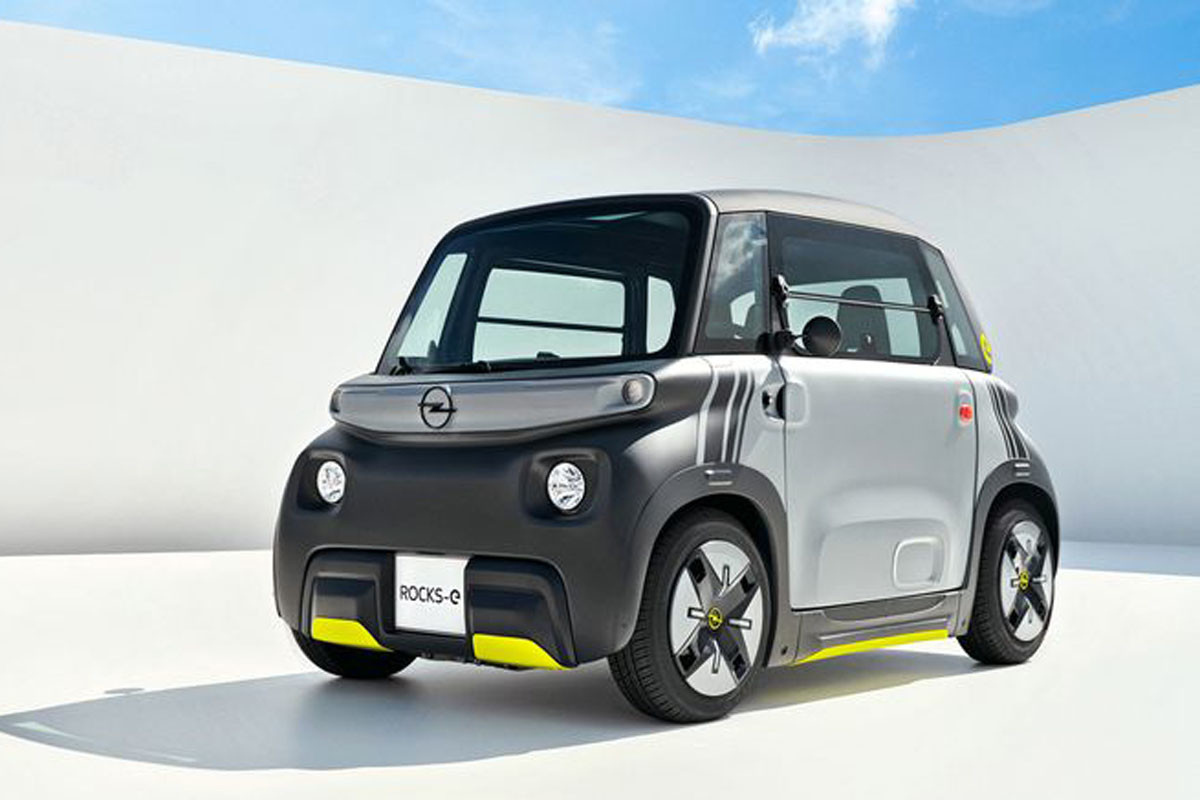
Mini Marvel - The rise of electric vehicles has changed the landscape of urban mobility, leading to more compact and eco-friendly alternatives. One such vehicle that has recently caught the attention of car enthusiasts is the Opel Rocks-e. While its size and design may seem unconventional for a modern car, it offers a solution tailored to the needs of city dwellers. This tiny electric car fits perfectly within the quadricycle class, providing an innovative way to navigate crowded streets. Despite its small size, the Opel Rocks-e is making waves, offering more than just practicality.
The Opel Rocks-e, apart from its unique design, is claimed to effectively meet the mobility needs of urban consumers, offering a practical and compact solution for city driving. (Picture from: OtoBlitz)
The Opel Rocks-e shares a close connection with the Citroën Ami, a French electric car, as it is essentially a rebadged version of the Ami. With a length of just 2.41 meters, it is one of the smallest electric vehicles on the market. Its compact form does not mean it lacks character, though. The front features prominent lights under the windshield, while the doors open in reverse, a unique design feature that adds to its quirky appeal. Silver and black 14-inch rims complete the exterior look, making the car stand out despite its size.
The Opel Rocks-e, at just 2.41 meters in length, is one of the smallest electric vehicles on the market but still boasts plenty of character. (Picture from: OtoBlitz)
On the inside, the Opel Rocks-e is designed with urban convenience in mind. It features a small digital instrument cluster, a flat steering wheel, climate control, and ample storage space for personal belongings. For its size, it provides enough comfort for two passengers, making it a practical choice for city travel
The Opel Rocks-e is designed for urban convenience, featuring a small digital instrument cluster, a flat steering wheel, climate control, and ample storage space for personal belongings. (Picture from: OtoBlitz)
The vehicle is powered by a 5.5 kWh battery and an 8 hp electric motor, offering a range of up to 75 km and a top speed of 45 km/h. It takes just 3.5 hours to recharge fully, making it a convenient option for daily commuting. While the Opel Rocks-e was originally intended as a city-friendly vehicle, its potential for off-road adventures has recently been explored.
The Opel Rocks-e is powered by a 5.5 kWh battery and an 8 hp electric motor, offering a range of up to 75 km and a top speed of 45 km/h. (Picture from: OtoBlitz)
The Rocks-e e-Xtreme is a special version of this tiny electric car that takes on a more rugged form. Designed by Lukas Wenzhöfer, the winner of the #OpelDesignHack contest, the Rocks-e e-Xtreme was created to tackle extreme terrains. The car's design includes modifications to improve its off-road capabilities, such as a reinforced chassis, larger tires, and increased ground clearance. The inclusion of a large rear wing, inspired by Opel's racing heritage, further enhances its aggressive look.
The Opel Rocks-e e-Xtreme was created to tackle extreme terrains, featuring a design by a talented student named Lukas Wenzhöfer, who won the #OpelDesignHack contest with his innovative concept. (Picture from: iNews.id)
The Rocks-e e-Xtreme is also equipped with a sturdier front bumper and a set of LED headlights, which are complemented by additional lighting mounted on the roof. While the performance details of this modified version are not fully disclosed, it is clear that the Rocks-e e-Xtreme is ready for more than just city streets.
With its toughened frame and off-road features, it is positioned to conquer a variety of terrains, making it an exciting option for adventure-seeking electric vehicle enthusiasts. In terms of its origins, the Opel Rocks-e and its off-road variant share a rich design heritage that showcases the potential of small electric vehicles. What started as a delivery-focused electric car has now evolved into something much more versatile, catering to different needs and preferences. 
Whether used for daily urban commuting or off-road adventures, the Opel Rocks-e proves that even the smallest electric cars can make a big impact. With the continuing development of electric mobility, we can only expect more exciting innovations like the Rocks-e to shape the future of transportation. Happy Holiday... *** [EKA | FROM VARIOUS SOURCES | OPEL | ID.MOTOR1 | HIGHMOTOR ]
Note: This blog  can be accessed via your smart phone

Citroën Ami: Versatile Mobility for Every Adventure

Versatile Innovation - In a world where mobility is rapidly evolving, finding the perfect vehicle that combines style, practicality, and sustainability can feel like a tall order. Enter the Citroën Ami, a revolutionary electric car designed to change how we think about transportation. Compact yet bold, the Ami has captured the hearts of urban and suburban drivers since its launch in Europe four years ago. Its unique approach to mobility was recently celebrated at the 2024 Paris Motor Show, further solidifying its place as an icon of modern transportation.
The Citroën Ami evolves with playful bulging headlights and 2CV-inspired gills, pairing fresh styling with its proven design and the rugged Ami Buggy Vision concept. (Picture from: Carscoops)
Citroën's Ami is more than just a car; it embodies innovation and accessibility. Unlike traditional vehicles, it can be driven without a license in certain European countries, making it a game-changer for young drivers and those seeking hassle-free transport. This compact vehicle traces its roots back to the Ami One Concept, first introduced by the French manufacturer in 2019.
The Citroën Ami Tower, a monumental display featuring various iconic versions of the Ami, was showcased at the 2024 Paris Motor Show. (Picture from: OtoDetik)
With a top speed of 45 km/h and a range of up to 75 km, the Ami is perfect for short, eco-friendly trips. Its affordability and ease of use have attracted over 65,000 customers, transforming it into a social phenomenon that redefines mobility.
The all-new Citroën Ami model, featuring refreshed designs and innovative features, took center stage at the 2024 Paris Motor Show. (Picture from: OtoDetik)
This year, Citroën unveiled a refreshed version of the Ami, featuring subtle yet impactful design enhancements. The headlights, now positioned higher at the base of the windshield, exude a friendly and expressive vibe. A wide, smile-shaped capsule connects the lights, reinforcing the Ami’s approachable personality. Meanwhile, cube-shaped bumpers at the corners add a sturdy yet cheerful look, ensuring that practicality meets aesthetics.
Citroën Ami Buggy Vision Concept, a striking showcase of innovation and style, was also prominently exhibited at the 2024 Paris Motor Show. (Picture from: OtoDetik)
The Ami also appeals to younger generations with its contemporary design touches. From checkered tire trims to sleek rear quarter panels, the car incorporates artistic and tech-inspired elements that make it stand out on the road. Each detail reflects Citroën’s commitment to creating a vehicle that is both stylish and functional, without compromising on sustainability.
The Citroen Ami Buggy Vision Concept, a doorless concept version tailored for outdoor enthusiasts. (Picture from: OtoDetik)
Building on the Ami’s success, Citroën introduced the Buggy Vision, a doorless concept version tailored for outdoor enthusiasts. With its Midnight Blue body, contrasting white roof, and thick tires, the Buggy Vision is ready for adventure. It’s ideal for activities like kitesurfing, featuring practical additions such as a kitesurfing board holder and storage solutions for outdoor gear. The LED light bar above the windscreen ensures safety during night drives, while the sunroof and opening windows offer a refreshing connection to nature.
Citroën Ami Buggy Vision Concept offers comfort and bold aesthetics with its vibrant orange-red Advanced Comfort seats ensuring passenger relaxation. (Picture from: OtoDetik)
Inside, the Buggy Vision combines comfort with a bold aesthetic. The Citroën Advanced Comfort seats, wrapped in vibrant orange-red fabric, provide support and relaxation for passengers. The interior design is further elevated by playful details, including the slogan “Like No One” displayed on the dashboard, emphasizing the car’s unique character.
As Citroën continues to innovate, the Ami remains a shining example of how compact vehicles can offer big solutions for modern mobility. From its iconic design to its practical applications, the Ami demonstrates that sustainable transportation can also be fun and stylish.
Whether navigating city streets or exploring off-road paths, the Ami and its Buggy Vision counterpart prove that the future of driving is as exciting as it is accessible. With its groundbreaking vision, Citroën has created a vehicle that truly speaks to the needs and aspirations of today’s drivers. Happy Holiday... *** [EKA | FROM VARIOUS SOURCES | CITROEN | CARSCOOPS | WIKIPEDIA ]
Note: This blog  can be accessed via your smart phone