-->
Drop Down MenusCSS Drop Down MenuPure CSS Dropdown Menu

Monday, December 30, 2024

Fiat Topolino EV: Italy's Tiny Electric Car Making Waves

Viral Mini EV - In recent years, electric vehicles (EVs) have become increasingly popular, with many manufacturers focusing on smaller, more efficient models tailored to city driving. This trend highlights a growing demand for compact, environmentally friendly vehicles that can navigate tight urban spaces with ease. One company that has embraced this concept wholeheartedly is Fiat, a renowned Italian automaker with a long history of producing iconic, compact cars. With the recent release of the Fiat Topolino EV, Fiat has once again captured the attention of the automotive world, offering a unique, tiny vehicle that has sparked significant buzz across social media platforms like Instagram, Twitter, and TikTok.
The first variant is the 'closed' (doored/hard-topped) Topolino under the Verde Vita paintjob, 14-inch wheels, and a two-seat interior. (Picture from: Otomotif.net)
The Fiat Topolino EV has attracted widespread attention not only for its eco-friendly design but also for its distinctive and charming appearance. It’s no surprise that this little electric car has gone viral, with people discussing its size, shape, and features. In Indonesia, the Topolino is considerably smaller than other compact EVs, such as the Wuling Air EV, which has gained popularity in markets like Indonesia. Despite its small size, the Fiat Topolino EV has captured the hearts of many due to its nostalgic yet modern appeal.
The second variant is the 'open' (doorless/soft-topped) Topolino Dolce Vita also under the Verde Vita paintjob, 14-inch wheels, and a two-seat interior. (Picture from: Kompas)
Looking back at Fiat’s history, the name “Topolino” holds a special place in the company’s legacy. Originally used for the first generation of the Fiat 500, the name, which translates to "little mouse" in Italian, reflects the car’s petite dimensions and its endearing character. The latest iteration of the Topolino stays true to its roots, maintaining its compact form while adapting to the needs of the modern world as a fully electric vehicle. Measuring just 2,535 mm in length and 1,530 mm in height, this vehicle truly lives up to its name. It offers the convenience of an ultra-compact city car with zero emissions, making it ideal for urban environments where space is limited, and air quality concerns are growing.
The rivals of the Fiat Topolino EV are the Citroën Ami and Opel Rocks-e. (Picture from: Kompas)
Interestingly, the Fiat Topolino EV shares its platform with two other well-known small electric vehicles: the Citroën Ami and the Opel Rocks-e. All three vehicles are built on the same foundation, and their similarities are evident in both their design and functionality. The resemblance is especially noticeable in their dimensions and overall shape, though Fiat has worked to give the Topolino its own distinct identity. The vehicle features perfectly rounded headlights, extra details around the bumper, and uniquely designed rims that set it apart from its counterparts. These touches enhance the vehicle’s aesthetic, giving it a playful and approachable look while maintaining a sense of individuality.
Stepping inside, the interior of the Fiat Topolino features a simple design with a steering wheel bearing the "Fiat" logo, a digital instrument cluster, and storage space on top of the dashboard. (Picture from: Otomotif.net)
Like its platform siblings, the Topolino EV comes in two variants: one with doors and one without. The doorless version is particularly interesting, as it features a removable rope accessory, adding a whimsical and fun touch to the vehicle’s overall design. The more traditional version comes with doors, offering a bit more enclosure for drivers who prefer a more conventional driving experience. Both variants feature the same Verde Vita paint color, 14-inch wheels, and a two-seat interior, ensuring that no matter the version, drivers enjoy the same core features that make the Topolino a practical and stylish choice for city driving.
Measuring just 2,535 mm in length and 1,530 mm in height, this vehicle truly lives up to its name and holds the distinction of being the smallest model in the entire Fiat 500 lineup.. (Picture from: Otomotif.net)
The Topolino EV is powered by the same battery used in the Citroen Ami, boasting a 5.4 kWh capacity that allows for a range of about 75 kilometers on a single charge. While this may seem limited compared to some larger EVs, Fiat envisions the Topolino as a car primarily meant for short, urban commutes or trips to tourist destinations. Its four-hour charge time makes it convenient for daily use, especially in cities where charging stations are readily available. The battery’s modest range, combined with the car’s tiny size, means it’s designed for practicality rather than long-distance travel, perfectly suited for short, frequent trips within city limits.
Both variants of the Fiat Topolino EV is powered by the same battery used in the Citroen Ami, boasting a 5.4 kWh capacity that allows for a range of about 75 kilometers on a single charge. (Picture from: AutoExpress)
In terms of features, the Topolino is equipped with all the essentials needed for comfortable city driving. It includes cabin cooling, Bluetooth speakers for entertainment on the go, and designated spaces for storing small items like water bottles. These features are simple but functional, making the Topolino a well-rounded choice for those who want a stylish yet practical vehicle for daily use.
The second variant is the 'open' (doorless/soft-topped) Topolino Dolce Vita is particularly interesting, as it features a removable rope accessory, adding a whimsical and fun touch to the vehicle’s overall design. (Picture from: CARMagazine)
Although the Fiat Topolino EV has not yet hit the market, it is expected to be a limited-edition model with a starting price of around $10,770, or approximately Rp. 160 million. This relatively affordable price tag makes the Topolino an attractive option for consumers looking for an eco-friendly, compact car without breaking the bank. Given its charming design, practical features, and affordability, the Topolino is poised to become a popular choice among urban drivers who want something both stylish and sustainable.
Fiat’s decision to revive the Topolino name for its latest electric vehicle not only pays homage to the company's rich history but also signals its commitment to embracing the future of transportation. The Topolino EV is a blend of classic design elements and modern technology, perfectly suited for today’s urban environments. As cities continue to grow and the need for sustainable transportation becomes more pressing, vehicles like the Fiat Topolino will likely play a key role in shaping the future of urban mobility. With its unique charm and practical design, the Topolino is not just a car; it’s a reflection of Fiat’s vision for the future—small, efficient, and full of character. Happy Holiday... *** [EKA | FROM VARIOUS SOURCES | FIAT | TOPGEAR | AUTOEXPRESS | CARMAGAZINE ]
Note: This blog can be accessed via your smart phone.

Sunday, December 29, 2024

De Tomaso's Final Masterpiece: A Showstopper for Collectors

Unrealized Brilliance - The streets of Italy echo with the legacy of its “supercar valley,” a region renowned for producing some of the world’s most iconic automotive masterpieces. This stretch, nestled between Modena and Bologna, boasts legends like Ferrari, Lamborghini, and Pagani. Yet, among these giants, De Tomaso once carved its own niche, captivating car enthusiasts for decades. Its story, intertwined with the vision of founder Alejandro de Tomaso, gave birth to some extraordinary vehicles, including a concept car that remains a tantalizing glimpse of what could have been.
The De Tomaso Pantera 2000 was a true masterpiece, designed by Marcello Gandini, the legendary creator of automotive icons like the Lamborghini Countach and Lancia Stratos. (Picture from: Carscoops)
Alejandro de Tomaso was a visionary with a passion for pushing boundaries. His creations weren’t just cars; they were statements of design and engineering. Before his passing in 2003, De Tomaso commissioned one last project: the Nuova Pantera, also known as the Pantera 2000. This concept car, introduced in 1999 during De Tomaso’s 40th anniversary celebration, was a bold reimagining of the original Pantera—a model that had cemented the company’s reputation for luxury and performance.
The De Tomaso Pantera 2000 made its debut as a mock-up on September 5, 1999, during the 40th anniversary celebrations of De Tomaso. (Picture from: Carrozzieri-Italiani)
The Pantera 2000 bore the hallmark of brilliance, being crafted by Marcello Gandini, the legendary designer behind automotive icons such as the Lamborghini Countach and Lancia Stratos. Gandini’s approach to the Pantera 2000 combined futuristic aesthetics with echoes of classic supercar elements. Its sharp profile and rear buttresses hinted at groundbreaking influences, even said to foreshadow the Bugatti Veyron. Despite its striking presence, the Pantera 2000 never progressed beyond a static mock-up, lacking an interior, engine, or functional mechanics.
The De Tomaso Pantera 2000’s bold profile and rear buttresses showcased groundbreaking design elements, often said to have inspired the Bugatti Veyron. (Picture from: Carrozzieri-Italiani)
At its unveiling, the Pantera 2000 dazzled the audience, embodying the aspirations of a new era for De Tomaso. However, as the company faced challenges, the concept quietly faded into obscurity. The automaker ceased operations in 2004, leaving behind a legacy filled with both triumphs and what-ifs. The Pantera 2000 became part of the Panini Collection in Modena, preserved as a testament to De Tomaso’s bold vision and Gandini’s design genius.
Despite its striking design, the De Tomaso Pantera 2000 remained a static mock-up, with no interior, engine, or functional mechanics. (Picture from: Carrozzieri-Italiani)
Years later, this exceptional piece of automotive history reemerged, drawing the admiration of collectors and enthusiasts worldwide. The Pantera 2000, now a prized collector’s item, serves as a testament to De Tomaso’s unwavering dedication to innovation and artistry. Although it never roared to life on the streets, its influence on design and its legacy in the chronicles of supercar history remain undeniable. Notably, in 2017, this Pantera 2000 prototype was sold for £19,200 at an RM Sotheby’s auction, cementing its status as a cherished artifact of automotive design.
Automotive history is filled with remarkable stories, and the Pantera 2000 is one of those rare chapters that intrigues and fascinates. It represents not just the dreams of a visionary founder but also the enduring allure of bold creativity. As it finds its way to a new home, this extraordinary concept car remains a symbol of ambition and the timeless quest for excellence in design. Happy Holiday... *** [EKA | FROM VARIOUS SOURCES | CARSCOOPS | CARROZZIERI-ITALIANI | RMSOTHEBYS ]
Note: This blog  can be accessed via your smart phone

Callaway C7R: A Casualty of Racing's Cost War

Racing Ambition - The world of motorsport has always been a proving ground for innovation and resilience. For boutique manufacturers like Callaway Cars, it’s a place to challenge the giants and test the limits of engineering. Callaway, well-known as a Corvette specialist, dared to dream big in the mid-1990s with the Callaway C7R, a GT1 sports car crafted from scratch to compete with some of the most advanced machines in racing history.
The Callaway C7R, a GT1 sports car crafted from scratch, embodied Callaway's mid-1990s ambition to compete with the era's most advanced racing machines. (Picture from: ObscureSupercar on X)
Callaway Cars began as a small team dedicated to enhancing the performance of Chevrolet Corvettes. With years of tuning expertise, they built a reputation for pushing the boundaries of Corvette engineering. However, their ambition grew beyond modifying existing models. The creation of the Callaway C7R marked a bold step into the competitive arena of bespoke race cars.
The Callaway C7R was a fully original creation, built with a carbon fiber monocoque and powered by a 383-cubic-inch all-aluminum V8 engine mounted behind the front wheels. (Picture from: BincangBincangMobil)
Unlike their earlier projects, the Callaway C7R was entirely original, featuring a carbon fiber monocoque and a 383 cubic-inch all-aluminum V8 engine positioned behind the front wheels. This design not only showcased Callaway's technical prowess but also aimed to rival GT1 supercars like the Porsche 911 GT1 and McLaren F1 GTR. The C7R was designed to excel in endurance racing, with its debut set for the iconic 24 Hours of Le Mans in 1996.
The Callaway C7R was designed to excel in endurance racing, with its debut set for the iconic 24 Hours of Le Mans in 1996. (Picture from: BincangBincangMobil)
Despite its potential, the C7R's journey was fraught with challenges. At Le Mans, it failed to qualify, overshadowed by faster and more resource-backed competitors. Undeterred, Callaway entered the C7R in the 1997 Rolex 24 at Daytona. The car demonstrated its capabilities by leading the race at the halfway mark, a remarkable feat for a newcomer. Unfortunately, an electrical failure ended its run prematurely, highlighting the difficulties faced by small manufacturers in maintaining reliability under extreme conditions.
The 1997 Callaway C7R, an impressive GT1 effort by the Callaway Corvette tuners, even led at the halfway mark of the 1997 Daytona race. (Picture from: Dsylom on Tumblr)
The rapid evolution of GT1 racing in the 1990s intensified the competition, with major automakers pouring vast resources into developing cutting-edge machines. This left smaller teams like Callaway struggling to keep pace. With rising costs and escalating technical demands, the C7R project was eventually shelved, and plans for a road-going variant were abandoned. | y72Jf1O74rE |
Only two C7R race cars were ever built, serving as reminders of Callaway's ambitious leap into the world of bespoke motorsport engineering. Although the Callaway C7R's racing career was brief, its story resonates with the spirit of perseverance and innovation. It stood as a testament to the courage of small manufacturers willing to challenge the dominance of industry giants.
While the C7R never claimed victory on the track, it earned its place in motorsport history as a bold and daring effort. For Callaway Cars, it remains a symbol of their relentless pursuit of excellence and a reminder that even the most fleeting moments of brilliance can leave a lasting legacy. Happy Holiday... *** [EKA | FROM VARIOUS SOURCES | CALLAWAYCARS | SUPERCARS.NET | OBSCURESUPERCAR ON X ]
Note: This blog  can be accessed via your smart phone

Guy Ligier's Maserati JS2: A Lasting Legacy

The Legacy - As we journey through the ever-changing landscape of time, certain events stand out, leaving a profound impact on our lives. These moments of transition often illuminate paths previously unexplored, giving rise to fresh aspirations and a renewed sense of purpose. In the automotive realm, such stories frequently emerge, showcasing resilience and ingenuity. One particularly captivating narrative revolves around the Ligier JS2, a car that embodies exceptional engineering and carries a heartfelt tribute to its creator's enduring legacy.
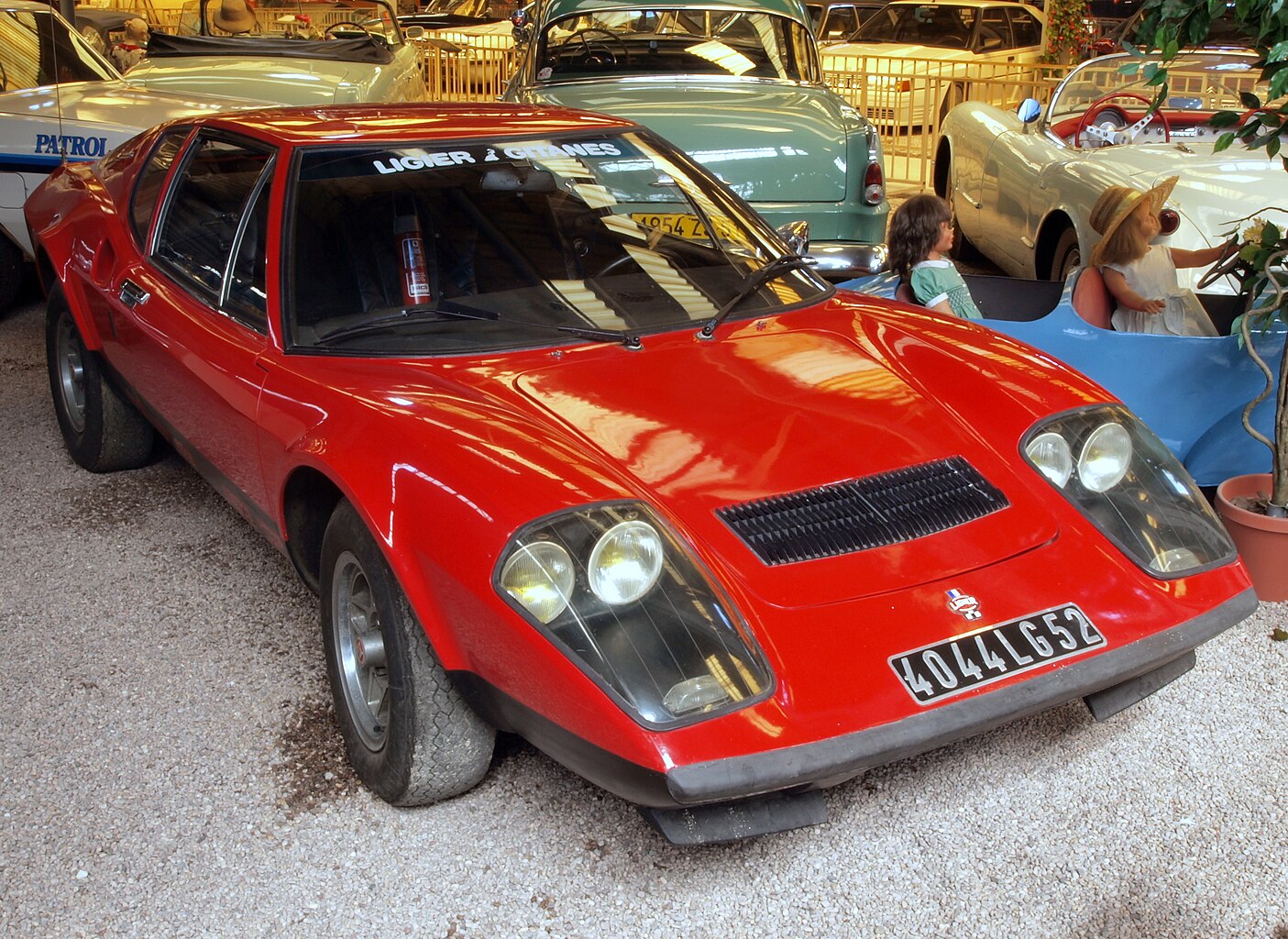
The Ligier JS2 (in pictured is 1974 model), supported by an aluminum chassis designed by Chief Engineer Michel Têtu, and fibreglass bodywork crafted by Pietro Frua. (Picture from: Wikipedia)
The journey of the Ligier JS2 begins with the establishment of Automobiles Ligier in 1968. Guy Ligier, a passionate French motorsport enthusiast and entrepreneur, founded the company during a transformative period in his life. His motivations were profoundly personal, especially following the tragic loss of his close friend, Jo Schlesser, a respected racing driver. Schlesser's untimely death in a racing accident marked a significant turning point for Ligier. Instead of abandoning his passion for racing, Ligier channeled his grief into creating something meaningful that would pay tribute to his friend’s memory.
The Ligier JS2, with its short wheelbase and centrally mounted engine, creates the perfect recipe for rallying efficiency and agility on various terrains. (Picture from: Hoonited)
The Ligier JS2 was unveiled at the 1970 Paris Salon, marking the second vehicle produced by Ligier’s burgeoning company, following the JS1. The initials "JS" were a heartfelt homage to Jo Schlesser, ensuring that his legacy would endure through the car. Initially, Ligier intended to partner with Ford for the engine, but when Ford withdrew from the project, he turned to Citroën, which had recently acquired Maserati. This strategic pivot resulted in the JS2 being equipped with a Maserati V6 engine, supported by an aluminum chassis designed by Chief Engineer Michel Têtu, and fibreglass bodywork crafted by Pietro Frua. This unique blend of French design and Italian engineering made the JS2 a standout in the automotive industry.
The rear of the Ligier JS2 often appears quite uninspiring, characterized by its understated design and absence of large exhaust outlets, emphasizing a commitment to sobriety and efficiency above all else. (Picture from: Hoonited)
Despite its promising features, the JS2 faced several challenges on the racetrack. Between 1970 and 1973, the car struggled with mechanical issues, particularly related to engine reliability, during its participation in the World Sportscar Championship. Nevertheless, Ligier’s determination and persistence ultimately paid off. By 1974, the JS2 underwent significant upgrades in both engine performance and aerodynamics, revitalizing its competitive edge. 
The Ligier JS2 (in pictured is 1974 model), equipped with a Maserati V6 engine and debuted at the 1970 Paris Salon. (Picture from: Wikipedia)
That same year, the car achieved a major victory at the Tour de France Auto, driven by a skilled trio: Gérard Larrousse, Jean-Pierre Nicolas, and Johnny Rives. This victory marked a defining moment for the Ligier JS2, showcasing the fruits of hard work and innovation and firmly establishing it in the motorsport spotlight.
The Ligier JS2 Le Mans competitor of 1973, as driven by Laffite/Ligier while sat on display at the Rétromobile 2011. (Picture from: Wikipedia)
In 1975, Ligier made a notable change, returning to Ford engines for that season. While the JS2 managed to secure a commendable second-place finish at the prestigious 24 Hours of Le Mans, the decision to switch engines left some to ponder the unfulfilled potential of the original Maserati configuration. Regardless, the JS2 had already made its mark, solidifying its position in racing history and earning respect from both fans and competitors alike.
The 1975 Ligier JS2 Ford Cosworth DFV managed to secure a commendable second-place finish at the prestigious 24 Hours of Le Mans. (Picture from: Wikipedia)
Beyond its racing pedigree, the Ligier JS2 also garnered attention as a road car. Its design, though not conventionally beautiful, possessed a distinct charm. The low profile and sleek proportions gave it an assertive presence on the road, while practical features such as wide-opening doors, a large windscreen, and a spacious boot lined with quilted leather enhanced its appeal. Inside, the luxurious touches continued with leather seats and design elements that celebrated its Maserati heritage, including the prominent display of Maserati's Trident emblem on the dashboard, emphasizing the collaboration between French and Italian craftsmanship.
The Ligier JS2 participating in the 2011 Tour Auto Historique. (Picture from: Wikipedia)
Despite its accomplishments and unique features, the exact number of Ligier JS2 road cars produced remains uncertain. Estimates suggest anywhere from 82 to as many as 300 units, adding an air of mystery to the car and making it a highly sought-after collector's item. Guy Ligier's influence on motorsport transcends the cars he built. His unwavering determination and passion for racing left an indelible mark on the industry. Even after his passing in 2015, Ligier's legacy continues to be celebrated, with the Ligier JS2 standing as one of the most significant symbols of his contribution to the sport.
This car represents not only a profound personal story but also the relentless pursuit of excellence amid adversity. The Ligier JS2 is more than just an automobile; it encapsulates the spirit of resilience, friendship, and the drive to create something meaningful from loss. Through the vision of Guy Ligier and the talents of engineers like Michel Têtu, a personal tragedy was transformed into a lasting triumph. The JS2 remains an integral part of French motorsport history, cherished by collectors and admired by enthusiasts, forever linked to the legacy of a man who refused to give up on his passion. Happy Holiday... *** [EKA | FROM VARIOUS SOURCES | LIGIERAUTOMOTIVE | CLASSICDRIVER | HOONITED | HAGERTY | WIKIPEDIA ]
Note: This blog  can be accessed via your smart phone

Saturday, December 28, 2024

6 Forgotten Supercars from the 90s That Deserve More Recognition

Raw of BEASTS - The 1990s was an era marked by significant advancements in automotive engineering, especially in the realm of supercars. These were the years when manufacturers pushed the boundaries of speed, power, and design, creating vehicles that captured the hearts of enthusiasts and set new standards for performance. One of the most exciting aspects of that decade was the production of unique and often forgotten supercars that, despite their extraordinary capabilities, failed to maintain long-term fame.
The 1996 Vector M12, one example of a 1990s supercar that deserves more recognition. (Picture from: GearHeads)
Among these, several cars stand out, each offering a glimpse into the vision of automotive excellence that defined the 1990s. Here they are another six forgotten and obscure supercars known ever produced in nineties.

1. Jaguar XJR-15
Jaguar’s XJR-15 is one such example, a true testament to the British manufacturer’s ambition to produce a supercar that could rival the best. Built between 1990 and 1992, only 53 units of the XJR-15 were produced, a rare gem in the supercar world. Powered by a 6.0-liter V12 engine, this car boasted 450 horsepower, which was impressive at the time.
The 1990 Jaguar XJR-15, built for a new series called the Intercontinental Challenge, was a limited-production supercar created by Jaguar Sport, a partnership between Jaguar and TWR. (Picture from: GearHeads)
For the Japanese market, a limited number of LM versions were produced, equipped with a 7.4-liter V12 engine capable of an astonishing 700 horsepower, offering a true racing pedigree.

2. Lister Storm
Another car that makes this list is the Lister Storm, an embodiment of British engineering with a twist. Built using the same 7.0-liter V12 engine from the Jaguar XJR-9, the Lister Storm was capable of 546 horsepower and reached a 0-60 mph time of just 4.1 seconds.
The 1993 Lister Storm was a homologated GT racing car manufactured by British low-volume automobile manufacturer Lister Cars with production beginning in 1993. (Picture from: DevianArt)
This made it the fastest accelerating four-seater saloon in the world at the time, a title it held until 2006. With only four units built, the Lister Storm remains one of the rarest and most fascinating supercars of the 1990s.

3. Dauer 962 Le Mans
The Dauer 962 Le Mans is another standout, a car that bridges the gap between racing and road legality. Originally designed for the prestigious 24 Hours of Le Mans, the Dauer 962 quickly became known for its remarkable speed and performance, winning the 1994 Le Mans event.
The 1994 Dauer 962 Le Mans is a sports car based on the Porsche 962 Group C racing car, built by German manufacturer Jochen Dauer's Dauer Racing. (Picture from: Supercars.net)
With just a dozen units produced, this Porsche-based supercar featured a flat-six engine capable of 730 horsepower, allowing it to reach speeds over 250 mph. The Dauer 962 was a product of intense racing heritage, demonstrating the sheer power that could be harnessed in a street-legal car.

4. Vector M12
Next is the Vector M12, a car that, despite being overshadowed by more famous supercars, showcased impressive power and performance. Produced by the American manufacturer Vector Motors, only 18 units were built. The M12 featured a 5.7-liter Lamborghini V12 engine, delivering 492 horsepower.
The 1996 Vector M12 was loosely built based on the WX-3 but powered by a version of the Lamborghini Diablo's V12 engine. (Picture from: Supercars.net)
Though it didn't reach the dizzying heights of other supercars, with a top speed of 189 mph and acceleration to 60 mph in 4.8 seconds, the M12 was a strong competitor in its own right. Yet, it didn’t achieve the lasting fame that some of its peers enjoyed.

5. TVR Cerbera Speed 12
The TVR Cerbera Speed 12 was perhaps the most daring of all the forgotten supercars of the 1990s. A car that never left the prototype phase, it still managed to capture the imagination of enthusiasts. Powered by a 7.7-liter V12 engine, the Cerbera Speed 12 was capable of producing over 900 horsepower, a number that may have been even higher due to its understated nature.
Not only does the 1997 TVR Cerbera Speed 12 have a fierce and intimidating look, but it also delivers astonishing power. (Picture from: Wikimedia)
It was initially intended for Le Mans but instead became a formidable competitor in the FIA GT Championship, even though its true potential was never fully realized on public roads.

6. Aston Martin V8 Vantage Le Mans
Finally, the Aston Martin V8 Vantage Le Mans stands out as a blend of British luxury and racing performance. Produced in a limited run of just 40 units in 1999, the V8 Vantage Le Mans was a celebration of Aston Martin’s victory at Le Mans 40 years prior.
The 1999 Aston Martin V8 Vantage Le Mans constructed with an aluminium body it was the very last model to be powered by the legendary Tadek Marek's renowned V8 engine. (Picture from: TopCarRating)
With a Tadek Marek's supercharged 5.3-liter V8 engine producing 600 horsepower, the V8 Vantage Le Mans was capable of a top speed of 200 mph and could accelerate from 0-60 mph in just 4 seconds. Despite its performance credentials, it remains one of the more obscure entries in the world of 1990s supercars. 

These forgotten supercars represent the pinnacle of 1990s engineering, with each one offering unique features and specifications that set them apart from the rest. As time goes on, the legacy of these remarkable vehicles only grows, reminding us that even in an era filled with iconic supercars, there were still those that slipped under the radar, waiting to be rediscovered. (Wanna see another forgotten supercars) Happy Holiday... *** [EKA [12072017] | FROM VARIOUS SOURCES | GEARHEADS | TOPCARRATING | WIKIMEDIA | SUPERCARS.NET | DEVIANART ]
Note: This blog  can be accessed via your smart phone

BMW-Powered Tirrito Ayrton R: Italy’s Bold and Unconventional Supercar

Weird ONES - Italy is synonymous with art, culture, and design. This reputation extends to the automotive industry, where the country has produced countless iconic vehicles, from the luxurious to the eccentric. Italy's cars are not just modes of transport but often a statement of style and engineering prowess. In a world where Ferrari, Lamborghini, and Maserati dominate headlines, there exists a hidden niche of boutique automakers. These smaller brands strive to capture the same spirit of innovation and performance but often do so in ways that are unique or unconventional. One such example is Tirrito Cars, an ambitious project born from passion and deeply rooted in Italian automotive tradition.
The Tirrito Ayrton R showcases the innovative spirit of Tirrito Cars, a lesser-known Italian automaker, and debuted at the prestigious 2011 Top Marques Monaco. (Picture from: Chris Wevers in Flickr)
Tirrito Cars, founded by Andrea Tirrito in 2010, is an example of a dreamer’s dedication to crafting a supercar that stands apart from the rest. The company made its public debut with the Ayrton S, a concept car that served as the starting point for what would later become the Ayrton R. Displayed at the prestigious 2011 Top Marques Monaco, the Ayrton R is a clear example of Tirrito’s bold vision, though it has left many onlookers puzzled due to its unorthodox design. The car's striking, angular lines and unusual proportions make it a visual anomaly in a world where fluidity and sleekness often take precedence. While the Ayrton R may have divided opinions, it certainly did not go unnoticed.
Tirrito's first car, named the Ayrton S, was introduced in 2010, marking the company's debut in the world of high-performance automotive design. (Picture from: WeirdWheels)
The story behind Tirrito Cars begins with Andrea Tirrito’s childhood, growing up in his father’s body shop where he developed a deep connection to cars. His journey into the automotive world was marked by hands-on experience and a fearless approach to creation. As a teenager, Andrea demonstrated his knack for innovation by building a go-kart using an old motorcycle engine. He later surprised his peers with a remarkable feat—constructing a fully functional replica of the Williams FW18 Formula 1 car at just eighteen years old. This replica was so well made that it garnered the attention of Formula 1 enthusiasts and even appeared on magazine covers.
The Ayrton R is a clear example of Tirrito Cars’ bold vision, though it has left many onlookers puzzled due to its unusual design. (Picture from: Erik Wiffers in Flickr)
Driven by his passion, Tirrito didn’t stop at one successful project. He went on to recreate several other grand prix cars, including McLaren’s MP4-14, MP4-15, and MP4-16 models, further honing his skills and earning praise for the accuracy and performance of his replicas. However, Andrea’s true aspiration was not to replicate but to innovate. His dream of designing and building his own high-performance sports car led him to create the Vajon RTT in 2006. This initial venture into car production served as the foundation for what would eventually become the Ayrton series.
The Tirrito Ayrton R aimed to pay tribute to a famous racing driver, but its mismatched elements—like the tiny headlights and overly angular design—missed the mark. (Picture from: Autoblog.nl)
The Ayrton models, named in honor of legendary Brazilian Formula 1 driver Ayrton Senna, are intended to embody both performance and innovation. Tirrito planned three different versions of the Ayrton, each with varying power outputs: the Ayrton R, S, and T. The Ayrton R, the most powerful of the trio, is equipped with a V10 engine delivering 627 horsepower. Meanwhile, the S version offers 550 horsepower, and the T version rounds out the lineup with 500 horsepower. Despite these differences in power, all versions of the Ayrton share a focus on lightweight construction, tipping the scales at just 1,120 kg, which ensures agile handling and blistering acceleration.
The interior of the Tirrito Ayrton R exudes a strong sporty vibe, while also incorporating elements of luxury and comfort to enhance the driving experience. (Picture from: GTSpirit)
The Ayrton R, in particular, boasts an array of impressive specifications. Its V10 engine powers the rear wheels through a six-speed manual transmission, promising an engaging driving experience. The car's dimensions—4,630 mm in length, 2,050 mm in width, and 1,200 mm in height—give it a low, wide stance that complements its aggressive design. Large 19-inch wheels with 245/35 tires at the front and 335/25 tires at the rear provide ample grip, while six-pot brake calipers and oversized discs ensure that the Ayrton R can come to a stop as quickly as it accelerates.
The Tirrito Ayrton R stands out with impressive specs, featuring a V10 engine powering the rear wheels via a six-speed manual transmission for a thrilling drive. (Picture from: HighMotor)
One of the most remarkable features of the Ayrton R is its performance capabilities. Powered by a BMW M5 engine, the car is expected to produce nearly 630 horsepower. This allows it to accelerate from 0 to 60 mph in just three seconds and achieve a top speed of over 205 mph. For a boutique automaker like Tirrito Cars, these numbers are impressive and put the Ayrton R in direct competition with some of the world's most renowned supercars. However, unlike mainstream manufacturers, Tirrito Cars will only produce a limited number of units—no more than 50 Ayrton Rs will be made, each priced at under half a million dollars.
A standout feature of the Ayrton R is its impressive performance, with a BMW M5 engine delivering nearly 630 horsepower. (Picture from: Autoblog.nl)
Despite its bold ambitions and impressive specs, the Ayrton R has struggled to win over everyone. While it certainly has the performance to match other supercars, its design has been a topic of debate. Some critics have pointed out the disjointed nature of the car's aesthetics, noting that elements like its sharp, angular lines and unusual headlights do not create a cohesive look. Yet, for others, the Ayrton R's unconventional design is part of its charm, setting it apart from the more polished but predictable offerings of other manufacturers. | 5ZL8mybEvi0 | r2Uj8r_bf9U |
Ultimately, Tirrito Cars is a testament to the spirit of innovation that defines the Italian automotive industry. Andrea Tirrito’s journey from building go-karts in his father’s garage to creating high-performance supercars reflects the passion and dedication that drive many of Italy’s greatest automotive minds. While the Ayrton R may not appeal to everyone, it remains a bold statement of what can be achieved when creativity, engineering, and ambition come together. For those looking for something different in the world of supercars, the Ayrton R represents a daring alternative. Happy Holiday... *** [EKA | FROM VARIOUS SOURCES | GTSPIRIT | ITALIASPEED | CARSIMPLIFIED | TOPSPEED | CARNOVELS | AUTOGESPOT.NL | AUTOBLOG.NL | MOTORS.MEGA.MU ]
Note: This blog  can be accessed via your smart phone