ONE-OFF - Alfa Romeo has a storied history of collaborating with some of the most renowned designers in the automotive world to create stunning concept cars. One such collaboration occurred in 2010, marking Alfa Romeo's 100th anniversary and Pininfarina's 80th. This partnership birthed the breathtaking Alfa Romeo Pininfarina 2uettottanta, a name pronounced "duettottanta."
The Alfa Romeo 2uettottanta concept car embodies Pininfarina's vision of the next generation of Alfa Romeo's iconic spider cars. (Picture from: Wall.AlphaCoders)
The 2uettottanta concept car embodies Pininfarina's vision of the next generation of Alfa Romeo's iconic spider cars. It also represents the peak of a longstanding relationship between two iconic Italian companies, paying homage to the legendary 1960s Duetto roadster. The name 2uettottanta, while sometimes confusing in its spelling, holds significant meaning.
Alfa Romeo 2uettottanta is Pininfarina's vision of how the next generation Alfa spider car should be. (Picture from: Motor1)
Contrary to what many believe, the initial character is a capital "D" from the Renaissance script, not the number "2". The "2" signifies the car's two-seat configuration, "uetto" nods to the classic Alfa Romeo Duetto model, and "ottanta," which means "80" in Italian, celebrates Pininfarina's 80 years of design excellence.
Alfa Romeo 2uettottanta concept by Pininfarina is debuted at the 2010 Geneva International Motor Show. (Picture from: Wikipedia)
Visually, the 2uettottanta is a masterpiece of design, featuring sleek and elegant red bodywork characteristic of Alfa Romeo's traditional paint. The car measures 1,797 mm in width, 4,212.6 mm in length, and 1,280 mm in height, with a wheelbase of 2500 mm. The front of the car maintains Alfa Romeo's contemporary design ethos, while the side and rear profiles are defined by smooth, flowing surfaces that exude sophistication and fluidity.
Alfa Romeo 2uettottanta concept inside is spacious and comfortable. (Picture from: Motor1)
Under the hood, the 2uettottanta is powered by a turbocharged 1,750 cc four-cylinder engine, reminiscent of the 1750 Veloce from 1968, part of the famed "Osso di Seppia" (Cuttlefish) lineage. This engine delivers power to the rear wheels through Alfa's TCT transmission. Additionally, the concept features a newly designed lever for Alfa's DNA adaptive chassis system, enhancing its driving dynamics and performance.
Alfa Romeo 2uettottanta concept, in particular, is not such a dramatic departure from current Alfa Romeo thinking. (Picture from: Motor1)
The Alfa Romeo 2uettottanta concept earned critical acclaim, winning the Car Design Award of the Year for best concept car design at the 2010 Geneva Motor Show. Its influence extended beyond accolades, inspiring the next generation of Alfa Romeo Spider models destined for the American and European markets.
In celebrating such a milestone collaboration, the 2uettottanta stands as a testament to the enduring legacy and innovative spirit of Alfa Romeo and Pininfarina. This concept car not only honors the rich history of these two automotive giants but also sets a visionary course for the future of automotive design.*** [EKA [19062020] | FROM VARIOUS SOURCES | MOTOR1 | WIKIPEDIA | CARSTYLING.RU ]
Note: This blog can be accessed via your smart phone
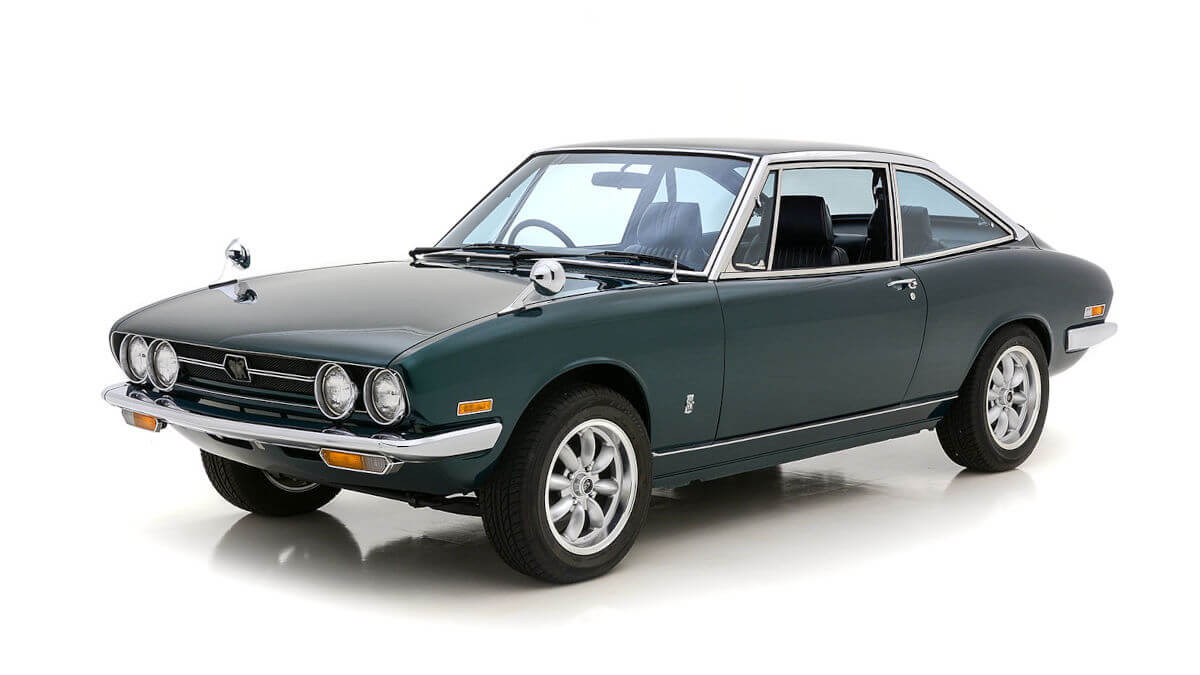
Rare ONES - You might never have thought that the classic Italian car Fiat Dino actually has an overseas cousin made specifically for the Japanese's renowned truck brand under the name Isuzu 117 Coupe. At first glance, many people mistake the Isuzu 117 for an early version of the Fiat Dino. This probably isn't a big surprise as both cars were designed by the same person within two years of each other.
The Fiat Dino Coupe (left) and its overseas cousin, the Isuzu 117 Coupe (right), were both designed by the renowned Italian stylist Giorgetto Giugiaro within two years of each other. (Picture from: Carrozzieri-Italiani)
The Isuzu 117 was one of the first Japanese cars to have a body designed entirely by an Italian stylist – the great Giorgetto Giugiaro when he was design director at Carrozzeria Ghia. Although largely unknown outside of Japan, the Isuzu 117 was an important car for Isuzu and the Japanese automotive industry as a whole. It was the world's first production sports car to be offered with a diesel engine and one of the first to be offered with a double overhead cam (DOHC) engine.
The Isuzu 117 Coupe became a cult classic in Japan, and it is now gaining popularity overseas as interest in vintage Japanese sports cars continues to rise. (Picture from: BelowTheRadar)
The project to build the car that would later the Isuzu 117 began in the mid-1960s. It was clear that a sports car was needed as a halo model to attract people into showrooms – of course, many of them would go with a less luxurious model. Meanwhile, at that time, Japanese cars were starting to become popular in Western countries due to their cheap price and good reliability. Several Japanese manufacturers decided to make sports cars to help improve their image.
The Isuzu 117 Coupe was designed and built based on the Florian sedan platform to expedite construction and reduce costs.(Picture from: Secret-Classics)
Isuzu Motors decided to follow this trend and contacted Giorgetto Giugiaro to design their new car. Rather than starting their sports car project from scratch, Isuzu chose to use the Florian sedan platform. This greatly sped up construction and reduced costs. Giorgetto Giugiaro designed the steel body for the new car, making great use of the Fiat Dino design, but the 117 was its own car in every way despite its resemblance to its older Italian cousin. The 117 debuted as a prototype at the 1966 Geneva Motor Show, and awarded with prizes, where it won prizes and received high praise at the Tokyo Motor Show later that autumn..
Inside the Isuzu 117 Coupe, you'll find seating for four with ample room in the rear seats. It also comes well-equipped with air conditioning, power windows, and an AM/FM cassette player. (Picture from: Secret-Classics)
When it was produced in 1968, the Isuzu 117 Coupe was offered with a 1.8-liter single overhead cam (SOHC) inline four-cylinder engine that sent power through a four-speed manual transmission to the rear wheels. The next model would be offered with a DOHC engine, automatic transmission, a 5-speed manual, and an increased engine capacity to 1.95 liters.
The Isuzu 117 Coupe featured a dual-overhead cam four-cylinder engine with electronic fuel injection, double wishbone suspension up front, and a live axle at the rear. (Picture from: Secret-Classics)
In Japan, the Isuzu 117 Coupe became a cult classic during its lifetime. Its neat combination of Japanese engineering and Italian styling proved successful, and the car was much more affordable than contemporaries such as the Toyota 2000GT. The Isuzu 117 Coupe was produced from 1968 to 1981 with 86,192 units. When they replaced it, they did so with another Giugiaro-designed coupe – the Isuzu Piazza.
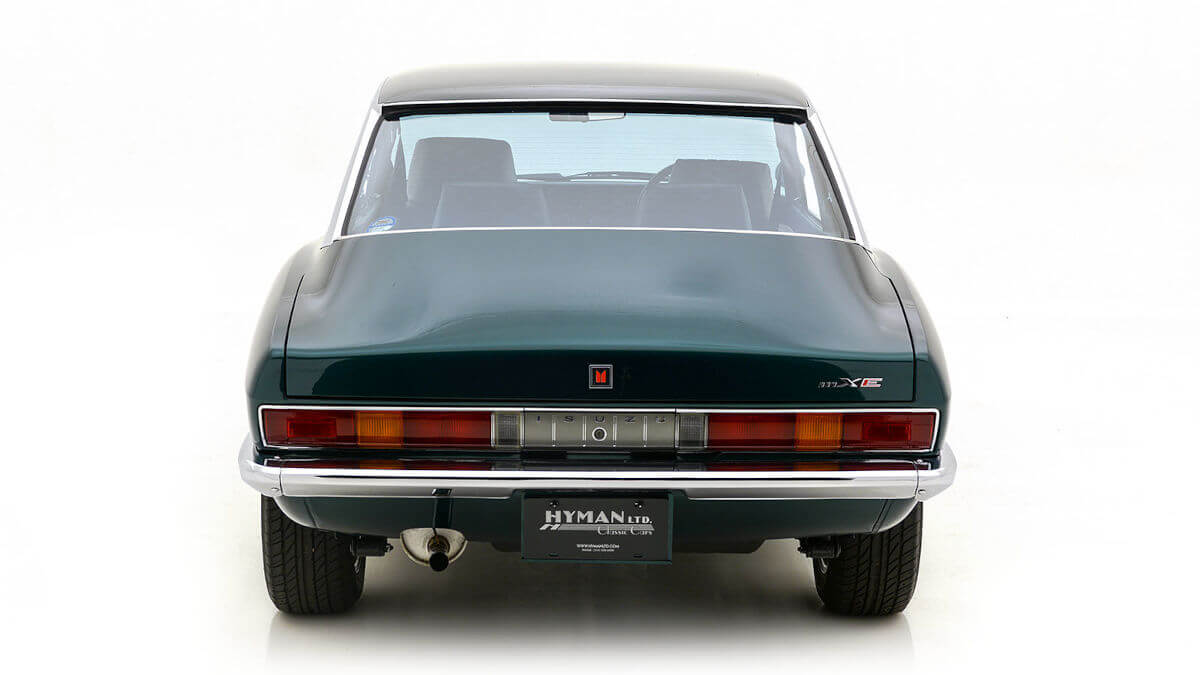
The Isuzu 117 Coupe's roof design was elegantly sloped, eliminating the vertical rear window in favor of homologated rear lights, setting it apart from the Fiat Dino. (Picture from: Secret-Classics)
Isuzu's strategy to combine Japanese reliability with Italian design was revolutionary. It showcased how a well-thought-out collaboration could result in a vehicle that resonated with consumers. The Isuzu 117 Coupe was not just a car; it was a statement of innovation and cross-cultural partnership.
The Isuzu 117 Coupe was a standout high-end personal car, combining elegant styling with sporty performance.(Picture from: Secret-Classics)
The legacy of the Isuzu 117 lives on, remembered by car enthusiasts and collectors who appreciate its unique place in automotive history. It stands as a testament to the bold vision of Isuzu and the timeless designs of Giugiaro. Today, the 117 remains a sought-after classic, cherished for its design and engineering.
As we look back on the story of the Isuzu 117 Coupe, it's clear that this car was more than just a vehicle; it was a bridge between cultures and an icon of its era. The Isuzu 117 Coupe will always be remembered as a pioneering effort that brought together the best of Japanese and Italian automotive expertise. This unique blend of cultures and ideas created a car that continues to be celebrated and admired, embodying a timeless appeal that transcends generations. *** [EKA | FROM VARIOUS SOURCES | ISUZU MOTORS | SILODROME | SECRET-CLASSICS | BELOWTHERADAR | ROADANDTRACK | CARROZZIERI-ITALIANI ]
Note: This blog can be accessed via your smart phone.
💣Legend Reborn💣 - From the heart of Sant'Agata, Bologna, Italy, the Lamborghini Countach emerged as a beacon of automotive innovation and style. Conceived in the early 1970s, this car was destined to follow in the illustrious footsteps of the Lamborghini Miura. Under the direction of Ferruccio Lamborghini, the development of the LP 500 Prototipo began, laying the groundwork for what would become an iconic model in automotive history.
The Lamborghini Countach LP 500 Prototipo returns after 50 years, reconstructed by the Lamborghini Polo Storico restoration division in collaboration with Lamborghini Centro Stile. (Picture from: GridOto)
Myterious ONES - Harley Earl's impact on the automotive industry is profound, characterized by innovation and visionary design that shaped the course of car manufacturing and inspired generations of designers. His pioneering techniques, such as utilizing clay for three-dimensional models, revolutionized the conceptualization and realization of cars. Earl's tenure at General Motors (GM) was a testament to his unwavering commitment to pushing boundaries and establishing new standards in car design.
The 1959 Oldsmobile F-88 Mark III (front) is displayed alongside the 1951 Buick LeSabre (center) and 1959 Cadillac Cyclone (rear) concept cars, showcasing GM's innovative design prowess in the 1950s. (Picture from: Quora)
A particularly fascinating chapter in Earl's illustrious career revolves around the Oldsmobile F-88 series, featuring three unique concept vehicles that embodied innovation and forward-thinking design, although General Motors had concerns about direct competition with the Corvette. Consequently, the Oldsmobile F-88 series concept car occupies a distinctive place in automotive history, symbolizing a fusion of cutting-edge engineering and artistic flair.
Harley Earl, GM VP of Design, received the vermilion 1959 Oldsmobile F-88 Mk III as a retirement gift, featuring a retractable stainless steel top, cast aluminum wheels, and a 394 V8 engine with front-exiting exhaust pipes. (Picture from: OldCarsWeekly)
The journey of the F-88 series commenced with the debut of the first F-88 at the 1954 Motorama show circuit, captivating audiences with its sleek design and innovative features. These initial models, featuring a potent 324 cu.in. 250 hp V8 'Rocket' engine, hinted at Oldsmobile's potential in high-performance sports cars and captured the imagination of car enthusiasts worldwide.
The first Oldsmobile F-88 had debuted at the 1954 Motorama show circuit, captivating audiences with its sleek design and innovative features. (Picture from: ConceptCarz)
Subsequent iterations, including the F-88 Mark II introduced in 1957, showcased advancements like quad headlights and aerodynamic enhancements, establishing the F-88 as a symbol of innovation and progress in the automotive landscape. The evolution of the Oldsmobile F-88 series had laid the groundwork for the ultimate masterpiece.
The first Oldsmobile F-88 powered by an 324 ci Rocket V8 produced 250 hp with a four barrel carb. (Picture from: ConceptCarz)
Additionally, the debut of the F-88 Mark III in 1959 propelled the F-88 series to new levels of excellence. The F-88 Mk III showcased a revamped design, incorporating elements like a sleek rectangular grille cavity with mesh and a retractable hardtop, exuding elegance and sophistication. Its interior boasted a chrome-laden instrument panel and advanced features ahead of its time, highlighting Earl's meticulous attention to detail and pursuit of perfection.
An innovative aspect of the F-88 Mk III was its unique muffler/exhaust system configuration, mounted ahead of the engine and exiting forward of the front wheels. Additionally, an experimental Hydra-matic transmission placed in the rear contributed to improved weight distribution, enhancing the car's overall performance.
The Oldsmobile F-88 Mk II was the second in a series of three F-88 concepts which General Motors feared would have competed too directly with the Corvette, and had debuted in the 1957. (Picture from: CarsThatNeverMadeItEtc)
Despite its acclaim and admiration, the whereabouts of most F-88 series models remain shrouded in mystery, adding an element of allure to these automotive treasures. Reports suggest that Harley Earl himself retained ownership of one, further elevating its status as a coveted collector's item.
The Oldsmobile F-88 Mk II featured a big ovoid grille with vertical teeth and a nerf-type front bumper system distinguished this Harley Earl special. (Picture from: CarStyling.ru)
The lasting legacy of the Oldsmobile F-88 series is a testament to Harley Earl's visionary leadership and GM's culture of innovation during that era. Even today, the F-88 series captivates car enthusiasts with its timeless design, impressive performance, and legacy of excellence in the automotive realm.
The Oldsmobile F-88 Mk II was an updated version of the previous ones, painted blue metallic and featuring design aspects of the forthcoming GM '58s.(Picture from: Hemmings)
Essentially, the threeOldsmobile F-88 concepts symbolize automotive excellence and embody the creative brilliance driving progress in car design and engineering. Their enduring legacy inspires future generations of designers and enthusiasts, leaving an indelible mark in automotive history. *** [EKA | FROM VARIOUS SOURCES | STORY-CARS | HEMMINGS | CARSTYLING.RU | OLDCARS WEEKLY | CONCEPTCARZ ]
Note: This blog can be accessed via your smart phone
Forgotten ONES - When General Motors decided to cease production of Pontiacs in 2009, many enthusiasts and automotive experts felt the decision was premature. Given the resurgence in the popularity of muscle cars, there was a belief that Pontiac deserved another chance. The brand, in its heyday, introduced a plethora of unique vehicles, including some innovative concept cars. One such notable concept was the Pontiac Pursuit, a car that, despite never reaching mass production, managed to predict future automotive trends with remarkable accuracy.
The Pontiac Pursuit Concept car introduced at the end of 1987, was aptly named "Pursuit" to symbolize its chase towards the elusive future. (Picture from: GMAuthority)
In the 1980s, a combination of factors such as fuel crises, economic instability, and advancements in cybernetics began to significantly influence car design and functionality. It became clear that the future of automobiles would differ vastly from what existed then. Even General Motors, known for its robust and stable vehicle designs, recognized this shift.
The Pontiac Pursuit was heavily influenced by aerodynamics, a principle that is now prevalent in modern electric cars and hybrids, and inspired the design of General Motors' first production electric car, the GM EV1. (Picture from: Carscoops)
While in the mid-eighties, the Pontiac design studio embarked on a project to envision the car of the future, resulting in the creation of the Pontiac Pursuit concept car. This vehicle, introduced at the end of 1987, was aptly named "Pursuit" to symbolize its chase towards the elusive future. The Pursuit's design was heavily influenced by aerodynamics, a principle that is now prevalent in modern electric cars and hybrids. Interestingly, the Pursuit's silhouette inspired the design of General Motors' first production electric car, the GM EV1. However, the Pursuit's futuristic design was just the beginning of its innovative features.
The
Pontiac Pursuit powered by a two-liter, turbocharged four-cylinder
engine producing 200 horsepower, a specification that was impressive for
its time. (Picture from: Carscoops)
One of the most groundbreaking aspects of the Pursuit was its control system, which eliminated the mechanical connection between the steering wheel and the wheels. Instead, the steering wheel acted as an actuator for electronic-mechanical systems on both the front and rear axles, powered by separate batteries. This meant the Pursuit was equipped with a fully functional drive-by-wire steering system. The driving experience was unlike anything seen before, with the steering wheel requiring only half a turn from lock to lock, a stark contrast to traditional systems.
The Pontiac Pursuit powered by a two-liter, turbocharged four-cylinder engine producing 200 horsepower, a specification that was impressive for its time. (Picture from: Carscoops)
The Pursuit also boasted several luxury features that were ahead of its time. It included air conditioning, rear passenger TVs, and even a built-in child seat, akin to what modern Volvo models offer. The only aspect that seems outdated by today’s standards is its manual transmission, which is now rare in sports coupes.
The Pontiac Pursuit was equipped with a fully functional drive-by-wire steering system, which improved handling and maneuverability. (Picture from: Carscoops)
Under the hood, the Pursuit featured a two-liter, turbocharged four-cylinder engine producing 200 horsepower, a specification that was impressive for its time. Despite these forward-thinking features, Pontiac's lineup in the following years became relatively uninspired. The reason behind this conservative approach by General Motors remains unclear, but it likely stemmed from a reluctance to take risks and a preference for gradual changes over bold innovations.
The Pontiac Pursuit was equipped with a fully functional drive-by-wire steering system, which improved handling and maneuverability. (Picture from: GMAuthority)
Besides its unique "steer by wire" system and aerodynamic design, the 1987 Pontiac Pursuit concept car was a remarkable achievement. It featured a Saginaw system powered by 24-volt electric motors, which improved handling and maneuverability. Its aerodynamic wheel skirts and advanced suspension system further enhanced its performance and fuel efficiency.
The Pontiac Pursuit boasted luxury features ahead of its time, including air conditioning, rear passenger TVs, and a built-in child seat. (Picture from: Carscoops)
Equipped with anti-lock brakes and an all-wheel-drive system, the Pursuit also included advanced traction control to prevent tire spinning. The car’s tires were designed for optimal all-weather performance, and the Getrag 5-speed manual gearbox added to its sporty appeal. Inside, the Pursuit featured a head-up display, fingertip steering controls, and entertainment options for rear passengers.
The Pontiac Pursuit was a visionary concept ahead of its time, influencing modern automotive trends with innovative features and design elements that showcased the potential of future cars. (Picture from: GMAuthority)
In retrospect, the Pontiac Pursuit was a visionary concept that showcased what future cars could be. Its innovative features and design elements were ahead of their time, influencing modern automotive trends. While Pontiac may no longer be in production, the legacy of the Pursuit concept lives on, reminding us of the potential for creativity and forward-thinking in automotive design. | ejx6xnyDCFg |
The Pontiac Pursuit serves as a fascinating glimpse into the future of car design as envisioned in the 1980s. Its innovative features, from drive-by-wire technology to digital dashboards, have become common in today's vehicles. The Pursuit's story is a testament to the importance of bold experimentation and the enduring impact of visionary concepts in shaping the automotive industry. *** [EKA | FROM VARIOUS SOURCES | GM AUTHORITY | CARSCOOPS | CARSTYLING.RU ]
Note: This blog can be accessed via your smart phone
New BREED - Did you know? Ferrari always manages to capture attention with every model they launch, and the Ferrari 12Cilindri is no exception. This stunning vehicle seamlessly blends the futuristic vibes of the 60s and 70s with a sleek, modern design.
The Ferrari 12Cilindri seamlessly blends the futuristic vibes of the 60s and 70s with a sleek, modern design, and is offered in both Coupe and Spider versions. (Picture from: Oto)
This model carries the spirit of the V12 engine that has been the Prancing Horse's trademark for 77 years. With a 6.5-liter V12 engine, evolved from the Ferrari Enzo, the 12Cilindri promises extraordinary performance. The engine boasts a 65-degree angle configuration, with each cylinder featuring a double overhead camshaft and four valves. Essentially, the F140HD engine is a refined version of the F140HC used in the 812 Competizione.
The Ferrari 12Cilindri (pictured in the Coupe model) continues the tradition of the front-engined, V12-powered two-door in Ferrari's lineup, which now also includes a six-cylinder four-door SUV and a plug-in hybrid mid-engine sports car.(Picture from: Oto)
The F140HD engine delivers an impressive 818 hp at 9,250 rpm and a maximum torque of 678 Nm at 7,250 rpm. This power allows the car reachs a top speed of up to 340 km/h, and to accelerate from 0 to 100 km/h in just 2.9 seconds for the Coupe version. While the Spider model is slightly slower, requiring 2.95 seconds to hit 100 km/h. These remarkable stats are even more impressive considering the engine meets Euro 6E emissions regulations.
Inside, the Ferrari 12Cilindri features a 15.6-inch digital instrument panel, a 10.25-inch touchscreen, and an entertainment system with 15 Burmester speakers, all enhancing the car's luxurious and sophisticated feel.(Picture from: Oto)
Embedded in this marvel is the advanced SSC 8.0 technology, an innovative Ferrari dynamic control system that boasts faster learning capabilities and a 10 percent increase in accuracy for estimating vehicle properties in various scenarios. It even claims to measure the level of tire grip with remarkable precision. The tires used are either Michelin Pilot Sport S5 or Goodyear Eagle F1 Supersport, configured at 275/35 at the front and 315/35 at the rear, all wrapped around 21-inch aluminum rims.
The Ferrari 12Cilindri (pictured in the Coupe model), powered by a 6.5-liter V12 F140HD engine, delivers an impressive 818 hp at 9,250 rpm and a maximum torque of 678 Nm at 7,250 rpm.(Picture from: Oto)
Design-wise, the Ferrari 12Cilindri combines the futuristic vibes of the 60s and 70s with an elegant modern concept. Features such as a 15.6-inch digital instrument panel, a 10.25-inch touchscreen, and an entertainment system with 15 Burmester speakers enhance the car's luxurious and sophisticated feel.
The Ferrari 12Cilindri (pictured in the Spider model) boasts extra tech that makes it 35kg heavier than the slightly longer 812 Superfast. (Picture from: Autocar)
The 12Cilindri is available in both Coupe and Spider hardtop versions, replacing the 812 Superfast. It continues the tradition of the front-engined, V12-powered two-door in Ferrari's lineup, which now also includes a six-cylinder four-door SUV and a plug-in hybrid mid-engine sports car. This model is said to revive the spirit of iconic Ferrari GT V12s like the Lusso and the 275 GTB/4.
The Ferrari 12Cilindri (pictured in Spider model), using a new aluminum alloy for the pistons and has installed a rebalanced and lightweight crankshaft. (Picture from: OtoDriver)
In terms of pricing, the Coupe model of the Ferrari 12Cilindri is offered at around $425,000 or approximately Rp.6.12 billion, while the Spider version is priced at $470,000 or about Rp.6.768 billion. These prices reflect the 12Cilindri's position at the pinnacle of Ferrari's innovation and heritage in the automotive world.
From the harmonious blend of retro and contemporary design elements to the roaring power of its V12 engine, the Ferrari 12Cilindri stands as a testament to Ferrari's enduring commitment to excellence and innovation. Each detail, from its advanced technology to its luxurious interior, underscores why Ferrari remains a leader in the automotive world, continuously setting new standards and inspiring car enthusiasts everywhere. The 12Cilindri isn't just a car; it's a statement of Ferrari's relentless pursuit of perfection and its dedication to pushing the boundaries of automotive engineering. *** [EKA | FROM VARIOUS SOURCES | FERRARI | CARSCOOPS | AUTOCAR | CARANDDRIVER ]
Note: This blog can be accessed via your smart phone


 The 2uettottanta concept car embodies Pininfarina's vision of the next generation of Alfa Romeo's iconic spider cars. It also represents the peak of a longstanding relationship between two iconic Italian companies, paying homage to the legendary 1960s Duetto roadster. The name 2uettottanta, while sometimes confusing in its spelling, holds significant meaning.
 Contrary to what many believe, the initial character is a capital "D" from the Renaissance script, not the number "2". The "2" signifies the car's two-seat configuration, "uetto" nods to the classic Alfa Romeo Duetto model, and "ottanta," which means "80" in Italian, celebrates Pininfarina's 80 years of design excellence.


 In celebrating such a milestone collaboration, the 2uettottanta stands as a testament to the enduring legacy and innovative spirit of Alfa Romeo and Pininfarina. This concept car not only honors the rich history of these two automotive giants but also sets a visionary course for the future of automotive design. *** [EKA [19062020] | FROM VARIOUS SOURCES | MOTOR1 | WIKIPEDIA | CARSTYLING.RU ]