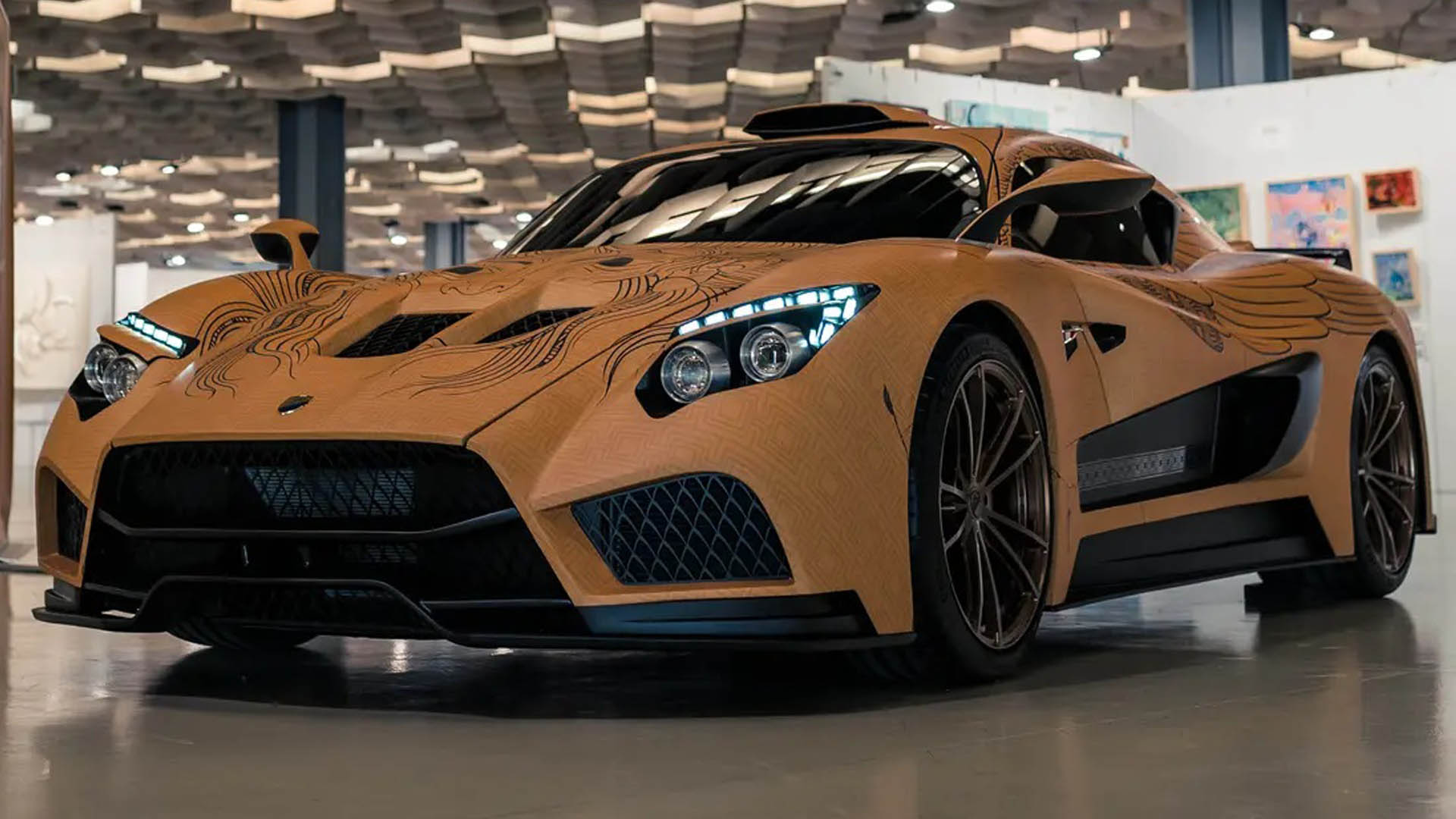
Before starting, the team of writers would like to inform you, the Trussty's loyal readers, that we had published about the 7,000th articles online since we've been here for the first time almost decade ago. By this momment, we look forward could be continued filling these virtual spaces with useful information for all of us and we hope also you can be supported us continously. A great pleasure to be with you along the way and Thank You.
Congrats..!
- In the captivating world of automotive dreams, tales of passion,
innovation, and unfulfilled endeavors paint a vivid picture. One such
captivating story revolves around the Pegaso Dual Turbo, an American contemporary reinterpretation inspired by the iconic Pegaso Z-102, a Spanish sports car that graced the roads from 1951 to 1958. Crafted by the visionary Raffi Minasian and his partner Bill Miller, this stallion, despite its promising wings, which didn’t get off the ground.
The Pegaso Dual Turbo is an American contemporary reinterpretation inspired by the iconic Pegaso Z-102, a Spanish sports car that graced the roads back in the 1950s, crafted by the visionary Raffi Minasian and Bill Miller. (Picture from: MyCarQuest)
The genesis of the Pegaso Dual Turbo traces back to a pivotal meeting in 1979, where Raffi Minasian and Bill Miller (the owner of the 1953 Pegaso 'Thrill' and former owner of the Bill Miller Special) embarked on a journey fueled by their collective vision. Drawing inspiration from legends like the Ferrari Daytona and Lamborghini Miura, the duo set their sights on creating a modern masterpiece with a nod to the classic Pegaso.
The Pegaso Dual Turbo was conceived by Raffi Minasian and Bill Miller, stemming from a crucial meeting in 1979. (Picture from: MyCarQuest)
The project kicked off with the acquisition of a discarded Porsche 914, its bare essentials providing the canvas for their automotive dreams. Stripping the Porsche 914 down to its core components—brakes, wheels, tires, and a Buick aluminum V8 with four Webers—the skeleton of what would become the Pegaso Dual Turbo began to take shape.
The Pegaso Dual Turbo project commenced with the acquisition of a discarded Porsche 914, stripped down to its core components—brakes, wheels, and tires—providing the canvas for their automotive dreams. (Picture from: MyCarQuest)
Departing from tradition, Minasian and Miller opted to fashion the car's body from fiberglass instead of the original's aluminum, resulting in a labor of love that took five meticulous years to complete. The fully functional prototype echoed the aesthetics of '60s sports cars, boasting a twin-turbocharged 500 horsepower mid-engine for an exhilarating driving experience.
All interior components of the Pegaso Dual Turbo, including plaster-carved pieces, fiberglass molds, steam-bent plywood dash and center console panels laminated with burled walnut, and originally intended Recaro seats, were meticulously crafted for a refined finish. (Picture from: MyCarQuest)
The grand plan was unveiled at the 1983 Los Angeles Auto Expo, where the Pegaso Dual Turbo made its debut. A sleek fiberglass body with gull-wing doors, a handcrafted chassis housing a mid-mounted Buick 5.7-liter V8—everything seemed poised for success. However, the dream faced a harsh reality. Despite Minasian and Miller's ambition to produce 500 limited-edition cars, only 14 orders materialized during the expo.
The Pegaso Dual Turbo boasts a robust mid-mounted twin-turbocharged Buick 5.7-liter V8 engine, delivering an impressive 500 horsepower. (Picture from: MyCarQuest)
Financial constraints proved insurmountable, leaving the dream unfulfilled and the lone prototype standing as a testament to unrealized aspirations. The challenges of mass production collided with the grand vision, and the Pegaso Dual Turbo, despite its allure, remained grounded, its wings clipped by feasibility and financial realities.
Unveiled at the 1983 Los Angeles Auto Expo with plans to produce 500 limited-edition cars, only 14 orders materialized during the expo for the Pegaso Dual Turbo. (Picture from: MyCarQuest)
In retrospection, the Pegaso Dual Turbo symbolizes the indomitable spirit of automotive innovation. Though it may not have soared into the masses, its story endures in the annals of automotive history—a testament to the audacity of dreamers, Raffi Minasian and Bill Miller, who defied convention even as the wheels of reality spun in a different direction.
The Pegaso Dual Turbo stands as a reminder that, in the realm of automotive dreams, not every venture takes flight, but the stories of those who dared to dream continue to inspire. As we navigate the highways of innovation, let us celebrate the visionaries who, like Minasian and Miller, left an indelible mark on the road less traveled, where dreams and aspirations pave the way for the future of automotive excellence. *** [EKA | FROM VARIOUS SOURCES | RAFFI MINASIAN | ALLCARINDEX | JESSICAGREEN0202 ON FLICKR | STUDEBAKER FORUM | MYCARQUEST | CLASSIC AND RECREATION SPORTSCAR ]
Note: This blog can be accessed via your smart phone.
Road BEAST - Mazzanti Automobili, a beacon of innovation in the automotive world since its establishment in 2002, continues to redefine excellence. The introduction of the Evantra supercar in 2013 marked a significant milestone, next is Evantra Millecavalli, and in 2021, the journey of evolution has now led to the unveiling of the Mazzanti Evantra Pura.
The Mazzanti Evantra Pura seamlessly marries European elegance with the raw potency of American muscle, and debuted at the 2021 Florence Biennale Festival in Florence, Italy. (Picture from: TopGear)
Displayed with pride at the illustrious 2021 Florence Biennale Festival in Florence, Italy, the Evantra Pura seamlessly marries European elegance with the raw potency of American muscle. Departing from its predecessor, the Evantra Pura opts for a 6.2-liter V8 sourced from the Chevrolet Corvette Stingray C8, tuned to unleash an astounding 761 horsepower and 671 lb-ft of torque. This powerhouse is artfully coupled with a seven-speed automatic transmission.
The Mazzanti Evantra Pura chassis maintains Mazzanti's unwavering commitment to quality and performance. (Picture from: TopGear)
Setting the Evantra Pura apart is its remarkable agility, owing to a significant 198-pound weight reduction compared to the original Evantra. This weight-saving measure propels the car from 0 to 60mph in an exhilarating 2.9 seconds, with a top speed reaching an impressive 360km/h.
The Mazzanti Evantra Pura crafted with a high-tensile, box-section steel frame and chrome molybdenum, the lightweight construction enhances the car's nimble handling. (Picture from: TopGear)
The chassis of the Evantra Pura maintains Mazzanti's unwavering commitment to quality and performance. Crafted with a high-tensile, box-section steel frame and chrome molybdenum, the lightweight construction enhances the car's nimble handling, reducing its overall weight by 90 kilograms compared to its predecessor.
The Mazzanti Evantra Pura's cabin elevates the driving experience with a larger portrait touch screen for the infotainment system and a racing-style steering wheel display. (Picture from: BlackXperience)
Standard features include front and rear MacPherson strut suspension, with the option for enthusiasts to choose a fully adjustable suspension system for a personalized driving experience. Brembo carbon-ceramic brakes, equipped with 14.9-inch discs and six-piston calipers in the front, along with 14-inch discs and four-piston calipers in the rear, ensure precise and powerful stopping capabilities.
The Mazzanti Evantra Pura rolling on OZ Racing wheels wrapped in Michelin tires (255/35R19 at the front and 315/30R20 at the rear), the Evantra Pura not only delivers exceptional performance but also exudes a sleek aesthetic. (Picture from: TopGear)
Rolling on OZ Racing wheels wrapped in Michelin tires (255/35R19 at the front and 315/30R20 at the rear), the Evantra Pura not only delivers exceptional performance but also exudes a sleek aesthetic. Inside the cabin, Mazzanti elevates the driving experience with a larger portrait touch screen for the infotainment system and a racing-style steering wheel display.
The Mazzanti Evantra Pura powered by a 6.2-liter V8 sourced from the Chevrolet Corvette Stingray C8, tuned to unleash an astounding 761 horsepower and 671 lb-ft of torque. (Picture from: TopGear)
A hallmark of the Evantra Pura is its driver-centric design. Mazzanti ensures that each driver experiences a bespoke fit, configuring the driving position based on individual measurements. Even the gear shift distance is customizable, adapting to the unique shape of the driver's hands.
While specific pricing details remain undisclosed, reports suggest that the Mazzanti Evantra Pura starts at an impressive $800,000 or approximately Rp. 11.3 billion. Production is limited to a mere five units annually, adding an exclusive touch to this already exceptional supercar.
In its essence, the Mazzanti Evantra Pura stands as a testament to the brand's unwavering dedication to innovation and performance. With its striking design, potent engine, and personalized driving experience, this limited-production supercar promises to captivate automotive enthusiasts worldwide. Embrace the thrill of the road with Mazzanti's latest masterpiece—the Evantra Pura. A symphony of power, precision, and exclusivity, this extraordinary creation invites enthusiasts to partake in a journey beyond the ordinary. *** [EKA | FROM VARIOUS SOURCES | FARANTUBE | TOPGEAR | ID.MOTOR1 | CARSCOOPS ]
Note: This blog can be accessed via your smart phone.
Forgotten ONES - Embarking on a digital journey, we stumbled upon a captivating piece of automotive history—a vintage snapshot showcasing the elegance of a low-slung GT car prototype envisioned by the legendary Pete Brock. Renowned for crafting iconic vehicles such as the Shelby Daytona Coupe and the Corvette StingRay, Brock, along with his talented associates Bruce Burness and Trevor Harris, set out on a mission to bring a unique prototype to life at their California-based BRE (Brock Racing Enterprises) workshop.
After being entrusted with the responsibility of overseeing Toyota's Sports Car Club racing program in America, Pete Brock found himself at the forefront of creating the groundbreaking Toyota JP6 sportscar. (Picture from: ClassicAndRecreationSportsCars)
This fascinating venture unfolded in the aftermath of the Hino Samurai's development and Toyota's acquisition of Hino Motors. Entrusted with the responsibility of overseeing the Sports Car Club racing program in America, Brock found himself leading the charge in creating the groundbreaking Toyota JP6—a novel sports prototype.
The Toyota JP6 prototype, showcasing a sleek design and the commitment of a potent DOHC 3.0-liter V8 engine, aimed to emerge as Toyota's 2-Liter contender for 24-Hours of Le Mans racing. (Picture from: ClassicAndRecreationSportsCars)
The JP6 aimed to be Toyota's 2-Liter contender for 24-Hours of Le Mans racing, featuring a sleek design and the promise of a powerful DOHC 3.0-liter V8 engine. However, facing challenges in V8 development, the pragmatic decision was made to equip the JP6 with a 2.0-liter straight-six from the Toyota 2000GT, coupled with a 5-speed manual transmission. Unfortunately, financial setbacks derailed the project in 1967.
Despite these setbacks, the team's dedication bore fruit in 1968 with the creation of a stunning wedge-shaped GT marvel. However, this triumph was short-lived as Brock lost his Toyota contract to Shelby, and the fate of the completed chassis, lacking the crucial V8, remained uncertain. The prototype returned to Toyota's possession, raising questions about its future—whether it would be consigned to a scrapyard or repurposed for new endeavors.
The Toyota JP6 utilized the inline-six from the 2000GT as its powerplant (with an eventual transition to a V8) and featured a compact spaceframe structure for the chassis. (Picture from: ClassicAndRecreationSportsCars)
Toyota then entrusted all program assets to Yamaha for completion. Yamaha's venture into advanced design faced tragic consequences in 1969 when a crash claimed the life of driver Yukio Fukuzawa, leaving the JP6 in ruins. Toyota maintained secrecy around the incident, leaving uncertainties about whether it involved a developed JP6 or a newer JP7, never unveiled to the public.
Facing challenges in V8 development, the Toyota JP6 led to Brock losing his Toyota contract to Shelby, leaving the fate of the completed chassis uncertain. (Picture from: ClassicAndRecreationSportsCars)
Rumors circulated that the body molds found a new home with a kit car manufacturer, Japan Project Six, further clouding the destiny of the prototype. Undeterred by challenges, BRE attempted a revival in 1970, envisioning an updated design powered by the potent GM Wankel Rotary engine.
Toyota entrusted all program assets to Yamaha, but their foray into advanced design faced tragic consequences in 1969 when a crash, resulting in the death of driver Yukio Fukuzawa, left the JP6 in ruins. (Picture from: ClassicAndRecreationSportsCars)
Despite the allure of this ambitious project, it never graced the racetrack. As the echoes of the JP6's untold tale reverberate through automotive history, one can't help but ponder the existence of the shadowed prototype, awaiting its moment to reemerge into the light.
Speculations suggest the body molds found a new home with a kit car manufacturer, Japan Project Six, adding an air of mystery to the fate of the prototype. (Picture from: Automobiliac)
The JP6, with its unrealized potential and captivating beauty, stands as a testament to the delicate dance between innovation and the unpredictable twists of fate in the realm of automotive design. The journey of the JP6 remains a poignant chapter in the rich tapestry of automotive evolution, leaving enthusiasts to wonder about the hidden tales behind its iconic silhouette. *** [EKA | FROM VARIOUS SOURCES | AUTOMOBILIAC | CLASSIC AND RECREATION SPORTS CARS | 2000GT.NET | MOTORTREND ]
Note: This blog can be accessed via your smart phone.
Unique EV - The Renault Trezor Concept, unveiled at the Paris Motor Show 2016, showcases an innovative approach to electric Grand Tourers. This all-electric car is designed as a futuristic vehicle, representing the future of electric cars, with distinctive features and cutting-edge technology. It follows the introduction of theRenault DeZir Conceptto the public in2010.
Renault Trezor concept revealed in the Paris Motor Show 2016. (Picture from: BlackXperience)
One of the standout features of the Trezor is its unique door mechanism. Instead of traditional doors, the car features a clamsphell hood that can be lifted upward, resembling the exit and entrance mechanism of a fighter jet cockpit. This design choice not only adds a futuristic touch but also contributes to the overall aerodynamics of the vehicle.
Renault Trezor concept has no doors, instead
there's a clamsphell hood can be lifted upward, representing the doors
to exit and enter the passenger like a fighter jet cockpit. (Picture from: BlackXperience)
The Trezor boasts impressive dimensions, with a height of 1,080 mm, a width of 2,048 mm at the front and 2,106 mm at the rear, and a wheelbase of approximately 2,776 mm. Its low ground clearance is complemented by large front wheels measuring 21 inches and rear wheels measuring 22 inches. The sleek and aerodynamic design is reflected in its low curb weight of 1,600 kg and an impressive air resistance value of 0.22 Cd.
Renault Trezor concept appears in red-colored cabin and equiped with large L-shaped screen, with the dashboard controls and infortainment system. As well as a unique-shaped steering wheel that sharpens the futuristic impression. (Picture from: Cintaobil)
The interior of the Trezor is equally futuristic, featuring a red-colored cabin with a warm atmosphere. The cabin includes a large L-shaped screen for controls and infotainment, utilizing OLED technology and a thin Corning Gorilla Glass curved without backlight.
Renault Trezor concept equiped the fierce drivetrain adopted the technology of Formula-E racing cars and claimed to
be capable of producing the power up to 350 hp and 380 Nm of torque, so
made it can accelerate from 0-100 km/h in less of 4.0 seconds. (Picture from: BlackXperience)
The dashboard, made of red wood, serves a dual purpose as both a design element and a luggage compartment. Crafted by renowned French woodworkers Keim Cycles, it adds a touch of luxury to the interior.
Rear side view of Renault Trezor concept. (Picture from: BlackXperience)
As
explained by Renault that Trezor offers three driving modes, namely
neutral, sporty and autonomous. Under the hood, the Trezor boasts a powerful drivetrain inspired by Formula-E racing cars. With a claimed output of 350 hp and 380 Nm of torque, the electric supercar can accelerate from 0-100 km/h in less than 4.0 seconds.
The vehicle incorporates a unique battery cooling system, drawing air from the intake on the hood. Furthermore, it adopts Formula 1 technology with the Rechargeable Energy Storage System (RESS), a regenerative braking system enhancing energy efficiency.
Overall, the Renault Trezor Concept represents a fusion of luxury, performance, and forward-thinking design, showcasing Renault's commitment to pushing the boundaries of electric vehicle technology. *** [EKA [04102016] | FROM VARIOUS SOURCES | RENAULT | AUTOCAR | AUTOMOBILEMAG ]
Note: This blog can be accessed via your smart phone.
Mazzanti Evantra Millecavalli reveal at the Salone dell'Auto di Torino Parco Valentino 2016. (Picture from: OtoBlitz)
The culmination of Mazzanti's relentless pursuit of automotive excellence is the Evantra Millecavalli, the third production car from the esteemed automaker. The name 'Millecavalli' speaks volumes, translating to 'Thousand Horses' and hinting at the colossal power that lies beneath the sleek exterior. The hypercar, initially dubbed the EV-R during development, finally graced the public stage at the Turin Auto Show 2016, setting the stage for a new era in supercar innovation.
Front view of Mazzanti Evantra Millecavalli. (Picture from: OtoBlitz)
DesignBoom, a reliable source for automotive enthusiasts, reported that Mazzanti Automobili plans to produce a mere 25 units of the Evantra Millecavalli, adding an element of exclusivity to an already extraordinary machine. The unveiling at the Turin Auto Show drew a crowd of eager fans and media, all eager to witness the birth of a potential rival to the revered LaFerrari.
Interior view of Mazzanti Evantra Millecavalli. (Picture from: OtoBlitz)
Underneath the hood, the Evantra Millecavalli boasts a formidable twin-turbocharged V8 engine with a displacement of 7.2 liters. This powerhouse is capable of unleashing a staggering 1,000 horsepower and generating a peak torque of 1,200 Nm. With such impressive specifications, the Millecavalli claims to accelerate from 0 to 100 km/h in a mere 2.7 seconds, ultimately reaching a top speed of 402 km/h.
Rear view of Mazzanti Evantra Millecavalli. (Picture from: OtoBlitz)
While the exact price of this hypercar remains undisclosed by Mazzanti Automobili, industry experts estimate that it will surpass the standard Evantra's price tag of £665,000 or approximately Rp.12,5 billion. The Evantra Millecavalli, with its blend of cutting-edge technology and Italian craftsmanship, is poised to redefine the boundaries of what a supercar can achieve.
In a world where automotive enthusiasts crave not just speed but also exclusivity and innovation, Mazzanti Automobili's Evantra Millecavalli emerges as a symbol of automotive prowess. The allure of a hypercar boasting a thousand horses, combined with its sleek design and groundbreaking performance, places it in a league of its own—a testament to the relentless pursuit of perfection in the realm of supercars. As the Evantra Millecavalli graces the automotive stage, it invites us to envision a future where boundaries are pushed, and the pursuit of excellence knows no limits. *** [EKA [26062016] | FROM VARIOUS SOURCES | FARANTUBE | DESIGNBOOM ]
Note: This blog can be accessed via your smart phone.
Come With LOVE - Nearly a quarter-century has passed since the dazzling debut of Renault's DeZir at the 2010 Paris Motor Show. Yet, the allure of this concept car still captivates automotive enthusiasts worldwide, showcasing the enduring impact of its futuristic design and eco-friendly features.
When we first spotted the DeZir on the Renault stand at the 2010 Paris Motor Show, we were a little intimidated. (Picture from: Autoblog)
Upon first sight of the DeZir, one can't help but exclaim, "Wow! Great!" This sentiment is quintessentially French, a testament to the nation's penchant for futuristic and sci-fi-inspired automotive designs. The car's appearance, even by today's standards, retains a remarkably futuristic charm that continues to resonate.
The Renault DeZir's distinct appeal lies not only in its aesthetic allure but also in its commitment to environmental sustainability. (Picture from: Autoblog)
The DeZir's distinct appeal lies not only in its aesthetic allure but also in its commitment to environmental sustainability. This two-door coupe operates solely on electrical energy, a forward-thinking move by Renault. The driving force behind this concept car is a lithium-ion battery with a 24 kWh capacity, enabling it to cover a distance of 160 km when fully charged – a nod to the eco-conscious era we find ourselves in.
Renault says DeZir's doors signify ying and yang-style amorous harmony. (Picture from: Wikipedia)
Laurens van den Acker, the creative mind behind Renault's design department then, underscores the DeZir's futuristic attributes with the design choice of 21-inch rims and tires. This, coupled with the sleek wheel housing design, adds a touch of sophistication to the overall visual appeal of the car.
The DeZir's futuristic allure is accentuated by its 21-inch rims, sleek wheel housing design, adding a sophisticated touch to its overall visual appeal. (Picture from: CNET)
Charging the DeZir's battery is a convenient affair, with an at-home socket allowing for an eight-hour charging cycle. For those seeking a faster turnaround, a 400-volt charging system can charge the battery to 80 percent in a mere 20 minutes, showcasing Renault's commitment to practicality and convenience.
The Renault DeZir doesn't have seats -- it has a single bench so you and your lover can get all snuggly together. (Picture from: Autoblog)
The emotional connection with the DeZir goes beyond its technical specifications. According to Yann Jarsalles, the exterior designer, the car is a visual representation of passion, evident in its sensual lines and vibrant red color. Renault's overarching concept, "Drive The Change," aims to forge a slow yet profound emotional bond between the brand and its users, illustrating various facets of human life.
The gaping back end is designed to exhaust battery-cooling air that's been sucked in fron the front. (Picture from: Wikipedia)
Three key words – simplicity, sensuality, and warmth – encapsulate Renault's vision for the DeZir. The red and white color scheme, combined with enthusiastic and harmonious design principles, permeates the car's interior, creating an atmosphere of cheerfulness. Stéphane Maïore, leader of DeZir's interior design, emphasizes that love is a sentiment that lifts one's dignity, giving them wings. This sentiment is embodied in the car's interior, which feels like flying among the clouds, as described by Stéphanie Petit, the color and materials designer.
The driving force behind the Renault DeZir is a lithium-ion battery with a 24 kWh capacity, enabling it to cover a distance of 160 km when fully charged – a nod to the eco-conscious era we find ourselves in. (Picture from: Wikipedia)
The interior, dominated by white with splashes of red, exudes passion and joy, creating a cocoon-like atmosphere for comfort. The placement of the electric motor in the rear center optimizes weight distribution between the front and rear wheels. The 24 kWh battery, installed vertically behind the seat, further contributes to this balance. The lightweight body constructed from Kevlar and steel pipes reminiscent of the Megane Trophy racing car showcases Renault's commitment to performance and precision control. | 7ycJsE0h0Xk |
In essence, the DeZir emerges as the latest symbol of Renault's dedication to emotional styling. Its sensuous lines, bright red finish, and eco-friendly credentials affirm that environmental consciousness and a love for cars are not mutually exclusive. As the echoes of the 2010 Paris Motor Show linger, the DeZir remains a timeless embodiment of Renault's vision for the future of automotive design and sustainability. *** [EKA | FROM VARIOUS SOURCES | RENAULT | ROADANDTRACK | AUTOBLOG | BELOW THE RADAR | WIKIPEDIA | CARMAGAZINE | CNET ]


 The Pegaso Dual Turbo stands as a reminder that, in the realm of automotive dreams, not every venture takes flight, but the stories of those who dared to dream continue to inspire. As we navigate the highways of innovation, let us celebrate the visionaries who, like Minasian and Miller, left an indelible mark on the road less traveled, where dreams and aspirations pave the way for the future of automotive excellence. *** [EKA | FROM VARIOUS SOURCES | RAFFI MINASIAN | ALLCARINDEX | JESSICAGREEN0202 ON FLICKR | STUDEBAKER FORUM | MYCARQUEST | CLASSIC AND RECREATION SPORTSCAR ]