Forgotten ONES - Making its debut at the 2013 Shanghai Auto Show, the Buick Riviera Concept stands as a significant milestone in automotive innovation. Emerging from the collaboration between GM’s Shanghai GM and Pan Asia Technical Automotive Center (PATAC), this concept car not only showcased avant-garde design but also provided a sneak peek into Buick's future aesthetic direction.
The Buick Riviera Concept stands as a significant milestone in automotive innovation, and emerging from the collaboration between GM’s Shanghai GM and Pan Asia Technical Automotive Center (PATAC). (Picture from: CarAndDriver)
Despite its debut almost a decade ago, the Riviera Concept remains an enduring source of inspiration for subsequent Buick models, including the Buick Wildcat EV Concept and others. Judging from its extraordinary design, it continues to influence the design language of Buick vehicles to this day.
The Buick Riviera Concept featured classic coupe proportions with precisely-shaped fenders, framing distinctive side air openings at both ends. (Picture from: CarBodyDesign)
Evolving from its 2007 predecessor, the Riviera Concept featured classic coupe proportions with precisely-shaped fenders, framing distinctive side air openings at both ends. Drawing inspiration from the Chinese proverb "The greatest good is like water," the exterior design mirrored the dynamic flow of a river, embodying an athletic shape, an elegant ambience, and deeply sculpted lines.
The Buick Riviera Concept boasted Buick's recognizable "sweep spear" silhouette with a three-dimensional effect reminiscent of ocean waves at a standstill. (Picture from: CarBodyDesign)
Ed Welburn, GM vice president of global design, labeled the Riviera as a "design study of the future expression of Buick design," highlighting its elegant athletic shape, sculptural beauty, and precision execution. Beyond a mere design showcase, this concept underscored Buick's commitment to seamlessly integrating advanced technology.
The Riviera Concept boasted Buick's recognizable "sweep spear" silhouette with a three-dimensional effect reminiscent of ocean waves at a standstill. Complemented by unique gull-wing doors and an ice celadon finish inspired by jade, the car exuded a dynamic yet elegant persona.
Step into the Buick Riviera Concept futuristic cabin through the single, large gull-wing doors, and you'll discover a harmonious blend of classic premium materials. (Picture from: CarBodyDesign)
At its core, the concept housed the Buick Intelligent Performance (BIP) technology, featuring GM’s dual-mode W-PHEV (wireless plug-in hybrid electric vehicle) propulsion system. This innovative system allowed users to seamlessly switch between electric and hybrid modes, blending green efficiency with exhilarating sports car performance. Charging options ranged from traditional methods to wireless charging via a sensory recharge panel integrated into Buick’s iconic porthole design.
The Buick Riviera Concept featured with interior radiated elegance, successfully marrying luxury and technology. (Picture from: CarBodyDesign)
Step into the futuristic cabin through the single, large gull-wing doors, and you'll discover a harmonious blend of classic premium materials like leather and wood with high-tech trims in aluminum, all illuminated by ambient blue LED lights. The interior radiated elegance, successfully marrying luxury and technology.
The Buick Riviera Concept featured with the eaglewood tone interior showcased refined materials like sand-blasted aluminum alloy, lava suede, and ebony, creating a visual spectacle reminiscent of Chinese jade-inlaid wood. (Picture from: CarBodyDesign)
Inside the cabin, the eaglewood tone interior showcased refined materials like sand-blasted aluminum alloy, lava suede, and ebony, creating a visual spectacle reminiscent of traditional Chinese jade-inlaid wood. The 360-degree integrated design mirrored Buick's signature elegance and refinement.
The Buick Riviera Concept housed the Buick Intelligent Performance (BIP) technology, featuring GM’s dual-mode W-PHEV (wireless plug-in hybrid electric vehicle) propulsion system. (Picture from: CarBodyDesign)
The Riviera Concept transcended mere aesthetics and performance; it embraced the future of connectivity. Equipped with an advanced mobile Internet system supporting high-speed 4G LTE network use, it delivered real-time traffic updates, weather information, and entertainment options while facilitating seamless communication with other vehicles.
Safety took center stage with an active safety system utilizing 10 high-resolution cameras and 18 micro high-precision sensors. This forward-looking system projected integrated information in a holographic image on the windshield, ensuring a high level of active safety and security for occupants.
As we marveled at the Riviera Concept, it became clear that Buick was not merely unveiling a car but presenting a vision of the future where elegance, performance, and technology seamlessly converged. The Riviera Concept stood as a testament to Buick's dedication to innovation and design excellence, signaling the dawn of a new era in automotive sophistication. *** [EKA | FROM VARIOUS SOURCES | CARBODYDESIGN | MOTORTREND | CARANDDRIVER ]
Note: This blog can be accessed via your smart phone.
AMERICAN RARE BEAST - Embark on a thrilling journey through the automotive time machine as we revisit the year 2011 and uncover the mysterious allure of the VISION SZR. For many, this name may not immediately strike a chord, but its story begins long before, in 1997, under the alias K/2.
Fast forward to 2005, John Misumi breathed new life into this project, molding it into the sleek and powerful VISION SZR as we talked about today. The metamorphosis included elongated wheelbases, widened greenhouses, and a stylish carbon fiber body atop an aluminum chassis – a true marriage of power and elegance.
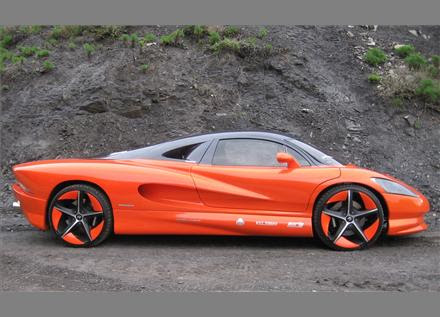
Right side view of 2011 Vision SZR concept. (Picture from: Supercars.net)
Crafted entirely in the USA by Vision Industries, LLC., headquartered in Mar Vista, California, the VISION SZR is not just a vehicle; it's an experience. Designed to be 50-state legal, it offers a spacious interior accommodating individuals up to 6’6” tall, proving that comfort and style can coexist seamlessly.
Interior view of 2011 Vision SZR concept. (Picture from: Supercars.net)
Originally equipped with a formidable 6.2 L V8 engine boasting 630 hp, the VISION SZR is gearing up for an upgrade with a 6.0 liter V12 roaring to an impressive 700 hp. Whether you prefer the raw thrill of a six-speed manual or the refined performance of an electronically-controlled dual-clutch automatic, the VISION SZR promises an exhilarating ride. Weighing in at approximately 1,270 kg, thanks to its aluminum chassis and carbon fiber body, this powerhouse can go from 0 to 100 km/h in less than three seconds.
Interior view of 2011 Vision SZR concept. (Picture from: Supercars.net)
What truly sets the VISION SZR apart is not just its performance but its exclusive status. Titled and registered as a production vehicle with a unique VIN number, it stands as a testament to automotive excellence. Yet, don't expect mass production. The VISION SZR is destined to be one of the most exclusive and low-volume production automobiles ever created.
Rear left side view of 2011 Vision SZR concept. (Picture from: Supercars.net)
Vision Industries, LLC. has not only been crafting automotive marvels, but also providing engineering and design services to OEMs and other automotive companies. The high degree of personalization available, from engine options to interior configurations, adds a layer of exclusivity that automotive enthusiasts crave.
Rear three quarter of 2011 Vision SZR concept. (Picture from: Supercars.net)
Now, the burning question – what's the price tag for this automotive gem? It's a bespoke creation, and interested parties are encouraged to inquire about specific pricing. Word on the street is that this masterpiece could be yours for a price tag hovering around $2 million – a hefty investment for a vehicle that defies convention and embraces individuality. Wow!
So, buckle up, because the VISION SZR is not just a car. It's an extraordinary journey into the realm of automotive excellence, where innovation and craftsmanship collide in a symphony of power and style. *** [EKA [11072015] | FROM VARIOUS SOURCES | VISIONSZR.COM | TOP SPEED | SUPERCARS.NET | AUTOBLOG | LUXATIC ]
Note: This blog can be accessed via your smart phone.
Quirky ONES - In our previous discussion, we delved into the fascinating world of the Deora, a remarkable show car that first graced the automotive scene in 1967. Crafted from the base of the 1960 Dodge A100, this unique automobile found its way into the iconic Hot Wheels miniature car series, courtesy of the renowned American toy manufacturer, Mattel Inc.
The Deora II is the drivable, full-scale car that originally started as die-cast models and inspired by the original Deora show car that was built in the 1960s. (Picture from: Diecast X Magazine)
Fast forward to the second millennium, and the allure of the Deora show car persists, captivating automotive enthusiasts worldwide. Particularly in the United States, there has been a resurgence of interest in reimagining this classic as a 1:1 scaled real car model, albeit with a modern aesthetic.
Meet the Deora II, a reinvention masterminded by designer Nathan Proch. Drawing inspiration from the original Deora show car of the 1960s, this contemporary iteration incorporates modern design elements like surfboards, engine spoilers, and an oval-shaped windshield.
The Deora II is the drivable, full-scale car that originally started as die-cast models and inspired by the original Deora show car that was built in the 1960s. (Picture from: FiveAxis)
Notably, the Deora II's design pays homage to production vehicles, with Nathan Proch borrowing design cues from the rear of the 1996 Ford Taurus station wagon. Contrasting sharply with the angular lines of the original Deora, the Deora II boasts a swoopy curve that adds a touch of modern flair. Its miniature model made its debut as the First Edition #5 on Mainline Hot Wheels in 2000.
The unique shape of the steering wheel of the Deora II looks like an aircraft stick. (Picture from: FiveAxis)
The transition from a miniature marvel to a life-sized automotive wonder began in 2003, marking the 35th Anniversary of Hot Wheels. Collaborating with Chip Foose, Five Axis, Mother's Wax, and PPG Industries, Mattel's Hot Wheels embarked on the ambitious project of bringing the Deora II to life. Equipped with a supercharged Northstar V8 engine, this unique car model also made its mark on the silver screen in the Hot Wheels Highway 35-World Race movie.
The Deora II includes the modernized design elements such as surfboards, spoilers on engines in the back. (Picture from: FiveAxis)
Following its completion, the Deora II received a prestigious accolade – an induction into the Hot Wheels Hall of Fame in 2003, held at the Petersen Automotive Museum in Los Angeles, California. A highlight of the event was Jay Leno igniting the Proch-designed, Foose-built Deora II and driving it into the star-studded gala. Interestingly, the car had made its debut a week prior at the SEMA show, preceding its Hall of Fame recognition.
The Deora II includes the modernized design elements such as surfboards, spoilers on engines in the back. (Picture from: FiveAxis)
Beyond its induction, the Deora II underwent further modifications. The original KMC Wheels were swapped out for Foose One-off, aligning with the 1/18 scale model and Nathan Proch's initial design. Notably, the Deora II made a virtual appearance in the Hot Wheels Velocity X games as a formidable boss car, providing enthusiasts with an opportunity to experience its power on a digital stage.
In conclusion, the Deora II stands as a testament to the timeless allure of innovative automotive design. From its humble beginnings as a miniature collectible to a life-sized masterpiece, this car continues to capture the imagination of automotive enthusiasts, bridging the gap between past and present with its unique blend of classic inspiration and modern aesthetics.. *** [EKA [29012020] | FROM VARIOUS SOURCES | FIVE AXIS | SIA MAGAZIN | DIECAST X MAGAZINE ]
Note: This blog can be accessed via your smart phone
ONE-OFF - In the ever-evolving landscape of the automotive world, a realm that never ceases to amaze with its diverse array of vehicles, from the commonplace to the extraordinary, there exists a hidden gem that has eluded the public eye for far too long. Today, we unravel the mystery surrounding the 1975 JJ Chasseing 2.7, a one-of-a-kind sports car that stands as a testament to innovation and uniqueness.
The 1975 JJ Chasseing 2.7 crafted by the enigmatic Jean-Jacques Chasseing, emerges as a captivating blend of artistry and engineering. (Picture from: Pinterest)
Crafted by the enigmatic Jean-Jacques Chasseing, the 1975 JJ Chasseing 2.7 emerges as a captivating blend of artistry and engineering. With a fiberglass body kit of FT Bonito seamlessly married to a 1966 Volkswagen Type 1 chassis, this automotive marvel is fueled by the potent heartbeat of a Porsche 911's 2.7-liter flat-6 drivetrain, propelling it to a remarkable top speed of 240 kph. The intriguing amalgamation of elements results in a vehicle that defies convention and demands attention.
The 1975 JJ Chasseing 2.7 featuring with a retro-future car concepts from the 70s, with front hood proudly showcases twin accented vents, infusing a touch of avant-garde flair. (Picture from: Autopuzzles)
Despite the scarcity of information surrounding the origins of this sports car and its creator, the visual allure captured in images circulating on the internet invites us to delve into its design. Reminiscent of retro-future car concepts from the 70s and inspired by a combination of Italian-American styles, the JJ Chasseing 2.7 boasts a mid-engine design, allowing for a sleek, sloping front that harmoniously blends with a sharply raked windshield and roofline, creating an elegant and simplistic silhouette.
The 1975 JJ Chasseing 2.7 boasts a mid-engine design, allowing for a sleek, sloping front that harmoniously blends with a sharply raked windshield and roofline, creating an elegant and simplistic silhouette. (Picture from: Pinterest)
The distinctive features of this automotive rarity become even more apparent upon closer inspection. The front hood proudly showcases twin vents, infusing a touch of avant-garde flair. Moreover, the tail lights, reminiscent of Peugeot 504 coupé, are meticulously embossed in a clean rectangular graphic finish, harmoniously complementing the sharp truncated tail. The double-ventilation rear trunk, housing its machinery, not only adds a layer of sophistication but also stands as the crowning glory of a design that truly reflects Chasseing's creative prowess.
The interior of the 1975 JJ Chasseing 2.7 boasts a blend of wood accents and black leather.(Picture from: el.guy08_11 in Flickr)
From a lateral perspective, the clean and linear body of the JJ Chasseing 2.7 is punctuated only by an air vent near the rear flared arches, enhancing the overall impression of power. This minimalist approach to design speaks volumes about the artistic sensibilities and attention to detail that went into creating this automotive masterpiece.
The tail lights of the 1975 JJ Chasseing 2.7, meticulously embossed in a clean rectangular graphic finish, harmoniously complement the sharp truncated tail. (Picture from: NameThatCar)
As we unravel the layers of mystery surrounding the 1975 JJ Chasseing 2.7, it becomes evident that this sports car is not merely a mode of transportation; it is a work of art on wheels. Jean-Jacques Chasseing's creation transcends the ordinary, inviting us to appreciate the fusion of innovation and aesthetic appeal. In a world inundated with automotive offerings, the JJ Chasseing 2.7 emerges as a unique and unforgettable presence, leaving an indelible mark on the annals of automotive history.
The 1975 JJ Chasseing 2.7 powered by a Porsche 911's
2.7-liter flat-6 drivetrain, propelling it to a remarkable top speed of
240 kph. (Picture from: el.guy08_11 in Flickr)
In conclusion, the 1975 JJ Chasseing 2.7 stands as a testament to the boundless creativity that thrives in the automotive realm. Its unique design, born from the mind of Jean-Jacques Chasseing, encapsulates the spirit of an era and continues to captivate enthusiasts and onlookers alike.
From a lateral perspective, the clean and linear body of the JJ Chasseing 2.7 is punctuated only by an air vent near the rear flared arches, enhancing the overall impression of power. (Picture from: el.guy08_11 in Flickr)
As we traverse the vast landscape of automotive wonders, let the JJ Chasseing 2.7 serve as a reminder that true innovation knows no bounds, and the pursuit of uniqueness can yield extraordinary results. If you have any additional information or objections regarding what we've presented, please don't hesitate to share them in the comments section below this article...😎 *** [EKA | FROM VARIOUS SOURCES | AUTOPUZZLES | WIKIPEDIA | TOTALKITCAR ]
Note: This blog can be accessed via your smart phone.
Road BEAST - Mazzanti Automobili, the renowned Italian automotive design and coach builder, recently unveiled its masterpiece, the Mazzanti Evantra supercar, at the prestigious 2013 Top Marques Monaco event. This exclusive supercar, limited to a production run of only five units worldwide, is a testament to exquisite craftsmanship and personalized luxury, with each unit uniquely tailored to the preferences of its discerning owner. Crafted by skilled hands in Italy, the Evantra is a symbol of automotive artistry.
At the heart of the Evantra lies a formidable 7.0-liter V8 engine, delivering an impressive 701 horsepower and a torque of 625 lb-ft. Sourced from the Corvette lineage, this powerhouse is strategically placed in the middle of the car, featuring titanium components for both piston and valve parts. The transmission prowess is harnessed through a six-speed sequential transmission system, channeling the entire force to the rear wheels for an exhilarating driving experience.
Front view of Mazzanti Evantra. (Picture from: Carbuzz)
Collaborating with Ysim, experts in F1 and Le Mans racing cars, the development process focused on optimizing the aerodynamic package. The chassis, constructed from chrome-molybdenum materials, ensures a featherweight of 1,300 kilograms, enabling the Evantra to accelerate from 0 to 100 kph in a mere 3.2 seconds before attaining a maximum speed of 350 kph.
Interior view of Mazzanti Evantra. (Picture from: Carbuzz)
The Evantra offers enthusiasts a choice between two distinctive body options – the Pro-Bodycrafted from composite carbon fiber and the One-Bodyentirely fashioned from aluminum. The interior is a haven of opulence, featuring special leather materials that can be customized to the owner's preference, even incorporating exotic luxury leathers.
Mazzanti Evantra supercar with the coolest suicide door-type. (Picture from: Carbuzz)
Inside the cabin, the center console showcases data from the AIM and Bosch audio-navigation system, while a Tricolore engine start button takes center stage, easily accessible on the steering wheel alongside a small display for transmission position. Mazzanti has meticulously curated an automotive masterpiece that seamlessly marries performance with personalized luxury.
Rear view of Mazzanti Evantra. (Picture from: Carbuzz)
For those captivated by the Evantra's allure, Mazzanti has officially opened orders. However, this exclusivity comes at a price, both in terms of funds and patience. The assembly process for each model spans several months, emphasizing the meticulous craftsmanship involved.
Undoubtedly, the Evantra's price tag will ascend into seven digits in U.S. dollars, reaffirming its status as a pinnacle of automotive refinement and exclusivity. Embrace the epitome of automotive opulence – the Mazzanti Evantra. *** [EKA [22112013] | FROM VARIOUS SOURCES | FARANTUBE | CARBUZZ | MOTORAUTHORITY ]
Note: This blog can be accessed via your smart phone.
Special ONES - The 90s, a decade known for its vibrancy, also birthed an automotive legend – the Lamborghini Diablo SE30. Representing three decades of Automobili Lamborghini S.p.A.'s journey, this iconic model, produced from June 1994 to September 1995, was a tribute to power and precision. Crafted as a road-worthy counterpart to the formidable Diablo competition model, it aimed to be both lighter and more powerful.
The iconic Lamborghini Diablo SE30 models, produced from June 1994 to September 1995, pay tribute to three decades of Automobili Lamborghini S.p.A.'s journey of power and precision. (Picture from: SupercarNostalgia)
The heart of the Diablo SE30, its engine, underwent a transformation, resulting in a power surge to 530 horsepower. Achieved through a trimmed fuel system, open exhaust, and magnesium intake manifolds, the car retained its rear-wheel-drive essence, shedding the electrically adjustable shock absorbers from the VT model. Instead, it embraced "on-the-fly" adjustable stabilizer bars, optimizing its racing prowess.
The Lamborghini Diablo SE30's heart underwent a metamorphosis, resulting in a power surge to an impressive 530 horsepower. (Picture from: SupercarNostalgia)
Weight reduction became an art form with the extensive use of lightweight materials. Glass side windows were replaced with fixed plexiglass installations, akin to racing cars, while carbon fiber seats with 4-point belts became standard, echoing the car's racing character. The allure of this automotive masterpiece was further heightened by the iconic configuration short gear lever and exclusive options like the 18" OZ Racing Magnesium rims, and special color brake calipers underscored its exclusivity.
Meanwhile the Lamborghini Diablo SE30 Jota added an extra layer to the limited SE30 Special Edition, introduced several revisions, including a distinctive hood with towering air ducts, and turning them into pure track racers. (Picture from: Finn.no)
While the iconic car featured in this article is presented in purple,
it's important to note that Lamborghini offers a variety of colors for
this model. Further, this rarity didn't just stop at the SE30;
it extended to the sought-after collector's and investment object, the
Lamborghini Diablo SE30 Jota. Originating from the Diablo, which defined
the dream car of the '90s, the Jota edition added an extra layer to the
limited SE30 Special Edition.
The Lamborghini Diablo SE30 Jota got meticulous tuning of the V12 engine, coupled with a fully open exhaust system, catapulted the power to an awe-inspiring 595 horsepower, accompanied by an almost mythical engine roar. (Picture from: Finn.no)
From the Diablo SE30 limited production numbers of 150 units, there're 11 units undergoing a fascinating transformation into the "Jota" specification, turning them into pure track racers. The Jota edition, a brainchild of Lamborghini engineering, introduced several revisions, including a distinctive hood with towering air ducts later adopted by the Diablo SV. Meticulous tuning of the V12 engine, coupled with a fully open exhaust system, catapulted the power to an awe-inspiring 595 horsepower, accompanied by an almost mythical engine roar.
Model
number 30 of the Lamborghini Diablo SE30 Jota, commissioned by Guiliano
Righini, features a Viola Metallic exterior and Blue Alcantara
upholstery, showcasing a masterful design. (Picture from: Finn.no)
Moreover, one of the Jota special editions configured in the signature Viola Metallic exterior coupled with Blue Alcantara upholstery inside the cabin was a truly masterpiece commissioned by Guiliano Righini, an avid Lamborghini collector and former president of the Lamborghini Club Italy. His involvement in the brand earned him the honor of being awarded car model number 30 of 150 Diablo SE30 editions, reflected in the car's chassis number. The "30SE" plaque proudly carried his name.
In the grand tapestry of automotive history, the Lamborghini Diablo SE30 Jota wasn't just a car; it was a testament to Lamborghini's dedication to excellence. As it graced the global supercar market, it invited enthusiasts and collectors to be part of a timeless legacy. Stepping into the driver's seat wasn't just a ride; it was a journey into automotive history, a roaring testament to Lamborghini's remarkable 30-year journey. *** [EKA | FROM VARIOUS SOURCES | SUPERCARNOSTALGIA | CARSCOOPS | FINN.NO ]
Note: This blog can be accessed via your smart phone.


 As we marveled at the Riviera Concept, it became clear that Buick was not merely unveiling a car but presenting a vision of the future where elegance, performance, and technology seamlessly converged. The Riviera Concept stood as a testament to Buick's dedication to innovation and design excellence, signaling the dawn of a new era in automotive sophistication. *** [EKA | FROM VARIOUS SOURCES | CARBODYDESIGN | MOTORTREND | CARANDDRIVER ]