Special ONES - In the midst of the tumultuous 1940s, Italy grappled with the challenges brought on by ongoing warfare, affecting the daily lives of its citizens. Scarce and expensive public transportation left people searching for alternatives. Domenico Agusta, who had assumed control of the family business in 1927, recognized an opportunity in the realm of motorbikes, offering a solution to mobility problems while securing a future for his employees at Officine Aeronautiche Giovanni Agusta.
The MV Agusta Superveloce 98 Edizione Limitata (on the right) posed alongside its predecessor, the MV Agusta 98cc from 1943. (Picture from: Liputan6)
The inception of MV Agusta's journey can be traced back to 1943 when the first MV Agusta engine was conceived. A 98 cc single-cylinder powerhouse equipped with a lubricated two-speed gearbox emerged from the creative minds at the company. However, the onset of World War II in September 1943 compelled the factory to halt production. With the war's end, motorcycle production regained its momentum, and the MV 98 was introduced in a distinct burgundy hue, exuding an air of elegance.
The MV Agusta Superveloce 98 Edizione Limitata is a tribute to MV's initial foray into the world of motorcycles, a timeless ode to the brand's legacy. (Picture from: MCN)
Fast forward eight decades, and we witness the revival of the iconic "98" as it graces the MV Agusta Superveloce 98 Edizione Limitata. This limited edition marvel is a tribute to MV's initial foray into the world of motorcycles, a timeless ode to the brand's legacy. A mere 300 units of this masterpiece were crafted, each intended for the discerning collector.
The MV Agusta Superveloce 98 Edizione Limitata bears the "Rosso Verghera" color scheme, an exquisite homage to the original color palette. This unique shade has been meticulously developed, employing materials and techniques designed to accentuate its metallic brilliance. It is hand-applied, seamlessly melding a matte base with a polished finish, thus enhancing the lustrous metallic flakes that adorn the bike. The distinct "98 Edizione Limitata" insignia graces the tail and top triple of this motorcycle, reaffirming its exclusive status.
The MV Agusta Superveloce 98 Edizione Limitata bears the "Rosso Verghera" color scheme, an exquisite homage to the original color palette. (Picture from: NaikMotor)
As is customary with limited editions of this caliber, each unit arrives with a certificate of authenticity, a numbered plaque, and an accompanying Race Kit box, adding to the exclusivity of the ownership experience. But what treasures does the Race Kit hold? It comprises a specially designed Superveloce 98 Edizione Limitata motorbike cover and a tail cover, ensuring that your prized possession remains in impeccable condition. Additionally, an Arrow racing exhaust, reserved for circuit use, comes as part of the package, delivering that extra edge in terms of performance. Furthermore, a special racing engine control unit (ECU) is included, allowing enthusiasts to fine-tune and extract the utmost from their machine.
The MV Agusta Superveloce 98 Edizione Limitata hides a powerful 798 cc DOHC 4-stroke 12-valve 3-cylinder in-line engine, boasting liquid cooling. (Picture from: NaikMotor)
Beneath its fairings, the MV Agusta Superveloce 98 Edizione Limitata hides a powerful 798 cc DOHC 4-stroke 12-valve 3-cylinder in-line engine, boasting liquid cooling. This finely tuned machine generates an impressive 148 horsepower at 13,000 RPM, with a maximum torque of 88 Newton-meters at 10,900 RPM, channeled to the rear wheels through a precise 6-speed manual clutch-type transmission.
The MV Agusta Superveloce 98 Edizione Limitata built only 300 units and each arrives with a certificate of authenticity, a numbered plaque, and Race Kit box, adding to the exclusivity of the ownership experience. (Picture from: NaikMotor)
The technical excellence doesn't end with the engine. The motorcycle offers various driving modes - Sport, Race, Rain, and Custom Race Mode - to cater to different riding preferences. It features an MV EAS 2.0 electronic gearbox and an 8-level traction control system. The engine meets Euro5 emission standards, emphasizing the brand's commitment to environmental responsibility. Remarkably, this commitment doesn't hinder performance, with a claimed top speed of 240 km/hour.
The MV Agusta Superveloce 98 Edizione Limitata pays meticulous attention to every detail, from its spoke wheels with gold coating to the Pirelli Diablo Rosso IV Corsa radial tires for superior grip and stability. (Picture from: MCN)
Crucial to the motorcycle's prowess is a new six-axis inertial platform managing rider aids such as Continental MK 100 ABS, traction control, wheelie control, and launch control. The 5.5-inch TFT instrument panel is not just informative; it also serves as a connectivity hub, enabling remote communication with the motorcycle via a personal smartphone.
The distinct "98 Edizione Limitata" insignia graces the tail and top triple of this motorcycle, reaffirming its exclusive status. (Picture from: NaikMotor)
The MV Agusta Superveloce 98 Edizione Limitata pays meticulous attention to every detail, from its spoke wheels with gold coating to the Pirelli Diablo Rosso IV Corsa radial tires for superior grip and stability. Braking performance is nothing short of exceptional, with dual 320 mm discs featuring twin Brembo 4-piston radial monoblock calipers at the front and 220 mm discs with Brembo 2-piston calipers at the rear, ensuring safety is never compromised.
The MV Agusta Superveloce 98 Edizione Limitata stands as a testament to MV's enduring commitment to innovation, quality, and style. (Picture from: MCN)
In conclusion, the MV Agusta Superveloce 98 Edizione Limitata stands as a testament to MV's enduring commitment to innovation, quality, and style. With only 300 units in existence, this masterpiece is more than a motorcycle; it is a collector's dream, a tribute to the brand's illustrious history, and a promise of exceptional performance. The "Rosso Verghera" color scheme, developed with meticulous care, signifies a dedication to excellence that transcends generations. The Race Kit, complete with exclusive accessories and performance enhancements, ensures that each owner can relish a truly unique experience.
In essence, the MV Agusta Superveloce 98 Edizione Limitata is not just a motorcycle; it is a symbol of MV Agusta's dedication to precision engineering and style. With its limited production run, exclusive color scheme, and the Race Kit for enthusiasts, it promises a riding experience like no other. For those fortunate enough to own one of the 300 units, it is a testament to MV Agusta's enduring legacy and a promise of exceptional performance on the open road or the racetrack.
Kept spur your adrenaline on the power of the two-wheeled monster and stay alive with true safety riding. May God will forgive Your sins and so does the cops...... *** [EKA | FROM VARIOUS SOURCES | MCN ]
Note: This blog can be accessed via your smart phone.
ONE-OFF - Recently, Ferrari unveiled the latest addition to its exclusive one-off series, the Ferrari SP-8 supercar. This extraordinary automobile was crafted at the request of a special customer, embodying the epitome of Prancing Horse customization. Designed by the renowned Ferrari Centro Stile (Ferrari Styling Centre) under the leadership of Flavio Manzoni, the SP-8 is a mid-rear-engined V8, derived from the F8 TributoandF8 Spider, inheriting its layout, chassis, and engine.
The new Ferrari SP-8 has been unveiled as a celebration of the firm’s twin-turbocharged 3.9-litre V8, a four-time winner of the Engine of the Year award. (Picture from: Autocar)
The moniker "SP-8" pays homage to its potent 3.9-liter V8 twin-turbo engine. This powerplant has garnered immense acclaim, securing the prestigious Engine of the Year (IEOTY) award an impressive four consecutive times. Additionally, this nomenclature carries significance for the Taiwanese client who commissioned the SP-8, as the number 8 is considered exceptionally auspicious in Chinese culture, symbolizing prosperity, good fortune, and personal achievement.
The Ferrari SP-8 has no roof, allowing a dramatic split shoulder line, featured with Carbonfibre front end, and was restyled with thinner headlights and a wider grille. (Picture from: Netcarshow)
What sets the Ferrari SP-8 apart is its striking absence of a roof, transforming it into a true two-seater roadster. This design choice emphasizes its sporty character and provides an exhilarating open-air driving experience. Achieving this required meticulous aerodynamic refinement, combining computational fluid dynamics (CFD) simulations, wind tunnel testing, and on-track trials to ensure acoustic comfort and wind dynamics akin to its closed-top counterparts.
The central theme of the SP-8's styling revolves around the seamless intersection and fusion of its volumes. The unpainted carbon fiber front section extends to the rear, creating a captivating two-tone effect that blends color and materials in a harmonious contrast. The removal of the retractable hardtop allowed the designers to reimagine the entire tail section, endowing it with a robust, taut beltline.
These directional five-spoke wheels are exclusive to the Ferrari SP-8 and provide a modern interpretation of classic rims used on legendary Ferrari Sports Prototypes and the iconic F40. (Picture from: Autocar)
The car's profile is divided into two segments, connected by a functional matte black central area. This central zone houses side air intakes with separate ducts for the intercooler and engine. At the top of this section, elongated elements provide engine compartment ventilation, paying homage to Ferrari's iconic lateral lines from the past.
The front of the SP-8 is dominated by a full-width cast aluminum grille, created using a single 3D-printed mold. This grille features a vertical strake design that gradually widens toward the sides, effectively channeling airflow to the front radiators. Close collaboration between the Ferrari Styling Centre and the aerodynamics team refined the styling of these elements through months of CFD optimization.
Inside the car, the center console has undergone significant modifications to accommodate the F1 gearbox controls, a feature that has graced the Ferrari lineup since the debut of the SF90 Stradale. (Picture from: Autocar)
Several elements of the Ferrari SP-8 were redesigned from the donor car, including the specially masked and lensed headlights, rear lights sourced from the Roma with unique lenses, and a windshield and exhaust treatment akin to the 296 GTB. The vehicle boasts specially designed wheel rims in a unique Grigio NART matte color.
These directional five-spoke wheels are exclusive to the SP-8 and provide a modern interpretation of classic rims used on legendary Ferrari Sports Prototypes and the iconic F40. Notably, these rims feature highly sculpted components and large apertures designed to enhance weight reduction.
The central theme of the Ferrari SP-8's styling revolves around the seamless intersection and fusion of its volumes. (Picture from: Autocar)
Inside the car, the center console has undergone significant modifications to accommodate the F1 gearbox controls, a feature that has graced the Ferrari lineup since the debut of the SF90 Stradale. This alteration has given rise to a distinctive shift-gate design, emblematic of this particular application. The interior boasts seats adorned with laser-engraved Navy Blue Alcantara details, complemented by gradient-effect fabric, while the carpets are finished in a special twill fabric with an iridescent effect.
The SP-8's Argento Micalizzato matte color, custom-crafted for this model, harmoniously complements the carbon fiber elements, characterized by a glossy iridescent Blue Sandstone finish. Even the unique Blu Scuro Stellato color, linking the two bodywork halves, was specially developed for this extraordinary creation.
In conclusion, the Ferrari SP-8 is a masterpiece of automotive design, showcasing the fusion of cutting-edge technology and bespoke craftsmanship. This extraordinary supercar, rooted in Italian tradition, redefines the boundaries of luxury and performance, providing a driving experience that is unparalleled. In essence, the SP-8 represents the pinnacle of Prancing Horse customization, tailored to meet the exacting standards of its discerning clientele. This unique creation not only exemplifies the marriage of art and engineering but also pays tribute to the rich legacy of Ferrari. *** [EKA | FROM VARIOUS SOURCES | FERRARI | TOPGEAR | MOTOR1 | AUTOCAR | NETCARSHOW ]
Note: This blog can be accessed via your smart phone
Future Versatile Vehicles - Countless potential vehicle designs conceived by innovative designers often fade into obscurity over time. Recently, we stumbled upon a captivating concept design for a multipurpose vehicle while browsing the internet. This vehicle made its debut at the 2006 North American International Auto Show (NAIAS), also known as the Detroit Motor Show, as part of the Michelin Challenge Design competition.
The BAAL (foreground) and Hyanide (far-background) Designs is a completely new vehicle concept based on a bendable rubber track that guarantees maximum traction as well as freely changeable directions. (Picture from: TrendHunter)
The Michelin Challenge Design competition serves as a global platform for aspiring students and designers to share their visionary ideas for the 21st-century automotive industry. The spotlight here falls on two outstanding designs brought to life by the collaborative efforts of two talented German designers, Tilmann Schlootz and Oliver Keller. They introduced the world to the BAAL and Hyanide Concepts, vehicles that pushed the boundaries of innovation and redefined traditional automotive design.
The BAAL all-terrain vehicle design was created by two talented German designers, Tilmann Schlootz and Oliver Keller for the 2006 Michelin Challange Design. (Picture from: Kneeslider)
What sets these designs apart from the conventional is their ingenious use of bendable rubber tracks, providing enhanced traction compared to their nearest kin, the motorcycle. Additionally, these vehicles offer unparalleled maneuverability, making them versatile contenders in the world of transportation. If you recall our previous discussion about the vintage multi-purpose vehicle, the Moto Guzzi Autoveicolo Da Montagna, you'll find a semblance of purpose in these contemporary creations.
The BAAL all-terrain vehicle design uses the engine concept and its unbeatable off road advantages as a race device. (Picture from: TopSpeed)
Like their predecessor, this German-designed marvel is engineered for all-terrain adventures. At first glance, it might resemble a tank, but the tracks are replaced by tires, hence earning it the moniker "Tank Motorcycle." According to the designer, the BAAL and Hyanide are two all-terrain vehicle (ATV) concepts that have different functions and uses.
The BAAL all-terrain vehicle design made for professional riders, it has a very light body and a broad handlebar. (Picture from: MicheliChallangeDesign)
As quoted from TopSpeed, the BAAL uses the engine concept and its unbeatable off road advantages as a race device. Made for professional riders, it has a very light body and a broad handlebar. This concept could take part in rallies Paris-Dakar or the Baja races. Meanwhile, the Hyanide is designed as an everyday use vehicle for all areas in the world with harder climatic and geographic conditions such as Alaska, Greenland, desert areas or mountain regions like the Himalaya. It can carry two persons and provides much space to transport any kind of small to midsize goods.
The Hyanide all-terrain vehicle design was created by two talented German designers, Tilmann Schlootz and Oliver Keller for the 2006 Michelin Challange Design. (Picture from: TopSpeed)
In an ever-evolving automotive landscape, where innovation knows no bounds, the BAAL and Hyanide Concepts challenge conventional norms, presenting a vision of multipurpose vehicles that can navigate diverse terrains with ease and precision. These groundbreaking designs merge the durability and ruggedness of an all-terrain vehicle with the nimbleness and versatility of a motorcycle, creating a unique hybrid that defies traditional categorization.
The Hyanide all-terrain vehicle design is designed as an everyday use vehicle for all areas in the world with harder climatic and geographic conditions. (Picture from: MicheliChallangeDesign)
One remarkable feature of these concepts is the utilization of flexible rubber tracks, which offer an unprecedented level of traction. Unlike traditional tires, these tracks provide the ability to tackle challenging surfaces with confidence, making these vehicles suitable for a wide range of environments, from urban streets to off-road adventures.
The Hyanide all-terrain vehicle design merges the durability and ruggedness of an all-terrain vehicle with the nimbleness and versatility of a motorcycle, creating a unique hybrid that defies traditional categorization. (Picture from: MicheliChallangeDesign)
Steering these innovative machines is a seamless process, offering both manual and foot-controlled options. By simply manipulating the handlebars, the vehicle can be directed with ease, allowing for precise turns and agile maneuvers. Meanwhile, the foot controls allow for adjustments to the pivot point, enhancing the overall control and adaptability of the vehicle.
The Hyanide all-terrain vehicle design can carry two persons and provides much space to transport any kind of small to midsize goods. (Picture from: MicheliChallangeDesign)
The versatility of the BAAL and Hyanide designs extends beyond their mechanical features. The initial models house a 500cc all-terrain vehicle engine, but the designers envision the potential for alternative power sources, including a fuel cell system. This adaptability opens doors to a more sustainable and eco-friendly future for multipurpose vehicles.
Despite the debate surrounding these unconventional designs, it's hard to deny the allure of their innovation. If brought to life, these vehicles could revolutionize the way we approach transportation, providing a new perspective on mobility. The BAAL and Hyanide concepts represent a bold step towards a future where boundaries are meant to be challenged and where innovation reigns supreme.
As we contemplate the possibilities presented by the BAAL and Hyanide concepts, one thing becomes clear: the automotive industry is on the cusp of a revolution. These designs remind us that innovation and creativity know no limits, and the future of transportation is poised to be as flexible and adaptable as the vehicles themselves. The question remains: will these visionary designs become a reality, or will they remain as tantalizing concepts in the annals of automotive history? Only time will tell.
And the following video about the Moto Guzzi Autoveicolo Da Montagna is just to give a little idea of what the BAAL and Hyanide concepts are like when in a snowy environment.
Rare ONES - Lamborghini has long been synonymous with pushing boundaries, both in performance and design. As the brand races toward an electrified future with revolutionary models like the Revuelto, its forward-thinking vision continues to define the supercar landscape. However, a glance back in time reminds us of a model that holds a special place in Lamborghini's storied history.
The Lamborghini Urraco Prototype I designed by Marcello Gandini of Carrozzeria Bertone. (Picture from: CarStyling.ru)
In 2023, one such icon celebrates its 53rd birthday—a car whose name evokes the image of a spirited little bull: the Lamborghini Urraco. Among the illustrious Lamborghini family, the Urraco occupies a unique position as a more accessible sports car. In the 1970s, it became the preferred choice for enthusiasts seeking an alternative to contemporaries like the Ferrari Dino, Maserati Merak, or even Lamborghini's own Miura.
The Lamborghini Urraco Prototype II designed by Marcello Gandini of Carrozzeria Bertone. (Picture from: CarStyling.ru)
The Urraco's charm and spirited performance made it a standout in an era dominated by exclusivity, offering a more approachable yet undeniably thrilling entry into the world of Italian sports cars. This iconic Lamborghini model made its grand debut at the Turin Motor Show in late October 1970.
The Lamborghini Urraco P250 Prototype I designed by Marcello Gandini of Carrozzeria Bertone. (Picture from: CarStyling.ru)
In comparison to its contemporaries, the Urraco introduced a wealth of innovative features, thanks to the brilliance of Paolo Stanzani, who was Lamborghini's Chief Technical Officer at that time. The aesthetic appeal of the Urraco was masterfully crafted by design virtuoso Marcello Gandini, who held the position of principal designer for Carrozzeria Bertone during this period.
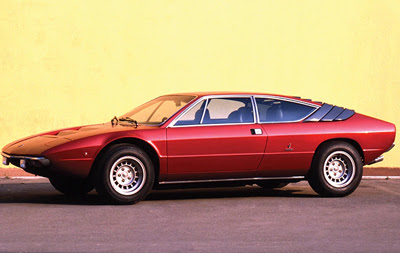
The Lamborghini Urraco designed by Marcello Gandini of Carrozzeria Bertone. (Picture from: OtoBlitz)
Technically speaking, the Lamborghini Urraco is a 2+2 coupe boasting a mid-rear V8 engine and an independent MacPherson strut suspension both in the front and rear. Notably, this suspension setup was groundbreaking for a production car at that time. Initially, the Urraco was outfitted with a 2.5-liter V8 engine generating 220 horsepower, and it could achieve an impressive top speed of 245 km/h.
The Lamborghini Urraco is a 2+2 coupe boasting a mid-rear V8 engine and an independent MacPherson strut suspension both in the front and rear. (Picture from: Lamborghini)
This engine boasted numerous innovations, including a Single Overhead Camshaft (SOHC) valve system, a unique "Heron" combustion chamber, and concave pistons that allowed for effective utilization of a high compression ratio. Fueling this marvel of engineering were four Weber 40 IDF1 double-barrel carburetors.
The interior of the Lamborghini Urraco is well appointed, with genuine leather upholstery, 2+2 seating, air-conditioning, Jaeger instruments, and a Blaupunkt radio/cassette player. (Picture from: OtoBlitz)
What set the Lamborghini Urraco apart was an efficient production system designed to minimize manual labor from the outset. This approach aligned with the vision of Ferruccio Lamborghini, who aimed to enhance production capabilities and make Lamborghini cars more affordable for a broader consumer base.
This cutaway illustration of the Lamborghini Urraco P250 reveals its transverse rear-mounted engine with the transmission on the driver's side, making it mid-engined and leaving space for a 10 cubic foot trunk. (Picture from: Silodrome)
Furthermore, the Urraco's cabin showcased a harmonious integration of the dashboard, instrument panel, and steering wheel in a distinctive and proportionate manner. The raging bull logoed automotive manufacturer initially introduced the Lamborghini Urraco P250, where the "P"denoted the posterior engine placement, and the "250"indicated the 2.5-liter engine capacity.
Rear side view of the Lamborghini Urraco. (Picture from: OtoBlitz)
Production of this model spanned from 1970 to 1976. Subsequently, Lamborghini unveiled the Lamborghini Urraco P300 with a 1,994 cc engine generating 182 horsepower, making its debut at the 1974 Turin Motor Show and hitting the Italian market in 1975-1977.
The Italian company produced the Urraco model during the period of 1972 to 1979 with only 791 units having been produced. Today, the Lamborghini Urraco is sat among the scarce, exorbitant priced sports cars, and one of the most sought after by the collectors and fans of classic Italian sports cars. *** [EKA [17032020] | FROM VARIOUS SOURCES | LAMBORGHINI | CARSTYLING.RU | TOP SPEED | SILODROME | WIKIPEDIA ]
Note: This blog can be accessed via your smart phone
TODAY' TECH MARVEL - In 2017, Yamaha made waves with the introduction of the groundbreaking Yamaha Motoroid Concept, an advanced motorcycle concept that left an indelible mark on the industry. Fast forward to the present, and the Japanese motorcycle maker Yamaha Motor has unveiled its sequel, the Yamaha Motoroid 2, a cutting-edge electric motorbike concept (e-bike) that takes innovation to the next level.
The Yamaha Motoroid 2 is a striking departure from its predecessor in terms of design and functionality. (Picture from: OAtekno)
The Yamaha Motoroid 2 is a striking departure from its predecessor in terms of design and functionality. While it embraces a modern aesthetic, it also retains the classic motorcycle form. However, what truly sets the Motoroid 2 apart is its futuristic, almost robotic, appearance.
The standout feature of the Yamaha Motoroid 2 is its self-balancing technology to enable the motorcycle to stand upright on two wheels, sporting a truly futuristic look. (Picture from: id.Motor1)
The standout feature of the Yamaha Motoroid 2 is its self-balancing technology. This technology enables the motorcycle to stand upright on two wheels, sporting a truly futuristic look. To steer this concept motorcycle, a joystick has been integrated as a handlebar, adding a novel touch to the riding experience.
The Yamaha Motoroid 2 maintains an optimal center of mass for its self-balancing capabilities. (Picture from: PakistanWise)
Central to this self-balancing marvel is the Active Mass Center Control System (AMCES), it is the technological backbone that ensures the Yamaha Motoroid 2 maintains an optimal center of mass for its self-balancing capabilities. It achieves this by seamlessly connecting the battery box and the swing arm, allowing for coordinated movement.
To steer this concept motorcycle, a joystick has been integrated as a handlebar, adding a novel touch to the riding experience. (Picture from: Pertamax7)
Excitingly, you won't have to wait long to witness the Yamaha Motoroid 2 in action. The motorcycle is set to make its debut at the 2023 Japan Mobility Show event, commencing on October 25, 2023. Notably, the Yamaha Motoroid 2 possesses the incredible ability to move autonomously. It can effortlessly lift itself from its side stand and navigate independently, resembling a two-wheeled robot. This is made possible through advanced AI recognition and precise movement control.
The Yamaha Motoroid 2 resembling a two-wheeled robot, and has the potential to revolutionize the riding experience, making it accessible and safe for riders of all skill levels. (Picture from: id.Motor1)
One question remains unanswered: Will the Yamaha Motoroid 2 transition from concept to a production model? As of now, Yamaha, the manufacturer adorned with the iconic tuning fork logo, has kept mum on this topic. The anticipation and speculation surrounding the future of this concept motorcycle are palpable, leaving enthusiasts and tech aficionados eagerly awaiting further updates.
The Yamaha Motoroid 2 possesses the remarkable capability to move autonomously thanks to its AI recognition and precise movement control. (Picture from: id.Motor1)
The Yamaha Motoroid 2 represents a remarkable leap in motorcycle technology, showcasing Yamaha's unwavering commitment to pushing the boundaries of innovation within the world of motorcycling. With its integration of self-balancing technology and futuristic design, it's clear that Yamaha's vision extends far beyond conventional motorcycles. The Motoroid 2 provides us with a glimpse into the future of transportation and mobility.
The Yamaha Motoroid 2 will be featured at the 2023 Japan Mobility Show underscores the company's dedication to exploring new horizons and shaping the future of mobility. (Picture from: id.Motor1)
While the transition from concept to production remains uncertain, the fact that the Yamaha Motoroid 2 will be featured at the 2023 Japan Mobility Show underscores the company's dedication to exploring new horizons and shaping the future of mobility.
The self-balancing technology at the heart of the Yamaha Motoroid 2 is a game-changer in the world of motorcycle engineering. It has the potential to revolutionize the riding experience, making it accessible and safe for riders of all skill levels. The prospect of a motorcycle that can maintain its balance independently opens up exciting possibilities for the future of transportation.
The rear swingarm of the Yamaha Motoroid 2 Concept provides suspension support, as well as incorporates a rear pivot. (Picture from: Pertamax7)
The Yamaha Motoroid 2 is not just a marvel of engineering; it's also a testament to Yamaha's commitment to embracing cutting-edge technology. With its AI recognition and autonomous movement control, the Motoroid 2 exemplifies Yamaha's position at the forefront of the intersection between traditional motorcycling and futuristic innovation.
The Yamaha Motoroid 2 represents a remarkable leap in motorcycle technology, showcasing Yamaha's unwavering commitment to pushing the boundaries of innovation within the world of motorcycling. (Picture from: Pertamax7)
As we eagerly await the 2023 Japan Mobility Show, we can't help but wonder about the potential impact of the Yamaha Motoroid 2 on the motorcycle industry. Will this concept bike pave the way for a new generation of motorbikes? Only time will tell. Until then, we can only marvel at the futuristic design and groundbreaking technology that Yamaha has introduced with the Motoroid 2.
In summary, the Yamaha Motoroid 2 represents a significant step forward in motorcycle technology. Its self-balancing capabilities and futuristic design position it as a standout innovation in the world of motorcycling. While its presence at the 2023 Japan Mobility Show is a clear indication of Yamaha's commitment to innovation. The Motoroid 2 is not merely a motorcycle; it offers a glimpse into the future of transportation. Yamaha's exploration of cutting-edge technology and its potential impact on the industry leave us eagerly anticipating what lies ahead.
Kept spur your adrenaline on the power of the two-wheeled monster and stay alive with true safety riding. May God will forgive Your sins and so does the cops...... *** [EKA | FROM VARIOUS SOURCES | YAMAHA | YAMAHAFORUM | PAKISTANWISE | ID.MOTOR1 ]
Note: This blog can be accessed via your smart phone.


 In essence, the MV Agusta Superveloce 98 Edizione Limitata is not just a motorcycle; it is a symbol of MV Agusta's dedication to precision engineering and style. With its limited production run, exclusive color scheme, and the Race Kit for enthusiasts, it promises a riding experience like no other. For those fortunate enough to own one of the 300 units, it is a testament to MV Agusta's enduring legacy and a promise of exceptional performance on the open road or the racetrack.