-->
Drop Down MenusCSS Drop Down MenuPure CSS Dropdown Menu

Thursday, December 11, 2025

Tracing Colani’s Mercedes Designs All the Way to the C112 Megastar

Maestro WORKS - Long before futuristic supercars became common conversation pieces, industrial designers were already imagining shapes that could slip through the air with the ease of migrating birds. The late 20th century was a fertile playground for such visions, and among the most daring voices of that era was Luigi Colani, the German-born designer who championed organic curves at a time when the automotive world was still dominated by sharp angles. His philosophy was disarmingly simple: nature already solved most aerodynamic problems—designers merely needed to pay attention. That idea would guide the trajectory of his work from the 1970s into the 1990s and eventually culminate in a radical concept known as the Mercedes C112 Megastar.
Luigi Colani’s Visionary Mercedes C112 Megastar: A Supercar for the Future. (Picture from: CultObjects in X, and Image Nanobana generated)
Colani's automotive journey with Mercedes-Benz stretches further back than most people realize. In the 1970s, he began experimenting with alternative automotive shapes, often using exaggerated curvature to prove how dramatically airflow could be controlled through organic geometry. His prototypes of that decade rarely resembled production vehicles; instead, they looked like sculpted wind tunnels made tangible, a blend of biology and machinery. These early experiments set the tone for everything that followed, especially as he pushed deeper into aerodynamic theory throughout the 1980s.
Thirty-four years ago, the 1991 issue of Auto-Illustrierte (1/91) introduced the Mercedes C112 as a groundbreaking concept created by the visionary Luigi Colani. (Picture from: CultObjects in X)
By the late 1980s and into the early 1990s, Colani’s relationship with high-speed performance became increasingly intertwined with motorsport. He proposed several extreme designs for Mercedes endurance racing, including imaginative studies meant for Le Mans. These machines were shaped like rolling airfoils—smooth, domed cockpits, rounded fenders, sweeping tails, and closed wheel housings that suggested a vehicle grown rather than engineered. Although Mercedes did not adopt these proposals for official competition, the concepts themselves influenced Colani’s own thinking. They were attempts to solve the same issues Group C cars faced: the need for stability at enormous speeds, efficient cooling, and minimal drag across hours of racing. In hindsight, these racing studies became the spiritual forerunners to the road-going supercar idea he would later pursue. 
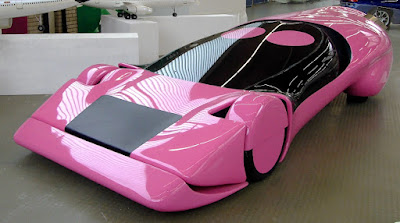
The 1970 Mercedes-Benz Colani C112 prototype, based on the Mercedes-Benz C111 with a rotary engine, stands out as a testament to his avant-garde vision. (Picture from: EternalConsumptionEngine)
That evolution led to the early 1990s, when Colani turned his attention to a more holistic supercar concept. In 1991, Auto-Illustrierte published what would become one of his most talked-about car creation under Mercedes badgethe C112 Megastar. While the name echoed the Mercedes C112 engineering prototype of the period, Colani’s interpretation was something entirely different, a sculpture of motion built upon his distinctive design language. 
The 1970 Mercedes-Benz Colani C112 prototype's rear featured with a giant wiper and a series of exhaust pipes, boasts radical aerodynamics with a drag coefficient of 0.2. (Picture from: EternalConsumptionEngine)
What made the C112 Megastar stand out was not just its visual boldness but how carefully its shape was engineered around airflow. Colani believed the world underestimated the power of what happened under a car, not just above it. In the Megastar, the air beneath the body was channeled to move faster than the air flowing over the top. This deliberate difference in velocity allowed the underbody to rise at a calculated angle, creating natural downforce at the rear axle without relying on aggressive wings or spoilers. It was a rare instance where aerodynamic function translated directly into aesthetic form.
The 1985 Mercedes-Benz W201/190 Le Mans Concept maintaining a sleek, low-slung profile, and exuded a more refined aesthetic compared to its predecessor, the Colani C112. (Picture from: ConceptCars)
The exterior continued this theme with generously sized side vents designed to extract heat from the engine and maintain steady temperatures during high-load driving. These openings did more than cool—their placement helped smooth the pressure zones along the car’s flanks, allowing the vehicle to maintain stability as speeds climbed. The roof was sculpted like an aero helmet, narrowing airflow into a controlled stream that reduced drag and guided air cleanly toward the rear. Even the tail served a role in managing turbulence, shaping the departing airflow to keep the car planted and consistent at speed.
The 1985 Mercedes-Benz W201/190 Le Mans Concept's rear incorporated smooth, rounded lines to enhance aerodynamics. (Picture from: ConceptCars)
Colani’s obsession with harmony extended all the way to the exhaust system, which he treated not as a mechanical afterthought but as part of the aerodynamic whole. Custom exhaust outlets were positioned to work with the body instead of against it, minimizing drag and supporting the airflow pattern established from nose to tail. While the interior of the Megastar was less documented than its exterior, Colani’s design philosophy suggests that he likely envisioned a cockpit built around organic ergonomics—smooth, flowing, uninterrupted shapes meant to merge with the driver rather than restrict movement.
The 1991 Mercedes-Benz W201/190 Le Mans Concept introducing slanted-style headlights, a typical modern Mercedes-Benz grille, and a striking orange hue. (Picture from: WeirdWheels)
Looking back several decades later, the C112 Megastar feels less like a relic and more like a preview of the design conversations happening today. Electric supercars, efficiency-driven shapes, underbody aerodynamics, and airflow-centric engineering have become standard topics in modern design studios. Colani’s Megastar anticipated the movement long before computational fluid dynamics became mainstream. And perhaps that is why his work continues to resonate: it occupies a rare intersection between art and engineering, challenging the idea that speed requires aggression rather than elegance.
Although the planned engine for this iteration remains undisclosed (seems like it still utilizes the donor's drivetrain), the design evolution showcased Colani's commitment to innovation. (Picture from: WeirdWheels)
Colani’s legacy is often framed through the lens of eccentricity, but the Megastar shows that his ideas were deeply grounded in physics. The car embodies decades of refinement—from his early 1970s organic experiments, to his Le Mans–inspired studies of the 1980s, to the fully formed aerodynamic philosophy he expressed in the early 1990s. The result is a concept not only representative of its era but also surprisingly aligned with the direction performance design is heading today. The C112 Megastar remains one of those rare creations that feels both rooted in its moment and remarkably ahead of it, a reminder that imagination, when paired with the laws of nature, can point toward futures the industry has yet to fully explore. *** [EKA | FROM VARIOUS SOURCES | CULTOBJECTS IN INSTAGRAM | CULTOBJECTS IN X | STORY-CARS | AMAZINGCLASSICCARS | 2H-LEMANS | DARKROASTEDBLEND | ETERNALCONSUMPTIONENGINE ]
Note: This blog can be accessed via your smart phone.

The 1978 Largo: A One-Off Sports Car by Godfred Jensen Lost to Time

Vintage Enigma - The late 1970s were a lively time for automotive experimentation, especially among enthusiasts who preferred building cars with their own hands rather than buying them from a showroom. Within that world of creative engineering, few vehicles are as intriguing—or as elusive—as the yellow sports car known simply as the Largo. Completed around 1978 by Danish builder Godfred Jensen, the car surfaces only through a handful of photographs, yet those images are enough to place it firmly among the most distinctive one-off creations of its era. Without brochures, technical documents, or media coverage, the Largo exists almost entirely as a mystery shaped from fiberglass, imagination, and personal ambition.
The Largo is a unique automotive creation built in 1978 by Danish designer Godfred Jensen, based on the Volkswagen Beetle. (Picture from: Kanaltdk)
What survives visually is striking. The Largo wears a bold yellow finish and features a T-top targa roof, an unusual design choice for independent builders at the time. The twin removable roof panels give the car a playful, open-air personality while still preserving a rigid center bar for structure. Its smooth, flowing body lines and compact sports-car profile evoke the style language of late-70s European custom vehicles, blending the low, clean nose of period sports cars with homebuilt ingenuity. Even without interior photos, the exterior proportions alone suggest a car shaped more by creativity than convention. 
The Largo wheelbase, body proportions, and rear weight balance all hint at Volkswagen origins, even if official confirmation has never surfaced. (Picture from: Kanaltdk)
The foundation beneath that distinctive bodywork is believed to be drawn from the Volkswagen Beetle platform, a favorite among hobbyists throughout Europe during that period. The Beetle’s simple backbone chassis, rear-engine layout, and easily sourced mechanical parts made it a natural starting point for ambitious individuals hoping to create unique personal vehicles. Countless kit cars and homebuilt projects relied on Beetle underpinnings for exactly these reasons, and the Largo fits that pattern both in size and stance. Its wheelbase, body proportions, and rear weight balance all hint at Volkswagen origins, even if official confirmation has never surfaced. 
The Largo wears a bold yellow finish and features a T-top targa roof, an unusual design choice for independent builders at the time. (Picture from: VWNetTet.dk)
Using a Volkswagen platform would have offered Jensen the freedom to shape the Largo’s identity without wrestling with the complexities of designing suspension, drivetrain, or structural components from scratch. Instead, he could focus on the aesthetics and personality of the car, building a low-slung sports machine with a cockpit suited to his vision. The likely pairing of fiberglass body panels with a familiar VW core was a practical approach used by many independent builders of the era, allowing them to achieve ambitious designs with manageable engineering demands.
The Largo's twin removable roof panels give the car a playful, open-air personality while still preserving a rigid center bar for structure (Picture from: VWNetTet.dk)
The Largo was never meant to become a production model, and everything about its story reflects that. It appears to have been a deeply personal project—built by one man, tested on Danish roads, and reportedly used for several years before being sold. Its registration plate, DT 62521, remains the only formal clue to its existence in Denmark’s vehicle records. Without surviving technical paperwork or magazine features, the car slipped through the cracks of automotive history once it changed hands, leaving no confirmed trail of ownership or location.
The Largo smooth, flowing body lines and compact sports-car profile evoke the style language of late-70s European custom vehicles, blending the low, clean nose of period sports cars with homebuilt ingenuity(Picture from: VWNetTet.dk)
This scarcity of information is part of what makes the Largo such a compelling artifact today. Built in the pre-internet era, its documentation relied entirely on physical photographs, workshop notes, and personal stories—items that can vanish easily if not deliberately preserved. Many one-off vehicles from the 1970s met similar fates: they lived full and enthusiastic lives locally, only to fade into obscurity once the builders moved on to other pursuits or the cars themselves were stored, sold abroad, or dismantled.
The Largo is a unique automotive creation built in 1978 by Danish designer Godfred Jensen, based on the Volkswagen Beetle. (Picture from: VWNetTet.dk)
Yet the Largo endures in the imagination of enthusiasts precisely because so little is known about it. It reflects an era when passion and ingenuity could bring an entirely unique sports car to life in a modest garage. Its bright yellow body, T-top targa layout, and likely Volkswagen underpinnings tell the story of a builder who sought something different—and had the skill and determination to make it real. Whether the Largo still exists today or vanished long ago, its legacy remains a quiet reminder of how powerful individual creativity can be in shaping automotive history. Finally, if any part of this article is inaccurate, incomplete, or if you have additional information about this car, you are warmly encouraged to share it in the comment section below. *** [EKA | FROM VARIOUS SOURCES | KANALT.DK | ALLCARINDEX | CCDISCUSSION | VWNETTET.DK ]
Note: This blog can be accessed via your smart phone.

Wednesday, December 10, 2025

KIA Marks 80 Years with the Futuristic Vision Meta Turismo Electric Coupe

Flux Horizon - At a moment when the automotive world is pushing hard toward cleaner energy and richer digital experiences, many brands are searching for a way to make mobility feel personal again. Instead of merely moving people from point A to point B, the conversation is shifting toward how a vehicle can shape the moments in between—those brief pauses where design, technology, and emotion meet. It’s within this evolving landscape that KIA introduces something far more symbolic than a concept car. The KIA Vision Meta Turismo steps into the spotlight as a narrative piece, tying together the brand’s past, present, and future with a level of intention that goes beyond aesthetics. 
The KIA Vision Meta Turismo Coupe steps into as a narrative piece, tying together the brand’s past, present, and future with a level of intention that goes beyond aesthetics. (Picture from: RoadAndTrack)
KIA chose a meaningful occasion for this reveal: its 80th anniversary celebration held on December 5, 2025, at KIA Vision Square in Yongin, South Korea. The event served as a reflective space, acknowledging decades of transformation while also presenting a clear declaration of what comes next. Among the retrospectives and commemorations, the Vision Meta Turismo became the undisputed focal point. As an all-electric mid-size coupe, it carries the spirit of the StingerKIA’s well-loved sporty model—yet reimagines that legacy for an era shaped by electrification, digital interaction, and immersive onboard environments. 
The KIA Vision Meta Turismo Coupe, an all-electric mid-size vehicle, carries the spirit of the Stinger while reimagining it for a future of electrification, digital interaction, and immersive onboard experiences. (Picture from: KIA_Worldwide in X)
Its design channels KIA’s “Opposites United” philosophy, a principle that blends tension and harmony to create something both futuristic and emotionally engaging. This is immediately evident in the car’s front profile: a shark-nose silhouette punctuated by a dark fascia, sharply drawn headlights, and sleek air intakes that suggest forward motion even when parked. The short hood transitions smoothly into a steeply angled windshield, giving the front end a condensed, athletic posture. It’s an approach that signals confidence, purpose, and modernity. 
The KIA Vision Meta Turismo Coupe channels KIA’s “Opposites United” philosophy, blending tension and harmony to achieve a futuristic yet emotionally engaging design. (Picture from: KIA_Worldwide in X)
The side view deepens that expression with bold sculpting and angular door surfaces that create a dynamic interplay of light and shadow. Flared rear wheel arches emphasize performance roots, while the aerodynamically styled wheels push the vehicle further into sporty territory. A glass roof with geometric texturing adds a surprising architectural touch, elevating the coupe’s silhouette from simply streamlined to artistically intentional. Every contour seems designed to communicate movement, energy, and a certain digital-age sharpness. 
The KIA Vision Meta Turismo Coupe features a glass roof with geometric texturing, elevating its silhouette with contours that convey movement, energy, and digital-age precision. (Picture from: RoadAndTrack)
At the rear, the Meta Turismo adopts a cleaner, more understated look without sacrificing identity. A built-in spoiler extends smoothly from the bodywork, paired with boomerang-shaped taillights that sharpen the overall stance. Meanwhile, a darkened bumper and diffuser anchor the car visually, grounding its futuristic lines with a layer of performance-oriented seriousness. It’s a balance of simplicity and character, avoiding unnecessary drama while still asserting its conceptual nature. 
The KIA Vision Meta Turismo Coupe features a cabin designed as a highly immersive digital space, replacing conventional dashboards with deeper driver–machine interaction. (Picture from: RoadAndTrack)
Inside the cabin, KIA pushes into far more experimental territory. The interior is crafted as a highly immersive digital space, shifting away from conventional dashboards and toward deeper interaction between driver and machine. A key feature is the AR-HUD systeman augmented reality head-up display that uses smart glass to project information so it appears to float above the road. This setup replaces traditional screens with layered visuals that blend seamlessly into the driving experience. Complementing this are a compact rectangular display, a camera system, and a distinctive steering wheel that signals a departure from familiar cockpit layouts. The standout element, however, is the bright yellow driver’s seat equipped with joystick-style controls embedded in the armrest, suggesting a future in which driving, gaming, and intuitive navigation coexist in a unified interface. | FF0ss_fldfY |
Karim Habib, KIA’s Head of Design, emphasized that the Vision Meta Turismo embodies the company’s evolving mission: integrating dynamic mobility with human-centered spaces to create experiences that resonate emotionally as well as functionally. It reflects KIA’s continued commitment to advanced technology and to redefining how people interact with vehicles. As the brand marks eighty years of innovation, this concept doesn’t just celebrate a milestone—it signals a shift in how mobility can feel, look, and connect with modern life. The Meta Turismo stands as a bold reminder that the future of transportation isn’t just electric or intelligent; it’s also deeply, intentionally human. *** [EKA | FROM VARIOUS SOURCES | KIA | ROADANDTRACK | KIA_WORLDWIDE IN X
Note: This blog can be accessed via your smart phone.

Russia’s “Flying Brick”: A 1930s-Style Hot Rod Reborn

Mechanical Mythcraft - There is something irresistibly captivating about machines that seem to leap out of their own era, as though they’ve slipped through a crack in time just to remind us how wildly inventive human imagination can be. In a world where automotive design is increasingly governed by efficiency metrics and software updates, a creation like Russia’s “Flying Brick” feels almost rebellious—an unapologetic celebration of mechanical artistry. What began as a casual sketch on a napkin has evolved into one of the most unusual modern reinterpretations of 1930s hot-rod culture, shaped by two minds who refused to let bold ideas remain merely ideas. 
Russia’s “Flying Brick”—a 1930s-style hot rod custom by Alexander Opanasenko for Sergei Kabargin—known online as ddKaba. (Picture from: TheArsenale)
The Flying Brick is the shared creation of businessman, racing driver, and video blogger Sergei Kabarginknown online as ddKabaand professional designer Alexander Opanasenko. Their collaboration stretched across seven years, not because of hesitation, but because the vision kept growing more ambitious. Kabargin’s original doodle had the charm of a vintage fever dream, but it needed someone with a sculptor’s intuition and an engineer’s practicality to transform it into a real machine. Opanasenko stepped into that role, crafting a body that marries sharp, retro geometry with a futuristic temperament.  
The Flying Brick hot rod custom, a modern take on 1930s hot-rod culture, uses an aluminum–carbon fiber monocoque that gives it modern stiffness while keeping its weight near 1,200 kilograms. (Picture from: TheArsenale)
Instead of a traditional steel skeleton, they went for a monocoque built from aluminum and carbon fiber. This blend gives the car a structural stiffness worthy of modern performance standards while keeping its weight just around 1,200 kilograms—surprisingly light for something that looks like it could shoulder its way through a brick wall.  
The Flying Brick hot rod custom features an intentionally awkward front bumper that embraces the brutish charm once iconic to early hot rods. (Picture from: AllCarz.ru)
Its exterior doesn’t attempt to hide its personality; instead, it amplifies it. The front bumper is intentionally awkward, leaning into the brutish charm that early hot rods were known for. Superchargers erupt from the hood like mechanical horns, a visual promise that the engine lurking beneath is not meant for polite Sunday drives.  
The Flying Brick hot rod custom showcases oversized, fully exposed exhaust pipes on each side, transforming even its idle into a striking visual spectacle. (Picture from: Drive2ru)
On each side, oversized exhaust pipes sit proudly exposed, turning the simple act of idling into a spectacle. And then, as a counterpoint to all the vintage aggression, the designers added modern touches—most notably the LED headlights that bring a sleek sci-fi crispness to the car’s stern face. The Flying Brick hot rod custom’s cabin is strikingly minimalist and driver-focused, featuring two racing bucket seats, a surrounding roll bar, a straightforward dashboard with racing-style instruments, a sporty steering wheel, and a tall gear lever with essential knobs on the center console.
The Flying Brick hot rod custom has a minimalist, driver-focused cabin with two racing seats, a roll bar, a simple racing-style dashboard, a sporty wheel, and a tall gear lever with essential knobs. (Picture from: AcademeG in Youtube)
Performance-wise, the project left no room for mediocrity. The current prototype, already fully drivable, runs on a supercharged MAST LS7 engine capable of pushing roughly 900 horsepower. For a one-off retro hot rod with the physique of a steel-jawed comic book villain, that kind of power turns the Flying Brick into something far more serious than an art piece. Kabargin has already put it to the test on Russia’s Igora Drive circuit, where it reached 279 km/h—setting a record for that track and hinting that this machine, odd as it looks, can move with startling purpose. 
The Flying Brick hot rod custom, driven by a supercharged MAST LS7 with about 900 horsepower, shows through its immense performance that it was never meant to be just a showpiece. (Picture from: TheArsenale)
Yet it’s not chasing any production goals or attempting to evolve into a commercial model. Kabargin has made it clear: this is a singular car for a singular vision, and it will remain a one-of-one. Its value isn’t measured by rarity alone. The Flying Brick stands as a fascinating example of how modern craftsmanship can breathe life into design philosophies almost a century old. In the 1930s, hot rods were scrappy, personal, built in garages by tinkerers who wanted more speed than mainstream manufacturers could offer.  | QfSDpq-X1TE | m8kdEkSZFaU |
Today, garage culture may be more complex, but the spirit of individualism, experimentation, and mechanical honesty lives on in projects like the Flying Brick, which reinterprets 1930s hot-rod style for a world often dominated by automation. It shows that craftsmanship still matters, a napkin sketch can become a 900-horsepower reality, and imagination combined with engineering can create something truly extraordinary. *** [EKA | FROM VARIOUS SOURCES | DRIVE2.RU | ALLCARZ.RU | THEARSENALE | TWEETCIIIIM IN X | RAINMAKER1973 IN X | QUIRKYRIDES IN X ]
Note: This blog can be accessed via your smart phone.

Tuesday, December 9, 2025

Lexus Reimagines the LFA Legend as a Next-Generation Electric Supercar

Neo Apex - For many enthusiasts, the evolution of performance cars has always felt like a tug-of-war between tradition and the future. The raw pulse of combustion engines shaped generations of automotive icons, yet today’s world increasingly leans toward silent, electrified mobility. Within that shifting landscape, a rare moment occurs when legacy and innovation intersect in a way that feels natural rather than forced—and that moment arrives in the form of the Lexus LFA Concept, a fully electric vision that rekindles one of Japan’s most revered supercar names. 
The Lexus LFA Concept is a fully electric sports car that carries forward its high-performance DNA while marking a bold transition into the era of electrification. (Picture from: TopGear)
Lexus approaches this new chapter with a level of intentionality that goes far beyond building a fast electric machine. The LFA Concept carries the imprint of Akio Toyoda, the Chairman of Toyota Motor Corporation, whose long-standing devotion to emotional, human-centered performance has earned him the nickname “Master Driver Morizo.” His belief that sports-car craftsmanship should not fade with time lies at the heart of the project. To preserve that spirit, Toyota draws on the philosophy of “Shikinen Sengu”a practice rooted in renewing tradition without erasing its soul. The same mindset that once shaped the legendary Toyota 2000GT and the original V10-powered LFA now guides the creation of this new electrified interpretation. 
The Lexus LFA Concept embraces a lightweight all-aluminum frame, a low center of gravity, and refined aerodynamics to deliver a level of precision and agility that proves electrification doesn’t diminish the sharpness of a true driver’s machine. (Picture from: TopGear)
While the name “LFA” once evoked the unforgettable howl of ten cylinders working in harmony, it now represents something more future-bound: a technological showcase shaped by motorsport influence and high-performance engineering. Developed alongside Toyota Gazoo Racing’s GR GT and GR GT3 programs, the concept embraces a lightweight all-aluminum frame that achieves both rigidity and agility. Its low center of gravity and refined aerodynamic form reveal a car engineered for precision rather than spectacle, showing that electrification need not dull the edge of a true driver’s machine
The Lexus LFA Concept’s interior applies the ‘Discover Immersion’ philosophy, with a meticulously designed driving position that places the driver deep within the cockpit for a fully connected experience. (Picture from: MotorTrend)
Inside, Lexus emphasizes a principle called “Discover Immersion”—a design intention that prioritizes connection over complexity. The driving position is crafted with meticulous attention, placing the driver deep within the car rather than perched above it. Every element of the cockpit aims to remove barriers between human action and mechanical response. Buttons and switches are shaped to feel instinctive, as if the car were reading the driver’s intent before commands are even fully delivered. This emphasis on unity echoes what made the first LFA memorable, translated here into a clean, modern electric architecture.
The Lexus LFA Concept’s cockpit is designed so every control feels instinctive, removing barriers between driver and machine while translating the original LFA’s unity into a modern electric architecture. (Picture from: TopGear)
Visually, the LFA Concept radiates familiarity while stepping confidently into new territory. Its silhouette preserves the flowing elegance that defined its predecessor—a long, low body that sweeps gracefully from nose to tail. Yet freed from the packaging constraints of an internal-combustion engine, designers were able to exaggerate proportions and craft a more harmonious balance. The result is a coupe that feels sculptural rather than ornamental, a shape that acknowledges its heritage but is clearly tuned for the decades ahead. The flexibility of an EV platform allows the lines to stretch, tighten, and breathe in ways the original LFA never could. 
The Lexus LFA Concept’s EV platform allows its design lines to stretch, tighten, and flow in ways the original LFA could never achieve. (Picture from: MotorTrend)
Though still a concept, Lexus has revealed key dimensions that hint at its presence on the road: a length of 4,690 mm, width of 2,040 mm, and a height of just 1,195 mm, underscored by a 2,725 mm wheelbase. The cabin remains a purposeful two-seat layout—an unmistakable signal that this machine is built for focused driving rather than practicality. Its earlier appearances as the Lexus Sport Concept at Monterey Car Week and the Japan Mobility Show in 2025 have now evolved into a clearer identity, signaling Lexus’s readiness to position it as a symbol of its electric future. 
The Lexus LFA Concept, a coupe that feels sculptural rather than ornamental, a shape that acknowledges its heritage but is clearly tuned for the decades ahead. (Picture from: TopGear)
What makes the LFA Concept compelling today isn’t merely its technology or its striking proportions. It represents a mindset shift within the performance-car world—a reminder that electrification doesn’t require sacrificing emotion. Lexus frames this car not as a replacement for the past but as an extension of it, carrying forward the craftsmanship, audacity, and human touch that once made the first LFA so admired. Where many electric sports cars chase numbers, this one pursues experience. It suggests a future in which sustainability and soulfulness can coexist, offering a vision that feels both modern and deeply rooted in legacy. | sL3lt3tUo1E |
As electrified performance continues to redefine what a sports car can be, the Lexus LFA Concept stands as a bold statement from a brand determined to keep driving passion alive. It embraces the silence of electric propulsion without surrendering the character that once made the LFA a legend, lighting a path for what emotionally engaging electric cars might become in the years ahead. *** [EKA | FROM VARIOUS SOURCES | LEXUS | MOTORTREND | TOPGEAR | EVOMAGAZINE IN X ]
Note: This blog can be accessed via your smart phone.

Honda GRX Concept: An Ultra-Light Sports Vision Shaped by Motorcycle-Inspired Engineering

Hybrid Vanguard - In an era where electrification and lightweight engineering dominate nearly every automotive discussion, it’s easy to overlook a time when hybrid performance still sounded like a distant concept. Long before efficiency became a stylistic statement, Honda explored what a truly modern sports car might look like. That exploration began with the bold and futuristic J-VX of the late 1990s and later evolved into the Honda GRX Hybrid Concept—an ultra-light, compact sports study shaped by a fusion of motorcycle-inspired engineering, motorsport cues, and lessons learned from its forward-thinking predecessor. 
The Honda GRX Concept—an ultra-light, compact sports study shaped by a fusion of motorcycle-inspired engineering, motorsport cues, and lessons learned from its forward-thinking predecessor. (Picture from: CarStylingru)
The origins trace back to 1995 when Honda R&D Americas in California was given a loosely defined but ambitious mission: create a concept that could surpass the Mazda Miata in every meaningful aspect. Rather than developing a predictable competitor, the team produced the J-VX, a Japan-spec coupe built with right-hand controls and a lightweight composite-and-aluminum body
The Honda J-VX appeared at the 1997 Tokyo Motor Show as a right-hand-drive coupe built from lightweight composite and aluminum, showcasing hybrid tech at a time when it was still rare. (Picture from: TopGear)
When it debuted at the 1997 Tokyo Motor Show as part of Honda’s “J-Mover” series, the J-VX stood out not only because hybrid technology was still a novelty but also because its sharp, exotic-like stylingcomplete with upward-opening doors reminiscent of miniature Italian supercars—felt like a vision from a decade ahead. 
The Honda J-VX Concept, part of Honda’s “J-Mover” lineup, drew attention with its sharp, futuristic lines and upward-opening doors that lent it the character of a miniature exotic. (Picture from: TopGear)
Inside the J-VX, Honda drew heavily from junior formula racers, shaping an interior defined by a wide wraparound windshield that opened up the cockpit and fixed bucket seats molded directly to the occupants to prioritize weight reduction. Even the four-point harnesses featured integrated airbags, underscoring how committed the concept was to exploring new safety ideas within a racing-focused layout. Every element felt deliberately engineered to express lightness, precision, and experimentation
The Honda GRX Concept, developed by Honda R&D Americas in California, emerged as a more muscular, American-influenced reinterpretation of its predecessor, the J-VX, infused with motorcycle-derived engineering. (Picture from: FiveAxis)
That same philosophy carried into the GRX years later, though Honda adapted it with a more measured hand. The GRX kept the minimalist, motorsport-inspired atmosphere but relaxed the extremity that made the J-VX feel almost prototype-only, allowing the cabin to become more approachable without losing its performance-oriented character. As a result, the GRX echoed the original concept’s intent while translating it into a form that hinted at broader usability.
The Honda GRX Concept is powered by a 1.5-liter flat-six derived from motorcycle engineering, marking a sharp departure from its predecessor, the J-VX, which relied on early iteration Honda's hybrid technology for its powertrain. (Picture from: FiveAxis)
Under the surface, however, the divergence between the two concepts became far more pronounced. The J-VX paired a one-liter three-cylinder VTEC engine with an early iteration of Honda’s Integrated Motor Assist hybrid system supported by a supercapacitor, creating a featherweight mild hybrid designed to boost performance rather than efficiency. The GRX instead abandoned hybrid experimentation altogether, adopting a 1.5-liter flat-six derived from motorcycle engineering, shifting its identity toward an exploration of cross-disciplinary powertrain synergy rather than the future of electrification.
The Honda GRX Concept retained the minimalist, motorsport-inspired atmosphere but softened the extreme, prototype-like feel of the J-VX, making the cabin more approachable without sacrificing its performance-focused character. (Picture from: FiveAxis)
Despite Honda’s enthusiasm for the J-VX’s advanced hybrid system, the idea of a hybrid sports car was seen as too daring for late-1990s production. The technology was redirected into the first-generation Insight in 1999, which carried the J-VX’s hybrid foundation but not its dramatic form. Years later, the GRX resurfaced in 2006 as a refreshed interpretationnow riding on updated bumpers, revised wheels, and a left-hand-drive layout for the American market—demonstrating that the fundamental idea of a compact, city-friendly sports concept had remained surprisingly relevant. 
The Honda GRX Concept resurfaced in 2006 with updated bumpers, revised wheels, and a left-hand-drive layout for the U.S. market, proving the compact city-friendly sports idea still had clear relevance. (Picture from: FiveAxis)
When the GRX appeared at the North American Auto Show, its design evolution became even clearer. Though still recognizable as a descendant of the J-VX, its proportions and surfaces hinted at the silhouette that would eventually influence the Honda CR-Z. The shift from a hybrid powertrain to a motorcycle-derived flat-six also reframed its character entirely, emphasizing how the concept could evolve beyond its original technical mission while still maintaining its commitment to lightness and driver-focused dynamics. | A9--O_enO9w | 69R8NbqGNSM |
The GRX eventually left the public circuit around 2015, but unlike the J-VXwhose current whereabouts are unclearit survives today in the American Honda Museum, where it represents Honda’s late-1990s experimentation in compact performance. Placed in context, the J-VX stands as the original hybrid-driven vision, while the GRX reflects a more muscular, American-influenced evolution with motorcycle-derived engineering. Neither concept reached production, yet together they shaped Honda’s early thinking on lightweight sports ideas and hybrid-adjacent innovation, proving how impactful pure experimentation can be. *** [EKA | FROM VARIOUS SOURCES | CARSTYLING.RU | FIVEAXIS | SUPERHONDA | HONDA-TECH | SLASHGEAR | TOPGEAR | WIKIPEDIA | DARYL K IN FLICKR ]
Note: This blog can be accessed via your smart phone.