Artistic Precision - In the world of classic automobiles, some stories stand out for their uniqueness and craftsmanship. Among these tales is the intriguing collaboration between British engineering and Italian artistry. While Jaguar is renowned for its sleek designs and remarkable performance, it is not every day that one hears about a Jaguar E-Type being transformed by Italian coachbuilders. This exceptional creation, crafted by Carrozzeria Sports Cars of Modena, epitomizes the perfect marriage of these two automotive worlds.
Artisans at Carrozzeria Sports Cars of Modena dedicated an impressive 2,700 hours to crafting a chassis for the elongated 2+2 coupé design of this Jaguar E-Type. (Picture from: DeviatArt)
This one-of-a-kind vehicle began its journey with a clear vision from its French commissioner. The foundation was a 1965 Jaguar E-Type, chosen for its robust mechanical engineering and iconic style. Yet, the final product was far from an ordinary E-Type. It featured an extensively modified body, sculpted entirely by hand from sheet iron. The Italian artisans poured a remarkable 2,700 hours into crafting a chassis that supported an elongated 2+2 coupé design. This dedication to detail transformed the vehicle into a masterpiece that retained Jaguar's essence while embracing a bold new form.
The Jaguar E-Type by Carrozzeria Sports Cars of Modena's interior blends elegance and practicality, featuring comfortable front seats, spacious rear seats, and a luxurious black leather dashboard with red carpeting.(Picture from: DeviatArt)
The interior of the car was designed with both elegance and practicality in mind. The front seats were crafted for maximum comfort, while the rear seats offered more space than one might expect in a coupé of its class. The choice of materials reflected the car's luxurious nature: a black leather dashboard complemented by red carpeting, creating a striking yet sophisticated cabin environment. The iconic spoked wheels of the original E-Type were preserved, although a second version was envisioned with Campagnolo cast elektron wheels, showcasing the flexibility of the Modena craftsmen’s vision.
The Jaguar E-Type by Carrozzeria Sports Cars of Modena finished in a sleek grey exterior, the car was a testament to the singularity and individuality that defined the creations of the Italian coachbuilder.(Picture from: DeviatArt)
Finished in a sleek grey exterior, the car was a testament to the singularity and individuality that defined the creations of Carrozzeria Sports Cars Modena. Each vehicle that left their workshop bore unique characteristics, making them truly one-of-a-kind. This particular Jaguar, with its elegant proportions and meticulous detailing, was no exception. It became a collector's dream and a symbol of what can be achieved when two distinct automotive philosophies merge.
The Jaguar E-Type by Carrozzeria Sports Cars of Modena stands out with its unique characteristics, elegant proportions, and meticulous detailing, making it a collector's dream and a symbol of the fusion of two automotive philosophies.(Picture from: DeviatArt)
In the end, this Jaguar E-Type by Carrozzeria Sports Cars Modena is not just a car; it’s a story of innovation, craftsmanship, and passion. It reminds us that when artistry meets engineering, the result can transcend mere utility to become a work of art. This singular creation continues to inspire admiration and spark curiosity, proving that the fusion of British and Italian expertise can produce something truly timeless. *** [EKA | FROM VARIOUS SOURCES | DANNATAVINTAGE | DEVIANTART | WIKIPEDIA ]
Note: This blog can be accessed via your smart phone
Racing Renaissance - In the world of motorsport, few names ignite passion and admiration like Ferrari. Synonymous with speed, innovation, and Italian craftsmanship, Ferrari has left an indelible mark on the racing world. Among its storied creations, the Ferrari 512 S stands out as a testament to the brand's relentless pursuit of excellence. Born from a desire to challenge the dominance of rivals, particularly Porsche, this remarkable car showcases not only Ferrari's engineering prowess but also its ability to adapt and innovate under competitive pressure.
The
1970 Ferrari 512 S, was on display at Goodwood on July 13, 2023, and is
owned by famous drummer Nick Mason, frequently showcased at these
annual events.(Picture from: Wikipedia)
The genesis of the Ferrari 512 S began in 1969, a pivotal year for Ferrari as it sought to create a machine capable of contending in the 1970 Group 5 Sports Car Championship. The competition was fierce, with the Porsche 917 setting the benchmark. Regulations mandated that manufacturers produce at least 25 examples of a model to meet homologation requirements. Ferrari rose to the challenge, and by January 1970, these stunning machines were lined up for FIA inspection at Maranello, symbolizing the culmination of tireless effort and ingenuity.
The
1970 Ferrari 512 S is powered by a formidable powertrain: a mid-mounted 5.0-liter V12 engine paired with Lucas indirect fuel injection.(Picture from: RMSothebys)
At the heart of the Ferrari 512 S was its formidable powertrain: a mid-mounted 5.0-liter V12 engine paired with Lucas indirect fuel injection. This powerhouse delivered an impressive 550 horsepower at 8,500 rpm, transferring its might to the rear wheels via a five-speed transaxle. Designed for versatility, the 512 S came in two configurations—berlinetta (closed coupe) and spider (open-top)—with its lightweight fiberglass body affixed to an aluminum semi-monocoque chassis reinforced by a steel tube frame. For endurance races like the Le Mans 24 Hours, a specialized "coda lunga" or long-tail body was developed to enhance aerodynamic efficiency, particularly on high-speed straights like the Mulsanne.
The
1970 Ferrari 512 S #1006 is widely considered to be the most original 512 Spider in existence since it has never been restored.(Picture from: Carswp)
The 512 S made an immediate impact during its racing debut season in 1970. Its crowning achievement came during its second outing at the 12 Hours of Sebring, where a works entry piloted by Andretti, Giunti, and Vaccarella triumphed after overcoming early setbacks. This victory underscored the car's potential, even as it contended with the formidable Porsche 917, which ultimately edged Ferrari in reliability and secured the Manufacturer’s Championship. Beyond Sebring, the 512 S continued to demonstrate its capability, securing wins in events like the Fuji 200 Mile Race and achieving podium finishes in other competitions.
Mike Parkes, driving Scuderia Filipinetti's Ferrari 512 S (Chassis No. 1008), achieved a fourth-place finish alongside Herbert Müller at the 1970 1000km Nürburgring.(Picture from: Wikipedia)
As the 1971 season dawned, Ferrari shifted its focus to the 312 P(B) sports prototype, leaving the 512 Slargely in the hands of privateers. However, the company offered an upgraded "M" package, short for "Modificato" or modified. This iteration featured a sleeker, more aerodynamic design that improved the car's competitiveness. All cars converted to the "M" specification adopted a coupe body style, reflecting Ferrari's commitment to evolution and innovation.
Nino Vaccarella, behind the wheel of the Ferrari 512 S Spyder (Chassis No. 1042), secured a third-place finish with John Surtees at the 1970 1000km Nürburgring.(Picture from: Wikipedia)
In the United States, the Roger Penske team took the Ferrari 512 M to new heights, developing chassis #1040 into the fastest 512 ever. Despite its speed, success proved elusive in a season dominated by other competitors. Late in 1971, Ferrari experimented further with the model, adapting chassis #1010 with a 7.0-liter engine for the American Can-Am series. Driven by Mario Andretti, it achieved a respectable fourth-place finish at Watkins Glen before being sold to the North American Racing Team (NART).
The modified Ferrari 512 M (Chassis No. 1044) driven by Herbert Müller in 1971, showcased its prowess on the legendary Nürburgring circuit.(Picture from: Wikipedia)
The legacy of the Ferrari 512 S is deeply intertwined with its homologation story. While 25 units were initially built to satisfy regulations, several were repurposed as spare parts over time. Most of the original 512 S modelswere eventually converted to the "M" (Modificato or Modified) specification, blurring the lines between the two versions. The cars bore serial numbers ranging from 1002 to 1050, with exceptions like the unused 1000 and 900 numbers adding a touch of mystery to the production history.
The
Ferrari 712 Can Am built based on the Ferrari 512 S (Chassis No. 1010) sat on display at the Retromobile 2012 in Paris.(Picture from: Wikipedia)
The Ferrari 512 S remains a symbol of resilience and ingenuity, a car forged through fierce competition and refined by relentless development. Its journey is one of ambition, triumph, and adaptation, embodying the very essence of Ferrari’s spirit. Despite facing challenges on the track, the 512 S endures as a testament to the artistry and determination that define the Prancing Horse.
Notably, its legendary status was underscored when the 1970 Ferrari 512 S #1006 sold for an impressive $3,567,432 (approximately €2,640,000) at the 2007 RM Auctions Ferrari – Legend e Passione event. Even today, it continues to captivate racing enthusiasts and collectors, standing as an enduring symbol of Ferrari’s relentless pursuit of perfection. *** [EKA | FROM VARIOUS SOURCES | FERRARI | BARCHETTA.CC | RMSOTHEBYS | CONCEPTCARZ | WIKIPEDIA ]
Note: This blog can be accessed via your smart phone.
Speed Evolution - Italy’s automotive heritage is shaped by a spirit of relentless innovation and competition. Following World War II, this drive reached new heights, especially in the fierce rivalry between Piaggio and Innocenti. Their Vespaand Lambretta scooters not only embodied Italian mobility but also sparked a battle for speed supremacy. Each brand aimed not only to conquer the roads but also to set new speed records that would cement their legacy in history.
The Innocenti Ghia IXG Dragster was the result of Innocenti's expansion into the automotive world, achieved through collaboration with the prestigious Ghia design house to create a groundbreaking vehicle. (Picture from: Story-Cars)
In 1951, Piaggio introduced the Vespa Siluro, a sleek, 125 cc scooter that achieved an impressive speed of 171.02 km/h. This set a new record, challenging other manufacturers to push the boundaries of what was possible. Not one to back down, Innocenti launched its Lambretta Silurothe same year, reaching a top speed of 201 km/h, surpassing Piaggio’s record and making a bold statement in the scooter world. This rivalry between the two giants reflected Italy’s post-war spirit of innovation and the desire to dominate on both the road and the record books.
The Innocenti Ghia IXG Dragster, an experimental prototype unveiled at the 1960 Turin Motor Show, was designed to set speed records in the under-1,000 cc class. (Picture from: Story-Cars)
Building on this competitive spirit, Innocenti expanded into the automotive world, collaborating with the prestigious Ghia design house to create a groundbreaking vehicle. The result was the Innocenti Ghia IXG Dragster, an experimental prototype that debuted at the 1960 Turin Motor Show. The IXG Dragsteraimed to break speed records in the under-1,000 cc class and was a bold step forward in automotive design. The Innocenti car seemed to be designed as a rival to the Abarth 1000 Monoposto da Record "La Principessa," which also made its debut at the same event under almost similar design.
The Innocenti Ghia IXG Dragster's stunning bodywork was the work of Tom Tjaarda, a celebrated designer at Ghia, known for his ability to blend aesthetic appeal with functional design. (Picture from: AutoAppassionati.it)
The IXG Dragster’s stunning bodywork was the work of Tom Tjaarda, a celebrated designer at Ghia. Known for his ability to blend aesthetic appeal with functional design, Tjaarda's vision brought the IXG Dragster’s aerodynamics to the forefront. The car featured an innovative layout where the 948 cc enginefromthe Innocenti 950 Spiderwas placed near the center, while the driver’s position was almost horizontal at the rear, contributing to its streamlined form. Notably, the car also featured one of the first aerodynamically optimized underbodies, a concept that would later influence racing car designs.
The Innocenti Ghia IXG Dragster boasted advanced aerodynamics, a centrally positioned 948 cc engine, and a nearly horizontal driver placement for peak performance. (Picture from: Story-Cars)
Despite the IXG Dragster’s innovative design and the excitement surrounding its debut, the project faced obstacles. Financial constraints and shifting priorities at Innocenti meant the car was never able to achieve its intended purpose of setting new speed records. Although the IXG Dragster never fully realized its potential, its design remains a symbol of Italian innovation during an era of rapid progress in automotive technology.
The
Innocenti Ghia IXG Dragster boasted advanced aerodynamics, a centrally
positioned 948 cc engine, and a nearly horizontal driver placement for
peak performance. (Picture from: Story-Cars)
In 2002, the IXG Dragster resurfaced when Ghia(which had been acquired by Ford in 1973) auctioned it as part of a collection of rare and unique vehicles. While the IXG Dragster’s time in the spotlight was brief, its legacy endures as a reminder of the bold ideas and daring vision that characterized Italy’s automotive innovation during the 1960s. *** [EKA | FROM VARIOUS SOURCES | DANNATAVINTAGE | AUTOAPPASSIONATI.IT | STORY-CARS | CARSTYLING.RU ]
Note: This blog can be accessed via your smart phone.
Throttle Royalty- There’s always been a deep connection between Hollywood and exotic cars. For decades, films have served as the perfect stage for the most powerful, elegant, and rare vehicles ever built. Whether it’s a high-speed chase, a dramatic reveal, or a quiet moment of admiration in a garage, the right car can instantly elevate a scene, becoming more than just a prop—it becomes a character. For car enthusiasts, the silver screen has often been the place where dreams of driving a supercar first took root.
One scene on 'Gone in 60 seconds' movie. (Picture from: Moto.it)
This relationship was captured perfectly in Gone in 60 Seconds, the 2000 remake of a 1974 cult classic. Packed with adrenaline and style, the movie followed the story of a reformed car thief forced back into the game for one last heist. Leading the charge was Nicolas Cage as Memphis Raines—a man with a deep love for rare cars and a sense of honor that often clashed with his criminal past.
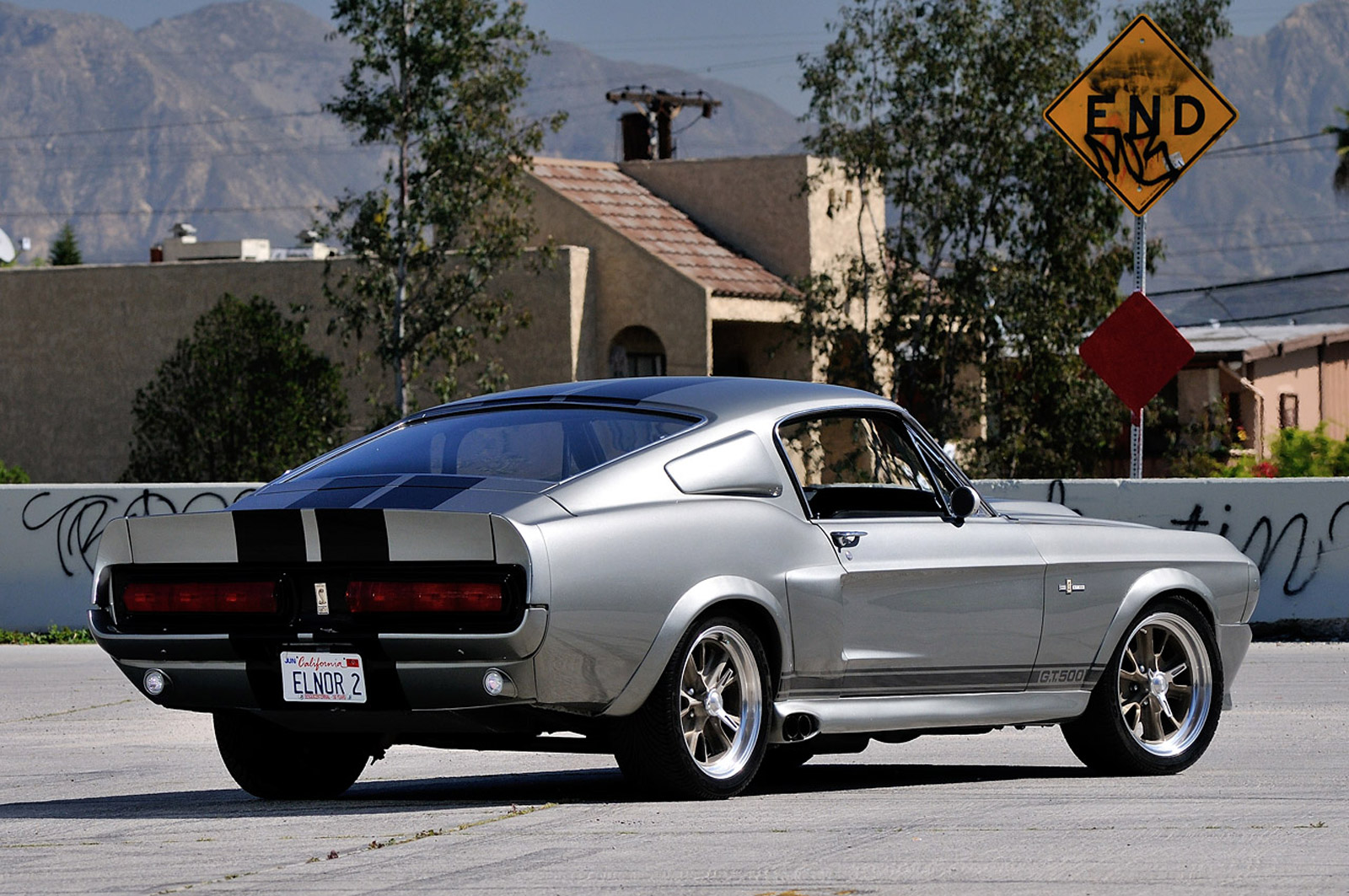
The 1967 Ford Mustang Shelby GT500 - Eleanor - wasn’t just another name on the list; for Memphis Raines, she was the one that always slipped through his fingers. (Picture from: Carscoops)
Alongside him, Robert Duvall played Otto Halliwell, his trusted mentor and mechanic, while Angelina Jolie stepped into the role of Sway, a skilled driver with a wild streak and a complicated history with Memphis. Together, they formed a tight-knit crew trying to steal 50 cars in under 72 hours—all with female codenames to fly under the radar.
Among that legendary list, five vehicles stood out—not just for their screen time, but for the rich stories behind their creation and the builders who made them legends.
5. Bernadine
Take Bernadine, the 1994 Jaguar XJ220. She represented Britain’s answer to the supercar arms race of the early '90s. Unveiled as a concept at the 1988 British International Motor Show, the XJ220 was developed by Jaguar in collaboration with Tom Walkinshaw Racing.
Though
it initially promised a V12 and all-wheel drive, the final production
model used a twin-turbo V6—but still delivered breathtaking speed,
topping out at 220 mph. Built in limited numbers—only 281 ever made—each
one sold for around £470,000, making Bernadine one of the most
exclusive Jaguars ever crafted.
4. Dorothy
Then there’s Dorothy, the stunning 1955 Mercedes-Benz 300SL Gullwing, and 'SL' stood for "Sport Leicht" (Sport Light). Born from Mercedes' 1952 racing heritage, this car introduced direct fuel injection to a production model for the first time, generating 215 horsepower.
Its upward-opening doors, designed to fit over the tubular space-frame chassis, became an instant design icon. Hand-assembled in Stuttgart, the 300SL blended racing innovation with elegance, becoming one of the most sought-after collector cars of all time.
3. Jessica
Switching gears to American muscle, Jessica brought fire and grit to the lineup. She’s the 1968 Plymouth Roadrunner—designed during the golden age of Detroit muscle. With a massive 6.3-liter V8 under the hood, she cranked out 335 horsepower, all for just $2,900 when new.
Plymouth
partnered with Warner Bros. for the rights to use the Road Runner
cartoon’s name and “beep-beep” horn, making the car not just powerful
but unforgettable in personality. Built to perform without the fluff,
Jessica was pure street-racing energy, and one of the best-selling
muscle cars of her time.
2. Patricia
Then came Patricia, the definition of 1950s American luxury. The 1958 Cadillac Eldorado Brougham was hand-built, ultra-limited, and packed with ahead-of-its-time features like memory seats, self-leveling air suspension, power everything, and even a factory-installed perfume dispenser.
Designed
by the visionary Bill Mitchell, this car was more than a vehicle—it was
an experience. With only 304 ever produced, Patricia was reserved for
the elite and remains one of the most iconic Cadillacs ever made.
1. Eleanor
And finally, there’s Eleanor—the undisputed queen of the film. The 1967 Ford Mustang Shelby GT500 wasn’t just another name on the list; for Memphis Raines, she was the one that always slipped through his fingers. In the story, Eleanor was the most challenging "woman" for Memphis to steal, often landing him in trouble with the law. Her legacy went far beyond the screen—Eleanor became the first car ever granted a trademark as a character, thanks to her unforgettable presence in Dominic Sena’s film.
Eleanor - 1967 Ford Mustang Shelby GT500. (Picture from: FutureFlame)
With a 428-cubic inch V8 under the hood, Eleanor was bred from Carroll Shelby’s racing vision and later transformed for the movie with a custom look designed by Chip Foose and Steve Stanford. The sleek silver-and-black styling, aggressive body kit, and distinctive roar made Eleanor an instant icon, and perhaps the most beloved movie car since Bullitt.
Eleanor - 1967 Ford Mustang Shelby GT500. (Picture from: Motorauthority)
Though years have passed since Gone in 60 Seconds lit up theaters, its impact still ripples through car culture today. From the emotional bond between characters and machines, to the legacy of the vehicles themselves, it wasn’t just a film—it was a love letter to the art of driving. And for anyone who’s ever dreamed of that one perfect car, it’s a reminder that some rides are more than just metal—they’re memories in motion. *** [EKA [23032014] | FROM VARIOUS SOURCES | EVA FAHAS | PIKIRAN RAKYAT 21032014 | MOTO.IT | LISTAL | SILICONINDIA | TOPGIR.COM.UA | FUTIREFLAME | MOTORATHORITY | CARSCOOPS ]
Note: This blog can be accessed via your smart phone.
Rotary Ambition - The pursuit of innovation has consistently propelled the automotive industry toward uncharted frontiers. During the transformative 1970s, car manufacturers competed to redefine engine technology in response to emerging challenges and opportunities. Against this dynamic backdrop, Chevrolet embarked on a bold journey to reshape the future of American sports cars. The result was the Chevrolet Corvette XP-987 GT—a concept car that seamlessly blended advanced engineering with daring design. But the origins of this remarkable vehicle trace back not to Chevrolet itself, but to a groundbreaking invention by a German engineer whose work would lay the foundation for its creation.
The 1973 Chevrolet Corvette XP-987 GT along with the 1973 GM-RCE266 Wankel Rotary Engine sat on display at the National Corvette Museum. (Picture from: CorvetteMuseum)
Felix Wankel’s revolutionary rotary engine, introduced to the world in the mid-20th century, stood out as a marvel of modern engineering. Its compact and lightweight design, coupled with fewer moving parts than traditional piston engines, offered smoother operation and higher revving capabilities. Initially adopted by brands like NSU and Citroën, it was Mazda that truly elevated the Wankel engine’s reputation, integrating it into iconic models such as the RX-7. Yet, the engine’s potential also caught the attention of American automakers, particularly Chevrolet, which envisioned not one but two mid-engine Corvette prototypes—the Two-Rotor and Four-Rotor concepts—powered by this groundbreaking technology.
The Chevrolet Corvette XP-987 GT, a concept car that seamlessly blended advanced engineering with daring design. (Picture from: MotorTrend)
Chevrolet’s venture into the realm of rotary engines began with the creation of the XP-987 GT, commonly referred to as the Corvette Two-Rotor. Conceived in the early 1970s, this prototype was designed to demonstrate the versatility of the Wankel engine, which General Motors had been developing for a range of applications. The engine’s compact size and impressive power-to-weight ratio aligned perfectly with Chevrolet’s vision of a nimble, high-performance Corvette. The decision to adopt a mid-engine layout further marked a significant departure from the traditional front-engine designs of its predecessors, signaling a bold evolution in the Corvette’s legacy.
The Chevrolet Corvette XP-987 GT boasted a striking design, born from meticulous efforts led by GM’s Vice President of Styling Bill Mitchell, sketched by Kip Wasenko, and brought to life in collaboration with renowned Italian coachbuilder Pininfarina. (Picture from: MotorTrend)
The XP-987 GT’s striking appearance was a result of meticulous design efforts led by Bill Mitchell, GM’s Vice President of Styling. Kip Wasenko’s sketches envisioned a sleek, European-inspired body, featuring a distinctive split windshield with an integrated radio antenna at its central seam—a hallmark of Mitchell’s influence. To bring this ambitious design to life, Chevrolet collaborated with the renowned Italian coachbuilder Pininfarina. Built on a heavily modified Porsche 914/6 chassis, the car’s steel body combined American ingenuity with European craftsmanship, resulting in a unique aesthetic that captured global attention.
The Chevrolet Corvette XP-987 GT built on a heavily modified Porsche 914/6 chassis, the car’s steel body combined American ingenuity with European craftsmanship, resulting in a unique aesthetic that captured global attention. (Picture from: Corvette Furman On Facebook)
When the XP-987 GT made its debut at the 1973 Paris Motor Show, it captivated both enthusiasts and industry experts. The concept’s compact design, powered by a two-rotor GM engine producing 180 horsepower, offered a glimpse into what the future of Corvette could entail: a perfect blend of performance, efficiency, and style. However, despite the excitement surrounding the concept, significant challenges loomed. The rotary engine, though innovative, faced hurdles such as high fuel consumption and difficulty meeting increasingly stringent emissions standards. The 1973 oil crisis and growing environmental concerns compounded these issues, prompting GM to abandon its rotary engine program in 1974.
The Chevrolet Corvette XP-987 GT powered by a two-rotor GM engine producing 180 horsepower, offered a glimpse into what the future of Corvette could entail: a perfect blend of performance, efficiency, and style. (Picture from: MotorTrend)
The XP-987 GT’s journey didn’t end with its withdrawal from the spotlight. After its global showcase, the car was stored at GM’s Vauxhall Motors Design Centre in England, where it remained largely forgotten for nearly a decade. Scheduled for destruction in 1983, the concept was rescued by Tom Falconer, a dedicated Corvette enthusiast and author. With assistance from Chuck Jordan, GM’s Head of Design, Falconer ensured the car avoided the scrapyard. The XP-987 GT found a new home in Falconer’s garage, where it underwent modifications to restore its functionality.
The Chevrolet Corvette XP-987 GT made its debut at the 1973 Paris Motor Show, it captivated both enthusiasts and industry experts. (Picture from: Corvette Furman On Facebook)
In a poignant twist, the rotary engine that symbolized the car’s innovative spirit was replaced with a Mazda 13B rotary engine, underscoring the lasting legacy of Felix Wankel’s invention. Falconer’s tireless efforts preserved the XP-987 GT as a tangible piece of Corvette history, allowing it to make appearances at prestigious events like the Amelia Island Concours d’Elegance. Today, the car stands as a reminder of an era defined by experimentation and ambition, and a tribute to the engineers and designers who dared to dream. | PSE-y4hRuK8 |
The Chevrolet Corvette XP-987 GT represents a glimpse into a path not taken. Its story is one of creativity, collaboration, and resilience, embodying the relentless pursuit of progress that drives the automotive world. Though it never reached production, its legacy endures as a symbol of what could have been—a testament to the boundless imagination that defines innovation in every era. *** [EKA | FROM VARIOUS SOURCES | CORVETTEMUSEUM | CORVSPORT | CONCEPTCARZ | CORVETTE FURMAN | CARBUZZ | HEMMINGS | LSXMAG | MOTORTREND ]
Note: This blog can be accessed via your smart phone
Heritage Reborn - In a world where automotive design is constantly evolving, it’s always thrilling when a concept car transitions into reality—especially when it brings together heritage and cutting-edge performance. The recent move by BMW to greenlight the Skytop Concept for production is a perfect example of this kind of evolution. Blending retro-inspired aesthetics with modern engineering, the Skytop is more than just another luxury roadster—it’s a tribute to BMW’s legacy, and a bold step into the future of exclusive motoring.
The BMW Skytop Concept, a striking two-seater sports car with a removable roof, captivates with its seamless blend of classic heritage and modern innovation, drawing clear inspiration from the legendary BMW 507. (Picture from: Mobilku)
When BMW first unveiled the Skytop Concept at the prestigious Concorso d’Eleganza Villa d’Este, the car immediately captured the imagination of enthusiasts and collectors. With design cues that echo the iconic BMW 507, most notably the signature shark-nose front, the Skytop stood out not just as a showpiece, but as a meaningful nod to the brand’s golden era of design. But even with its striking appearance, few anticipated that this concept would make the leap to production. Now, not only is it happening, but it’s doing so in the most exclusive way possible: just 50 units are being built, each reportedly priced around $500,000.
The BMW 507-inspired Skytop prototype was still cloaked in camouflage with dark red roof panels when spotted during a road test session. (Picture from: Carscoops)
Behind its glamorous exterior, the Skytop is built on the robust foundation of the BMW M8 Competition. That means under the hood lies a 4.4-liter bi-turbo V8 engine producing a formidable 617 horsepower, delivered through an all-wheel-drive system. This setup ensures that the Skytop isn’t just a piece of art—it’s a serious performance machine. In fact, BMW has been putting the prototype through its paces on the Nürburgring, Germany’s legendary racetrack, to fine-tune its capabilities and prove it’s more than just a pretty face.
The BMW 507-inspired Skytop prototype was still cloaked in camouflage with dark red roof panels when spotted during a road test session. (Picture from: Carscoops)
A closer look reveals that much of what made the concept so captivating has carried over to the production model. The sleek spine flowing along the rear deck, turbine-style wheels, and razor-thin LED headlights all remain intact. The dark red roof panels, which must be removed manually—a charming nod to traditional roadsters—add a touch of exclusivity that separates it from the more tech-laden M8 Convertible. Even the details at the rear, like the faux oval tailpipe surrounds hiding the real exhaust pipes behind, have been carefully retained to maintain the design language without compromising performance.
The BMW 507-inspired Skytop prototype was still cloaked in camouflage with dark red roof panels when spotted during a road test session. (Picture from: Carscoops)
The Skytop’s arrival also marks a shift for BMW into a more bespoke, coachbuilt segment. With only a handful of these cars ever hitting the road, each one becomes a rolling piece of art, destined for private collections and likely never to be seen often on public roads. At nearly three times the cost of the brand’s already pricey XM, the Skytop doesn’t just set a new benchmark for exclusivity—it redefines what it means to own a BMW in 2025. | LZNw6kjw7jY |
If you're already picturing yourself behind the wheel, it’s worth noting that all 50 units have been claimed. For those lucky enough to secure one, the Skytop isn’t just a car—it’s an heirloom. And for the rest of us, it's a reminder that sometimes, dream cars really do make it off the concept stage and onto the road—just not always within reach. *** [EKA | FROM VARIOUS SOURCES | CARSCOOPS ]
Note: This blog can be accessed via your smart phone.


 In the end, this Jaguar E-Type by Carrozzeria Sports Cars Modena is not just a car; it’s a story of innovation, craftsmanship, and passion. It reminds us that when artistry meets engineering, the result can transcend mere utility to become a work of art. This singular creation continues to inspire admiration and spark curiosity, proving that the fusion of British and Italian expertise can produce something truly timeless. *** [EKA | FROM VARIOUS SOURCES | DANNATAVINTAGE | DEVIANTART | WIKIPEDIA ]