Unique ONES - In the dynamic world of automotive innovation, where the legacy of crafting awe-inspiring supercars meets cutting-edge design, the Salaff C2 emerges as a shining example of brilliance. Unveiled at the prestigious Pebble Beach Concours d'Elegance 2018, this sleek and robust supercar is the brainchild of SALAFF Design, an American automotive company led by the visionary designer Carlos Salaff.
The Salaff C2 on its debut at he Pebble Beach Concours d'Elegance 2018. (Picture from: OtoBlitz))
He was an alumnus of the Art Design Center in California, has left an indelible mark on automotive history with iconic designs like Mazda Nagare, Mazda Furai, Mazda 3, and Mazda MX-5, showcasing his creative prowess during a prolific career at Mazda. Drawing on this rich professional background, SALAFF embarked on a journey to establish his production house, laying the foundation for the remarkable Caden Collection.
Carlos Salaff, the visionary force behind the Salaff C2 masterpiece. (Picture from: YahooAuto)
The Caden Collection encompasses the C1, a mid-engined supercar featuring a distinctive McLaren F1-style three-seat layout, and the upcoming C3, promising a more traditional front-engined grand tourer experience. However, it is the C2 that takes center stage, built upon the foundation of the Lamborghini Gallardo and infused with bespoke interior and exterior elements.
Design sketch of the SALAFF Design C1 supercar. (Picture from: ShakerLife)
The exterior design pays homage to classics like Ferrari 330 P4,
Porsche 917, and Peugeot 905, seamlessly merging timeless elements with a modern touch inspired by architecture and fashion. Built on the Gallardo foundation, the C2 features a square muzzle, elongated headlights, and triangular accents along the bodywork's lower edge. The broad front grille, adorned with striking gold-painted accents, adds an opulent touch to the overall aesthetic.
Design sketch of the SALAFF Design C3 supercar. (Picture from: ShakerLife)
Side features of the Salaff C2 include spaceship wing-shaped mirrors, black wheels, and strategically placed air ducts for enhanced aerodynamics. The Lamborghini-inspired rear boasts a hexagon-engine cover and dual exhausts, adding to the C2's commanding presence.
The Salaff C2 captivates with attention-grabbing details, including spaceship wing-shaped mirrors, black wheels, and strategically placed air ducts designed to optimize aerodynamics. (Picture from: OtoBlitz)
Carlos Salaff, the visionary force behind this automotive masterpiece, shared his philosophy, stating, "I believe that great car design can blur the line between fantasy and reality - immersing you in sight, feeling, and sound from another world. I have founded SALAFF to create amazing vehicle collections, handcrafted one by one, and tailored for passionate drivers and art collectors."
Inside the Salaff C2's cockpit: robust toggle switches, machined aluminum details, carbon fiber and durable leathers create a timeless bond between man and machine. (Picture from: BlackXperience)
For those aspiring to own this automotive marvel, the process involves a personalized order, allowing customers to choose between carbon fiber and aluminum as the preferred raw material. What sets the construction process apart is its artisanal nature, with each Salaff C2 meticulously crafted by hand, ensuring a unique touch for every discerning owner.
The Salaff C2's rear, inspired by Lamborghini, showcases a hexagon-engine cover and dual exhausts, contributing to the C2's commanding presence. (Picture from: BlackXperience)
The Salaff C2 transcends being merely a vehicle; it stands as a testament to the seamless fusion of imagination and craftsmanship. It embodies the belief that exceptional car design possesses the power to transport enthusiasts into a realm where fantasy converges effortlessly with reality.
For those seeking more than mere transportation means—a genuine work of automotive art—the Salaff C2 guarantees a customized and thrilling driving encounter, showcasing devotion and precision in every meticulously crafted detail. *** [EKA [24102018] | FROM VARIOUS SOURCES | SALAFF | CARSCOOPS | YAHOO | SHAKER.LIFE ]
Note: This blog can be accessed via your smart phone.
Maestro WORKS - In the expansive realm of automotive design, Luigi Colani emerges as a true virtuoso, showcasing his artistic brilliance not confined to cars alone but extending across an array of domains, including ballpoint pens, televisions, furniture, kitchens, cameras, and many others.
The Lada Gorbi Concept is purposefully tailored for the rigors of desert rallies, boasting oversized wheels, ample ground clearance, and a 4WD system equipped with 4-wheel steering. (Picture from: CCDiscussion)
Colani's multifaceted talent is underscored by one of his remarkable automotive creations – the Lada Gorbi Concept. This unique all-terrain vehicle undergoes a metamorphosis of the familiar Lada Niva, achieved by ingeniously repositioning the engine toward the middle. The distinctive moniker is said to be derived from the nickname of the former Soviet Union leader, Mikhail Gorbachev.
The Lada Gorbi, a unique all-terrain vehicle concept based on the familiar Lada Niva, ingeniously repositions the engine toward the middle. (Picture from: Drive2.ru)
Diverging from the conventional trajectory of supercars, the Lada Gorbi Concept is purposefully tailored for the rigors of desert rallies. Boasting oversized wheels, ample ground clearance, and a 4WD system equipped with 4-wheel steering.
Luigi Colani posed next to his all-terrain vehicle creation, the Lada Gorbi. (Picture from: Drive2.ru)
Colani's design paradigm revolves around a harmonious blend of aerodynamics and functionality. The recumbent seating arrangement for both driver and passenger serves a dual role – not only reducing the overall height of the vehicle but also ensuring an optimum ground clearance ratio.
As a solitary exemplar, the Lada Gorbi now finds its abode as a car on display at the Luigi Colani Design Museum. (Picture from: Drive2.ru)
This pioneering off-roader, conceived in 1987, transcends the norms of the traditional Russian AvtoVAZ car through the adoption of a mid-mounted drivetrain. Drawing inspiration from the streamlined design of specialized desert racing buggies, the Gorbi's 200-horsepower engine propels it to an impressive top speed of 200 km/h, underscoring its dominance over challenging terrains.
The deliberately crafted reclining positions in the Lada Gorbi's seating arrangement elevate comfort levels and simultaneously mitigate the risk of back injuries during off-road exploits for both the driver and passenger. (Picture from: ChaosChronicler)
In the evolutionary trajectory of the AvtoVAZ-2121 Niva SUV, which has seen various iterations over the years, the Lada Gorbi stands out as an avant-garde variation. Colani's experimental prototype seamlessly intertwines avant-garde design with functionality, showcasing symbolic wings, substantial ground clearance, and futuristic aesthetics. The deliberately crafted reclining positions for the driver not only elevate comfort levels but also serve to mitigate the risk of back injuries during off-road exploits.
The meticulous mid-engine placement enhances the vehicle's balance and handling, contributing significantly to its exceptional performance across diverse terrains. (Picture from: CCDiscussion)
Besides its unique shapses, the mid-mounted engine could be said a strategic hallmark of Colani's innovative ethos, emerges as a defining feature that sets the Gorbi apart from traditional off-road vehicles. This meticulous placement augments the vehicle's balance and handling, contributing significantly to its exceptional performance across diverse terrains. The Lada Gorbi, thus, stands as a testament to Colani's unwavering commitment to pushing the boundaries of conventional design.
ONE-OFF - The 1950s and 1960s witnessed a transformative period in automotive design, where visionary engineers and designers gave birth to exceptional vehicle aesthetics. These innovators, akin to virtuosos, not only created visually stunning vehicles but also dared to challenge established norms of their time.
In 1967, Bertone crafted the fully-functional Jaguar Pirana prototype commissioned by John Anstey, the Daily Telegraph's publisher. (Picture from: Goodwood)
As we delve into the pages of automotive history, let's immerse ourselves in the captivating story of a Jaguar model from the late 1960s. Beyond its visually striking exterior, the intrigue deepens with the car's unique name, adding an extra layer of curiosity as we explore the essence of this automotive masterpiece.
Materializing under the creative genius of Marcello Gandini, the Jaguar Pirana was built based on a Jaguar E-type Series 1 4.2. (Picture from: Opumo)
The genesis of this creation lies with Bertone, a revered Turin-based design house known for its artistry in crafting enticing concept cars. Bertone's portfolio includes a range of remarkable designs such as a handsome XK150-based coupe in 1957, the more traditional S-Type-derived FT coupe-saloon in 1966, and the B99 two-door saloon, unveiled at the 2011 Geneva Motor Show shortly before Bertone faced business challenges.
The Jaguar Pirana by Bertone exhibited a sharp, angular design that seamlessly fused British engineering with Italian flair. (Picture from: Opumo)
Now, let's shift our focus to the spotlight of our discussion—the Jaguar Pirana. This fully-functional prototype emerged in 1967 as part of a daring publicity stunt orchestrated by John Anstey, then the publisher of the Daily Telegraph. The vehicle, based on a Jaguar E-type Series 1 4.2 of 1967, materialized under the creative genius of Marcello Gandini in just five months in Turin, commanding a staggering cost of around £14,000—more than twice the price of a standard E-type at that time. The distinctive spelling of "Pirana" reportedly arose from the already claimed name "Piranha" by another automaker.
Bertone's design for the Jaguar Pirana meticulously considers passenger needs, influencing every technical and design decision within the space. (Picture from: Opumo)
Diverging from the sleek and feline silhouette of Jaguar’s iconic E-type, Gandini's Pirana showcased a sharp, angular design seamlessly blending British engineering with Italian flair. This avant-garde concept car, predating Bertone’s acclaimed Lamborghini Espada 2+2 GT—another masterpiece by Marcello Gandini—holds a pivotal position in automotive history. Fundamentally, the Pirana serves as the precursor to the Espada, bridging the gap between Gandini’s groundbreaking 1967 Lamborghini Marzal concept car and the subsequent production Espada of 1968.
The Jaguar Pirana serves as the precursor to the Espada, bridging the gap between Gandini’s groundbreaking 1967 Lamborghini Marzal concept car and the subsequent production Espada of 1968. (Picture from: Opumo)
Adorned with the iconic leaping-cat badge, symbolizing its affiliation with the world of Jaguars, the true legacy of the Pirana lies in its exceptional journey from a visionary idea to tangible existence. This extraordinary vehicle has weathered the sands of time and has undergone meticulous restoration, preserving its original magnificence. Notably, it retains its in-car tape player—a cutting-edge feature in 1967, emblematic of the era's pioneering spirit.
In a realm where automotive dreams often remain mere sketches, the Pirana stands as a testament to the audacity of transforming dreams into a palpable, roaring reality. Its story is not just about a car; it's a narrative of innovation, creativity, and the resilience of a vision that continues to captivate enthusiasts and collectors alike. As we admire this restored gem, we are not merely looking at a vehicle; we are witnessing the embodiment of automotive history—a tangible, roaring testament to the audacious spirit of an era that dared to dream differently. *** [EKA | FROM VARIOUS SOURCES | ROADANDTRACK | GOODWOOD | RMSOTHEBYS | SECRET-CLASSIC | OPUMO | CARROZZIERI-ITALIANI ]
Note: This blog can be accessed via your smart phone.
Rare ONES - In the dynamic realm of automotive excellence, Porsche emerges as a true icon, celebrated for crafting high-performance vehicles that dominate both the streets and racetracks. Among its illustrious lineup, the Porsche 928, a masterpiece unveiled in 1977 and honored as the 1978 Car of the Year, occupies a unique position—often overshadowed by its more renowned counterparts.
Sitting proudly on display at the Goodwood Festival of Speed 2022, the Porsche 928 by Nardone Automotive had initially premiered at the Design Week in Milan in June 2022. (Picture from: Autocar)
Yet, the 928 has not escaped the discerning eye of innovative third-party entities seeking to transform it into an extraordinary automotive canvas. Previously, we explored Strosek Auto Design's interpretation; now, let's delve into the artistry of Nardone Automotive.
The Porsche 928 by Nardone Automotive injects a modern flair, breathing new life into this classic. (Picture from: StuttCars)
Originating from France, Nardone Automotive injects a modern flair into the V8-powered Porsche 928, breathing new life into this classic. This restomodded coupe undergoes meticulous transformations inside and out, boasting bespoke design elements, a carbon fiber body, and a formidable 400-horsepower V8 engine. The 928, once a hidden gem, is gradually gaining recognition among collectors, riding the wave of popularity for restomodded classics.
The wedge-shaped design of the 928 undergoes a contemporary facelift, featuring redesigned bumpers, widened wheel arches, a modern interpretation of the original flip-up headlights. (Picture from: StuttCars)
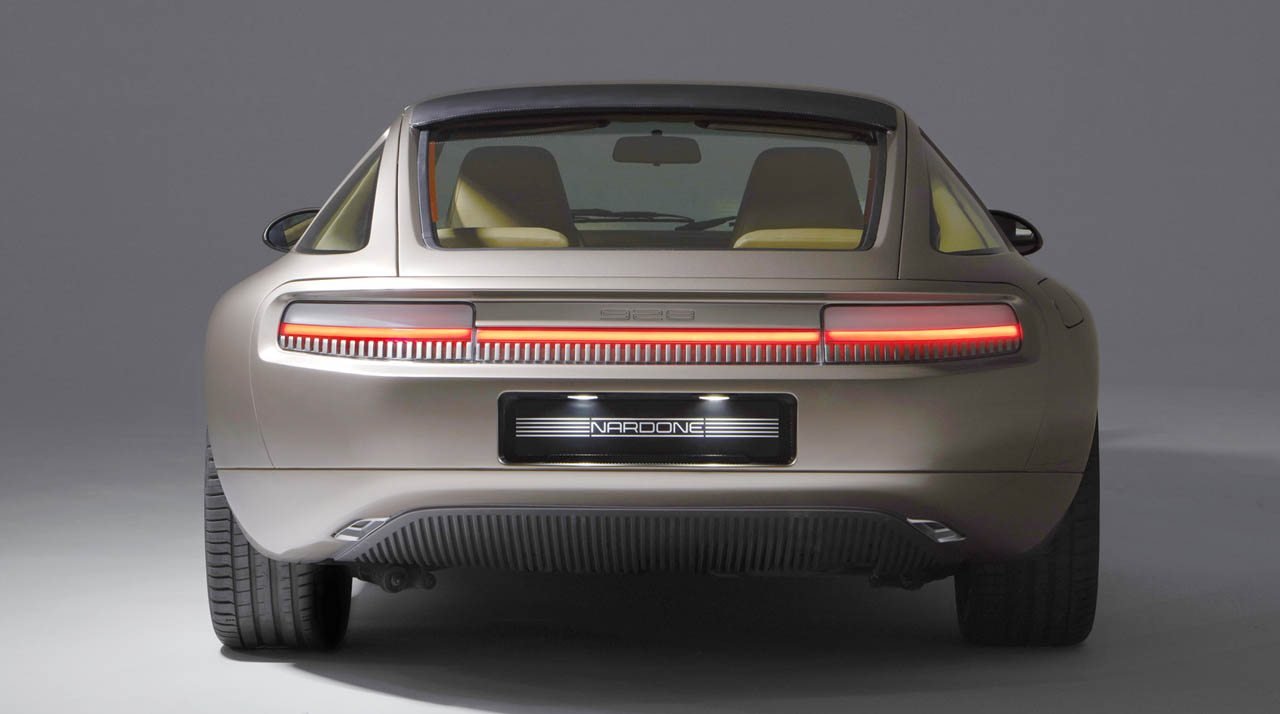
The wedge-shaped design of the 928 undergoes a contemporary facelift, featuring redesigned bumpers, widened wheel arches, a modern interpretation of the original flip-up headlights, and a reimagined rear light bar. The finishing touch comes in the form of 18-inch wheels, reminiscent of the 16-inch units offered by Porsche during the 928's inception. Notably, carbon fiber dominates the body construction, striking a harmonious balance between aesthetics and weight efficiency.
Beneath
the hood of the Porsche 928 by Nardone Automotive lies an evolved
version of the 928's naturally-aspirated V8 engine, coupled with a
six-speed manual transaxle and a limited-slip differential. (Picture from: StuttCars)
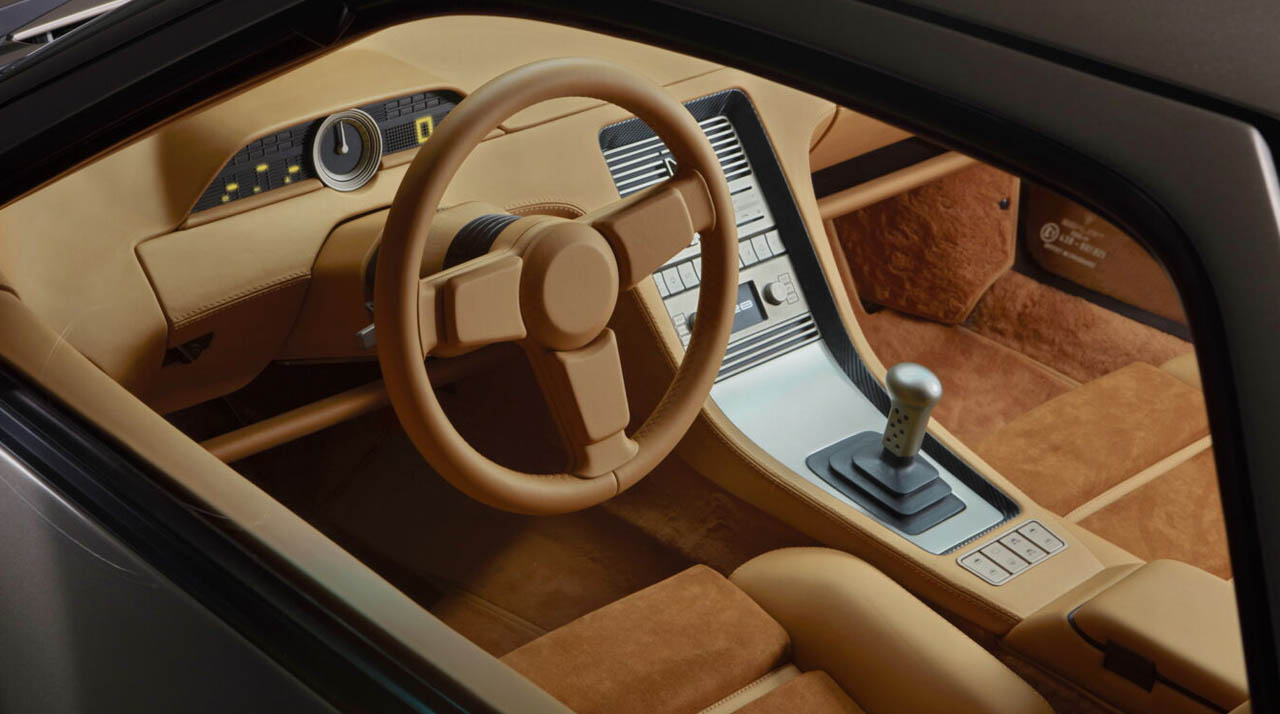
Entering the cabin, Nardone Automotive leaves its mark with luxurious leather and Alcantara upholstery. The interior exudes sophistication, boasting a minimalist design adorning the instrument cluster and center stack—a seamless blend of modernity and a period-correct aesthetic. The Porsche Classic Communication Management (PCCM) system takes center stage, providing the driver with a contemporary, Apple CarPlay-compatible infotainment system. Enhancing the experience further is a high-end sound system, promising a sensory delight.
The interior exudes sophistication, boasting a minimalist design adorning the instrument cluster and center stack—a seamless blend of modernity and a period-correct aesthetic. (Picture from: StuttCars)
While beneath the hood lies an evolved version of the 928's naturally-aspirated V8 engine—a testament to Porsche's engineering prowess. Over its 18-year production span, the coupe's engine displacement gradually increased to 5.4 liters. This front-mounted, water-cooled eight-cylinder powerhouse now churns out around 400 horsepower, propelled by modern engine management technology.
The Porsche 928 by Nardone Automotive features a uniquely modern reimagined rear light bar. (Picture from: StuttCars)
Power is channeled through a six-speed manual transaxle and a limited-slip differential—one more gear than the original 928. Standard features include upgraded brakes, an electronic suspension system, and electric power steering, offering a driving experience that transcends the capabilities of the original model.
The Nardone Automotive 928 made its dazzling debut at the Design Week in Milan in June 2022, captivating automotive enthusiasts with its reimagined allure. Following its Italian unveiling, the car embarked on a journey to England, where it graced the prestigious Goodwood Festival of Speed on June 23.
Anticipation surrounds the tentative commencement of deliveries in 2024, marking a new chapter in the legacy of the Porsche 928—one that seamlessly marries history with innovation, creating a harmonious symphony of classic elegance and modern performance. *** [EKA | FROM VARIOUS SOURCES | NARDONEAUTOMOTIVE | STUTTCARS | AUTOCAR | TOPGEAR ]
Note: This blog can be accessed via your smart phone.
Rare ONES - In the vibrant tapestry of Italian sports cars, the year 1966 stands out as a watershed moment. It witnessed the emergence of the Lamborghini Miura, a vehicle that not only etched its place in the annals of automotive history but also challenged established technical conventions. The Miura's mid-engine configuration, positioned behind the driver, echoed the revolutionary design principles observed in Formula 1 cars of the late 1950s.
The Nembo GT Due Litri was an automotive creation of Giorgio Neri and Luciano Bonacini, former Maserati team employees turned founders of Carrozzeria Neri and Bonacini in 1966. (Picture from: Classic And Recreation Sports Cars)
While the Miura commanded attention, it wasn't the pioneering mid-engined Italian car. The ATS 2500 GT and De Tomaso Vallelunga had previously embraced this design, albeit in limited production. The Miura, with its transversely mounted engine, sparked a new wave of smaller-scale sports cars. Among them, the noteworthy Nembo GT Due Litri, a creation of Giorgio Neri and Luciano Bonacini, former Maserati team employees turned founders of Carrozzeria Neri and Bonacini in 1966.
The Nembo GT Due Litri is inspired by the Lamborghini Miura so it is not surprising that the car displays distinct similarities. (Picture from: Classic And Recreation Sports Cars)
During the 1960s, a golden age for Italian sports cars, Neri and Bonacini's portfolio included exotic cars like the Ferrari 250 Breadvan for the Scuderia Serenissima and the Strale Daytona 6000 GT, based on the Iso Rivolta GT ordered by a luxury car dealer. Inspired by this flourishing era, the duo, after years of contributing to other factories, embarked on creating a vehicle under their own Nembo trademark in 1966.
The Nembo GT Due Litri was built by Neri and Bonacini after years of contributing to other factories, embarked on creating a vehicle under their own Nembo trademark. (Picture from: Classic And Recreation Sports Cars)
The Nembo GT featured a monocoque chassis with front and rear subframe chassis, incorporating an aluminum body. Drawing inspiration from the Miura, the car displayed distinct similarities, especially in the rear section—exhibiting fenders, rear window, and a black grille reminiscent of Lamborghini's iconic design.
The Nembo GT Due Litri featured a monocoque chassis with front and rear subframe chassis, incorporating an aluminum body. (Picture from: Classic And Recreation Sports Cars)
A standout feature of the Nembo GT was its engine—a 4-cylinder boxer engine from the Lancia Flavia Sport Zagato. Equipped with dual carburetors, it produced a maximum power of 105 hp. The boxer engine not only ensured a lower center of gravity but also hinted at exceptional handling capabilities. Weighing less than 1,800 pounds, the Nembo GT delivered impressive performance, reaching a top speed of 125 mph.
The
Nembo GT Due Litri featured a 4-cylinder boxer engine sourced from the
Lancia Flavia Sport Zagato, complemented by dual carburetors. (Picture from: Classic And Recreation Sports Cars)
The first Nembo GT, a test car with essential tuning, sported an unpainted aluminum body. Its headlights were integrated into the front grille, and the taillights, though sizable, featured a distinctive design. The second iteration marked improvements, offering enhanced comfort and nearing small-scale production readiness. The cabin, though seemingly simple, featured standard equipment such as a radio with speakers and carpeted floors.
The
Nembo GT Due Litri's boxer engine not only ensured a lower center of
gravity but also hinted at exceptional handling capabilities. (Picture from: Classic And Recreation Sports Cars)
Despite its promising potential, the Nembo GT encountered a significant setback when Lancia declined to supply engines for the Flavia, disrupting plans for series production. This unforeseen obstacle prompted Neri and Bonacini to part ways with their venture, signaling the end of their dream to produce a successful sports car. Neri joined the Piero Drogo factory, while Bonacini moved to De Tomaso.
STRIKE-1 - The Dodge Viper RT/10 is indeed a notable American sports car and the first generation of the Dodge Viper lineup. It was introduced in 1992 and produced until 1995. The "RT/10" designation stands for "RoadsTer, 10th Anniversary," highlighting its convertible, open-top design.
As Carscoops reported, the iconic supercar, in service for over a decade, has undergone a remarkable transformation with an extended chassis, evolving into a supercar limousine. The convertible model now spans an impressive 7.62 meters (25 feet) in length, offering seating for up to 12 passengers. However, specific details regarding dimensions and additional features beyond the standard version are currently unavailable.
Rear three quarter of Dodge Viper RT/10 Convertible limousine supercar while sat on display at the SEMA 2012. (Picture from: MotorTrend)
This unique creation, the Dodge RT/10 Limousine, is the brainchild of Unique Movie Cars, a company specializing in the design and fabrication of vehicles for the American film industry. The limousine was specifically crafted to capture the attention of the U.S. audience attending the Sams Town 300 NASCAR race in Las Vegas on Saturday, March 17, 2012. The unveiling of this extraordinary limousine supercar took place during the event organized by the committee.
The Viper limousine was commissioned to chauffeur Oscar Goodman, the chairman of the Las Vegas Convention and Visitors Authority committee, a former mayor, and the grand marshal at the Las Vegas Motor Speedway. This supercar limousine is part of the fleet of 'magic' cars operated by Unique Movie Cars, the same company responsible for renting out iconic vehicles such as the van shaped like dogs 'Mutt Cutts' for the movie 'Dumb and Dumber' and KITT from the 'Knight Rider' series.
Ferrari 360 Modena F131 limousine supercar. (Picture from: Luxuo)
Furthermore, for comparison, You may recall the Ferrari 360 Modena F131 super limousine, which is equipped with a V8 engine boasting a 3.6-liter capacity, capable of generating 400 horsepower. This model is renowned as the world's fastest limousine, reaching an impressive maximum speed of 267 kph (165.91 mph).
Ferrari 360 Modena F131 limousine supercar. (Picture from: Luxuo)
This distinctive vehicle was crafted by Dan Cawley of Style Limousines and meticulously tuned by Prestige Limousines in Birmingham, England.The limo creator stated that it's the ideal way for seven passengers to experience a Ferrari. This colossal and unconventional vehicle aims to provide a new and unique Ferrari encounter, as quoted by Topspeed.
The Ferrari-based limousine underwent a transformation by splitting a standard 360 Modena in half and inserting additional seats in the middle to accommodate eight passengers. Boasting a large onboard flat screen and several smaller screens integrated into the headrests, it features a state-of-the-art sound system and mesmerizing fiber optic disco lighting.
However, there is news that Audi is set to unveil a concept variant of the R8 Limousine. Equipped with a 5.2-liter V10 engine producing 525 horsepower and 530 Nm of torque, the Audi R8 V10 coupé accelerates from 0 to 100 kph (62 mph) in a mere 3.9 seconds and boasts a top speed of 317 kph (196.97 mph).
Audi R8 limousine supercar. (Picture from: GTSpirit)
These remarkable performance figures suggest that the elongated R8, in its unique form, is poised to claim the title of the world's fastest limousine. With the introduction of the Dodge Viper RT/10 super limousine, there is a potential shift in the title of the fastest limousine supercar from the Ferrari 360 Modena.
This is attributed to the fact that the Chrysler-manufactured vehicle still adheres to the platform of the 2008 model. The Dodge Viper RT/10 is renowned for its impressive capabilities, capable of reaching speeds of up to 325 kph (201.95 mph). Accelerating from 0 to 100 kph can be achieved in just 7.6 seconds.*** [EKA | FROM VARIOUS SOURCES | CARSCOOPS | MOTORTREND | LUXUO | TOPSPEED | GTSPIRIT ]
Note: This blog can be accessed via your smart phone.

 He was an alumnus of the Art Design Center in California, has left an indelible mark on automotive history with iconic designs like Mazda Nagare, Mazda Furai, Mazda 3, and Mazda MX-5, showcasing his creative prowess during a prolific career at Mazda. Drawing on this rich professional background, SALAFF embarked on a journey to establish his production house, laying the foundation for the remarkable Caden Collection.
 The exterior design pays homage to classics like Ferrari 330 P4,
Porsche 917, and Peugeot 905, seamlessly merging timeless elements with a modern touch inspired by architecture and fashion. Built on the Gallardo foundation, the C2 features a square muzzle, elongated headlights, and triangular accents along the bodywork's lower edge. The broad front grille, adorned with striking gold-painted accents, adds an opulent touch to the overall aesthetic.
The exterior design pays homage to classics like Ferrari 330 P4,
Porsche 917, and Peugeot 905, seamlessly merging timeless elements with a modern touch inspired by architecture and fashion. Built on the Gallardo foundation, the C2 features a square muzzle, elongated headlights, and triangular accents along the bodywork's lower edge. The broad front grille, adorned with striking gold-painted accents, adds an opulent touch to the overall aesthetic. 


 For those seeking more than mere transportation means—a genuine work of automotive art—the Salaff C2 guarantees a customized and thrilling driving encounter, showcasing devotion and precision in every meticulously crafted detail. *** [EKA [24102018] | FROM VARIOUS SOURCES | SALAFF | CARSCOOPS | YAHOO | SHAKER.LIFE ]