Real ITALIAN Styled Car - When it comes to sports cars exuding pure Italian style, one name that inevitably comes to mind is the Maserati Mexico. This exceptional automobile made its official debut at the 53rd edition of the Mondial de l'Automobile de Paris on October 6, 1966, and quickly earned a reputation as one of the finest Italian GT cars of its era.
The Maserati Mexico is a true work of art, characterized by its elegant and clean lines, meticulously crafted by CarrozzerIa Vignale during 1966 to 1973. This 2+2 coupe embodies the quintessential Maserati essence while maintaining a strong sporting character. It marked a significant milestone as the third Maserati model to utilize the propulsion unit, following in the footsteps of the Quattroporte and the 5000 GT. Underneath the hood, this beauty conceals a road-ready version of the racing engine derived from the legendary Maserati 450S.
Interior view of the Maserati Mexico 4700 (1969 model). (Picture from: BisnisIndonesia)
The story behind the name "Mexico" for this remarkable vehicle is shrouded in intrigue. According to reports, a prominent Maserati customer in 1961 had acquired a Maserati Allemano 5000 GT that was previously owned by the Mexican President at the time, Adolfo López Mateos. He brought the car to Modena for repairs following an accident.
During a visit to the Ciro Menotti's Viale factory, this customer was so captivated by a Vignale-designed prototype that he insisted on purchasing it, even to the extent of transferring the bodywork onto his 5000 GT chassis.
While some suggest that it was named in honor of Cooper-Maserati's victory in the 1966 Mexican Grand Prix, where John Surtees emerged victorious in the final round of that year's Formula 1 World Championship. These intriguing twists of fate are believed to have influenced the choice of the name "Mexico" for the future model. Ultimately, the choice is yours, but we find the latter explanation more plausible.
The Maserati Mexico 4200 (1967 model). (Picture from: Thiesen-Automobile)
Since its initial launch, the Maserati Mexico has been available with two distinct engine options. The first is a 4.2-liter V8 engine generating 260 horsepower, propelling the car to a top speed of 240 km/hour. Alternatively, there's a 4.7-liter V8 engine with 290 hp, pushing the Mexico to a top speed of 255 km/h. Furthermore, the 4.7-liter version was fitted with 650 x 15" Boranni chrome wire wheels and the 4.2-liter version with 'disc' wheels.
Interior view of the Maserati Mexico 4200 (1967 model). (Picture from: Thiesen-Automobile)
What truly sets the Maserati Mexico apart is its exceptional style and standard equipment. The interior features luxurious leather seats, electric windows, a finely crafted wooden dashboard, air conditioning, and servo-ventilated front disc brakes. For those seeking added conveniences, automatic transmission, power steering, and a radio were available as optional extras. The interior was often described as an "Italian-style lounge," reflecting Maserati's commitment to Italian heritage and craftsmanship.
The Maserati Mexico 4200 (1967 model). (Picture from: Thiesen-Automobile)
As we approach the 57th anniversary of the Maserati Mexico's debut in 1966, it is worth noting that Maserati has continued to produce iconic cars that leave an indelible mark on automotive history and set new standards in the luxury segment. The Mexico model embodies the values of excellence, design, and power that still resonate in all Maserati vehicles proudly carrying the Trident emblem.
In conclusion, the Maserati Mexico remains a symbol of Italian automotive excellence, blending timeless style with impressive performance. Its rich history and enduring legacy continue to inspire car enthusiasts and aficionados around the world. As Maserati forges ahead into the future, it does so with a commitment to upholding the traditions and values that have defined the brand for decades. *** [EKA | FROM VARIOUS SOURCES | CARROZZIERI-ITALIANI | CARSTYLING.RU ]
Note: This blog can be accessed via your smart phone.
Avant-Garde Rarity - Scrolling through the universe of classic cars today often feels like wandering inside a living museum. Beyond the headline-grabbing Ferraris and Porsches, there are rare creations that quietly challenge everything we think we know about automotive beauty. One such machine is the Alfa Romeo 1900C Astral Cabriolet—a bold 1950s experiment that fused Italian engineering with American-inspired futurism, resulting in one of the most unusual Alfa Romeos ever built.
The second example of the Alfa Romeo 1900C “Astral” Cabriolet was built by Carrozzeria Boneschi and later sold to Rafael Trujillo, then ruler of the Dominican Republic, in 1954.(Picture from: Carrozzieri-Italiani)
The Astralwas born from the respected Alfa Romeo 1900C chassis, a grand touring platform known in its time for combining performance with everyday usability.In 1953, the Milan-based coachbuilder Carrozzeria Boneschi set out to reinterpret the 1900C as a striking spider for display at the prestigious Turin Motor Show. The design direction came from industrial designer Rodolfo Bonetto, whose forward-looking ideas shaped a car that deliberately stepped away from convention.
The first example Alfa Romeo 1900C “Astral” Cabriolet built by Carrozzeria Boneschi was unveiled at the 1953 Turin Auto Show. (Picture from: Carrozzieri-Italiani)
Boneschi itself had a long heritage, founded in 1919 by Giovanni Boneschi and headquartered in Cambiago throughout its existence. By the early 1950s, the company was already an established name in Italian coachbuilding. Yet the Astral would become one of its most daring creations—and ultimately one of its rarest. Only two units were ever completed. One of them was reportedly delivered in 1954 to Rafael Trujillo, then ruler of the Dominican Republic. Not long after, production ceased, and Boneschi eventually faded from the automotive landscape, leaving the Astral as a lasting symbol of its experimental spirit.
The second Alfa Romeo 1900C “Astral” Cabriolet appears to feature a more recognizable Alfa Romeo shield positioned at the center of its oval grille.(Picture from: Carrozzieri-Italiani)
Visually, the Astral immediately sparks curiosity—and not always agreement. Many enthusiasts have reacted with surprise when comparing it to the standard 1900C. The familiar Alfa Romeo shield grille, typically the focal point of the brand’s identity, was largely replaced by a dominant elliptical front opening. This oval grille, flanked by two circular headlights, defined the car’s face. A subtle horizontal line connected discreet turn signals, while twin air scoops mounted on the hood added a sense of drama and performance. Interestingly, period images show slight variations between the two cars—one appears to incorporate a more recognizable Alfa shield at the center, while the other fully embraces the oval theme.
The first example of the Alfa Romeo 1900C “Astral” Cabriolet fully embraced the oval grille theme, presenting a bold front fascia that departed noticeably from the traditional Alfa Romeo shield design.(Picture from: Carrozzieri-Italiani)
The elliptical motif at the front does not stop there. It flows backward into a sweeping aerodynamic line that integrates smoothly with the leading edge of the rear wheel arch. The influence of early-1950s American styling is unmistakable, particularly in the presence of rear fins. These were not merely decorative flourishes; they emphasized the Astral’s futuristic character and hinted at aerodynamic ambition. The overall side profile marked a clear departure from the donor car’s more restrained lines, making the Astral feel like a design study brought to life.
The Alfa Romeo 1900C “Astral” Cabriolet built by Carrozzeria Boneschi carries its elliptical front motif into a sweeping aerodynamic line toward the rear wheel arch, with unmistakable early-1950s American-inspired tailfins.(Picture from: Carrozzieri-Italiani)
Beneath its radical bodywork, the mechanical foundation remained rooted in Alfa Romeo’s advanced engineering. The standard 1900C was powered by a 1,975 cc dual overhead cam inline four-cylinder engine equipped with Weber carburetors and paired with a five-speed manual transmission—impressive specifications for the early 1950s. Its suspension setup featured independent front suspension with double A-arms, coil springs, and hydraulic shock absorbers, complemented by a rear live axle with trailing links and coil springs. Four-wheel drum brakes completed the package. Whether Boneschi introduced performance modifications to the Astral remains uncertain, but even in standard form, the 1900C chassis offered a refined and capable driving experience.
Today, the Alfa Romeo 1900C Astral Cabrioletstands as a vivid reminder of a time when coachbuilders could reinterpret established platforms with fearless creativity. Its blend of Italian craftsmanship and American-inspired styling may divide opinions, yet that very boldness is what secures its place in classic car history. In a modern era shaped by uniform design languages and strict regulations, the Astral feels refreshingly individual—a rare machine that proves experimentation, even when controversial, can leave a lasting impression decades later. *** [EKA [21092023] | FROM VARIOUS SOURCES | CARROZZIERI-ITALIANI | WIKIPEDIA | CARSTYLING.RU | SPORTSCARDIGEST | CAR.INFO ]
Note: This blog can be accessed via your smart phone
Revving Up the Skies - Designing a motorcycle with a movie-themed twist can be a challenging endeavor. Aligning the end result with a cinematic concept while maintaining functionality and style can often feel like swimming against the current.
The BMW R18 Maverick custom built by Rusty Wrench drawing inspiration from the Hollywood blockbuster, "Top Gun: Maverick." (Picture from: BikeExif)
However, Rusty Wrench Motorcycles, a Portuguese modification house, has managed to pull off this daring feat brilliantly. Their masterpiece? A stunning transformation of a custom-built motorcycle called BMW R18 'Maverick', drawing inspiration from the Hollywood blockbuster "Top Gun: Maverick".
As quoted from BikeExif, the genesis of this remarkable project can be traced back to BMW Motorrad Portugal's local modification contest. The winning entrants were not only rewarded but also given the opportunity to bring their vision to life and represent the country at the prestigious BMW International R18 Customizing Championship.
Rusty Wrench meticulously handcrafted both the frame and
the entire bodywork, giving the front section the distinctive appearance
of a jet aircraft's nacelle.(Picture from: BikeExif)
Rusty Wrench Motorcycles, with their eyes set on aviation-themed aesthetics, selected "Top Gun: Maverick" as their muse. This choice paid off handsomely as they clinched victory in the competition with their innovative design.
The front end of the motorcycle was ingeniously designed to resemble the nacelle of a jet aircraft, featuring a KTM motorbike headlamp that seamlessly integrates with covers concealing the front suspension. (Picture from: BikeExif)
The journey began by stripping the BMW R18 down to its bare frame, removing nearly all of its bodywork, and leaving only the engine and suspension intact. Then, with meticulous craftsmanship, they reconstructed the entire frame and bodywork from scratch.
The BMW R18 'Maverick' features an Alcantara seat shell with eye-catching eyelets that serve both style and function. (Picture from: BikeExif)
The front end of the motorcycle was ingeniously designed to resemble the nacelle of a jet aircraft, featuring a KTM motorbike headlamp that seamlessly integrates with covers concealing the front suspension. The lower section boasts a fuselage-inspired cover, complete with an air scoop at the front and rows of dome-shaped fasteners on each side, emphasizing the aviation theme.
To complete the masterpiece, custom CNC machined badges commemorating BMW Motorrad's 100th anniversary were meticulously affixed, while 'Maverick' logos replaced the original engine emblems. (Picture from: BikeExif)
The cruiser-style fuel tank was discarded and replaced with one sporting a knee curve, reminiscent of the classic Yamaha XJR, giving the motorcycle a front-heavy appearance that gracefully tapers towards the tail. The subframe, cleverly hidden by being bolted directly to the center, features an Alcantara seat shell with eye-catching eyelets that serve both style and function.
Aluminum exhausts were fabricated, featuring end caps reminiscent of afterburners found on fighter jets. (Picture from: BikeExif)
While the R18's suspension remained untouched, Rusty Wrench opted for a wheel upgrade, swapping the rims for a set of 21-inch front and 18-inch rear alloys from BMW's Roland Sands collection. Dedicated foot controls were also added, positioned higher and further back to accommodate the increased seat height.
Rusty Wrench crafted new stainless steel headers, routing them up and over the BMW's massive exhaust pipes and beneath the redesigned tail section. (Picture from: BikeExif)
The one-piece seat upholstery
complements the motorcycle's luxurious paint job, predominantly black
with silver accents and subtle blue stripes. Additional styling details
include a BMW x Roland Sands engine cover and taillights that mimic jet
tail fins.
A particularly striking visual element is the exhaust system. Rusty Wrench crafted new stainless steel headers, routing them up and over the BMW's massive exhaust pipes and beneath the redesigned tail section. Aluminum exhausts were fabricated, featuring end caps reminiscent of afterburners found on fighter jets.
Rusty Wrench crafted new stainless steel headers, routing
them up and over the BMW's massive exhaust pipes and beneath the
redesigned tail section. (Picture from: BikeExif)
The handlebars, mounted on Roland Sands risers and equipped with Motogadget bar-ends, provide a comfortable yet stylish riding position. To preserve the R18's modern wiring, Rusty Wrench retained the OEM speedometer. Beyond the movie and aviation influences, the R18 by Rusty Wrench also exhibits a deep appreciation for luxury sports cars.
To add the finishing touches, custom CNC machined badges were meticulously installed. These emblems, celebrating BMW Motorrad's 100th anniversary, adorn each side of the tank, while the engine emblems were replaced with a pair of 'Maverick' logos.
What sets the R18 by Rusty Wrench apart from most 'themed' motorcycles is its seamless and cohesive design. Even without the Top Gun-inspired details, it remains visually appealing. Moreover, the revised ergonomics promise an even more enjoyable riding experience on the R18. Rusty Wrench Motorcycles has indeed crafted a masterpiece that transcends cinematic inspiration, delivering a motorcycle that is as breathtaking as it is functional.
Kept spur your adrenaline on the power of two-wheeled monster and stay alive with the true safety riding. May God will forgive Your sins and so does the cops.... *** [EKA | FROM VARIOUS SOURCES | BMW MOTORRAD PORTUGAL | RUSTYWRENCH | BIKEEXIF ]
Note: This blog can be accessed via your smart phone.
Special ONES - There’s a certain thrill in looking back at moments when the automotive world dared to imagine far beyond what the road seemed ready for. The mid-1990s, a period bursting with technological optimism, gave rise to one of Ford’s boldest experiments—a concept car that didn’t just hint at the future but looked as though it had arrived early. From this atmosphere of ambition emerged the Ford GT90, a machine designed to bridge the legendary past of the GT40 with a vision of tomorrow’s performance and innovation.
The magnificent creation of the Ford GT90 earned the title of "world's mightiest supercar" due to its cutting-edge technology and unmatched capabilities of the time. (Picture from: ConceptCarz)
Ford introduced the GT90 to the world at the 1995 Detroit Auto Show, immediately positioning it as the most powerful supercar of its time. Yet the GT90 was more than a showcase of force; it was crafted as the spiritual successor to the dominant GT40 of the 1960s. Beyond heritage, Ford used the GT90 as a test bed for advanced engineering, design studies, and driver-focused technologies intended for future models. It embodied both respect for tradition and a willingness to push boundaries.
The Ford GT90 was not merely a concept car; it was envisioned as the spiritual heir to the iconic Ford GT40. (Picture from: ConceptCarz)
A key element of the GT90’s significance was its pioneering adoption of the “New Edge” design philosophy. This approach favored sharp intersections, triangular surfaces, and defined geometry—styling choices that later appeared on mainstream Ford models including the Focus, Mustang, and Falcon. In shaping later production vehicles, the GT90 became one of Ford’s most influential concept cars, proving that design experiments could ripple through an entire brand’s evolution.
The Ford GT90 dazzled in a striking bright white hue, featured with a forward-positioned cabin with a short hood, complemented by a lengthy 2,946 mm wheelbase. (Picture from: ConceptCarz)
Behind its creation was a small, high-intensity team from Ford’s Special Vehicle Team (SVT). They were given just six months to produce a fully realized hypercar, an astonishingly tight schedule that required creative solutions. One such solution was sourcing components from Jaguar, then part of the Ford family. This approach kept development efficient and cost-effective, though the finished prototype still represented approximately three million dollars’ worth of resources and engineering. Speed and ingenuity became the hallmarks of its development.
The Ford GT90 cabin dominated with a vibrant bright blue theme, tastefully blending leather and suede, paired with an aluminum linkage connected to the center console, exuded a sporty and elegant vibe. (Picture from: ConceptCarz)
Externally, the GT90 embraced an unmistakably futuristic presence. Its bright white carbon-fiber body panels, combined with an aluminum honeycomb monocoque chassis, reflected cutting-edge construction for its era. The cabin was pushed far forward, supported by a long 2,946 mm wheelbase and a short hood, giving it a stance both aggressive and technical. Electronically operated doors added a touch of theater, while the interior surprised many with its generous space—unusual among 1990s supercars. A bright blue theme dominated the cabin, blending leather and suede with silver accents, a carbon-fiber center console, an aluminum open-gated shifter, and a custom instrument layout that included a distinctive yellow triangle on the steering wheel.
The Ford GT90 powered by a monstrous 6,000cc 12-cylinder V12 engine, a fusion of two Lincoln V8 engines, coupled with four Garrett Systems T2 turbo units. (Picture from: ConceptCarz)
Its performance figures remain astonishing even by modern standards. Ford engineered a 6.0-liter V12 by merging two Lincoln V8s, then pushed the formula further with four Garrett T2 turbochargers. The result was 720 horsepower and 895 Nm of torque fed to the rear wheels through a five-speed FFD-Ricardo manual gearbox sourced fromthe Jaguar XJ220. That powertrain propelled the GT90 to a top speed of 407 km/h and enabled a 0–100 km/h sprint in just 3.1 seconds. To cope with this immense capability, Ford fitted a double-wishbone suspension system also derived fromthe XJ220, enhancing stability at extreme speeds.
Despite the Ford GT90's awe-inspiring concept and its suitability as a successor to the Ford GT40, Ford made a surprising decision not to put it into production. (Picture from: ConceptCarz)
Despite its undeniable promise and its natural role as a modern
successor to the GT40, Ford ultimately chose not to put the GT90 into
production. Instead, the company introduced the Ford GT in 2004 as the
true road-going continuation of the GT40 legacy.
The lone GT90 prototype slipped into near-mythical status, resurfacing only occasionally—most notably at an RM Auction event in 2009, where it rekindled admiration among collectors and enthusiasts. Even without a production run, the GT90 continues to occupy a powerful place in automotive history as a symbol of Ford’s willingness to explore the far edges of design and performance, revealing what can happen when imagination is allowed to run at full speed. *** [EKA [20092023] | FROM VARIOUS SOURCES | HEMMINGS | CONCEPTCARZ | ROAD&TRACK | DRIVINGLINE | WIKIPEDIA ]
Note: This blog can be accessed via your smart phone
Special ONES - In the realm of automotive enthusiasts, the Lamborghini Miura P400SV often garners accolades as the epitome of beauty and elegance to ever roll out of the renowned Italian car manufacturer based in Sant'Agata Bolognese. With its graceful curves and captivating agility, it's hailed by many as a timeless masterpiece. Thus, it comes as no surprise that its automaker company Automobili Lamborghini, on the 50th anniversary of the Miura's inception in 2016, paid a special tribute to this iconic car.
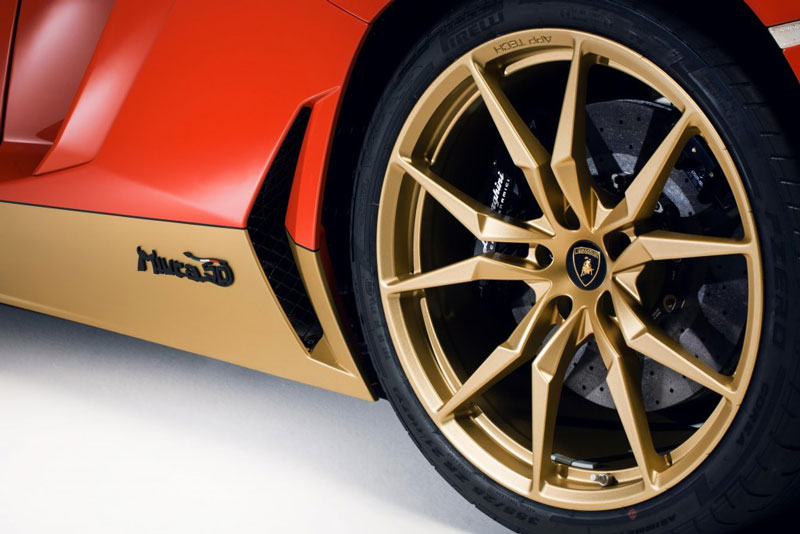
The Lamborghini Aventador Miura Homage appeared in Rosso Arancio with gold coating Dione alloy 21" wheels, debuted at the Goodwood Festival of Speed 2016. (Picture from: TheVerge)
Enter the Lamborghini Aventador Miura Homage, a limited edition masterpiece, with only 50 units gracing select markets across the globe. These exclusive automobiles were allocated to discerning buyers who successfully navigated a rigorous selection process, and unsurprisingly, most of them have found their lucky owners.
The Lamborghini Aventador Miura Homage will be rarer than the car it honors with only 50 units ever made. (Picture from: OtoSpirit)
The Lamborghini Aventador Miura Homage owes its existence to the skilled artisans at the Lamborghini Ad Personam studio. Built upon the foundation of the Lamborghini Aventador, this exquisite creation was unveiled at the prestigious Goodwood Festival of Speed 2016. The philosophy behind its creation was to pay homage to the original 1966 Miura in a manner that truly captures its spirit.
The Lamborghini Aventador Miura Homage owes its existence to the skilled artisans at the Lamborghini Ad Personam studio. (Picture from: OtoSpirit)
Notably, the top portion of the Aventador Miura Homage's body can be adorned with a palette of 18 vibrant solid and metallic colors. Among these are Rosso Arancio (red), Verde Scandal (green), Blu Tahiti (blue), and more. Meanwhile, the lower body and side sills are treated to contrasting paint, accentuating its striking appearance. The Dione alloy wheels, available in silver or gold finish, further enhance its visual appeal.
The Lamborghini Aventador Miura Homage's side proudly displayed with a Miura 50th-anniversary badge, serving as a constant reminder of its heritage. (Picture from: OtoSpirit)
On closer inspection, you'll find a Miura 50th-anniversary badge proudly displayed, serving as a constant reminder of its heritage. Inside the cabin, a choice of two-tone colors with 'Miura 50th' stitching adorns the supple leather, perfectly echoing the aesthetics of the original masterpiece. Now, let's delve into the mechanical heart of this extraordinary beast.
Interior view of Lamborghini Aventador Miura Homage for Hong Kong adorned with two-tone colors with 'Miura 50th' stitching adorns the supple leather. (Picture from: Motor1)
Under the Aventador Miura Homage's sculpted hood resides a 6.5-liter V12 engine that defies the ordinary. This powerplant boasts an astounding 700 horsepower at 8,250 rpm, paired with a maximum torque of 690 Nm at 5,500 rpm—a substantial leap from the original's P400SV variant, which produced a modest 380 horsepower. With this powerhouse at its disposal, the Lamborghini Aventador Miura Homage catapults from a standstill to 100 kph in a mere 2.9 seconds and achieves a blistering top speed of 350 kph.
The Lamborghini Aventador Miura Homage for Hong Kong in Verde Scandal with silver coating Dione alloy 21" wheels graces the market with a price of HK $8 million. (Picture from: Motor1)
Now, the question that inevitably arises: How much does this piece of automotive artistry cost? Well, as you might expect, it commands a hefty price tag. For instance, an Aventador Miura Homage destined for Hong Kong graces the market with a price of HK $8 million, roughly equivalent to Rp. 13 billion.
While it's undeniably a substantial sum, it represents an enticing proposition when compared to the astronomical prices of an original Miura, which can easily reach up to $3 million. And let's not forget, these two cars share more than just Racing Bull emblem; they share a legacy that defines the very essence of automotive excellence. ***[EKA [01072016] | FROM VARIOUS SOURCES | LAMBORGHINI | THE VERGE | MOTOR1 ]
Note: This blog can be accessed via your smart phone.
Unique ONES - In 1972, BMW unveiled a groundbreaking automotive creation, the BMW E25 Turbo Concept. This innovative vehicle was designed to celebrate the 1972 Summer Olympics in Munich and was the brainchild of the talented French designer Paul Bracq. The E25 Turbo Concept featured distinctive gullwing doors and was constructed on a modified 2002 chassis, boasting a mid-mounted engine.
Legends meeting at Lake Como in 2008: BMW M1 Hommage, BMW M1 and BMW Turbo. (Picture from: BMW)
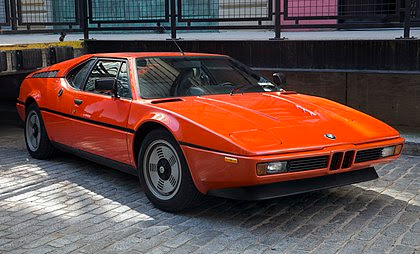
Little did the world know that this concept car would eventually pave the way for the iconic BMW M1, which was introduced six years later in 1978. The BMW M1, with its body code E26, holds a special place in the heart of automotive enthusiasts as it remains the only car dedicated solely to the BMW ///M (Motorsport) division, renowned for its high-performance vehicles.
1972 BMW E25 Turbo Concept is built on a BMW 2002 modified chassis also powered by a 2,000 cc 4-cylinder engine. (Picture from: Motor1)
Interestingly, the BMW M1 wasn't a product solely crafted by BMW. Instead, it was the result of a collaborative effort between BMW, Italdesign, and Lamborghini. This unique partnership birthed a sports car that left an indelible mark on the world of high-performance automobiles in limited numbers of only 453 units.
The BMW M1 featured with E26 body code, holds a special place in the heart of enthusiasts as it remains the only car dedicated solely to the BMW ///M (Motorsport) division, renowned for its high-performance vehicles. (Picture from: Wikipedia)
Fast forward to 2008, and BMW enthusiasts were treated to another spectacular creation – the BMW M1 Hommage. This supercar concept was conceived by the BMW Group Design division to commemorate the 30th anniversary of the BMW M1's existence. The BMW M1 Hommage served as a testament to the exceptional competence, creativity, and potential of the BMW Group Design team.
The BMW M1 Hommage was conceived by the BMW Group Design division to commemorate the 30th anniversary of the BMW M1's existence. (Picture from: BMW)
This concept car seamlessly blended emotional design with cutting-edge technological innovation, resulting in an aesthetically pleasing masterpiece. Its futuristic design, characterized by bold contours on the sleek body, instantly appealed to speed enthusiasts worldwide. The elongated engine compartment, the well-defined transition into the A pillar, and the gracefully extending window line terminating in a "Hofmeister" arch all contributed to its unmistakable BMW identity. The horizontal lines running through the car gave the impression of a lower center of gravity, ensuring maximum control for the driver.
BMW’s M performance car division is developed the BMW Vision M NEXT, a two-seater plug-in hybrid coupe known as long sought-after successor to the 41-year-old M1 supercar. (Picture from: Autocar)
Several iconic elements from the original BMW M1 design were retained, including the distinctive air vents on the hood, the rear window grille, and the black cutting line that elegantly separated the roof from the rear. Unfortunately, the M1 Hommage never made it to mass production; it remained a tantalizing concept, a glimpse into what could have been. Around four years ago, in 2019, BMW teased its dedicated fan base with the BMW Vision M Next. Regrettably, this exciting project never materialized due to constrained development costs.
With the introduction of electric car models like the BMW Vision Neue Klasse into their production lineup, BMW has definitively concluded the era of conventional internal combustion engined vehicles. (Picture from: TopGear)
Beside that the dreams of equipping the supercar concept with a powerful V8, V10, or V12 petrol engine seem distant, given BMW's official decision to discontinue conventional internal combustion engines in 2022. Moreover, petrol-powered vehicles are facing extinction as automotive manufacturers, not limited to BMW, invest heavily in the development of electric vehicles to meet sustainability goals, especially considering BMW's recent unveiling of the BMW Vision Neue Klasse, a symbol of futuristic aesthetics defining the electric vehicles of tomorrow.
With its striking appearance, BMW has taken a bold step toward shaping the future of sustainable and visually captivating transportation. The automotive world eagerly awaits to witness the evolution of BMW's design philosophy and the electrifying innovations that will redefine our driving experience. What are your thoughts on this exciting journey into the BMW future? *** [EKA | FROM VARIOUS SOURCES | BMW | WIKIPEDIA | ]
Note: This blog can be accessed via your smart phone.


 In conclusion, the Maserati Mexico remains a symbol of Italian automotive excellence, blending timeless style with impressive performance. Its rich history and enduring legacy continue to inspire car enthusiasts and aficionados around the world. As Maserati forges ahead into the future, it does so with a commitment to upholding the traditions and values that have defined the brand for decades. *** [EKA | FROM VARIOUS SOURCES | CARROZZIERI-ITALIANI | CARSTYLING.RU ]