Resilient Velocity - The history of British sports cars is often told through icons that conquered racetracks and cinema screens, yet some of the most fascinating stories belong to machines that almost made it. Among those near-mythical creations stands
The Ecosse Signature, a car born from ambition, reinvention, and the enduring belief that a compact British manufacturer could still challenge the established order.
Emerging from the remnants of AC Cars’ turbulent 1980s chapter,
the Ecosse Signature was not merely a facelift or a rebadge—it was a final, determined attempt to give a promising concept the future it once seemed destined for.
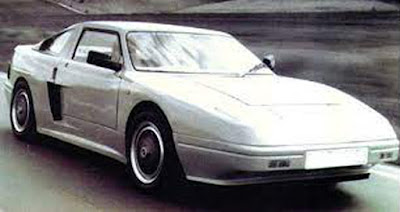 |
| The Ecosse Signature prototype built in 1988 based on the AC 3000ME Mark 2 prototype. (Picture from: AROnline) |
 The car’s roots stretch back to the mid-engined sports car formula that had captivated Europe since the 1970s
. By the time
the Ecosse Signature appeared, it carried forward a distinctive wedge-shaped silhouette—sharp, low, and unmistakably period-inspired—yet refined for a more modern audience.
Its glassfibre bodywork preserved the lightweight ethos of its predecessor while subtle restyling softened some of the harsher lines,
giving it a cleaner and more contemporary stance.
The proportions remained compact and purposeful: a short nose,
a cabin pushed forward,
and muscular rear haunches that hinted at the engine mounted just behind the seats.
Inside,
the cabin followed a driver-focused philosophy typical of British sports cars of the era—
intimate, functional, and built around engagement rather than luxury excess.
The low seating position,
straightforward instrumentation,
and snug two-seat layout reinforced its identity as a pure driver’s machine.

What truly distinguished
the Ecosse Signature, however, was the engineering evolution beneath its sculpted body.
After earlier iterations had experimented with various powerplants,
the team behind the reborn project opted for a turbocharged Fiat twin-cam engine sourced from the Croma Turbo,
replacing the previously considered Alfa Romeo V6. This decision signaled a clear intention: deliver sharper performance while maintaining manageable weight and balance.
With its mid-engine configuration and carefully developed chassis—
featuring independent suspension and a rigid structural core—
the car promised agile handling and lively acceleration. It was a combination that, on paper, aligned perfectly with the spirited driving culture of the late 1980s, when enthusiasts were rediscovering compact performance machines after the fuel-conscious years earlier in the decade.
 |
| The Ecosse Signature prototype debuted at the 1988 Birmingham Motor Show, several potential customers came in. (Picture from: AllCarIndex) |
The Ecosse Signature was developed under the banner of the Ecosse Car Company Ltd,
formed after the closure of AC’s Scottish venture.
John Parsons and former BRM technical director Aubrey Woods acquired the remaining assets and relocated operations to Hertfordshire,
determined to transform an unfinished prototype into a viable production sports car.
Their reworked prototype made its public appearance at the 1988 Birmingham Motor Show, drawing genuine curiosity from potential buyers intrigued by its blend of British character and continental engineering influence.
The car symbolized resilience—
proof that even after financial struggles,
failed crash tests in earlier phases,
and missed production targets,
the core idea still inspired belief.
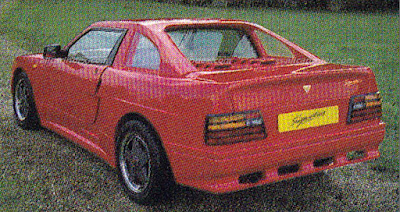 |
| The Ecosse Signature prototype debuted at the 1988 Birmingham Motor Show, several potential customers came in. (Picture from: AllCarIndex) |
 Yet ambition alone could not secure its survival
. Despite the renewed interest and thoughtful mechanical updates,
the Ecosse Signature required significant investment to move beyond prototype status. Funding proved elusive, and without the financial backing necessary to enter full production, the project quietly faded.
Today,
The Ecosse Signature holds a unique place in automotive history: not as a mass-produced success,
but as a reminder of how creativity, persistence,
and engineering passion often outpace commercial reality. In an era when boutique manufacturers and restomod culture are thriving once again, its story feels surprisingly relevant—an echo of what can happen when bold ideas meet harsh economics, and a compelling chapter in Britain’s enduring love affair with the mid-engined sports car. ***
[EKA | FROM VARIOUS SOURCES | ARONLINE | AC3000ME | WIKIPEDIA | SILODROME | ADRIANFLUX | ALLCARINDEX | CARSTYLING.RU | CLASSIC AND RECREATION SPORTSCARS IN FACEBOOK ]Note: This blog can be accessed via your smart phone.


 The car’s roots stretch back to the mid-engined sports car formula that had captivated Europe since the 1970s. By the time the Ecosse Signature appeared, it carried forward a distinctive wedge-shaped silhouette—sharp, low, and unmistakably period-inspired—yet refined for a more modern audience. Its glassfibre bodywork preserved the lightweight ethos of its predecessor while subtle restyling softened some of the harsher lines, giving it a cleaner and more contemporary stance. The proportions remained compact and purposeful: a short nose, a cabin pushed forward, and muscular rear haunches that hinted at the engine mounted just behind the seats. Inside, the cabin followed a driver-focused philosophy typical of British sports cars of the era—intimate, functional, and built around engagement rather than luxury excess. The low seating position, straightforward instrumentation, and snug two-seat layout reinforced its identity as a pure driver’s machine.
 What truly distinguished the Ecosse Signature, however, was the engineering evolution beneath its sculpted body. After earlier iterations had experimented with various powerplants, the team behind the reborn project opted for a turbocharged Fiat twin-cam engine sourced from the Croma Turbo, replacing the previously considered Alfa Romeo V6. This decision signaled a clear intention: deliver sharper performance while maintaining manageable weight and balance. With its mid-engine configuration and carefully developed chassis—featuring independent suspension and a rigid structural core—the car promised agile handling and lively acceleration. It was a combination that, on paper, aligned perfectly with the spirited driving culture of the late 1980s, when enthusiasts were rediscovering compact performance machines after the fuel-conscious years earlier in the decade.


