The Golden Wing: Inside the 1940s Stanguellini Ala d’Oro Sports Car Legacy
Modenese Spirit - There’s something endlessly fascinating about the race cars of the 1940s — machines born in a world recovering from war, yet filled with an unshakable optimism for the future. Their sculpted metal bodies weren’t just designed to slice through the air; they carried the dreams of engineers and drivers who believed in speed as a form of art. Among these creations, one name continues to shimmer through time like sunlight on polished aluminum: the Stanguellini Ala d’Oro — the “Golden Wing” of Modena.
The 1943 Fiat Stanguellini 1100 Sports Barchetta Ala d'Oro. (Picture from: Coachbuild)
The Ala d’Oro began its journey with Fiat’s 508 S model in 1934, a humble yet capable foundation that soon became the canvas for something far more daring. In the hands of Automobili Stanguellini, a small but ambitious Modenese workshop, that modest Fiat evolved into a vision of beauty and velocity. Stanguellini was never a giant in the automotive world by scale, but in spirit and ingenuity, it stood shoulder to shoulder with Italy’s most celebrated marques.
Front view of the 1943 Fiat Stanguellini 1100 Sports Barchetta Ala d'Oro.(Picture from: Coachbuild)
Behind the company’s rise was Vittorio Stanguellini, a man who believed that greatness wasn’t reserved for factories with massive budgets. Under his leadership, and later through the restless imagination of his son Francesco, Stanguellini transformed ordinary machinery into extraordinary racing legends. Francesco, often called “the engine wizard,” had a rare gift for coaxing life from metal. He could look at a standard engine block and see potential others missed — power waiting to be awakened.
Rear side view of the 1943 Fiat Stanguellini 1100 Sports Barchetta Ala d'Oro.(Picture from: Coachbuild)
In 1943, driven by this vision, Francesco sketched what would becomethe first Stanguellini Sports Barchetta Ala d’Oro. The car was compact and light, powered by a finely tuned 1,110cc four-cylinder Fiat engine capable of producing 45 horsepower — an impressive figure for its time. More remarkable still was its speed: the car could reach 185 kilometers per hour, allowing it to fly across Italy’s postwar race circuits with grace and authority. Its performance soon spoke for itself, securing victories in the Italian Sportscar Championships of 1946 and 1947.
The 1946 Fiat Stanguellini 1100 Sports Berlinetta Ala d'Oro.(Picture from: Aquaramabec)
But the Ala d’Oro wasn’t just about power; it was a study in balance and beauty. The sweeping curves and featherlike proportions embodied the Italian philosophy that engineering and elegance should always coexist. The design was not only aerodynamic but poetic, earning admiration far beyond the racing world. For many, seeing the Ala d’Oro glide past on a winding road was witnessing a symphony of motion — a reminder that speed could be an expression of artistry.
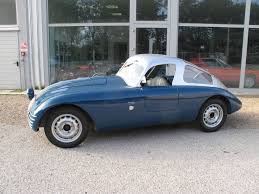
Left side view of the 1946 Fiat Stanguellini 1100 Sports Berlinetta Ala d'Oro. (Picture from: Aquaramabec)
Following the Barchetta came the Stanguellini Sports Berlinetta Ala d’Oro, a more enclosed and refined evolution of the original design. This version featured a distinctive dynamic hardtop, giving it a versatile form that made it suitable for endurance and road races such as the legendary Mille Miglia. In 1946, one such Berlinettawas purchased by Cornelio Corazza di Treviglio, who had it re-registered and fitted with a new engine and bodywork crafted by the Carrozzeria Ala d’Oro itself. These refinements only deepened the car’s mystique, ensuring its place among the most admired sports cars of the era.
Rearview of the 1946 Fiat Stanguellini 1100 Sports Berlinetta Ala d'Oro.(Picture from: Aquaramabec)
While Stanguellini never reached the mass fame of Ferrari or Maserati, it captured something purer — the spirit of Italian craftsmanship at its most intimate. Between 1946 and 1960, the company thrived on innovation and passion, producing cars that punched far above their weight on the racing circuit. Even after Vittorio’s passing in 1981, the Stanguellini legacy endured through the company’s dedication to preserving vintage cars — not as relics, but as living embodiments of creativity and courage.
Today, the Stanguellini Ala d’Orostands as more than a collector’s dream. It represents a chapter in automotive history when artistry and ambition shared the driver’s seat. Each surviving model tells a story of resilience — of a small Modenese workshop that dared to dream in gold when the world was still rebuilding in gray. And as modern enthusiasts continue to rediscover these rare machines, the Golden Wing keeps soaring, reminding us that true beauty in motion never really fades. *** [EKA | FROM VARIOUS SOURCES | ITALIAN WAYS | ROUTEVECCHIE | AQUARAMABEC | COACHBUILD ]
Note: This blog can be accessed via your smart phone
The Golden Wing: Inside the 1940s Stanguellini Ala d’Oro Sports Car Legacy


 Behind the company’s rise was Vittorio Stanguellini, a man who believed that greatness wasn’t reserved for factories with massive budgets. Under his leadership, and later through the restless imagination of his son Francesco, Stanguellini transformed ordinary machinery into extraordinary racing legends. Francesco, often called “the engine wizard,” had a rare gift for coaxing life from metal. He could look at a standard engine block and see potential others missed — power waiting to be awakened.




 Today, the Stanguellini Ala d’Oro stands as more than a collector’s dream. It represents a chapter in automotive history when artistry and ambition shared the driver’s seat. Each surviving model tells a story of resilience — of a small Modenese workshop that dared to dream in gold when the world was still rebuilding in gray. And as modern enthusiasts continue to rediscover these rare machines, the Golden Wing keeps soaring, reminding us that true beauty in motion never really fades. *** [EKA | FROM VARIOUS SOURCES | ITALIAN WAYS | ROUTEVECCHIE | AQUARAMABEC | COACHBUILD ]
